Artwork
The Annunciation
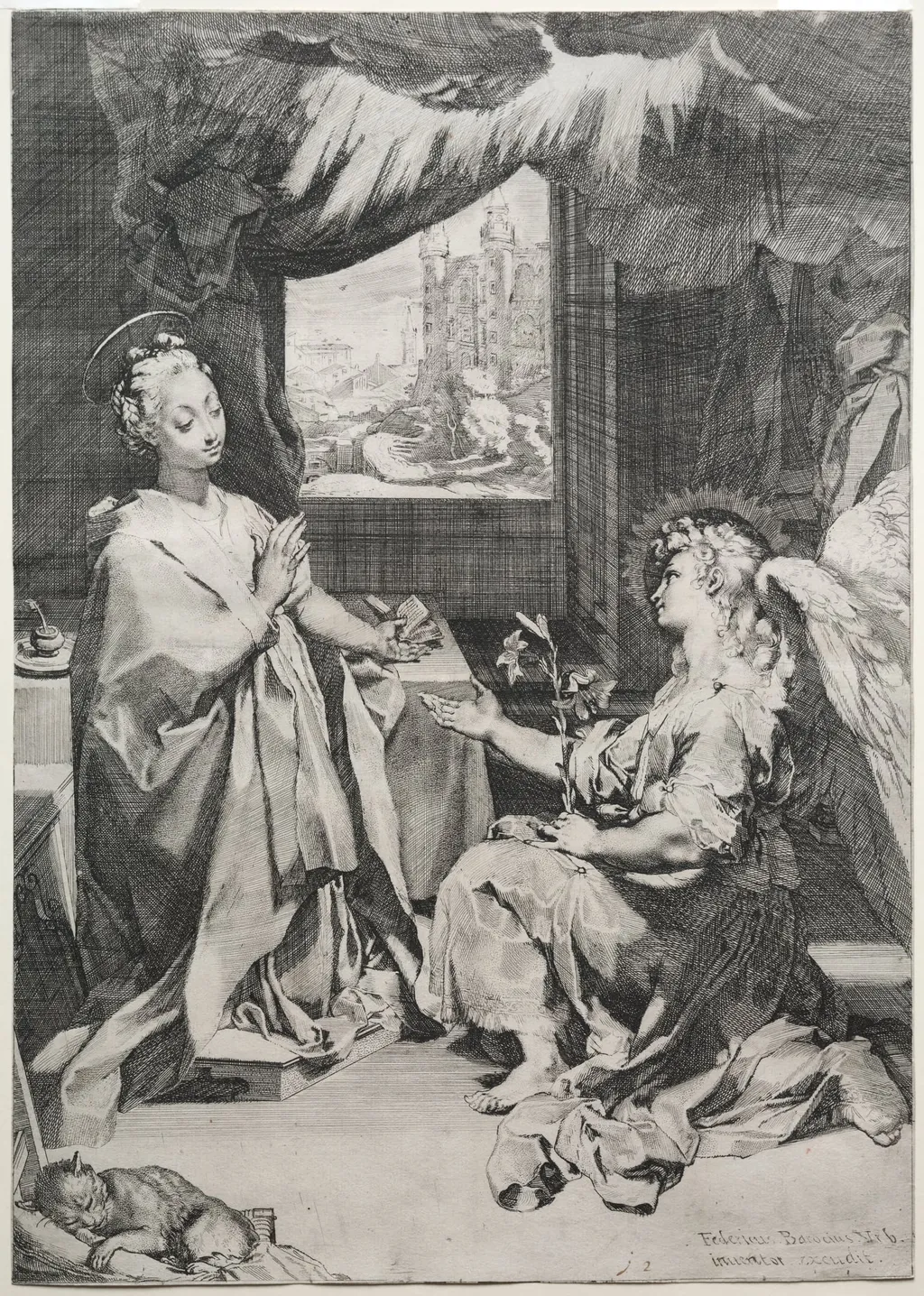
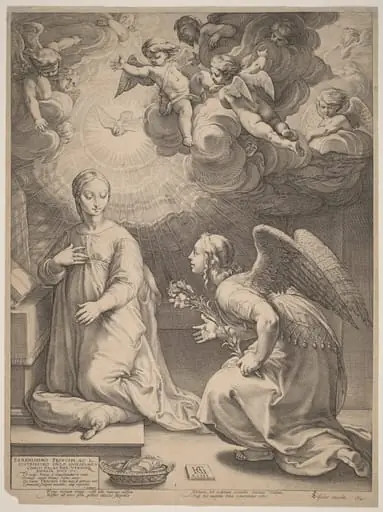
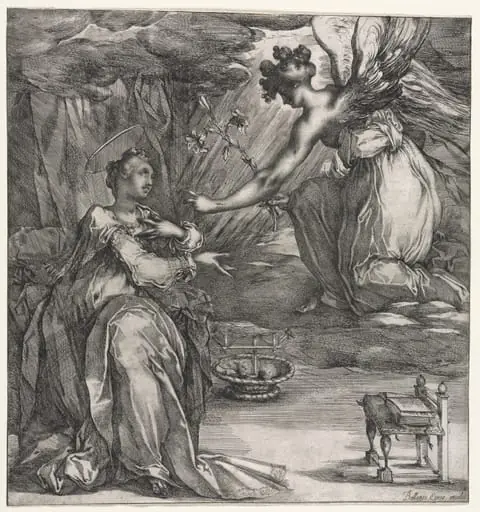
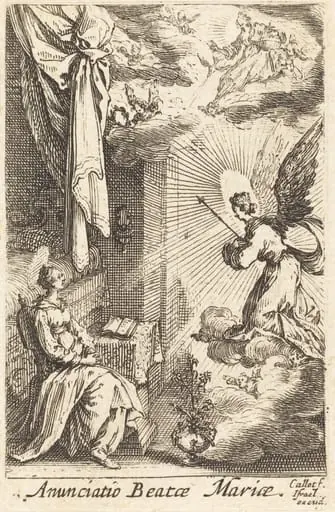
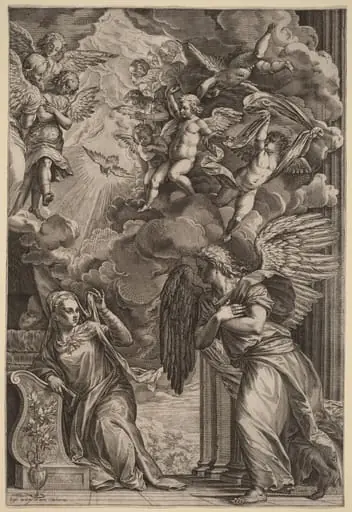
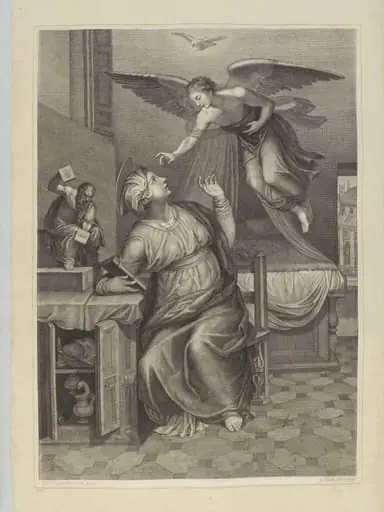
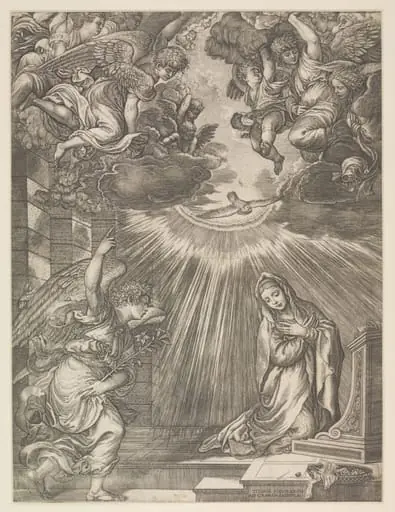
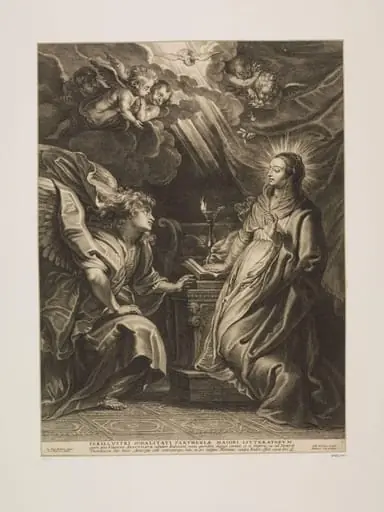
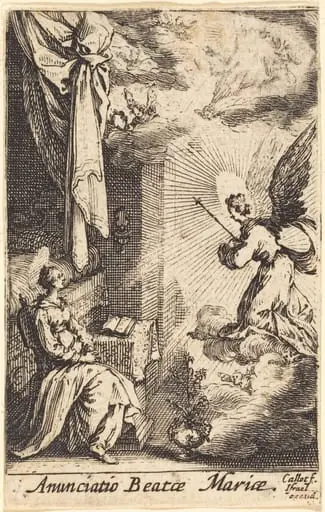
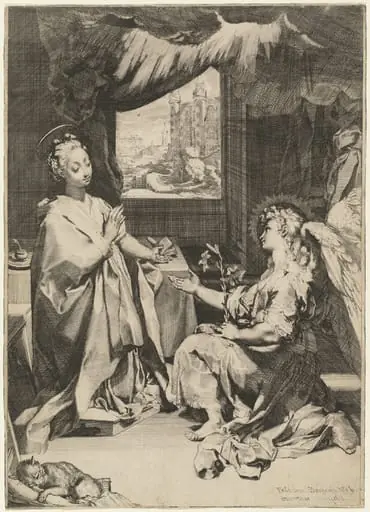
The Annunciation is a print by the Renaissance artist Federico Barocci. It dates from 1585 and is held in the collection of the Cleveland Museum of Art.
About this work
The painting shows an angel and a woman in a quiet moment.
The artist used soft colors and gentle lines to create a sense of calm. This style was typical of Italian art during the 16th century, and it's interesting to see how the artist used it to tell a story.
To learn more about this style, look up the technique: sfumato.
Overview
Federico Barocci, also known as Il Baroccio, produced *The Annunciation* circa 1585 as a painted panel, not a print.
Federico Barocci, also known as Il Baroccio, produced *The Annunciation* circa 1585 as a painted panel, not a print. An influential figure in late Renaissance Italy, Barocci’s work bridged Mannerism and early Baroque sensibilities. The piece resides in The Cleveland Museum of Art’s collection, where it is recognized for its emotional restraint and refined composition, reflecting the artist’s distinctive approach to sacred narrative.
Subject & Meaning
The scene depicts the moment the archangel Gabriel announces to the Virgin Mary that she will bear the Son of God. Barocci captures the quiet intensity of the encounter: Mary’s modest posture and Gabriel’s gentle gesture convey reverence rather than drama. The composition emphasizes spiritual receptivity, aligning with Counter-Reformation ideals that favored humility and inner devotion over theatricality.
Technique & Style
Barocci employed delicate brushwork and a muted, harmonious palette to evoke stillness and tenderness. His use of soft transitions between light and shadow, reminiscent of sfumato, enhances the ethereal quality of the figures. Lines are fluid and unforced, guiding the viewer’s eye gently across the scene. This approach distinguishes his style from the more dramatic contrasts favored by contemporaries.
History & Provenance
Created during Barocci’s mature period in Urbino, the painting likely originated as a private devotional piece. It entered the Cleveland Museum of Art’s collection in the 20th century, having passed through several European private holdings. Its documented history is modest but consistent, with no major alterations or reworkings noted over time.
Context
In the late 16th century, Italian religious art increasingly emphasized emotional accessibility and psychological depth, responding to the Council of Trent’s call for clarity and piety. Barocci’s *Annunciation* aligns with this shift, avoiding overt spectacle in favor of intimate, humanized sacred moments. His work resonated with clerical patrons seeking art that fostered contemplation.
Legacy
Barocci’s subtle handling of light and emotion influenced later Baroque painters, including Peter Paul Rubens, who admired his expressive grace. Though less widely known today than his Florentine or Roman peers, his contribution to the evolution of devotional imagery remains significant, particularly in how he balanced spiritual gravity with quiet humanity.
Artist & collection
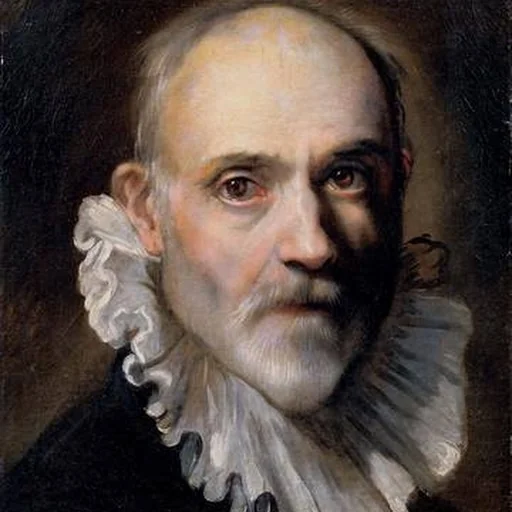
Artist
Federico Barocci (also written Barozzi) (c. 1535 – 30 September 1612) was an Italian Renaissance painter and printmaker. His original name was Federico Fiori, and he was nicknamed Il Baroccio. His work was highly…