Artwork
Ale Porte del Dolo
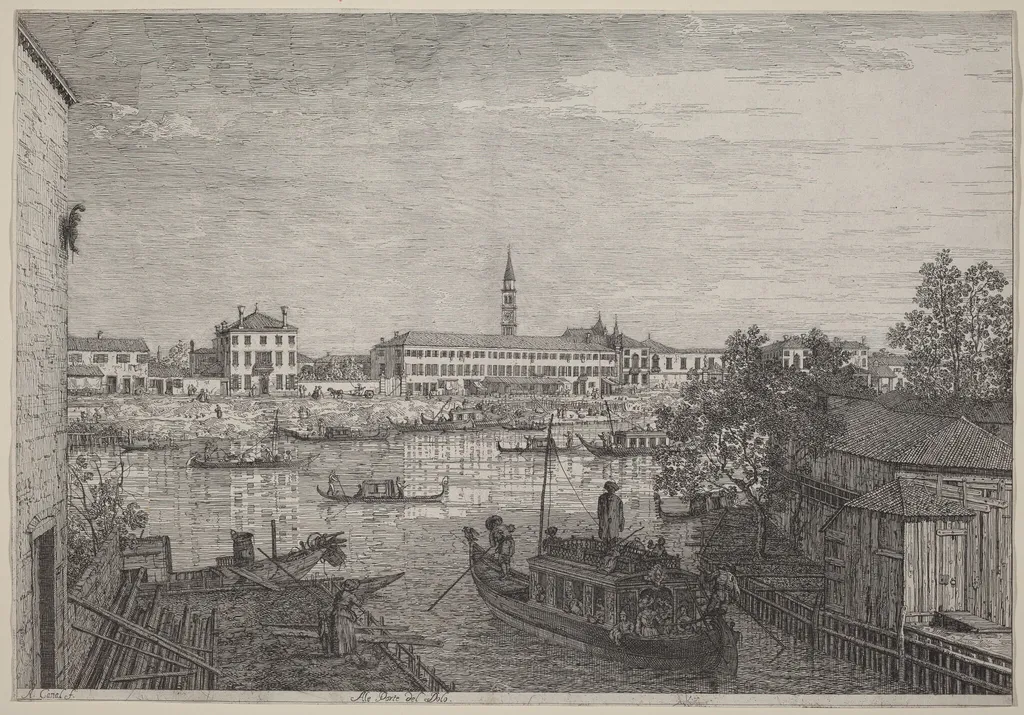
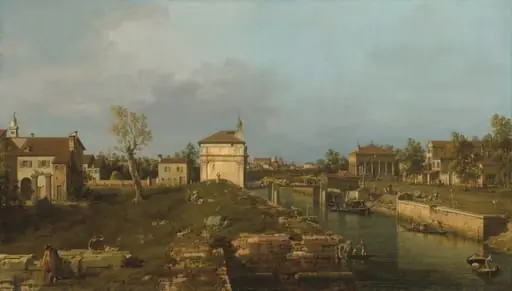
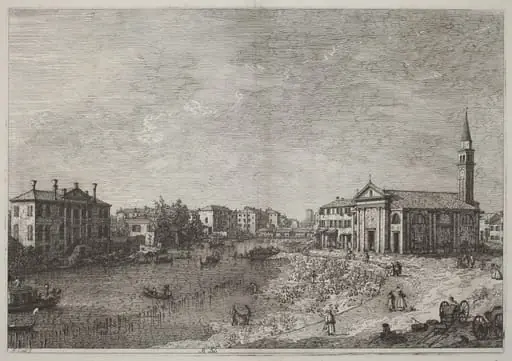
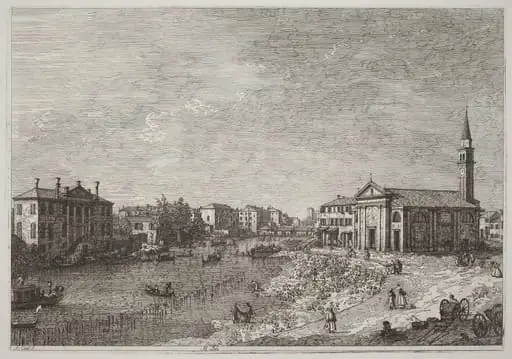
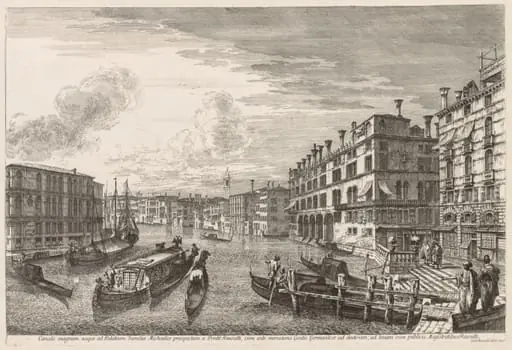
Ale Porte del Dolo is an ink print by the Baroque artist Canaletto. It dates from 1740 and is held in the collection of the National Gallery of Art.
About this work
Overview
This work exemplifies his technical precision and interest in documenting urban life through controlled line work.
Created around 1740, *Ale Porte del Dolo* is an etching by Giovanni Antonio Canal, known as Canaletto. It belongs to a series of Venetian cityscapes produced during the height of his career. While primarily celebrated for his paintings, Canaletto also engaged actively with printmaking, using etching to capture the architectural and atmospheric qualities of Venice. This work exemplifies his technical precision and interest in documenting urban life through controlled line work.
Subject & Meaning
The scene portrays a quiet stretch of canal flanked by two contrasting structures: a substantial stone building on the left and a lighter wooden edifice on the right, with a tree anchoring the composition. Moored boats and small figures suggest daily activity without drama. The title references a specific gate, grounding the image in Venice’s physical geography. The absence of grandeur or narrative emphasizes contemplation over spectacle, reflecting a quiet appreciation of place.
Technique & Style
Canaletto employed fine, deliberate etching lines to render textures of stone, wood, and water with subtle gradations of tone. The composition uses linear perspective to guide the eye along the canal, enhancing spatial depth. Delicate hatching suggests light and shadow without heavy contrast, creating a restrained, atmospheric effect. His approach balances topographical accuracy with a lyrical sensitivity to light, characteristic of his mature style in both painting and print.
History & Provenance
The etching emerged during Canaletto’s most productive period, when demand for Venetian views among Grand Tour travelers was high. Though less documented than his paintings, his prints circulated widely and were often collected as souvenirs. *Ale Porte del Dolo* likely originated as part of a private commission or a small edition, reflecting the artist’s dual role as both observer and commercial producer of Venetian imagery.
Context
In mid-18th-century Venice, vedute—precise city views—were prized by foreign visitors seeking tangible mementos of their travels. Canaletto’s work responded to this market, yet his etchings often retained a personal restraint absent in his more theatrical paintings. This piece aligns with a broader trend among Venetian artists to document the city’s architecture and waterways with clarity, preserving its character amid changing social and economic conditions.
Legacy
Though overshadowed by his paintings, Canaletto’s etchings contributed significantly to the dissemination of Venetian imagery across Europe. *Ale Porte del Dolo* exemplifies how printmaking allowed his observations to reach wider audiences, influencing later topographical artists. Its quiet realism helped define a mode of urban representation that valued observation over embellishment, leaving a quiet but enduring mark on the tradition of landscape printmaking.
Artist & collection
Artist
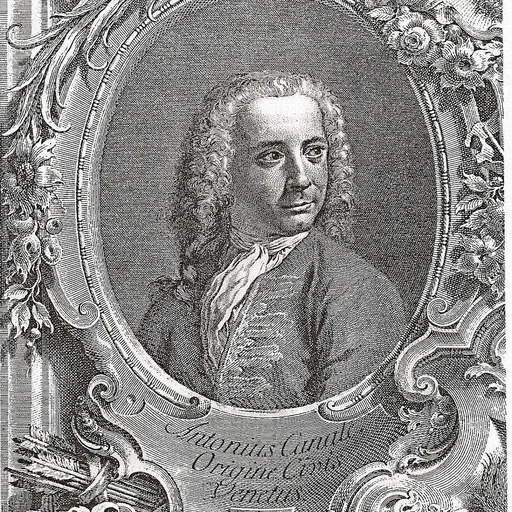
Giovanni Antonio Canal (18 October 1697 – 19 April 1768), commonly known as Canaletto (Italian: ), was an Italian painter from the Republic of Venice, considered an important member of the 18th-century Venetian school.