Artwork
Isola del Lazaretto Nuovo
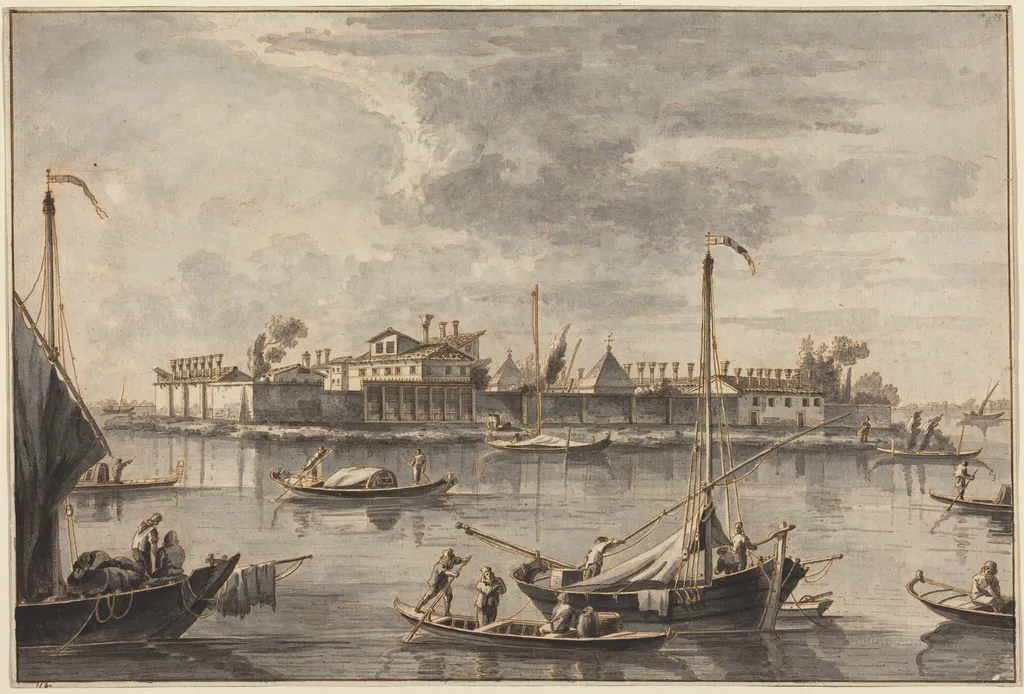
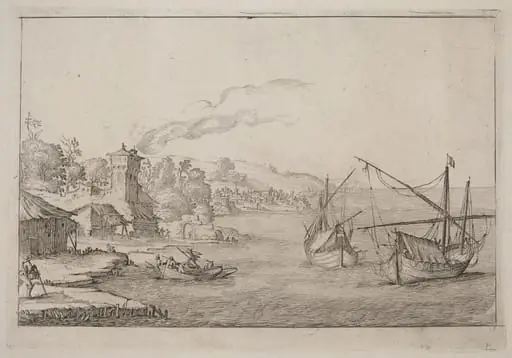
Isola del Lazaretto Nuovo is an ink drawing by the Romanticist artist Francesco Tironi. It dates from 1778 and is held in the collection of the National Gallery of Art.
About this work
Overview
Created in 1778, this drawing by Francesco Tironi depicts the Isola del Lazaretto Nuovo, a small island in the Venetian lagoon.
Created in 1778, this drawing by Francesco Tironi depicts the Isola del Lazaretto Nuovo, a small island in the Venetian lagoon. Executed in pen and brown ink with gray wash on laid paper, it belongs to a tradition of topographical sketches made by Venetian artists to document the city’s surrounding architecture and landscape. The work reflects a precise, observational approach rather than idealized composition.
Subject & Meaning
The Lazaretto Nuovo island served historically as a quarantine station for ships arriving in Venice, particularly during plague outbreaks. Tironi’s rendering captures its austere buildings and isolated setting, emphasizing function over ornament. The image conveys the island’s role in public health infrastructure, presenting it as a quiet, utilitarian structure within the broader Venetian maritime system.
Technique & Style
Tironi employed fine pen lines to define architectural forms, layered with subtle gray washes to suggest volume and atmospheric depth. The use of laid paper, with its characteristic chain lines, adds texture and supports the delicate tonal transitions. His technique is restrained, prioritizing clarity and spatial accuracy over expressive flourish, aligning with the documentary aims of 18th-century Venetian draftsmanship.
History & Provenance
The drawing was produced during Tironi’s active period in Venice, likely as part of a series documenting lagoon islands. Its survival suggests it was retained within a private or institutional collection, possibly connected to Venetian civic or maritime records. No definitive provenance before the 20th century is established, though its style and medium are consistent with works from Venetian artistic circles of the late 1700s.
Context
In late 18th-century Venice, detailed topographical drawings were valued for both practical and scholarly purposes. Tironi’s work reflects a broader interest in mapping and recording the city’s maritime infrastructure, including quarantine sites critical to public safety. Such drawings often circulated among officials, merchants, and artists, serving as visual records of Venice’s complex relationship with trade and disease control.
Legacy
Though not widely exhibited, Tironi’s drawing contributes to the historical record of Venice’s public health architecture. It remains a representative example of how artists documented functional landscapes with precision, offering insight into urban planning and societal priorities of the time. The work continues to inform studies on Venetian topography and the material culture of quarantine practices.
Own this work as a print
Artist & collection


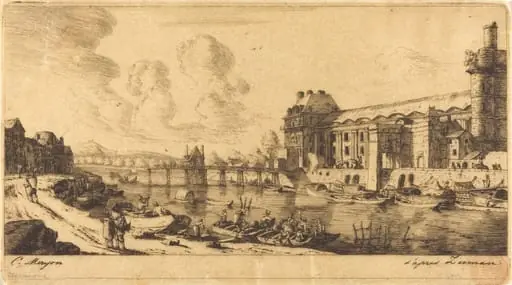 Le Pavillion de Mlle. et une partie du Louvre
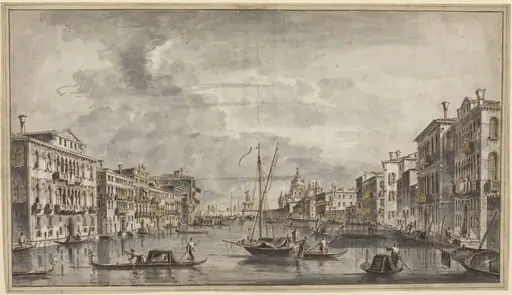 The Grand Canal Looking Toward the Salute and the Dogana
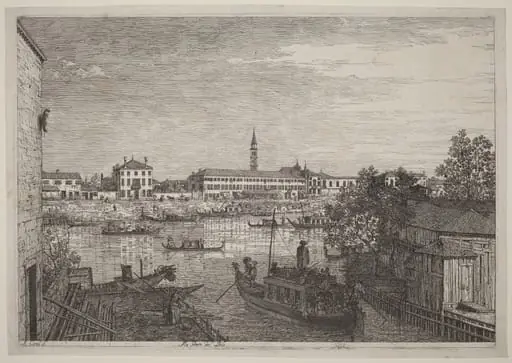 Ale Porte del Dolo
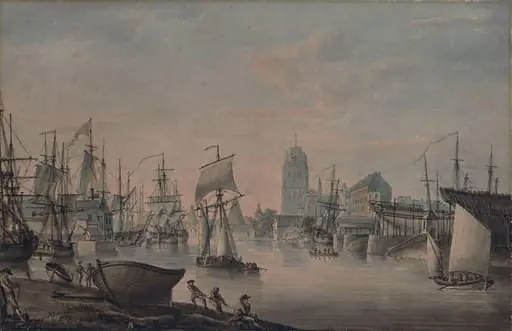 View of Bristol
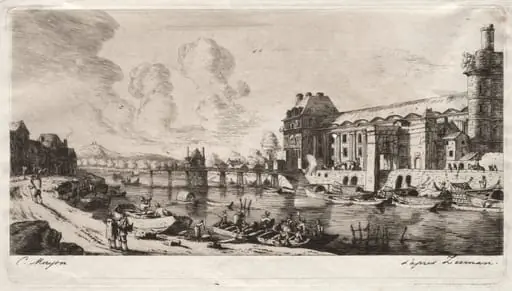 The Pavillon de Mademoiselle and part of the Louvre
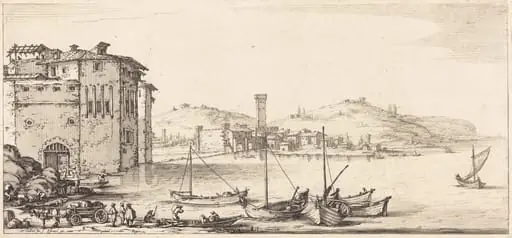 Loading Merchandise
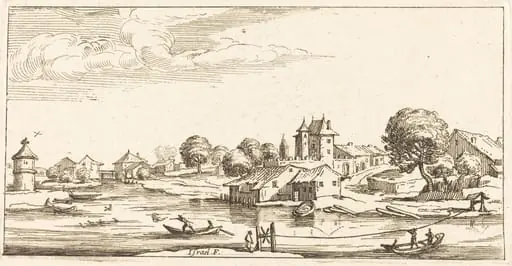 Landscape
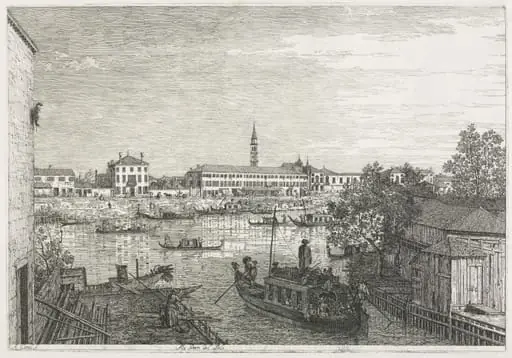 Views: The Harbor at Dolo
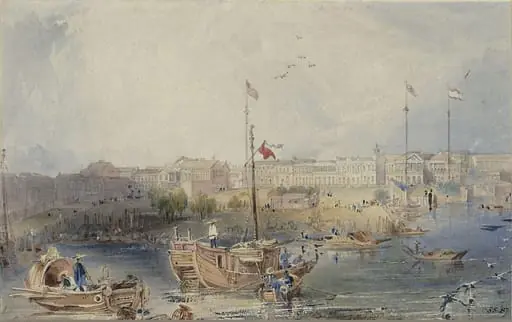 View in Guangzhou (Canton), China
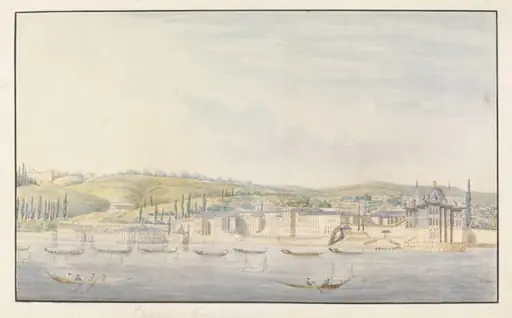 Former Dolmabahçe Palace and Mosque
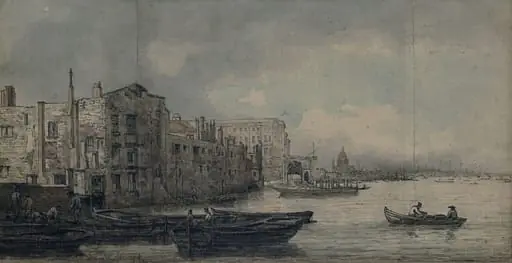 The Thames, showing Somerset House in the course of construction
 Coastal Landscape with Anchored Vessels