Artwork
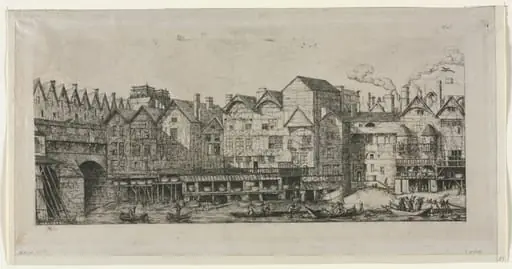
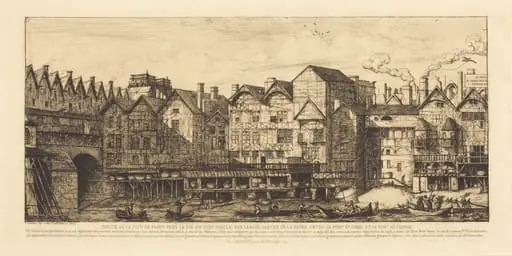
Partie de la cité vers la fin du XVIIe siècle
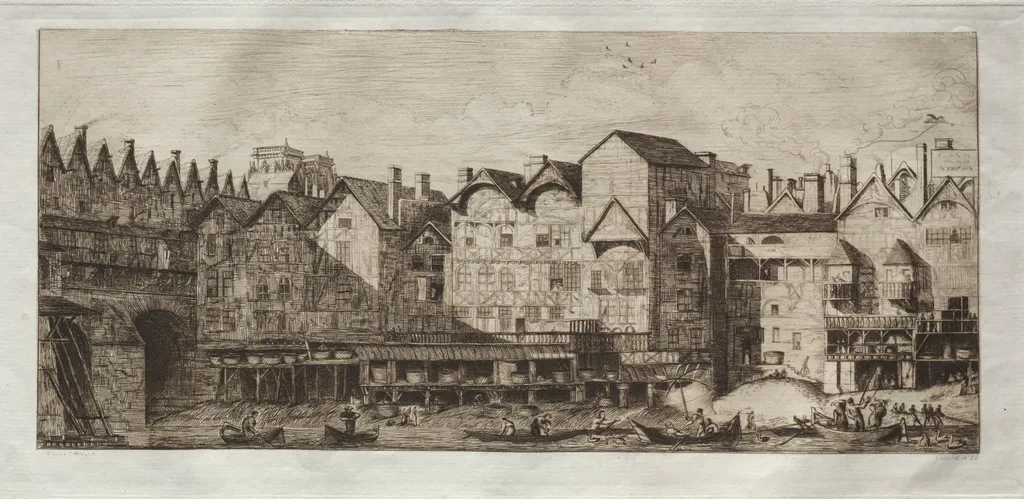
Partie de la cité vers la fin du XVIIe siècle is a print by the Impressionist artist Edmond Gosselin. It dates from 1881 and is held in the collection of the Cleveland Museum of Art.
About this work
Overview
Though drawn in the late nineteenth century, the image is a retrospective reconstruction, not a contemporary view.
Created around 1881 by French artist Edmond Gosselin, this ink sketch depicts a section of a coastal city as it appeared toward the end of the seventeenth century. Though drawn in the late nineteenth century, the image is a retrospective reconstruction, not a contemporary view. The work is part of the collection at The Cleveland Museum of Art and reflects a period interest in documenting historical urban landscapes through precise draftsmanship.
Subject & Meaning
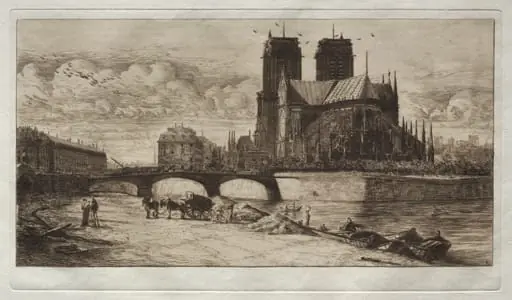
The scene portrays a dense waterfront neighborhood with closely spaced, tall buildings featuring steep roofs and overhanging upper stories. Small boats rest on the water, and figures move along the shore, suggesting daily life in a bustling port. The composition emphasizes architectural density and human activity, conveying a sense of urban vitality without romanticizing it. The focus is on observable detail rather than narrative or symbolism.
Technique & Style
Gosselin employed fine, controlled ink lines to render every architectural element with clarity—windows, roof tiles, wooden beams, and wall textures are all meticulously indicated. The linear precision reflects a topographical approach common in 19th-century architectural sketches, where accuracy served documentary purposes. Shading is minimal, relying on line weight and spacing to suggest form and depth.
History & Provenance
The work was produced in the late 1800s as part of a broader effort to visually record historical urban environments. Gosselin, known for his architectural studies, likely based this image on archival sources or earlier depictions rather than direct observation. It entered the collection of The Cleveland Museum of Art at an unspecified date, where it remains as an example of scholarly illustration from the period.
Context
In the 19th century, artists and antiquarians increasingly turned to historical urban scenes as subjects for study, driven by industrialization’s rapid transformation of cities. Gosselin’s sketch aligns with this trend, offering a reconstructed view of a pre-modern port. Such works were often used in publications or academic settings to illustrate historical geography and building practices before photography became widespread.
Legacy
Though not widely exhibited, Gosselin’s sketch contributes to a body of 19th-century documentation that preserved visual records of architectural forms now altered or lost. Its value lies in its methodical observation and fidelity to historical detail, serving as a reference for scholars studying European port cities. The work exemplifies how drawing functioned as a tool of historical inquiry before the dominance of photographic reproduction.
Artist & collection

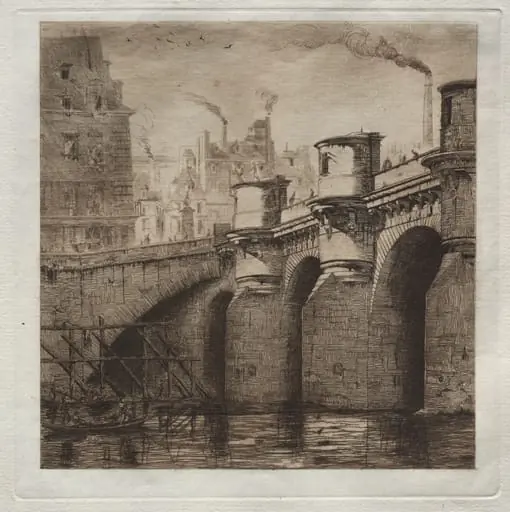
 View of Part of the City of Paris Toward the Close of the 17th Century
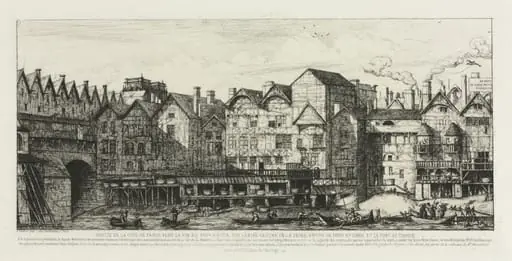 Part of the City of Paris at the End of the Seventeenth Century
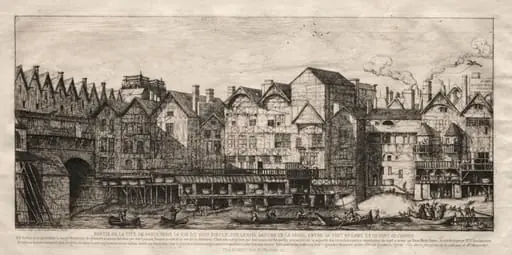 View of Part of the City of Paris, Towards the Close of the 17th Century
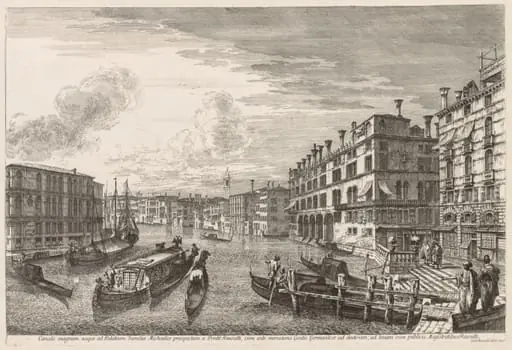 Views of Venice: Grand Canal
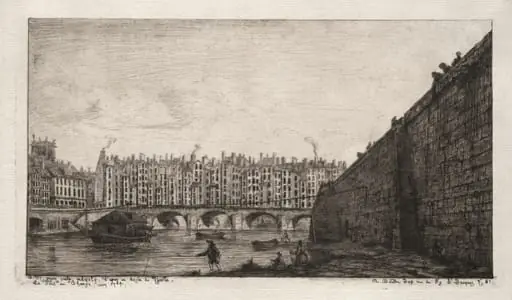 The Exchange Bridge, Paris, about 1784
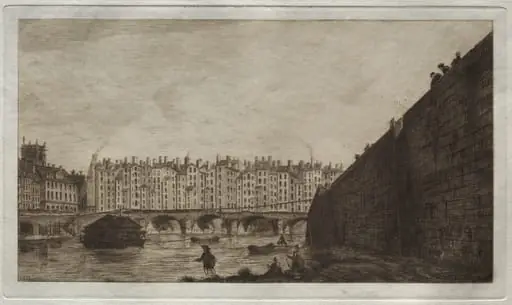 Le Pont-au-change, Paris, vers 1784
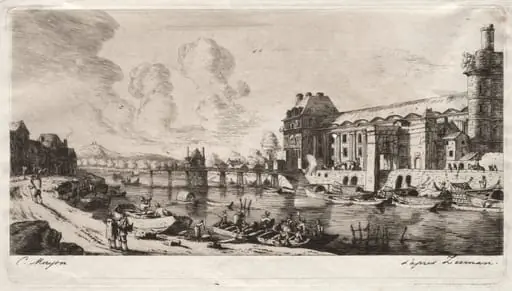 The Pavillon de Mademoiselle and part of the Louvre
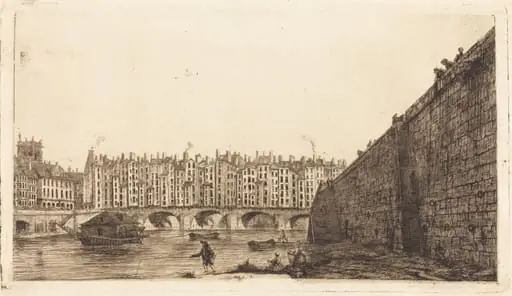 Le Pont-au-Change, Paris, vers 1784
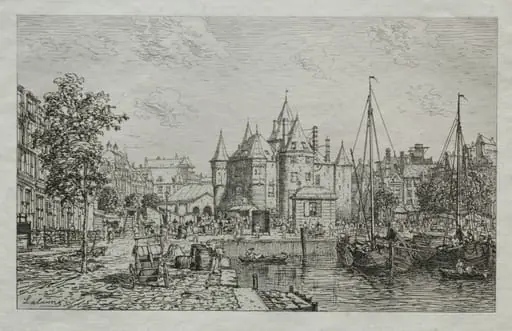 The Wagg-Poids of the City of Amsterdam
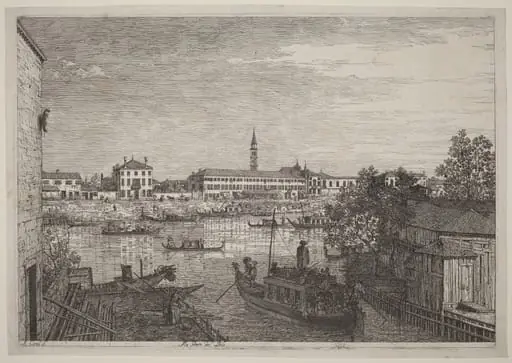 Ale Porte del Dolo
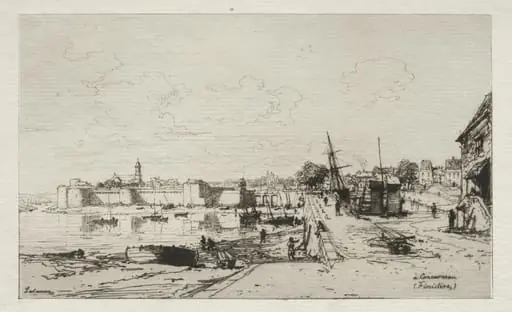 A Concarneau (Finistère)
 Partie de la Cité vers la fin du XVIIe siècle (View of the City of Paris Towards the Close of the XVIIth Century)