Artwork
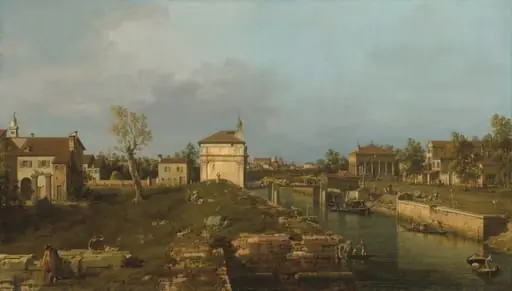
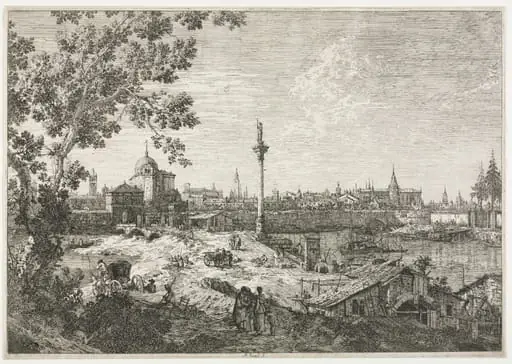
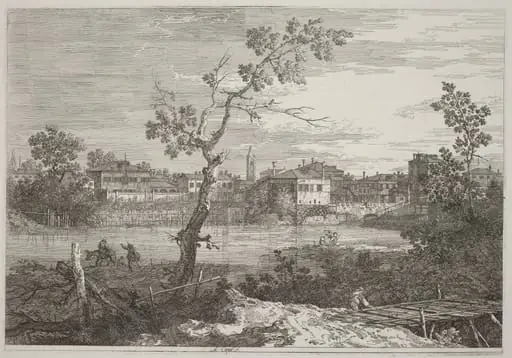
Imaginary View of Padua
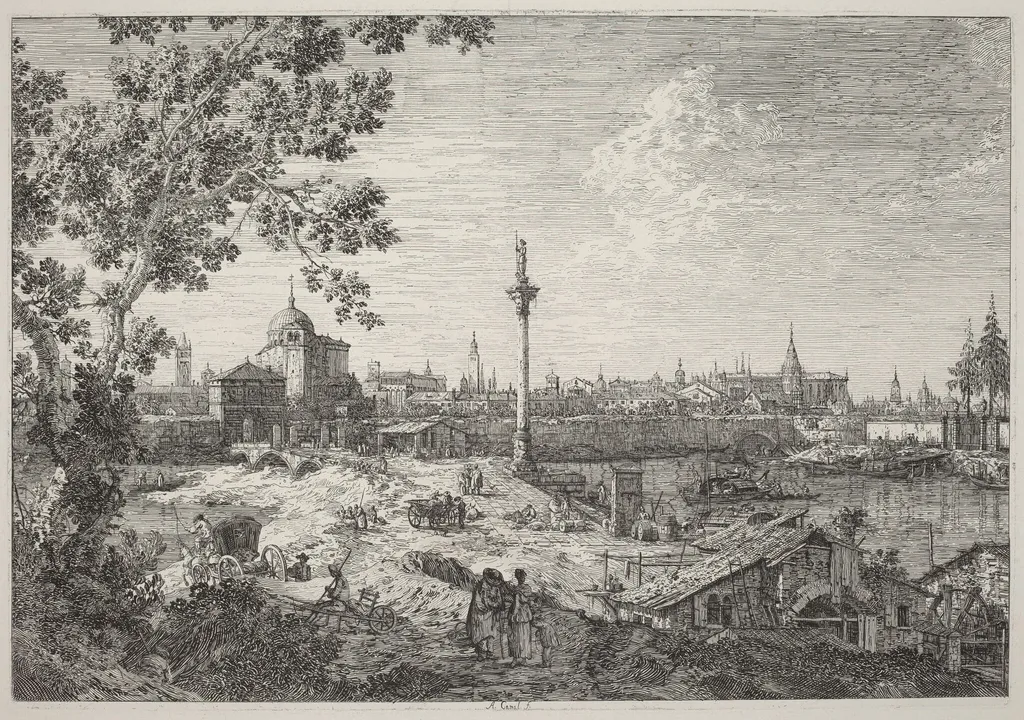
Imaginary View of Padua is an ink print by the Baroque artist Canaletto. It dates from 1740 and is held in the collection of the National Gallery of Art.
About this work
Overview
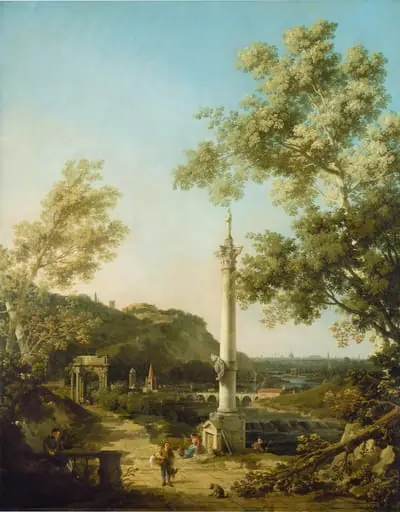
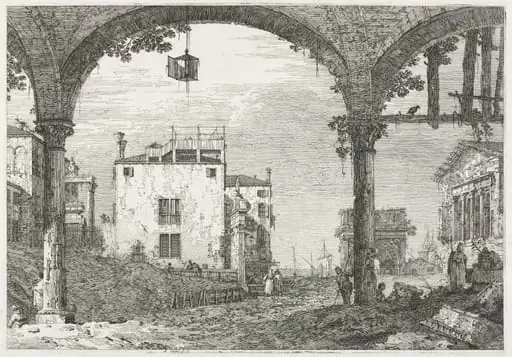
Though celebrated for his precise urban landscapes—vedute—this work forms part of his capricci, a genre blending observed and invented architectural motifs.
Giovanni Antonio Canal, commonly referred to as Canaletto, produced *Imaginary View of Padua* circa 1740 as an etching on laid paper. Though celebrated for his precise urban landscapes—vedute—this work forms part of his capricci, a genre blending observed and invented architectural motifs. The print exemplifies his engagement with printmaking, a medium he explored alongside painting, demonstrating technical precision in rendering spatial depth and atmospheric effects.
Subject & Meaning
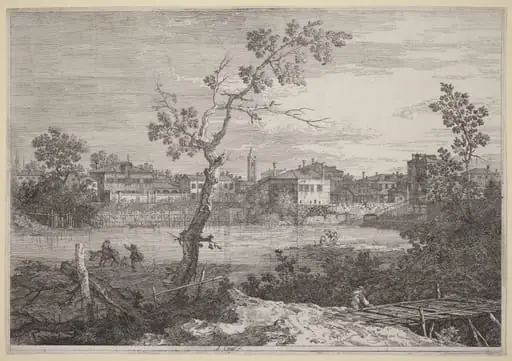
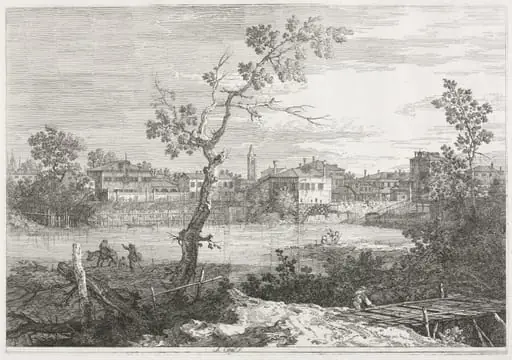
The composition presents an idealized vision of Padua, merging recognizable structures with fictive elements. A prominent tree anchors the foreground, its branches framing the scene, while distant buildings, towers, and a river bridge suggest a tranquil urban setting. Figures populate the riverbank and bridge, engaging in everyday activities, lending the scene a sense of lived experience. The work’s imaginative synthesis of place reflects Canaletto’s interest in evoking mood rather than topographical accuracy.
Technique & Style
Executed in etching, the print employs fine, controlled lines to model form and light, with subtle gradations of tone creating spatial recession. Canaletto’s methodical approach captures architectural detail and natural elements—foliage, water, and sky—with equal attention. The delicate cross-hatching and stippling techniques enhance texture, while the soft grey palette unifies the scene, reinforcing its atmospheric quality. This stylistic precision aligns with the Venetian vedute tradition yet distinguishes itself through imaginative invention.
History & Provenance
Dated to around 1740, *Imaginary View of Padua* belongs to a series of capricci Canaletto produced during his career. The etching reflects his broader practice of printmaking, which complemented his painted oeuvre. Little documentation survives regarding its early ownership, though such works were likely acquired by collectors drawn to the artist’s reputation for both urban views and fanciful compositions. The print’s survival in laid paper form attests to its preservation within private or institutional collections over centuries.
Context
Canaletto’s capricci emerged during a period when Venetian artists increasingly explored imaginative reinterpretations of landscape and architecture. While his vedute catered to Grand Tour patrons seeking accurate representations of Italian cities, the capricci offered a creative departure, blending observation with invention. This print reflects the 18th-century fascination with picturesque scenes, where idealized views satisfied aesthetic and intellectual interests beyond mere documentation.
Legacy
Though less celebrated than his painted vedute, Canaletto’s etched capricci contributed to the evolution of landscape printmaking. *Imaginary View of Padua* exemplifies his ability to merge technical skill with imaginative vision, influencing later artists who valued both precision and creative liberty. The work’s inclusion in studies of his printmaking underscores its role in broadening understanding of his artistic range beyond conventional cityscapes.
Artist & collection
Artist
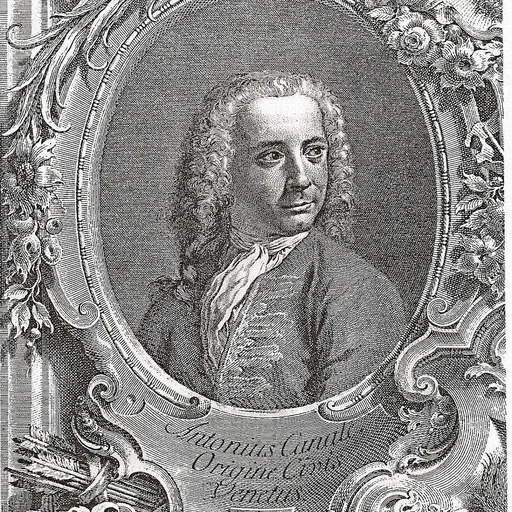
Giovanni Antonio Canal (18 October 1697 – 19 April 1768), commonly known as Canaletto (Italian: ), was an Italian painter from the Republic of Venice, considered an important member of the 18th-century Venetian school.