Artwork
Landscape with Horseman and Three Travelers
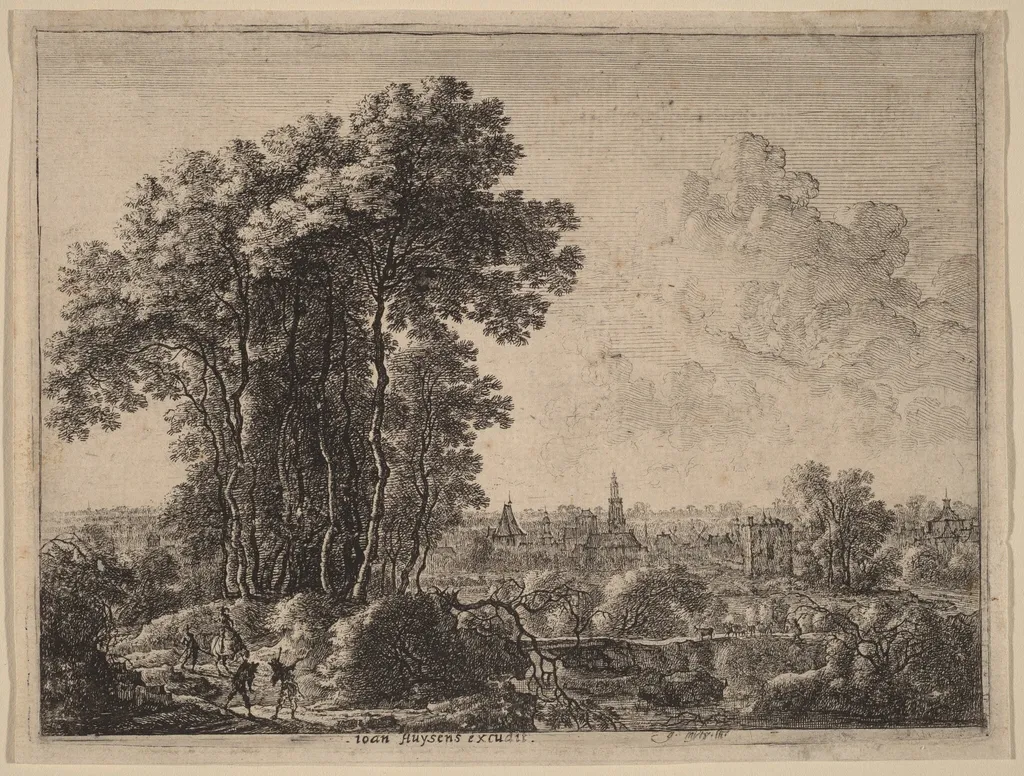
Landscape with Horseman and Three Travelers is an ink print by the Baroque artist Gilles Neyts. It dates from 1655 and is held in the collection of the National Gallery of Art.
About this work
Overview
Created in 1655 by Gilles Neyts, this black-and-white etching presents a tranquil rural scene rendered in fine linear detail. The composition balances natural elements with human presence, using the contrast of dense foliage and open sky to guide the viewer’s eye across a layered landscape. As a print, it reflects the technical precision characteristic of 17th-century Northern European etchers.
Subject & Meaning
The scene depicts a quiet path where three travelers move beneath two large, intertwined trees. A distant town with spired buildings suggests habitation, yet the figures appear small and transient against the enduring landscape. The absence of narrative action implies contemplation, emphasizing the quiet rhythm of rural life and the scale of nature relative to human movement.
Technique & Style
Neyts employed fine, controlled etching lines to model form and suggest depth. The trees are rendered with dense cross-hatching that gives them volume, while the sky and distant town use lighter, sparser strokes to imply distance. The scale of the figures reinforces the vastness of the environment, a common device in landscape prints of the period to evoke humility before nature.
History & Provenance
The print originates from the mid-17th century, a time when landscape etchings flourished in the Southern Netherlands. While specific early ownership records are not documented, Neyts’s works were circulated among collectors and artists familiar with the regional tradition of topographical printmaking, often used for study or private enjoyment.
Context
This work aligns with a broader trend in Flemish and Dutch printmaking that favored serene, unidealized landscapes over dramatic or mythological subjects. Artists like Neyts responded to growing interest in the natural world and local topography, producing prints that appealed to both aesthetic sensibility and a quiet appreciation of everyday rural environments.
Legacy
Neyts’s etchings, though not widely known today, contributed to the development of landscape as a standalone genre in printmaking. His attention to atmospheric perspective and subtle tonal variation influenced later generations of Northern European draftsmen who sought to capture the quiet dignity of the countryside without embellishment.
Artist & collection


 Landscape with a Stream
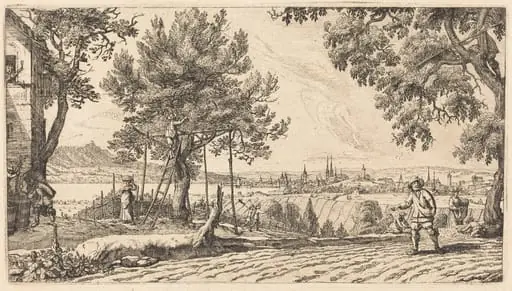 Autumn
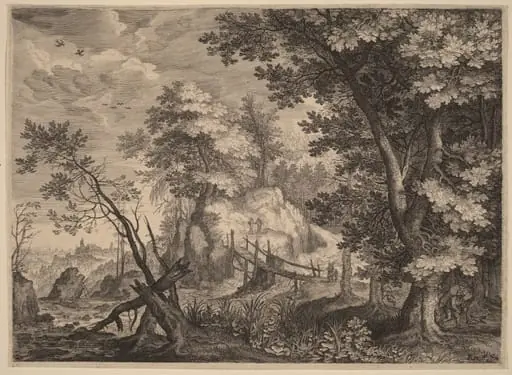 Woodland Scene
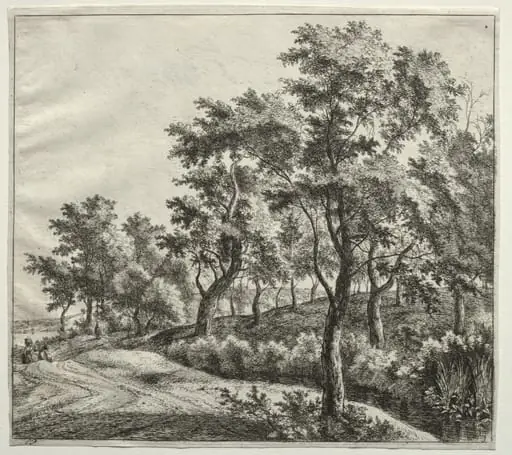 The Narrow Stream
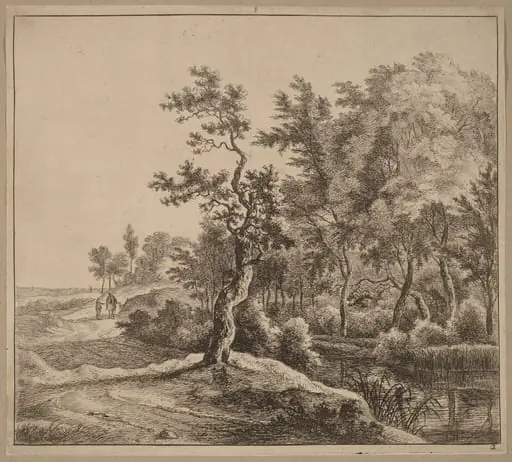 Landscape with a Winding Road
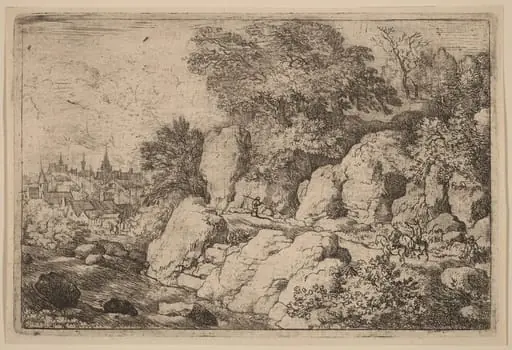 Two Horsemen on a Rocky Path
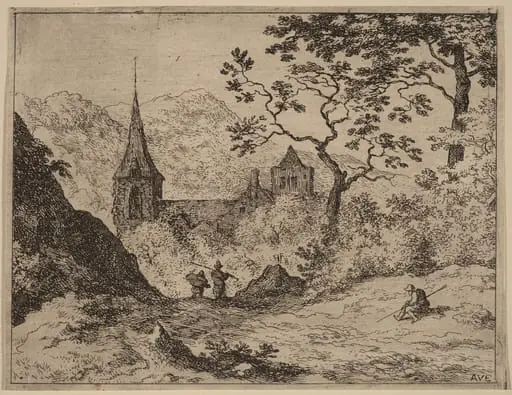 The Steeple
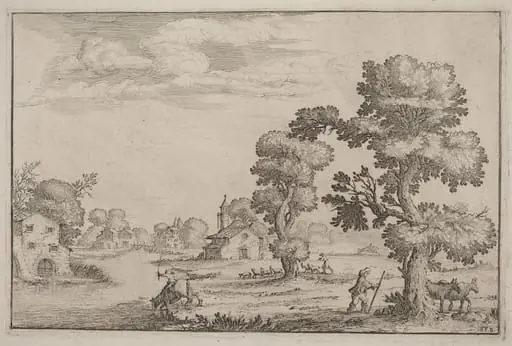 Lakeside Village with Herdsmen
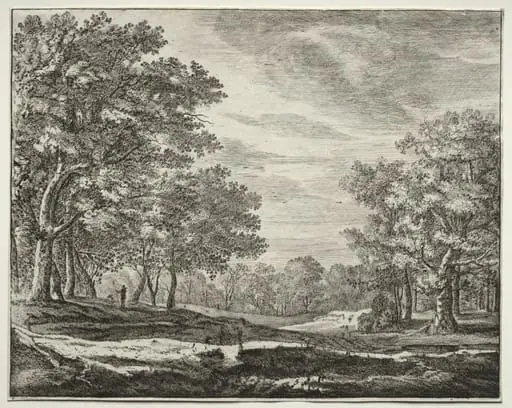 Six views in the Wood of the Hague: Plate 5, A Man with a Staff in His Hand
 Traveler Passing Two Large Trees
 Two Horsemen on a Rocky Path
 Twelve landscapes (H.95-106): The Two Bridges