Artwork
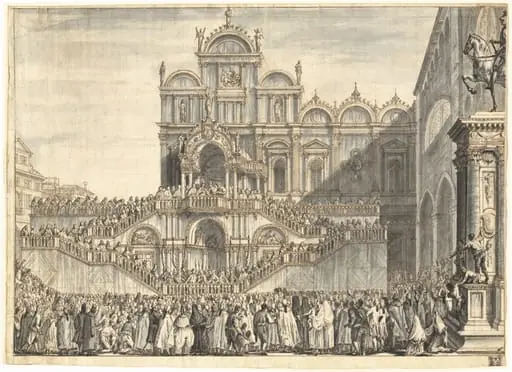
The "Giovedì Grasso" Festival before the Ducal Palace in Venice
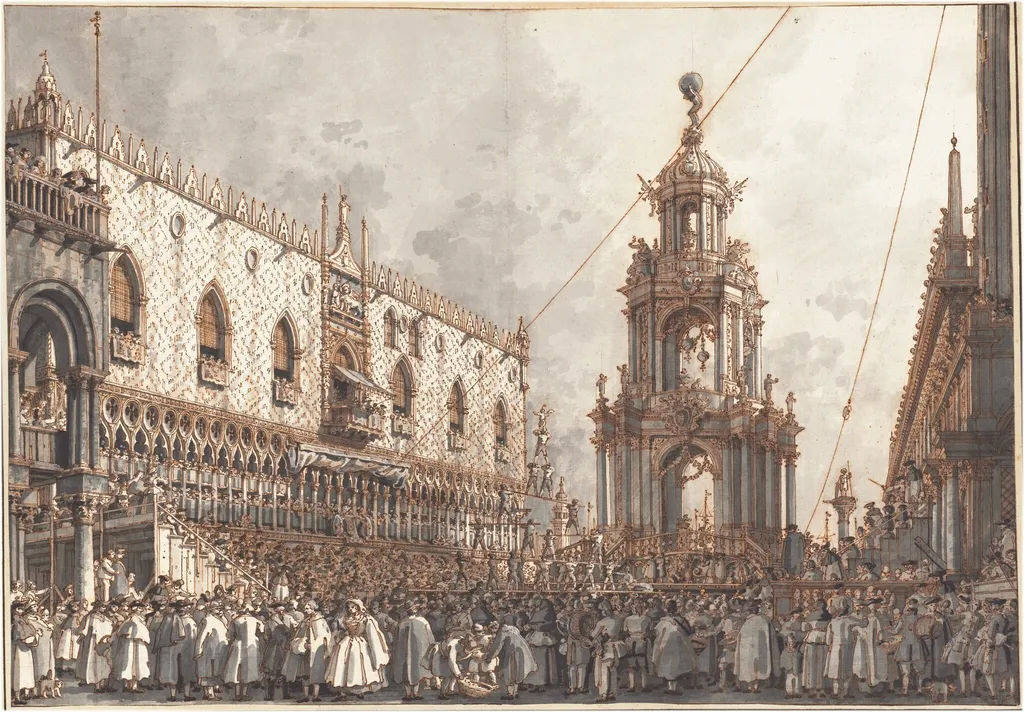
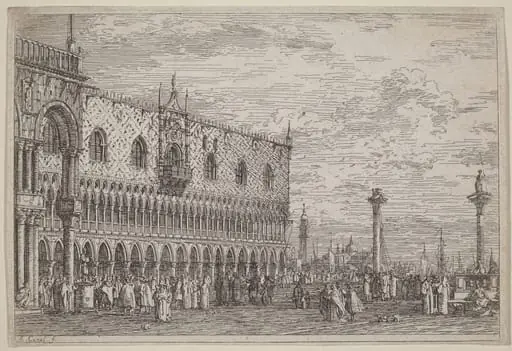
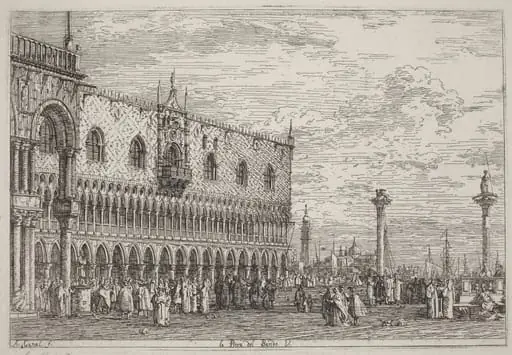
The "Giovedì Grasso" Festival before the Ducal Palace in Venice is an ink drawing by the Romanticist artist Canaletto. It is held in the collection of the National Gallery of Art.
About this work
Overview
Executed in pen and brown ink with gray wash, it is enhanced with white gouache for highlights and retains faint graphite underdrawing.
Created in 1766, this drawing by Canaletto captures a festive occasion in Venice just two years before his death. Executed in pen and brown ink with gray wash, it is enhanced with white gouache for highlights and retains faint graphite underdrawing. The work is mounted on an eighteenth-century paper support, typical of the period’s preservation practices. It reflects Canaletto’s enduring focus on Venetian urban life through precise, observational draftsmanship.
Subject & Meaning
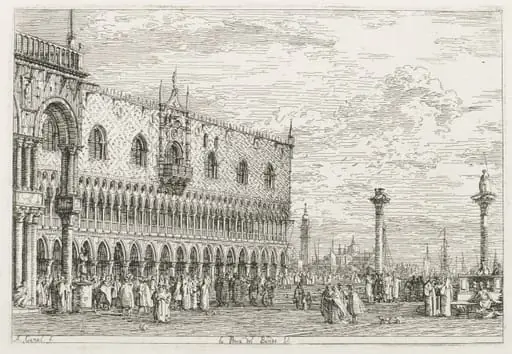
The scene portrays the Giovedì Grasso, or Shrove Thursday, celebration before the Ducal Palace, a moment of public revelry preceding Lent. Crowds gather along the waterfront, figures engaged in conversation, movement, and spectacle, while the palace’s ornate façade frames the activity. The composition emphasizes civic pride and the ritual rhythm of Venetian life, not as a grand historical event but as a vivid, everyday gathering infused with seasonal tradition.
Technique & Style
Canaletto employed fine pen lines to define architectural details and figures, layered with subtle gray washes to suggest depth and shadow. White gouache was applied sparingly but deliberately to catch light on surfaces like stone and fabric, enhancing realism. The brushwork is controlled yet fluid, balancing architectural precision with the spontaneity of human motion. The drawing’s scale and finish suggest it was intended as a finished work, not merely a preparatory sketch.
History & Provenance
The drawing was made in Venice during Canaletto’s final years, when he continued to produce vedute for European collectors despite declining health. It remained in private hands in Italy and later entered a major European collection, where it was mounted on its original eighteenth-century support. Its survival in good condition reflects careful stewardship and the enduring interest in Canaletto’s observational drawings beyond his painted outputs.
Context
In mid-eighteenth-century Venice, public festivals like Giovedì Grasso were central to civic identity, blending religious observance with communal spectacle. Canaletto’s drawings of such events served both as records and as commodities for Grand Tour travelers seeking authentic glimpses of Venetian culture. His work stood apart from idealized histories, instead anchoring spectacle in the tangible textures of the city’s architecture and daily rhythms.
Legacy
This drawing exemplifies Canaletto’s role in shaping the veduta tradition through disciplined observation rather than romantic invention. While his paintings gained wider fame, his ink drawings reveal a more intimate, immediate engagement with Venice’s urban fabric. Later artists and topographers drew from his method of combining architectural accuracy with lively human presence, cementing his influence on the documentation of urban life in the Enlightenment era.
Artist & collection
Artist
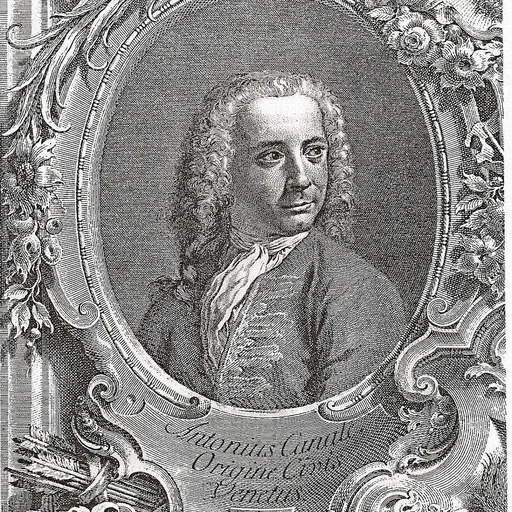
Giovanni Antonio Canal (18 October 1697 – 19 April 1768), commonly known as Canaletto (Italian: ), was an Italian painter from the Republic of Venice, considered an important member of the 18th-century Venetian school.

![La Piera del Bando. V. [lower right], by Canaletto](https://artifactworldgallery.com/img/canaletto--la-piera-del-bando-v-lower-right--e5125c188ee0e1bc-w320.webp)