Artwork
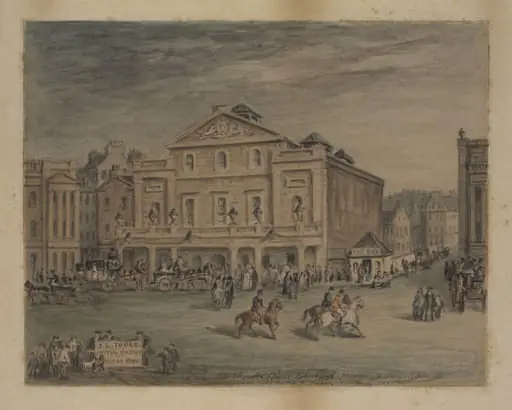
The Italian Opera House, Haymarket, prior to the fire of June 1789
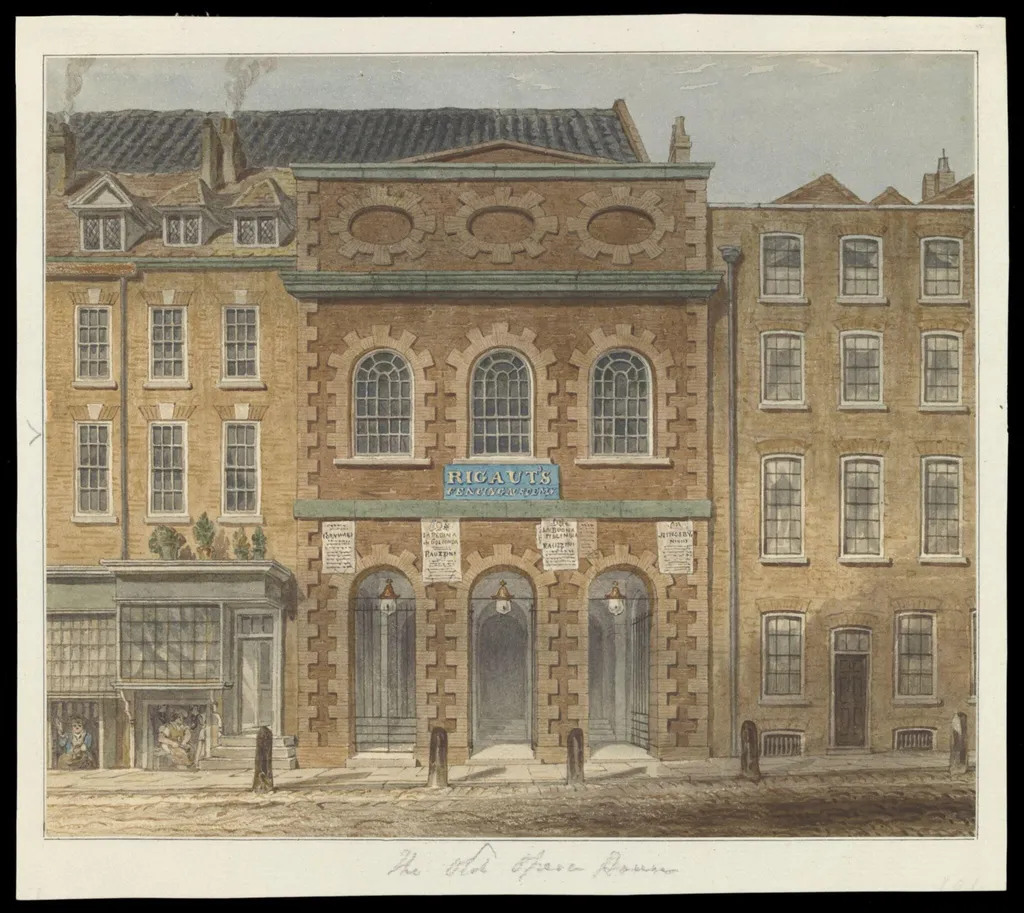
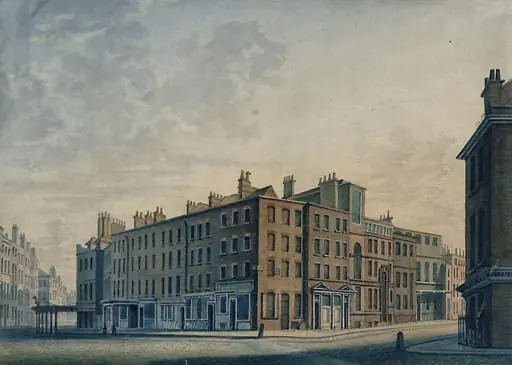
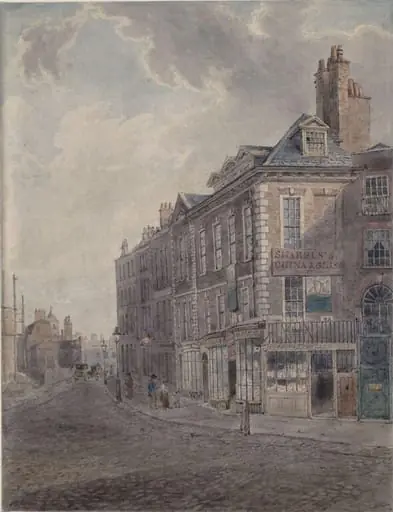
The Italian Opera House, Haymarket, prior to the fire of June 1789 is a watercolor work on paper by the Rococo painting artist William Capon. It dates from 1788 and is held in the collection of the Victoria and Albert Museum.
About this work
William Capon painted the inside of a London opera house just before it burned down.
William Capon painted the inside of a London opera house just before it burned down. He used watercolour and pencil in 1788. This was the Romantic era, when artists liked mood over perfect lines.
Back then, opera houses were social hubs—not just for shows. Capon shows that mix of glitter and grit before the flames hit in 1789.
The Victoria and Albert Museum keeps this piece in its Harry Beard Collection.
Overview
This watercolour and pencil rendering, executed in 1788 by William Capon, depicts the interior of London’s Old Opera House—also known as Rigaut’s Fencing Academy—just months before the building was destroyed by fire in June 1789. The work is part of the Victoria and Albert Museum’s Harry Beard Collection and offers a rare visual record of the venue’s architectural and social atmosphere.
Subject & Meaning
Capon’s composition captures the opera house as a bustling public space, where performances, gatherings, and everyday commerce intersected. By portraying both the ornamental décor and the presence of patrons, the drawing conveys the dual character of the venue as a site of cultural spectacle and a communal hub within late‑eighteenth‑century London.
Technique & Style
The artist combines transparent watercolour washes with delicate pencil hatching, a method typical of the period’s Romantic sensibility that favored atmospheric effect over strict linear precision. The muted palette and softened edges create a sense of ambience, emphasizing the mood of the interior rather than a strictly architectural survey.
History & Provenance
Created shortly before the June 1789 conflagration that razed the opera house, the drawing survived as a documentary artifact. It entered the Harry Beard Collection, a private assemblage of British watercolours, and was later acquired by the Victoria and Albert Museum, where it remains on display as part of the museum’s holdings on eighteenth‑century visual culture.
Context
In the late 1700s, London’s opera houses functioned as prominent social venues, hosting not only musical performances but also gatherings for the city’s elite and middle classes. Capon’s work reflects this multifunctional role, illustrating how such spaces blended entertainment, fashion, and public interaction within the urban fabric of the time.
Artist & collection