Artwork
Madonna of the Rosary
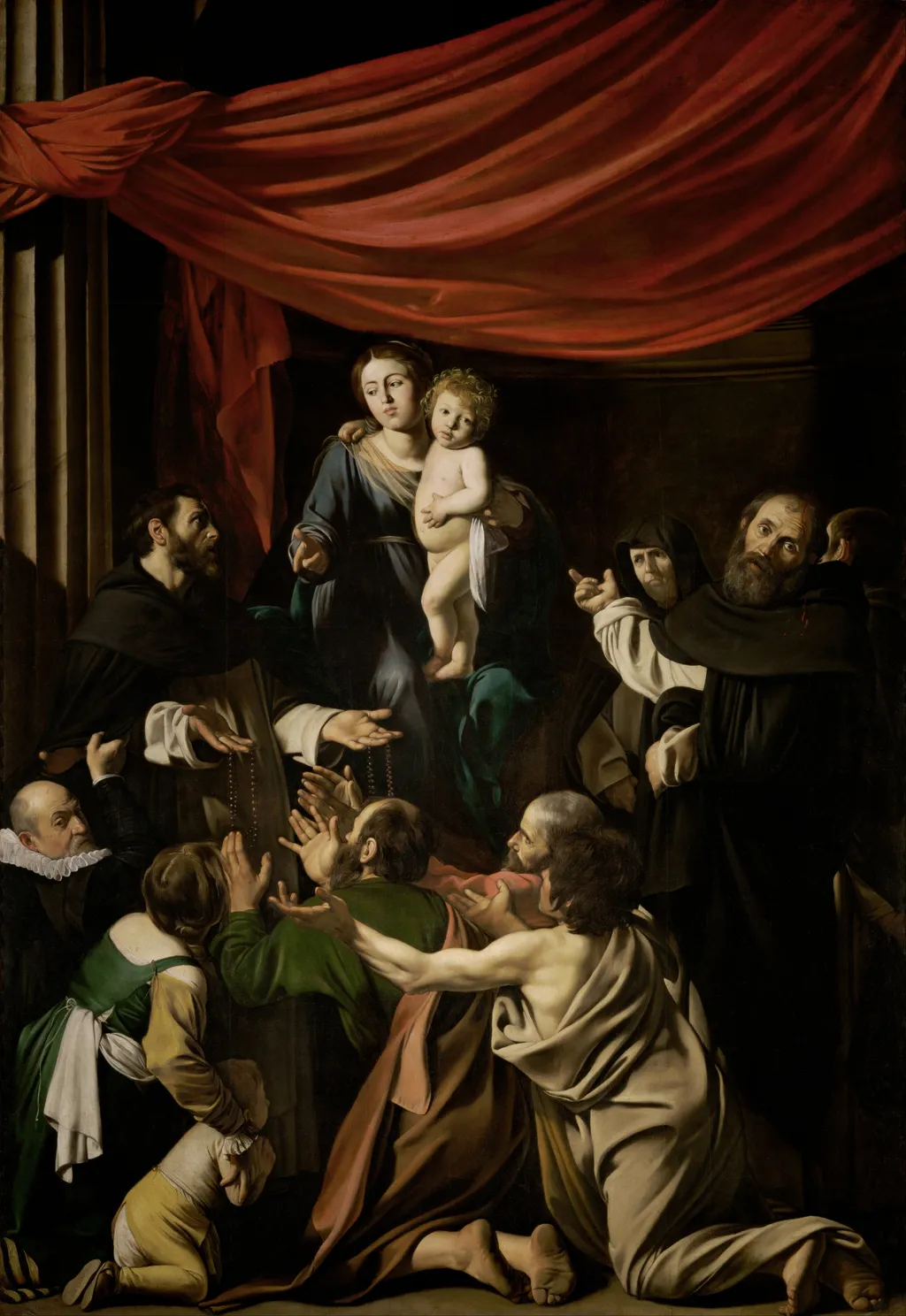
Madonna of the Rosary is an oil painting by the Baroque artist Caravaggio. It dates from 1607 and is held in the collection of the Kunsthistorisches Museum.
About this work
This is a large altar painting by Caravaggio from 1607.
It shows Mary with the Christ Child and other figures.
The work uses strong light and dark to focus attention.
Caravaggio painted it for a Dominican church in Naples.
It’s the only altarpiece he made that fits the usual church style.
The drama comes from how he lights the faces.
Next, look up Caravaggio.
Overview
This large altarpiece stands out as the sole example among his oeuvre that aligns with the conventional format of Baroque church commissions.
Caravaggio's "Madonna of the Rosary," completed in 1607, is an oil painting housed in the Kunsthistorisches Museum, Vienna. This large altarpiece stands out as the sole example among his oeuvre that aligns with the conventional format of Baroque church commissions. It depicts the Virgin and Child surrounded by various figures, characteristic of the artist's dramatic use of chiaroscuro to illuminate the scene and draw the viewer's eye.
Subject & Meaning
The painting centers on the Virgin Mary and the Christ Child, flanked by several saints, notably Saint Dominic and Saint Peter Martyr of Verona. Their inclusion strongly suggests the work was intended for a Dominican order. A donor figure, dressed in black with a ruff, appears on the left, seeking protection beneath Saint Dominic's cloak while engaging the viewer directly, a common practice in altarpiece commissions.
Technique & Style
Characteristic of Caravaggio's approach, the "Madonna of the Rosary" employs stark contrasts of light and shadow, known as chiaroscuro, to heighten the dramatic impact and direct attention to key figures. While employing his distinctive lighting, this monumental canvas is unique within his body of work for adhering to the established compositional conventions of a Baroque altarpiece, a departure from some of his more unconventional religious scenes.
History & Provenance
The precise origins of the "Madonna of the Rosary" remain debated. One theory suggests a commission by Nicholas Radulovic, a wealthy merchant, with an initial concept later adapted for Dominican patrons. Another, perhaps more plausible, attributes the commission to Luigi Carafa-Colonna for his family chapel in Naples' San Domenico Maggiore, a church where Caravaggio found refuge after fleeing Rome. This uncertainty underscores the complex circumstances surrounding its creation.
Context
The large column on the left, draped in red fabric, may subtly allude to the Colonna family, particularly if Luigi Carafa-Colonna was the patron. Furthermore, the theme of the Rosary gained prominence after the 1571 Battle of Lepanto, a naval victory against the Ottoman Empire. Luigi Carafa-Colonna's relation to Marcantonio Colonna, a prominent admiral in that battle, provides a significant historical link to the painting's subject matter.
Own this work as a print
Artist & collection
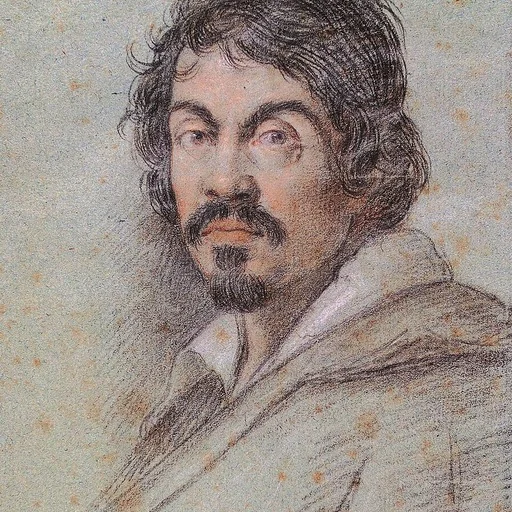
Artist
Michelangelo Merisi da Caravaggio (also Michele Angelo Merigi or Amerighi da Caravaggio; 29 September 1571 – 18 July 1610), known mononymously as Caravaggio, was an Italian painter active in Rome for most of his artistic life.