Artwork
Munca la pește
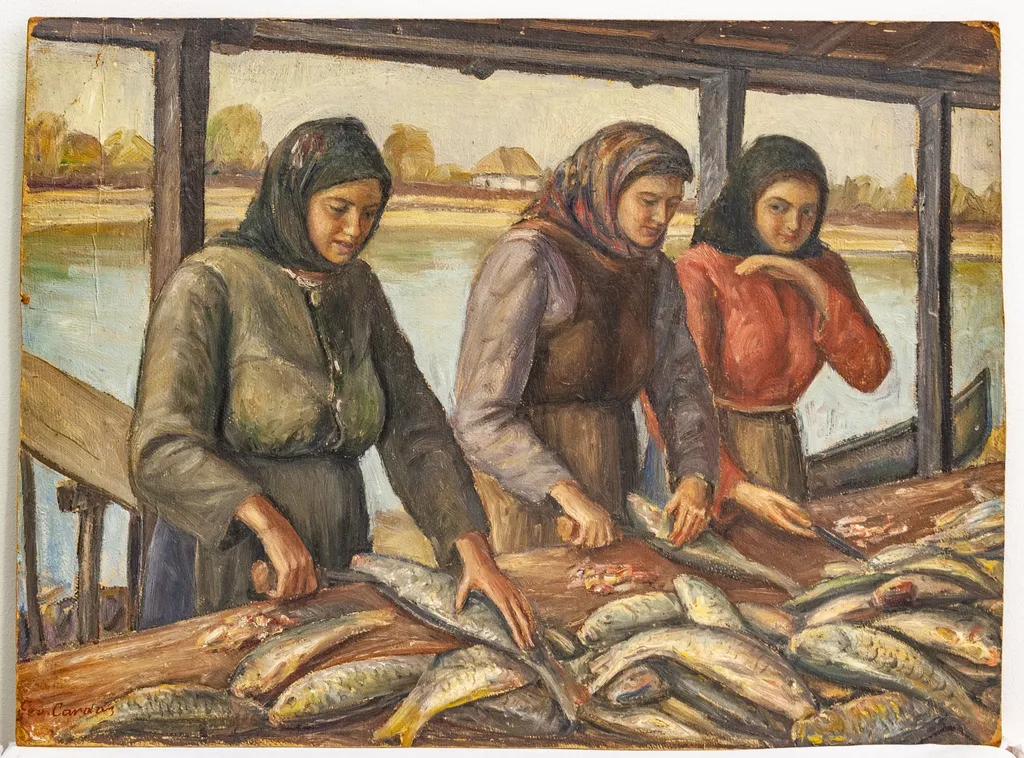
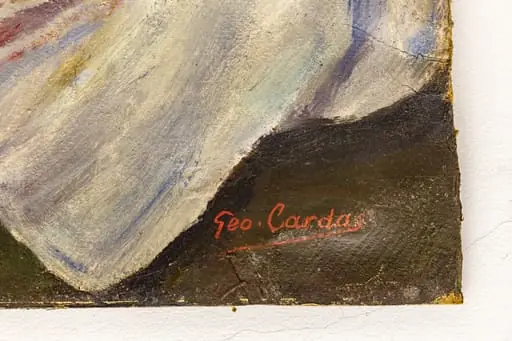
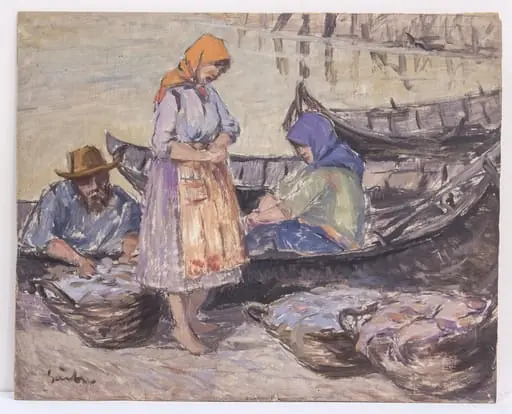
Munca la pește is a print by Geo Cardaș. It is held in the collection of the Gavrila Simion Eco-Museum Research Institute Tulcea. This image depicts three women engaged in the routine work of preparing fish at a wooden table.
About this work
Overview
The composition centers on their quiet concentration, with no overt narrative, instead emphasizing the physicality of daily tasks.
This image depicts three women engaged in the routine work of preparing fish at a wooden table. Their postures and clothing suggest a coastal or riverine community, where such labor was common. The composition centers on their quiet concentration, with no overt narrative, instead emphasizing the physicality of daily tasks. The background hints at a broader environment of boats and buildings, subtly anchoring the scene in a specific place.
Subject & Meaning
The women are shown in the midst of processing fish, a task requiring both skill and endurance. Their gestures—pulling apart a catch, resting thoughtfully, observing silently—convey a sense of shared, unspoken labor. The absence of facial detail and the focus on hands and posture suggest a broader commentary on anonymous, essential work rather than individual identity. The scene honors routine without sentimentality.
Technique & Style
Thick, textured brushwork gives the fish and surfaces a tactile immediacy, emphasizing the wetness of scales and the rough grain of wood. Colors are muted except for the red sweater, which draws the eye without disrupting the scene’s gravity. The hazy background blurs architectural details, keeping attention on the figures and their work. The rough handling of paint reinforces the physicality of the labor depicted.
History & Provenance
The work originates from a regional artistic tradition that documented rural and working-class life in the early 20th century. Though exact origins are unrecorded, its style aligns with regional realist movements that prioritized authenticity over idealization. It was likely created for local audiences, not galleries, and entered institutional collections later as interest grew in vernacular visual culture.
Context
In communities dependent on fishing, the preparation of catch was a daily, gendered task often performed by women. The scene reflects a time before industrialization altered such routines, when processing fish was done by hand, in small groups, and close to home. The window’s view of boats suggests proximity to water, reinforcing the link between livelihood and environment.
Legacy
This image contributes to a broader archive of everyday labor in 20th-century visual culture. It is not celebrated as fine art in the traditional sense but valued for its unembellished record of work and community. Institutions focused on ethnography and social history preserve such works to document the material conditions of ordinary life, ensuring their place in cultural memory.
Artist & collection
Artist
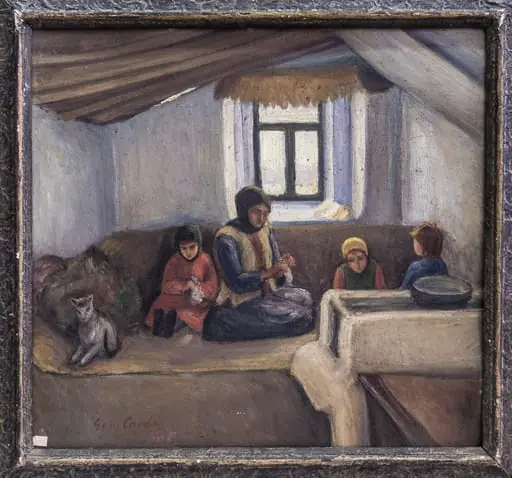
Geo Cardaș painted quiet scenes of everyday life and the places around them. He made still lifes like *Natură moartă cu pește* and village interiors such as *Interior țărănesc*, along with prints of *Plajă* and a view…
Museum
Gavrila Simion Eco-Museum Research Institute Tulcea
Continue through works from the same source collection.