Artwork
Plajă
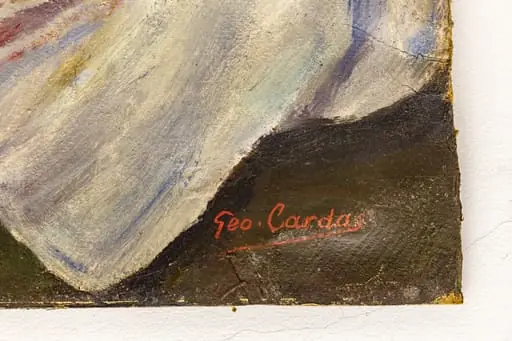
Plajă is a print by Geo Cardaș. It is held in the collection of the Gavrila Simion Eco-Museum Research Institute Tulcea.
About this work
Overview
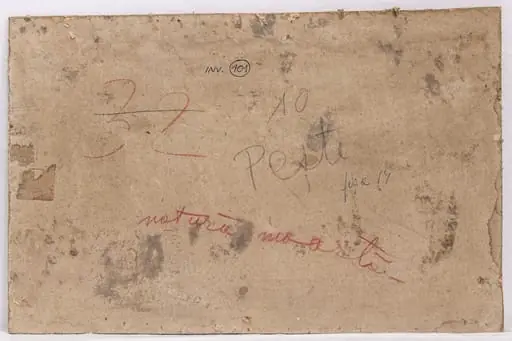
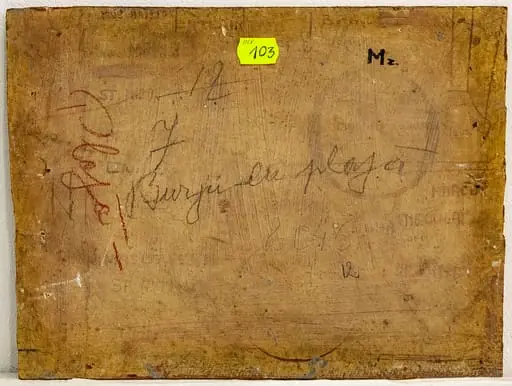
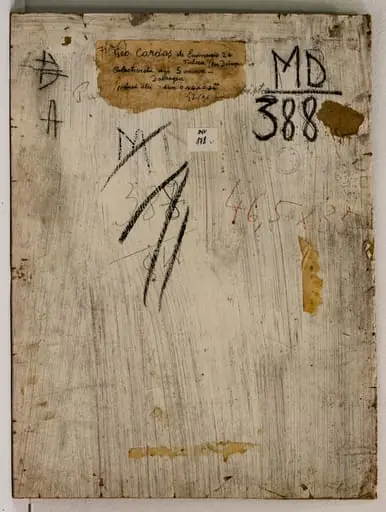
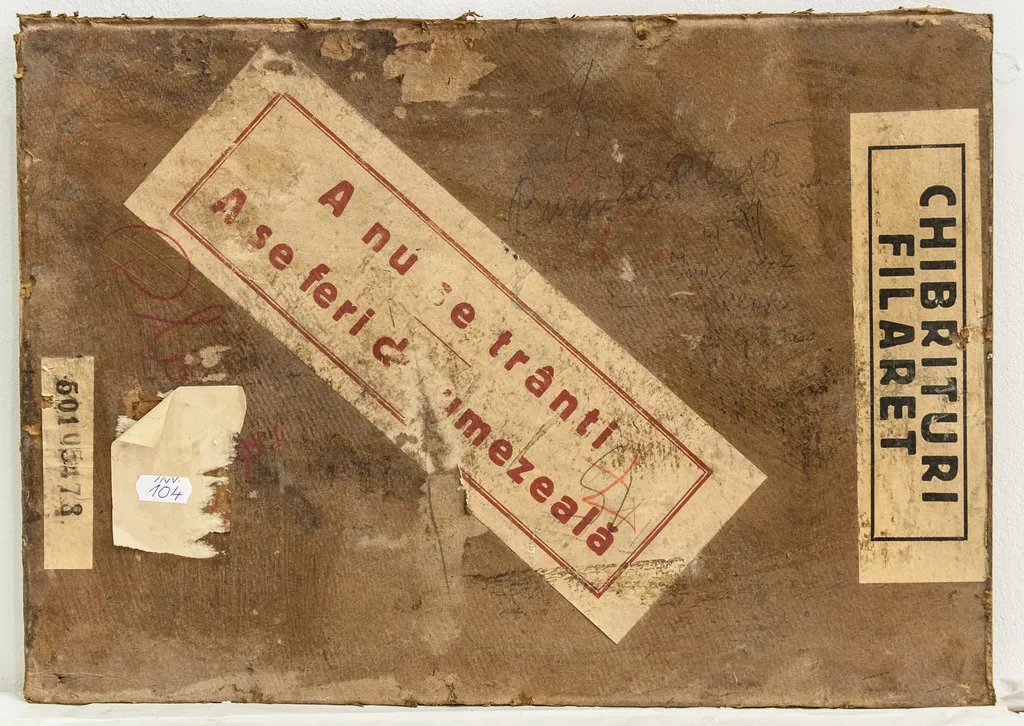
This artifact presents two faded textual signs on a weathered surface, likely paper or cardboard, bearing Romanian phrases in red and black ink. The background shows cracking and embedded fragments, suggesting prolonged exposure and physical handling. Its appearance evokes a discarded commercial or public notice, possibly from a modest retail or storage space, with signs of age and wear.
Subject & Meaning
One sign reads 'A nu se feri de tranziții imezeale'—a phrase that may contain a typographical or orthographic error, possibly intended to warn against avoiding transitional phases. The other, 'CHIBRITURI,' clearly advertises matches. Together, they suggest a blend of commercial intent and cryptic advisory, possibly reflecting local vernacular or a personal inscription layered over a utilitarian label.
Technique & Style
The text is applied with hand-painted or stamped lettering, uneven in alignment and faded from time. The surface exhibits deliberate roughness: cracked paint, torn edges, and adhered paper scraps. These qualities reject polished presentation, favoring a raw, improvised aesthetic that prioritizes function over form, typical of vernacular signage in mid-20th century Romania.
History & Provenance
The object’s origin is undocumented, but its materials and condition suggest it was once affixed to a shop wall or storage area in a Romanian town or village. Its survival implies accidental preservation rather than intentional archiving. No known institutional record exists, and its current form likely results from decades of environmental exposure and neglect.
Context
In mid-century Romania, such signs were common in small businesses, where handwritten or crudely printed notices served both commercial and communal functions. The phrase 'tranziții imezeale' may reflect colloquial speech or a misrendered term, possibly relating to economic or social change. Similar artifacts appear in regional folk archives, often linked to local artisans or shopkeepers.
Legacy
The object stands as an unassuming relic of everyday visual culture, preserved not for its artistic merit but by circumstance. It has been referenced in relation to the work of Geo. Cardaș, whose own practice engaged with vernacular typography and decayed signage. Its value lies in its authenticity as a fragment of ordinary life, quietly resisting erasure.
Artist & collection
Artist
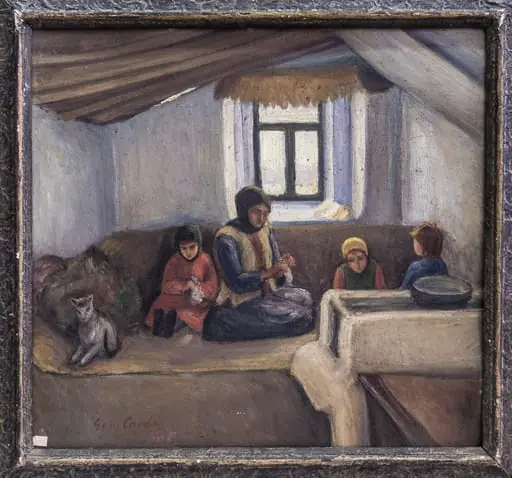
Geo Cardaș painted quiet scenes of everyday life and the places around them. He made still lifes like *Natură moartă cu pește* and village interiors such as *Interior țărănesc*, along with prints of *Plajă* and a view…
Museum
Gavrila Simion Eco-Museum Research Institute Tulcea
Continue through works from the same source collection.