Artwork
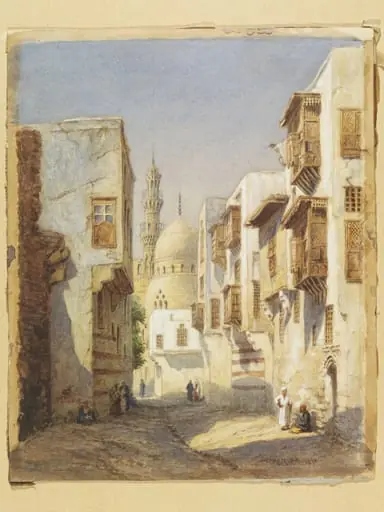
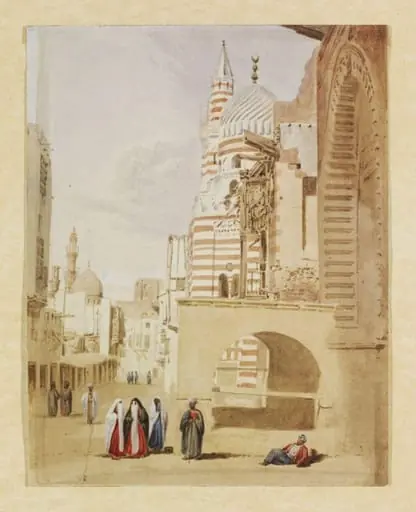
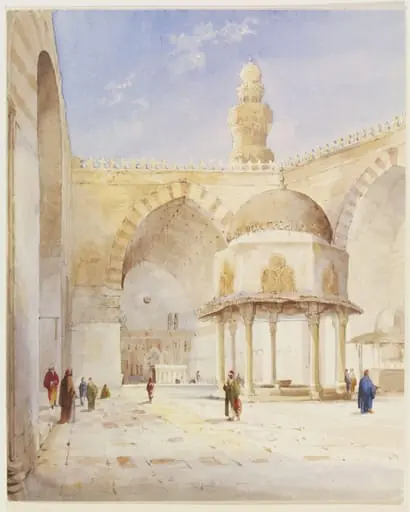
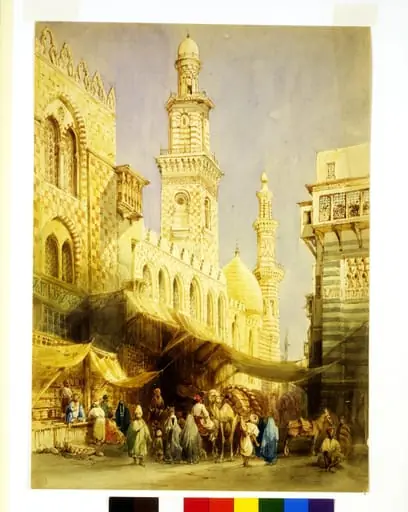
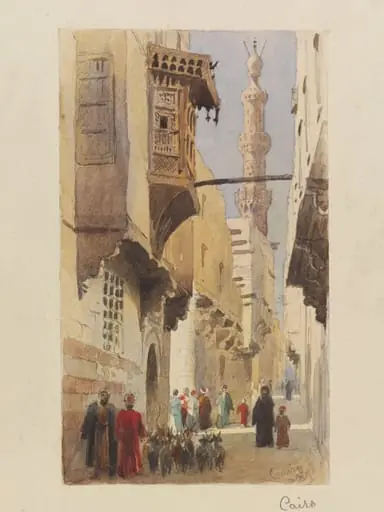
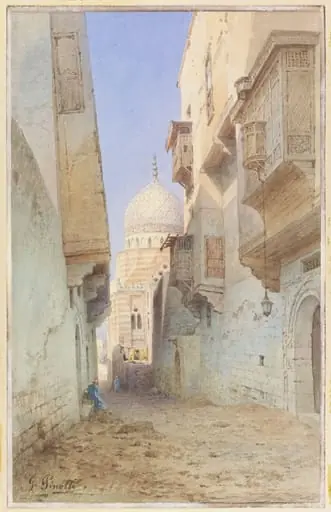
Sharia Bab al-Wazir with the Madrasah and Tomb of Sultan Shaban II (Umm al-Sultan)
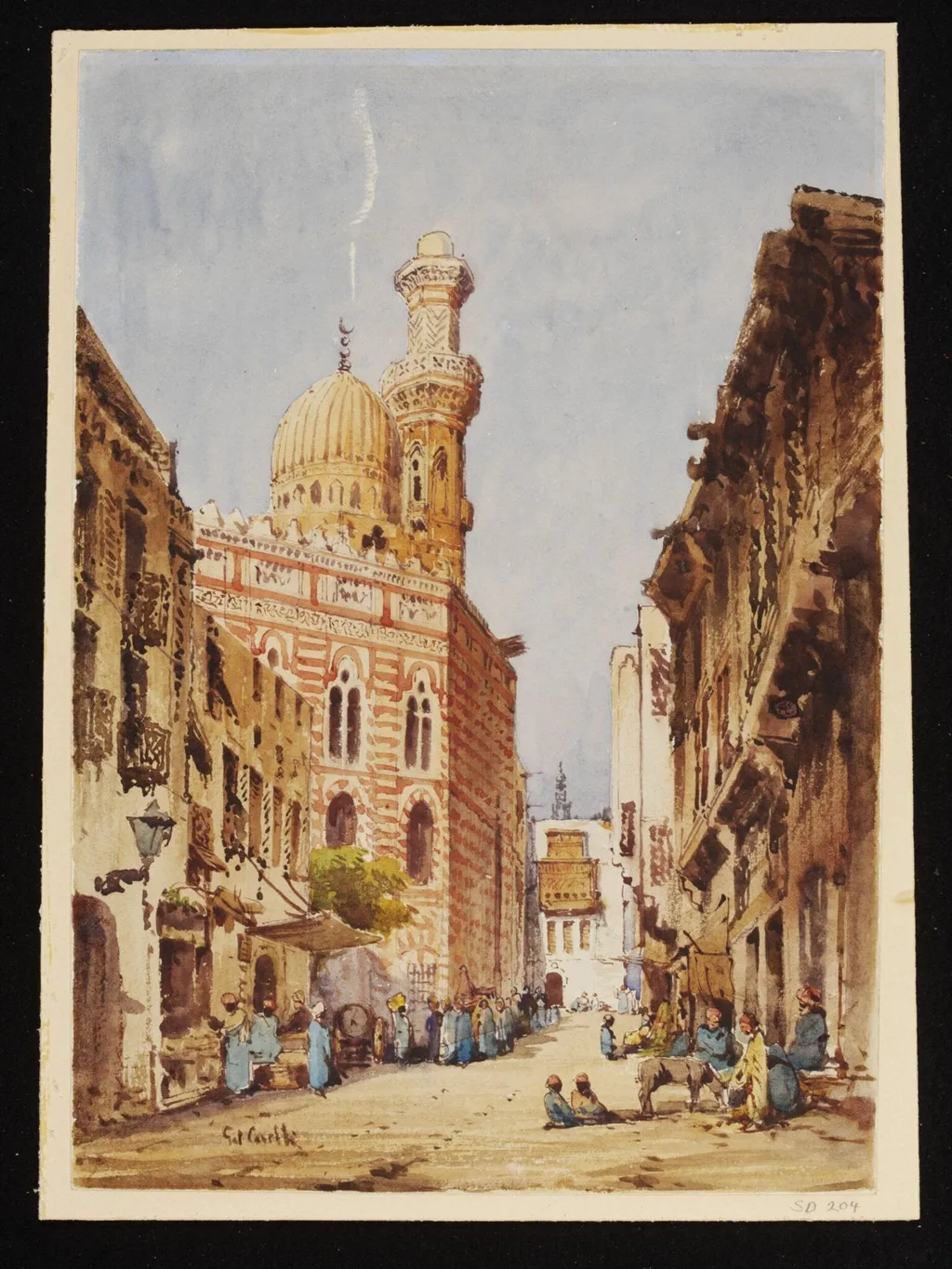
Sharia Bab al-Wazir with the Madrasah and Tomb of Sultan Shaban II (Umm al-Sultan) is a watercolor work on paper by the Orientalist artist , Gabriele Mariano Nicolai Carelli Carelli. It dates from 1850 and is held in the collection of the Victoria and Albert Museum.
About this work
Overview
Executed with delicate washes, the work records a moment of urban life in the 19th century.
This watercolour by Gabriele Mariano Nicolai Carelli captures a street view of Sharia Bab al-Wazir in Cairo, focusing on the architectural ensemble of Sultan Shaban II’s madrasah and tomb. Executed with delicate washes, the work records a moment of urban life in the 19th century. Acquired by the Victoria and Albert Museum in 1968, it reflects European artistic engagement with Islamic urban landscapes during a period of heightened interest in Orientalist subjects.
Subject & Meaning
The scene centers on a monumental religious complex marked by alternating red and white stone bands, a dome, and a slender minaret. Figures in traditional dress populate the foreground and surrounding streets, suggesting daily activity around a site of spiritual and educational significance. The composition emphasizes the building’s presence within a lived environment, not as a monument isolated from its context, but as an integral part of Cairo’s social fabric.
Technique & Style
Carelli employed transparent watercolour to render architectural details with precision while maintaining a light, atmospheric tone. The soft gradations of colour and fine brushwork convey texture in stone, fabric, and shadow without heavy outlines. The perspective is carefully constructed to draw the eye toward the building’s entrance, where figures cluster, grounding the scene in human scale despite the grandeur of the architecture.
History & Provenance
The watercolour entered the Victoria and Albert Museum’s collection in April 1968, purchased from Salisbury Galleries for £7. Its earlier history is undocumented, but Carelli’s travels in Egypt during the mid-1800s suggest it was made during one of his sketching expeditions. The modest acquisition price reflects its status as a personal study rather than a finished exhibition piece at the time of purchase.
Context
Created during the 19th century, when European artists increasingly documented the Middle East, this work aligns with a broader trend of topographical watercolours produced for scholarly and aesthetic interest. Carelli’s depiction avoids exoticism, instead offering a quiet, observational record of Cairo’s urban architecture and public life, consistent with the growing ethnographic impulse in Western art of the period.
Legacy
As a preserved record of a specific Cairo street and its monuments before modernization, the watercolour serves as a visual archive. It contributes to the understanding of how 19th-century European artists engaged with Islamic architecture—not as spectacle, but as a complex, inhabited environment. Its inclusion in the V&A underscores its value as a historical document within the museum’s broader collection of global material culture.
Artist & collection
Artist
, Gabriele Mariano Nicolai Carelli Carelli
This painter made delicate watercolours of Cairo’s streets and buildings. You can see one of his scenes in *Sharia Bab al-Wazir with the Madrasah and Tomb of Sultan Shaban II*, a view of the old city from the 19th…