Artwork
Stillleben
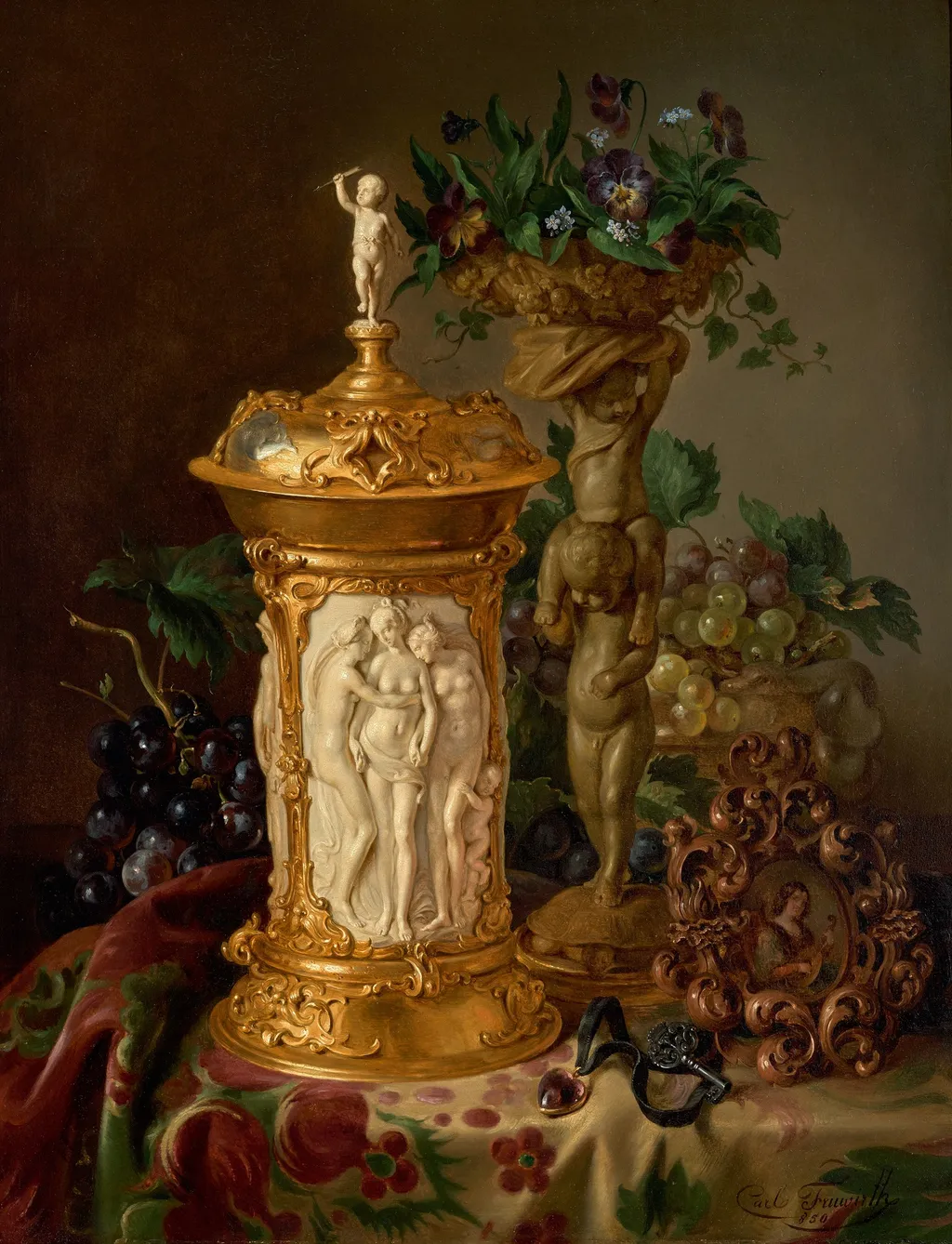
Stillleben is an oil painting by the Biedermeier artist Carl Borromäus Fruwirth. It dates from 1850 and is held in the collection of the Kunsthistorisches Museum.
About this work
Overview
This oil painting, attributed to Carl Borromäus Fruwirth and dated around 1850, presents a meticulously arranged still life. It is part of the collection at the Kunsthistorisches Museum in Vienna. The composition centers on a gilded ceramic vase adorned with intricate relief carvings, surrounded by seasonal produce and blossoms, all rendered with careful attention to texture and light.
Subject & Meaning
The arrangement includes grapes, plums, and vivid flowers, symbols often associated with abundance and transience in 19th-century still life.
The arrangement includes grapes, plums, and vivid flowers, symbols often associated with abundance and transience in 19th-century still life. A small statuette of a boy perches atop the vase, his gesture ambiguous. The carved figures embracing on the vase suggest themes of intimacy or affection, subtly layered beneath the surface of everyday objects, inviting quiet contemplation rather than overt narrative.
Technique & Style
Fruwirth employs a dark, neutral background to heighten the luminosity of the objects. The golden vase is rendered with precise highlights and reflections, emphasizing its metallic surface. Fruits and petals are painted with soft gradations, capturing their natural sheen and weight. The fine carving details on the vase are rendered in miniature, demonstrating a disciplined, almost enamel-like precision in brushwork.
History & Provenance
The painting entered the Kunsthistorisches Museum’s collection in the 19th century, likely through acquisition or donation during a period of expanded holdings in Austrian still life. Its attribution to Fruwirth is consistent with his known output of detailed domestic still lifes. No significant changes in ownership or restoration are documented, preserving its original condition.
Context
Created during a time when still life remained popular in Central European academies, this work reflects a continuation of Dutch and Flemish traditions adapted to Viennese tastes. Fruwirth’s focus on ornate objects and natural elements aligns with broader 19th-century interests in craftsmanship and the aesthetic value of everyday things, distinct from emerging realist or impressionist trends.
Legacy
While not widely exhibited beyond museum collections, the painting exemplifies the quiet sophistication of Austrian still life in the mid-1800s. Fruwirth’s attention to material detail and compositional balance influenced lesser-known regional artists but did not significantly alter broader art historical trajectories. It endures as a representative example of its genre and period.
Own this work as a print
Artist & collection

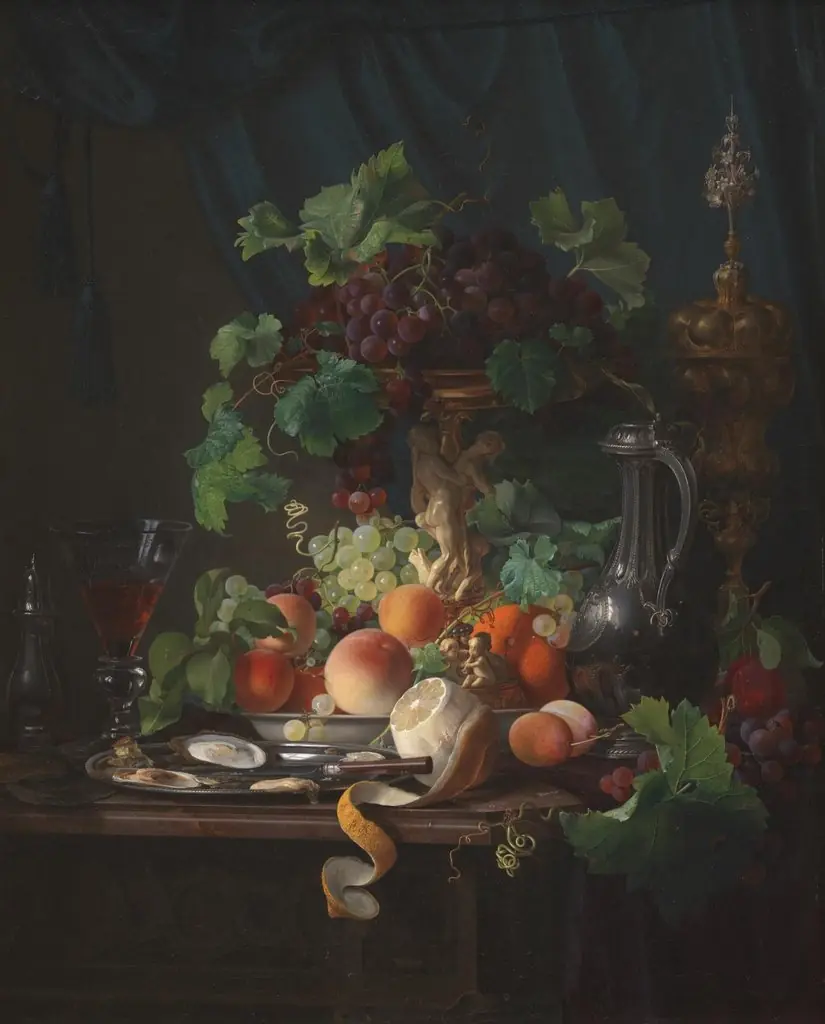 Opstilling med vinglas, østers, citron og andre frugter
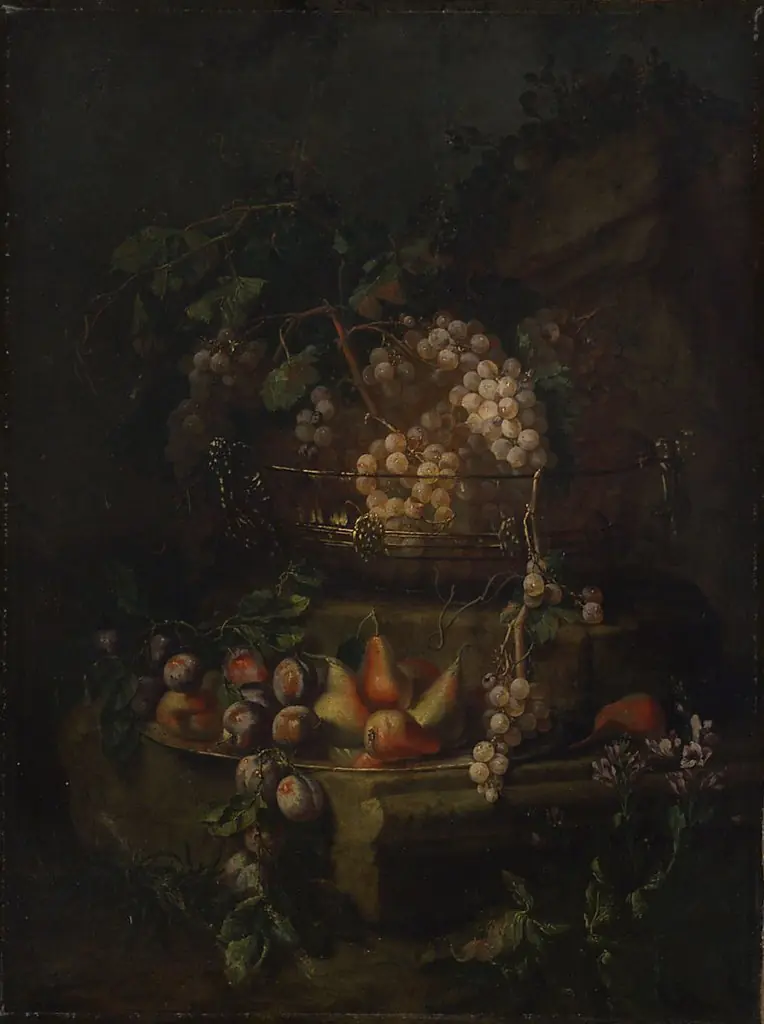 Still life with Fruit
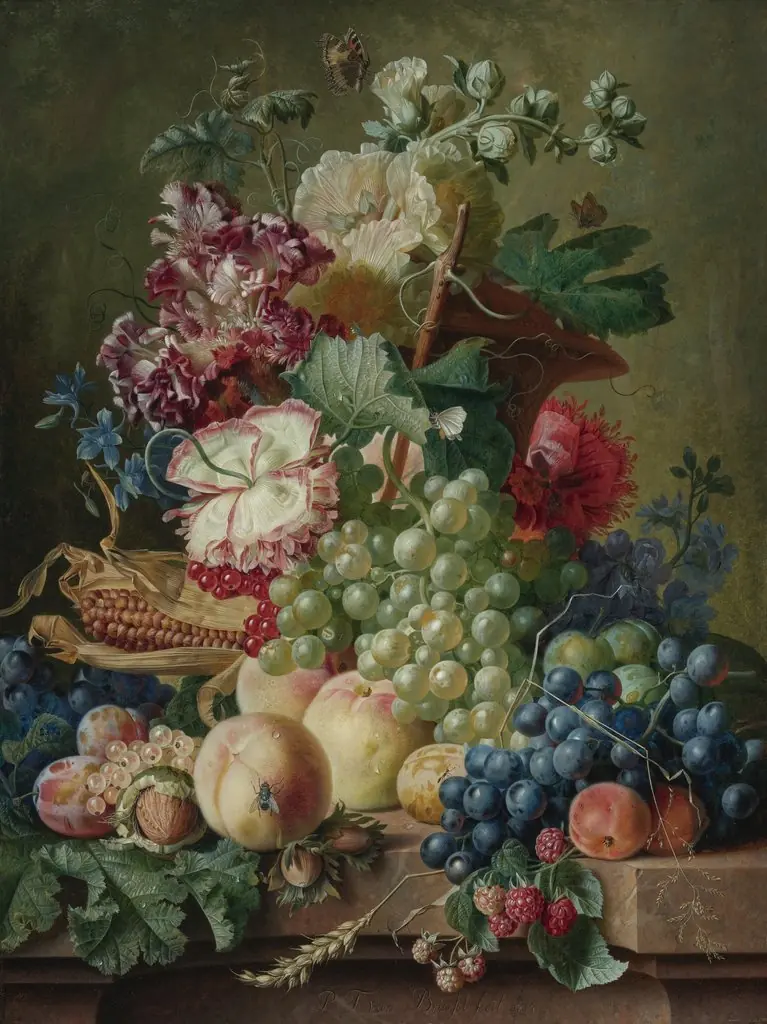 Still life of flowers and fruits on a marble ledge
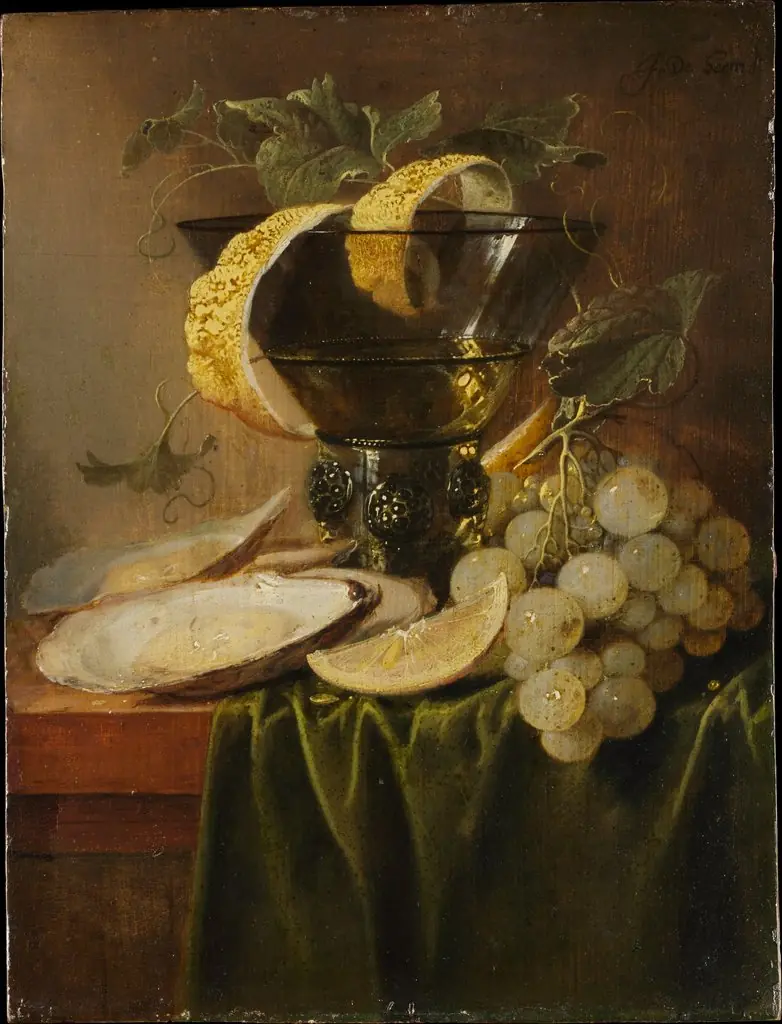 Still Life with a Glass and Oysters
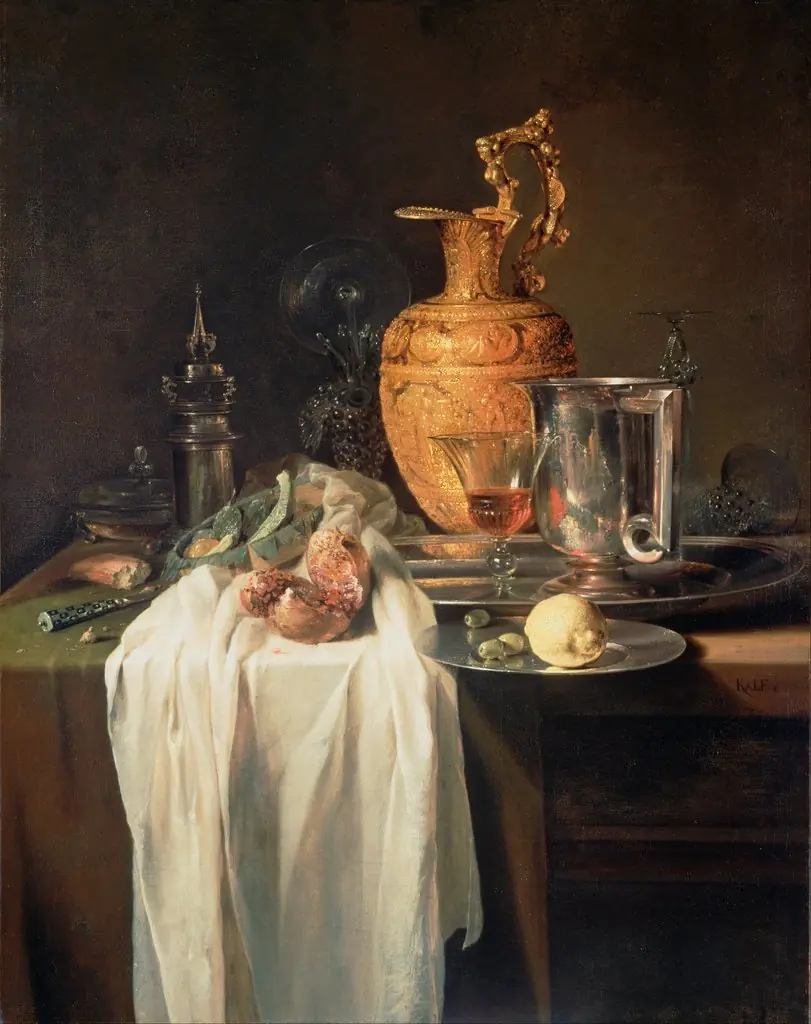 Still Life with Ewer, Vessels and Pomegranate
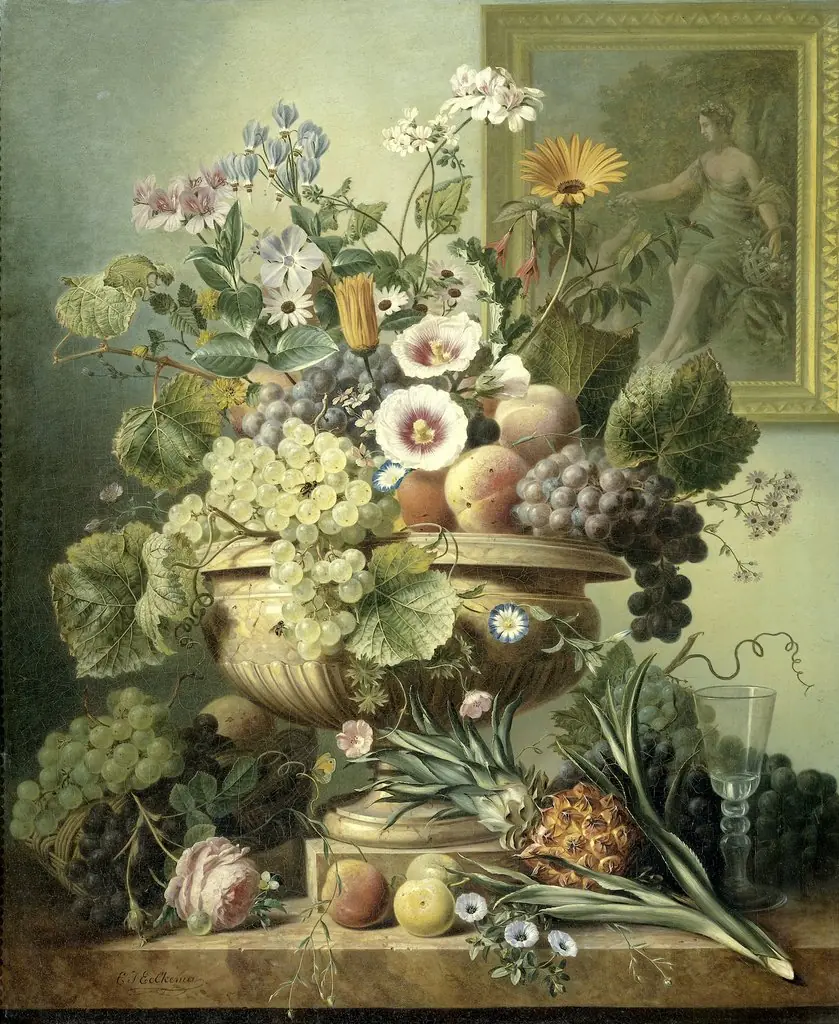 Still-Life with Flowers and Fruit
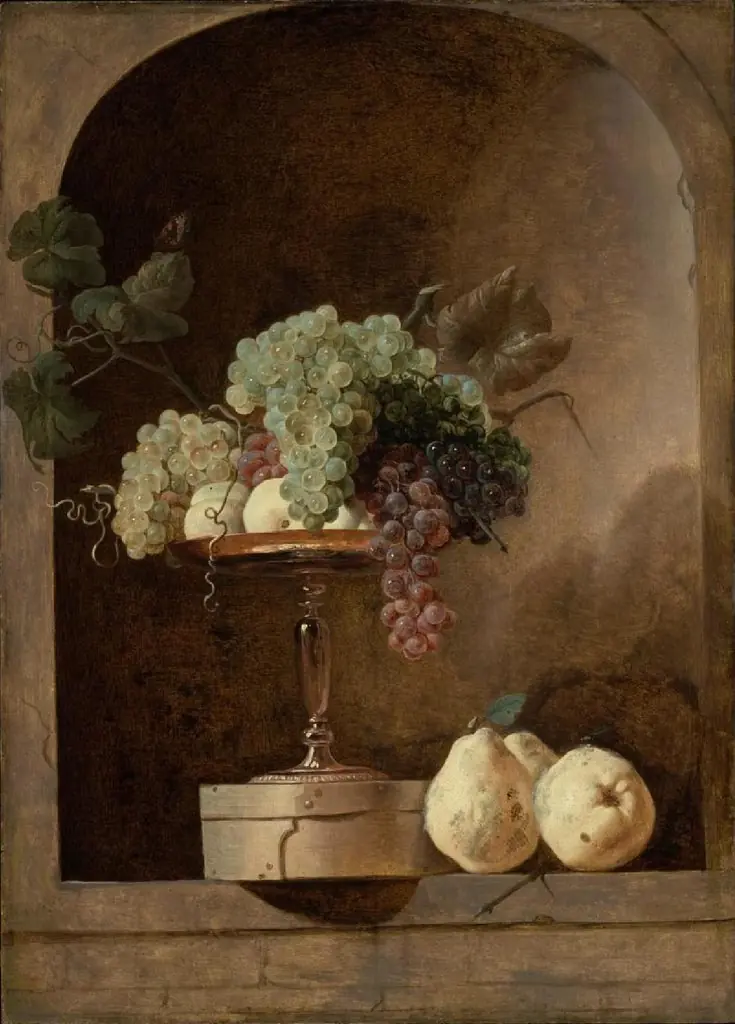 Grapes, Peaches and Quinces in a Niche
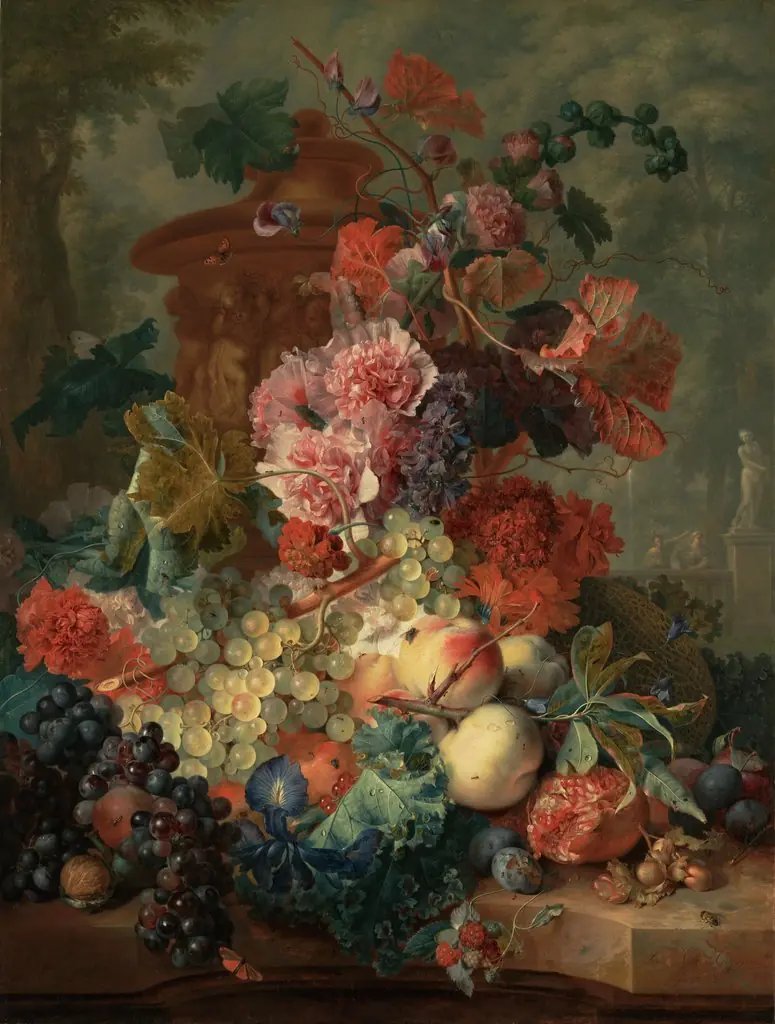 Fruit Piece
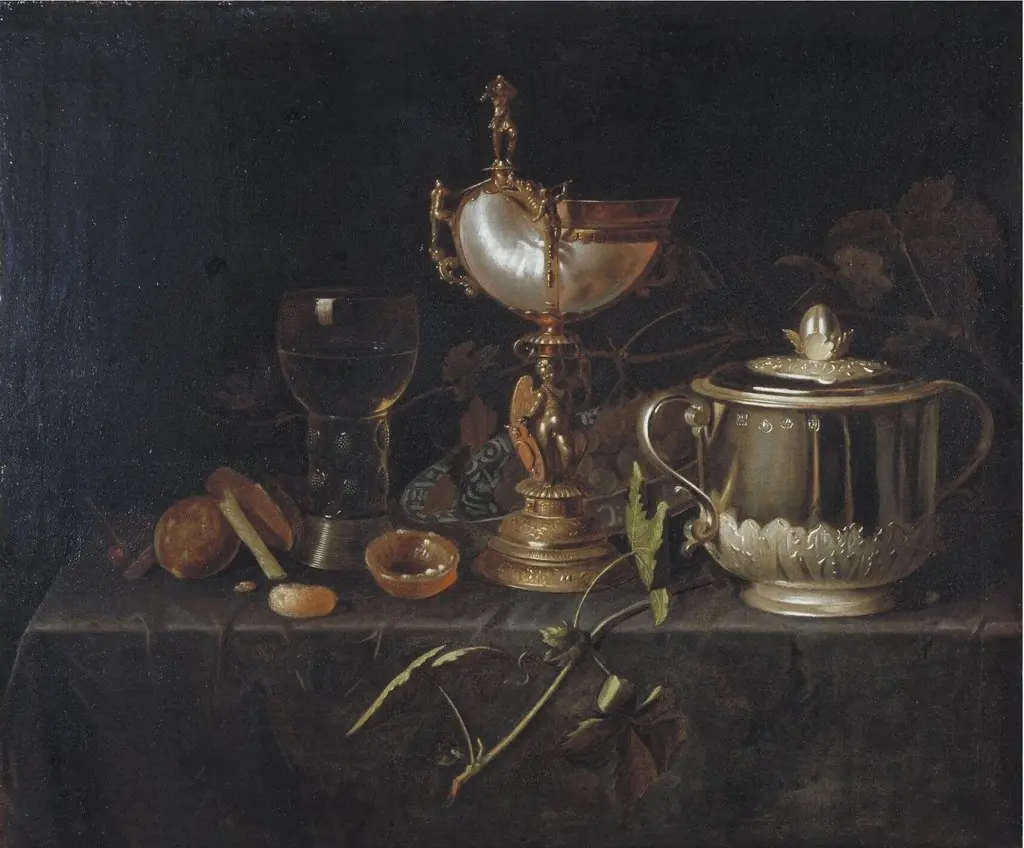 Porringer and Nautilus Cup
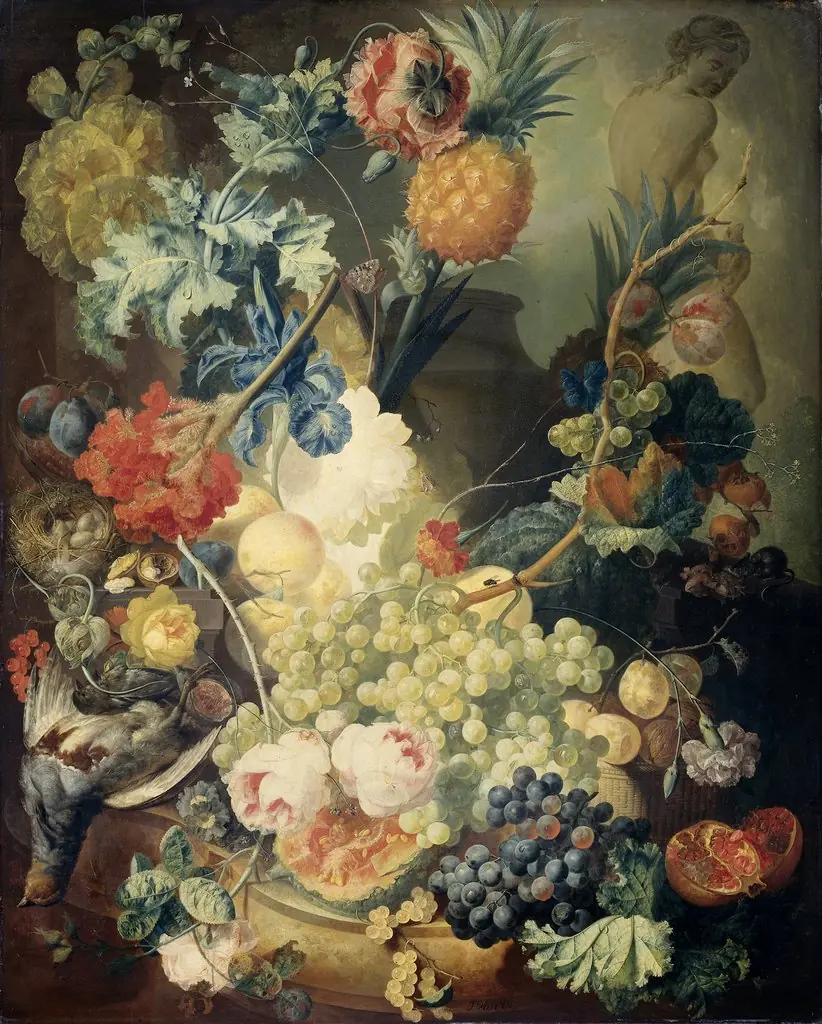 Still Life with Flowers, Fruit and Birds
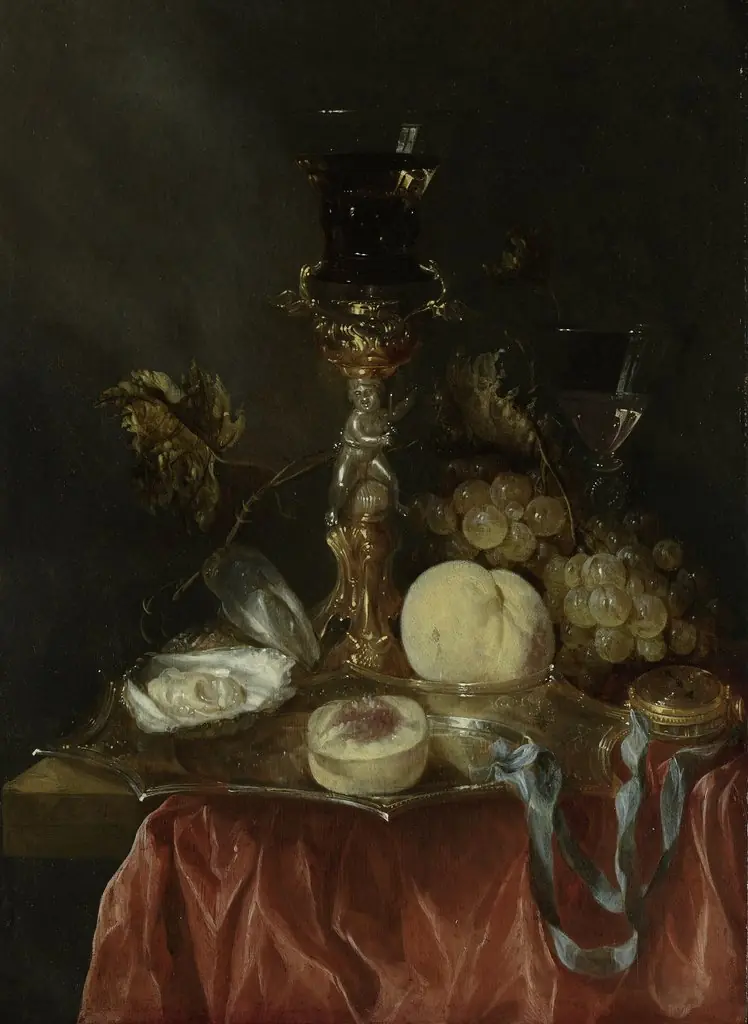 Still Life with Silver-gilt Bekerschroef with Roemer
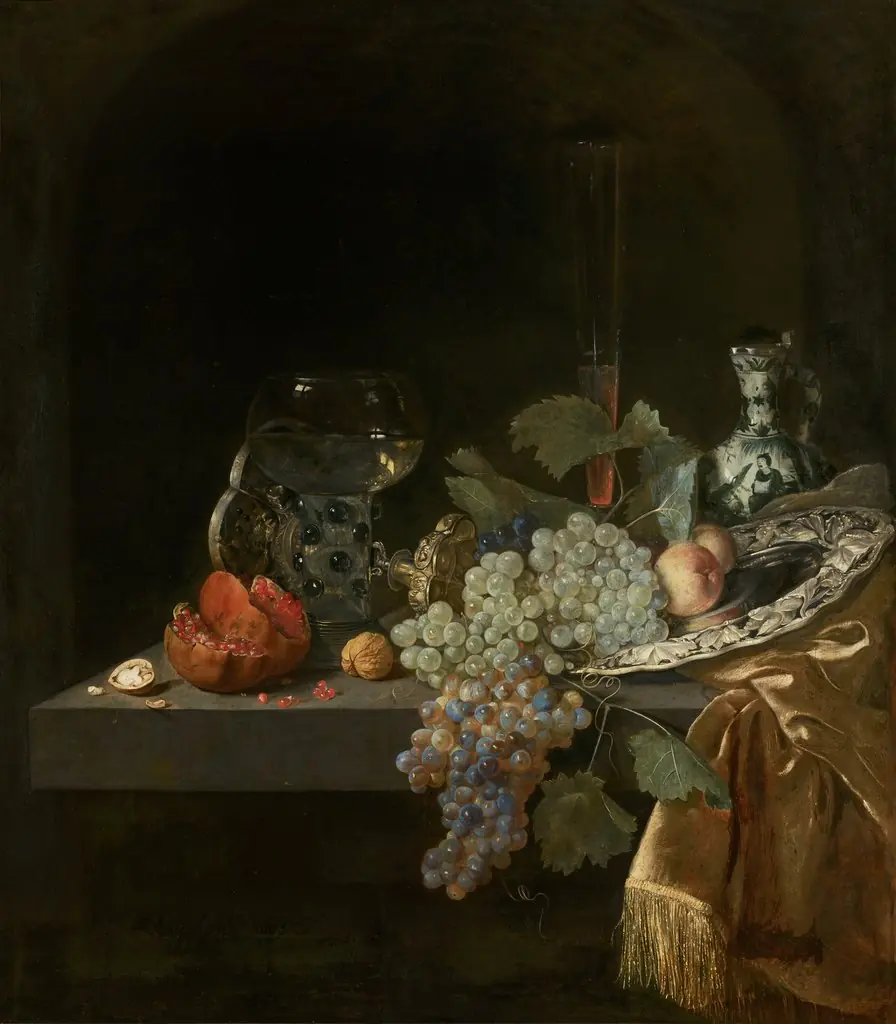 Still life