Artwork
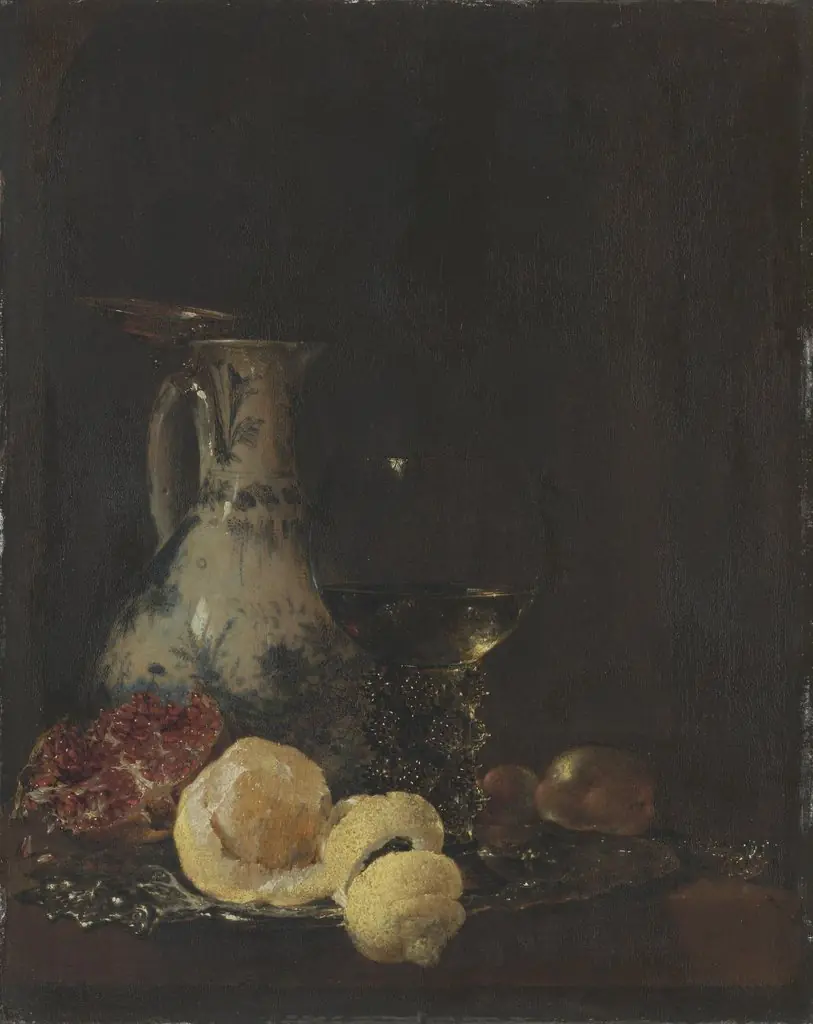
Still Life with Ewer, Vessels and Pomegranate
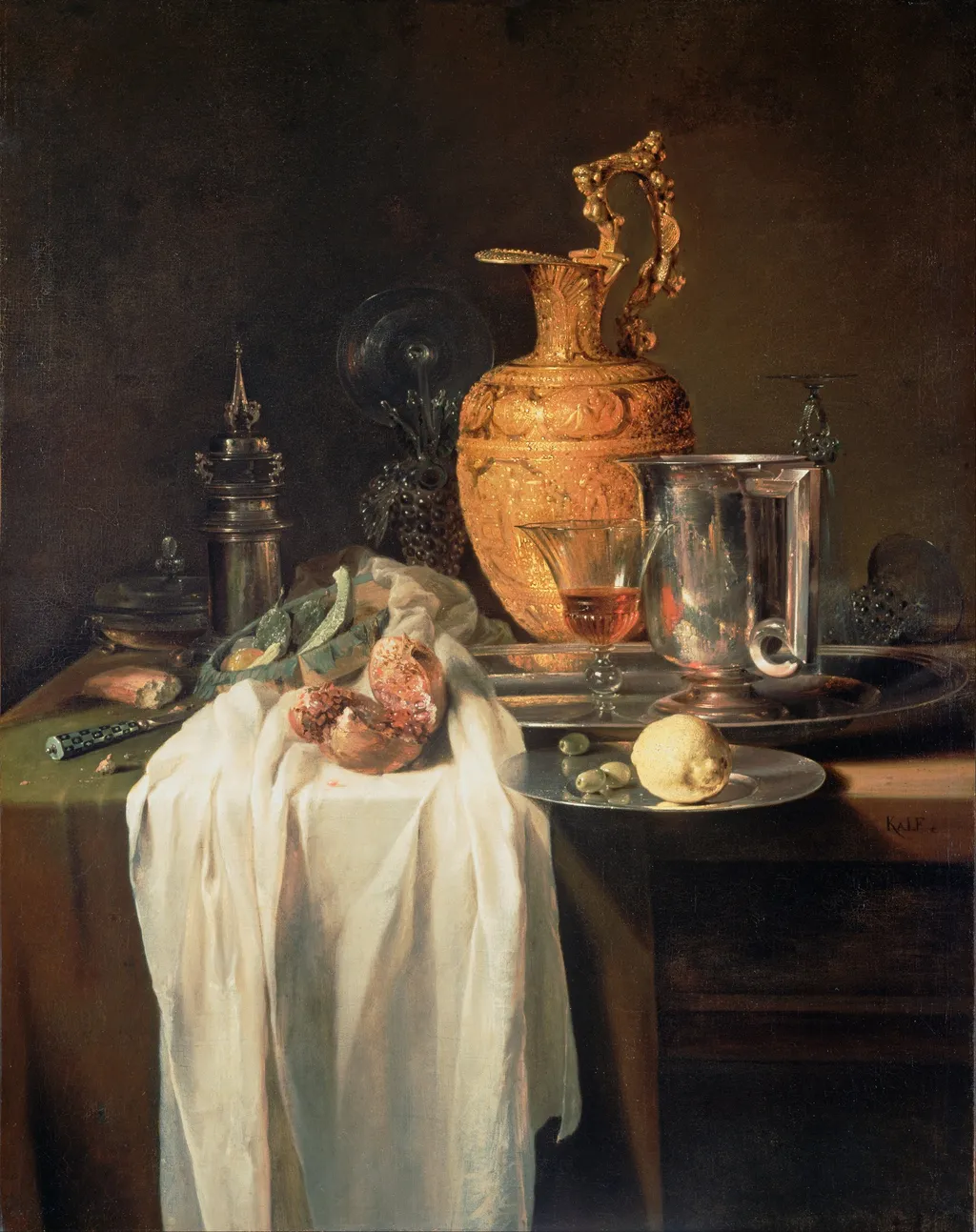
Still Life with Ewer, Vessels and Pomegranate is an oil painting by the Dutch Golden Age artist Willem Kalf. It dates from 1640 and is held in the collection of the J. Paul Getty Museum.
About this work
Overview
Willem Kalf’s *Still Life with Ewer, Vessels and Pomegranate* was painted in 1640 during the height of the Dutch Golden Age. Executed in oil on canvas, the work exemplifies the period’s fascination with meticulously rendered still‑life compositions that celebrate material abundance.
Subject & Meaning
The composition gathers a large silver ewer, a selection of smaller metal vessels, and a ripe pomegranate set upon a white cloth. The juxtaposition of polished metal and the fruit’s textured skin invites contemplation of transience versus wealth, a common moral undertone in 17th‑century Dutch still lifes.
Technique & Style
Kalf employs a pronounced chiaroscuro, casting the objects against a deep, almost black background. This lighting scheme heightens the tactile quality of the surfaces, allowing the reflective sheen of the metal and the subtle translucence of the pomegranate’s skin to emerge with striking realism.
History & Provenance
Highly regarded in his own time, Kalf received commendation from contemporary biographer Arnold Houbraken, who later recorded his achievements in the *Groot Schilderboek*. The painting has remained in public collections, reflecting its continued scholarly and curatorial interest.
Context
As a prime example of the *pronkstilleven* genre, the work illustrates the Dutch elite’s appetite for exotic and luxurious objects imported through global trade. Kalf’s precise handling of light and texture influenced subsequent generations of still‑life painters who sought to balance visual splendor with moral reflection.
Own this work as a print
Artist & collection
Artist
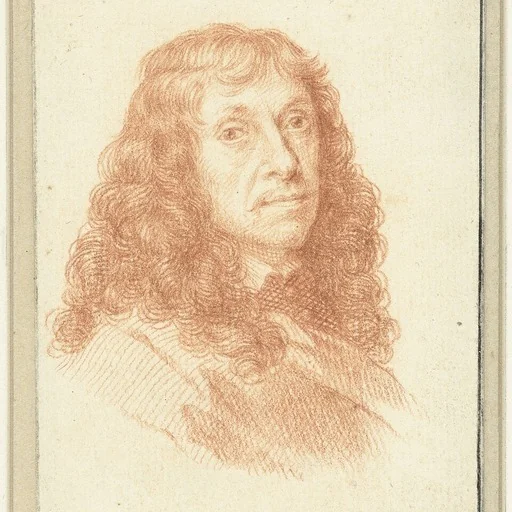
Willem Kalf (1619 – 31 July 1693) was one of the most prominent Dutch still-life painters of the 17th century, the Dutch Golden Age.

 Sumptuous still life
 Still Life with Ham
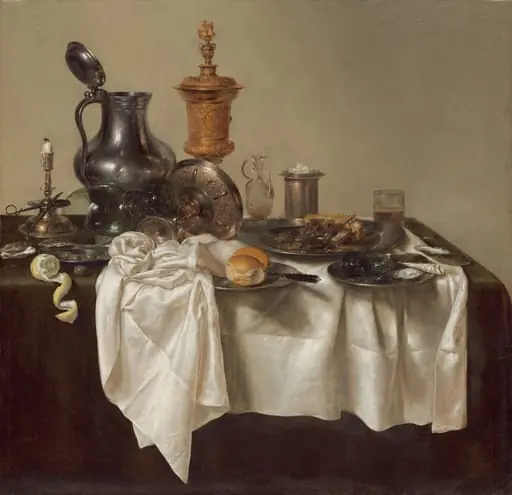 Banquet Piece with Mince Pie
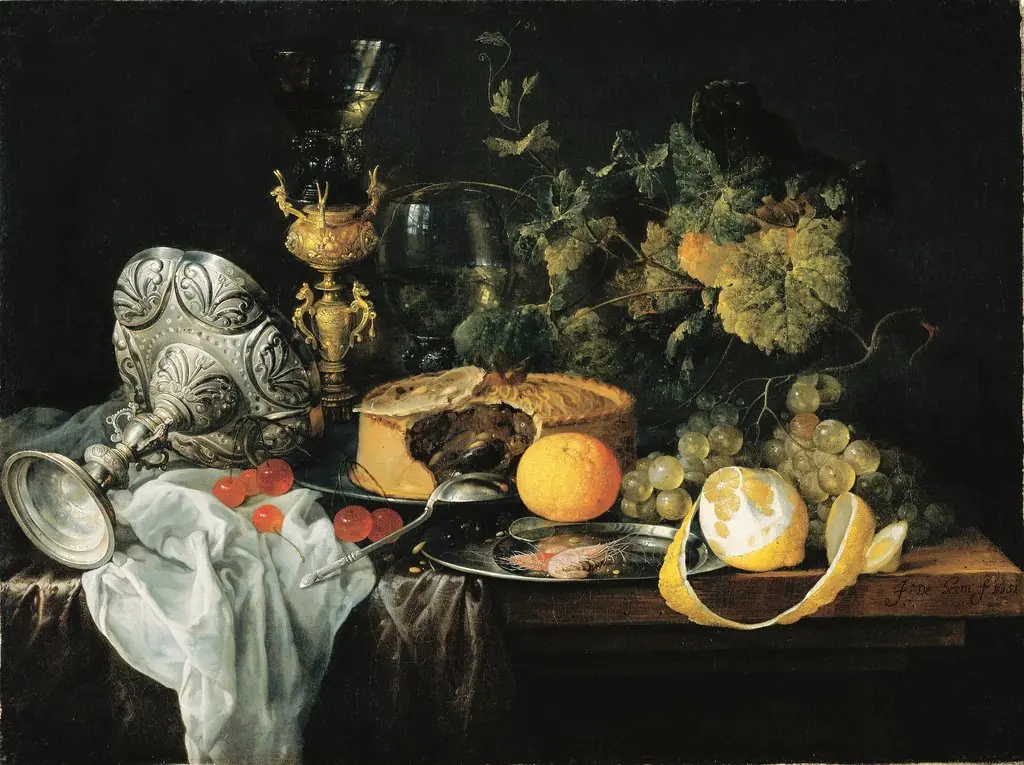 Sumptuous Still Life with Fruits, Pie and Goblets, 1651
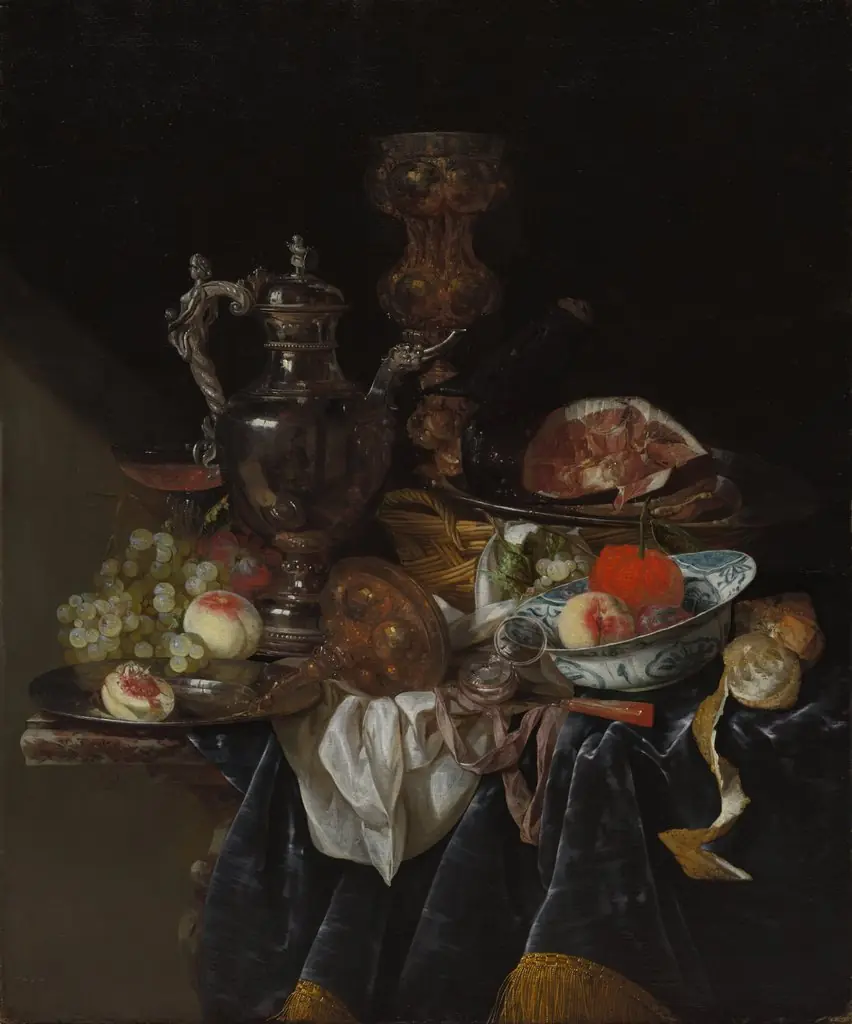 Silver Wine Jug, Ham, and Fruit
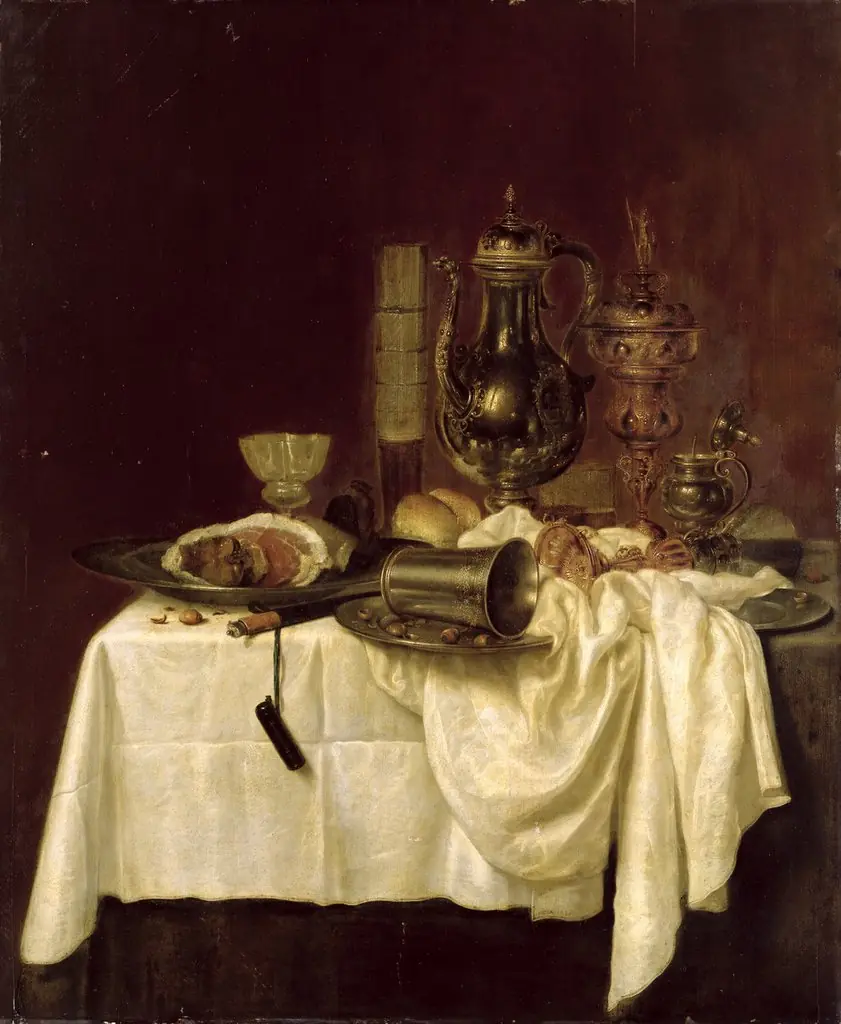 Still life with ham, decanter, columbine cup and passglass on a laid table
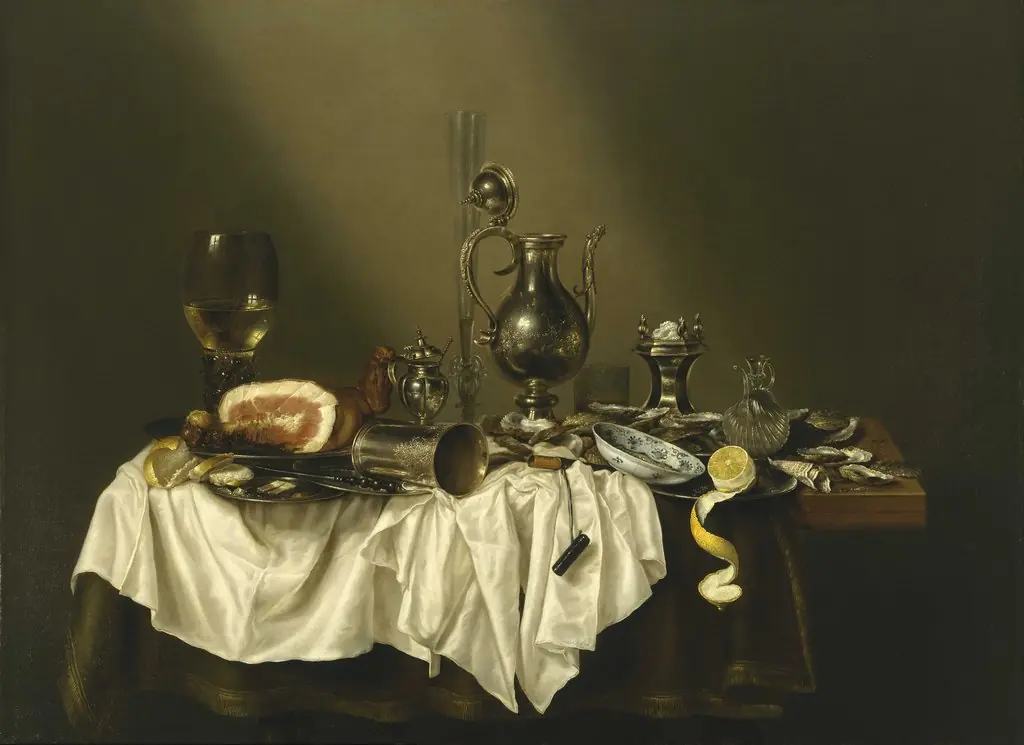 Banquet Piece with Ham
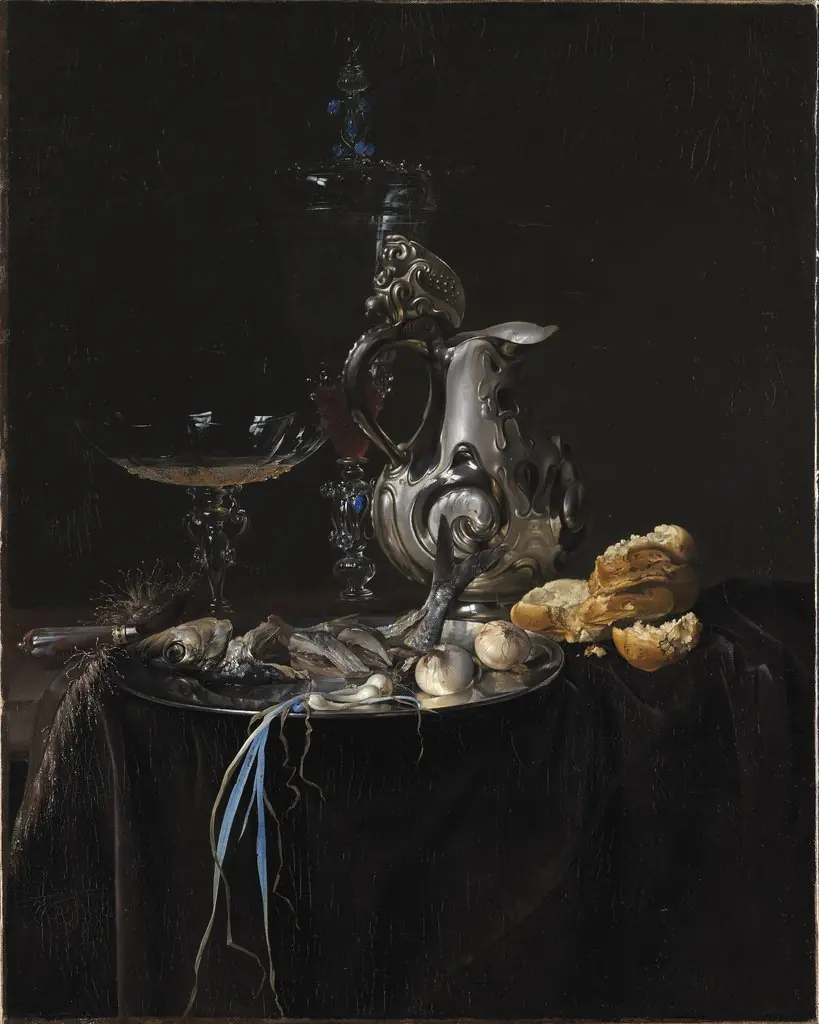 Still Life. Breakfast Piece with a Silver Jug
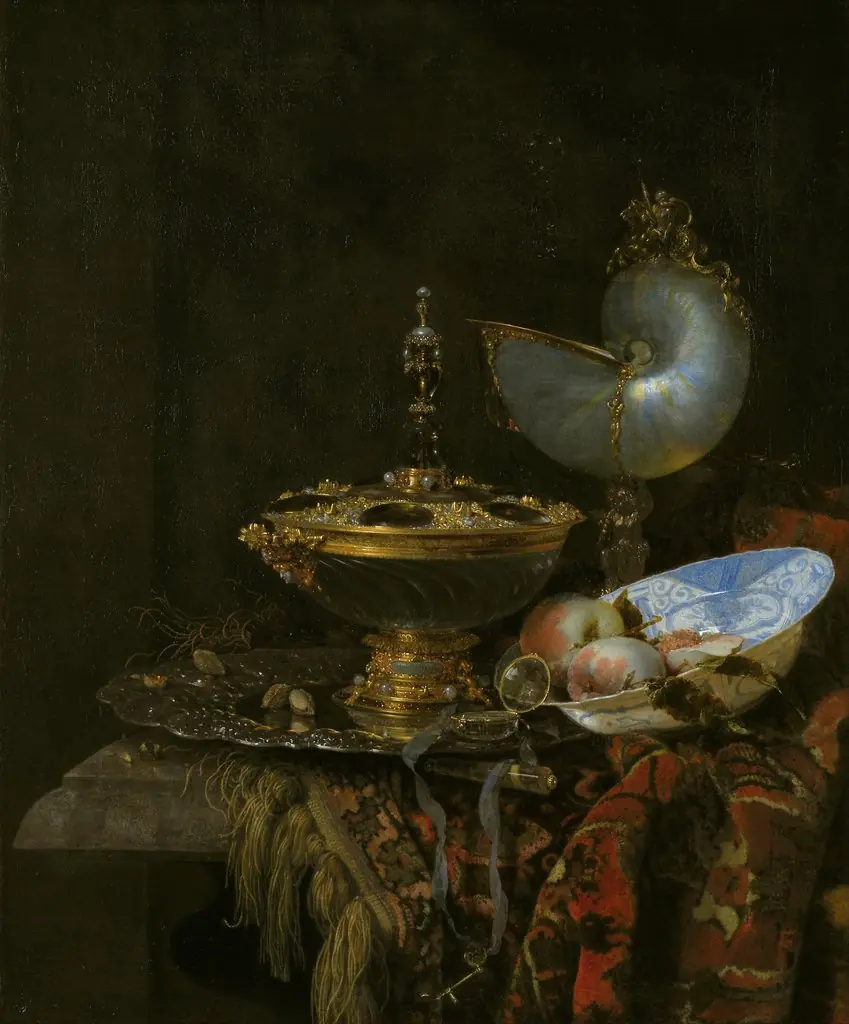
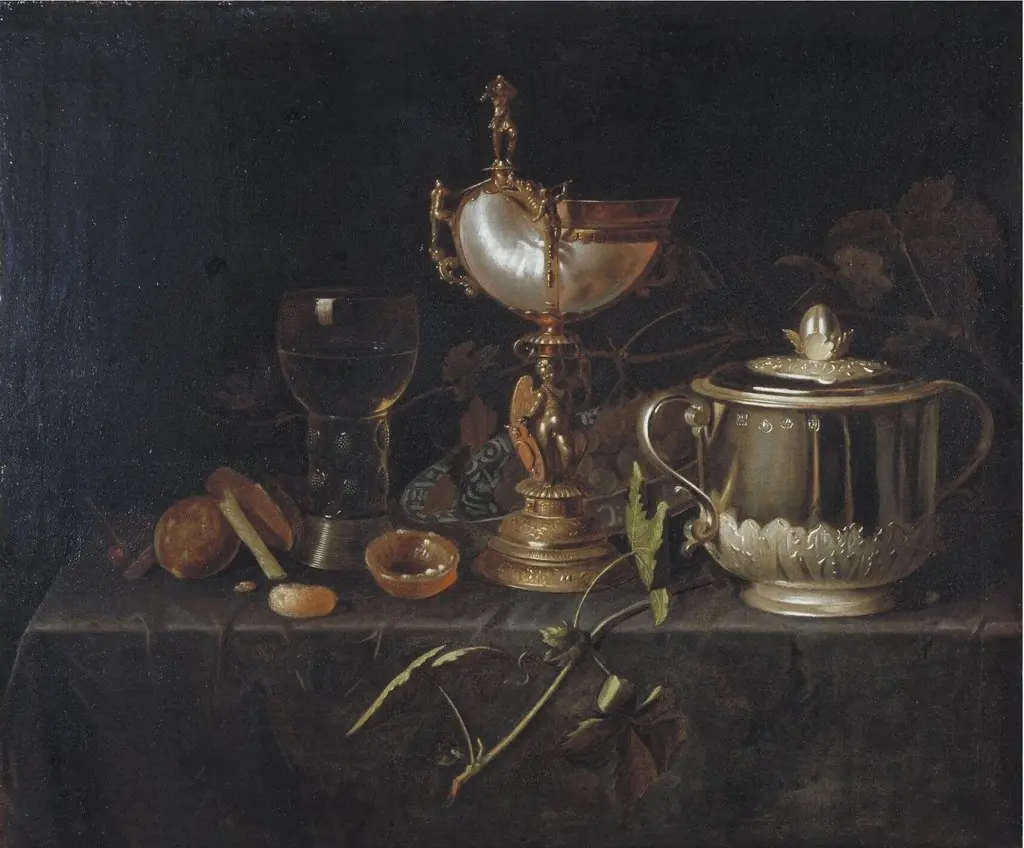 Porringer and Nautilus Cup
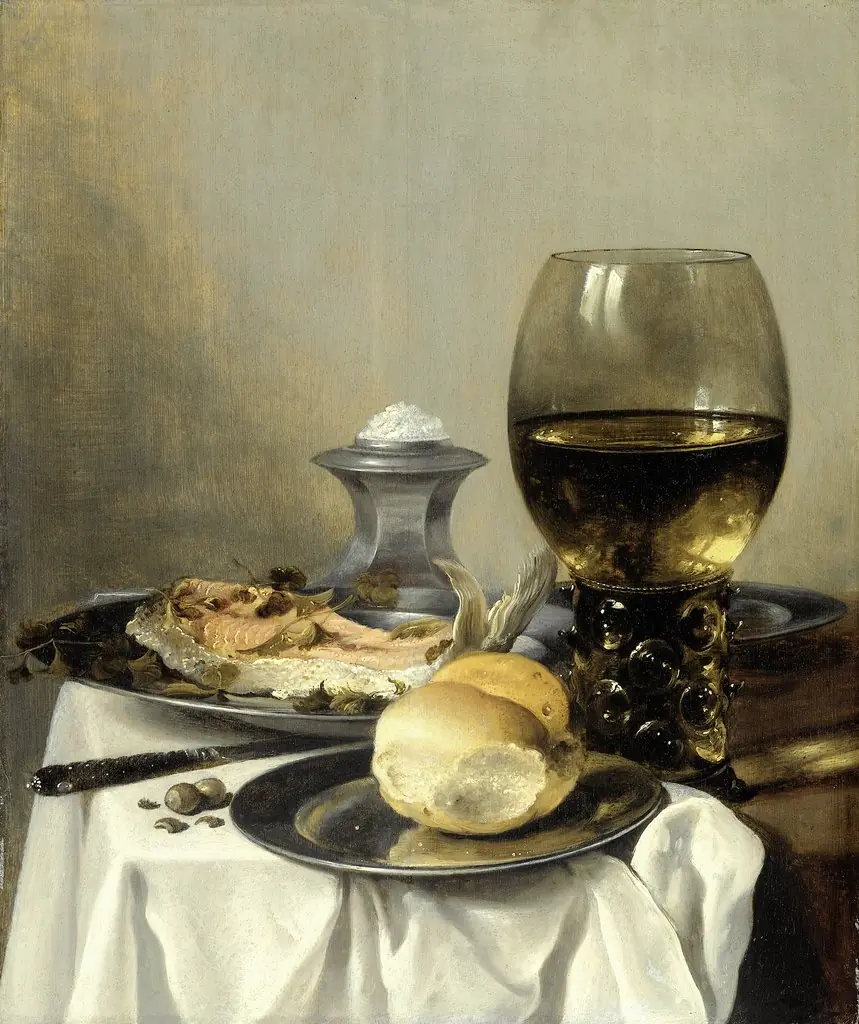 Still life with a salt cellar
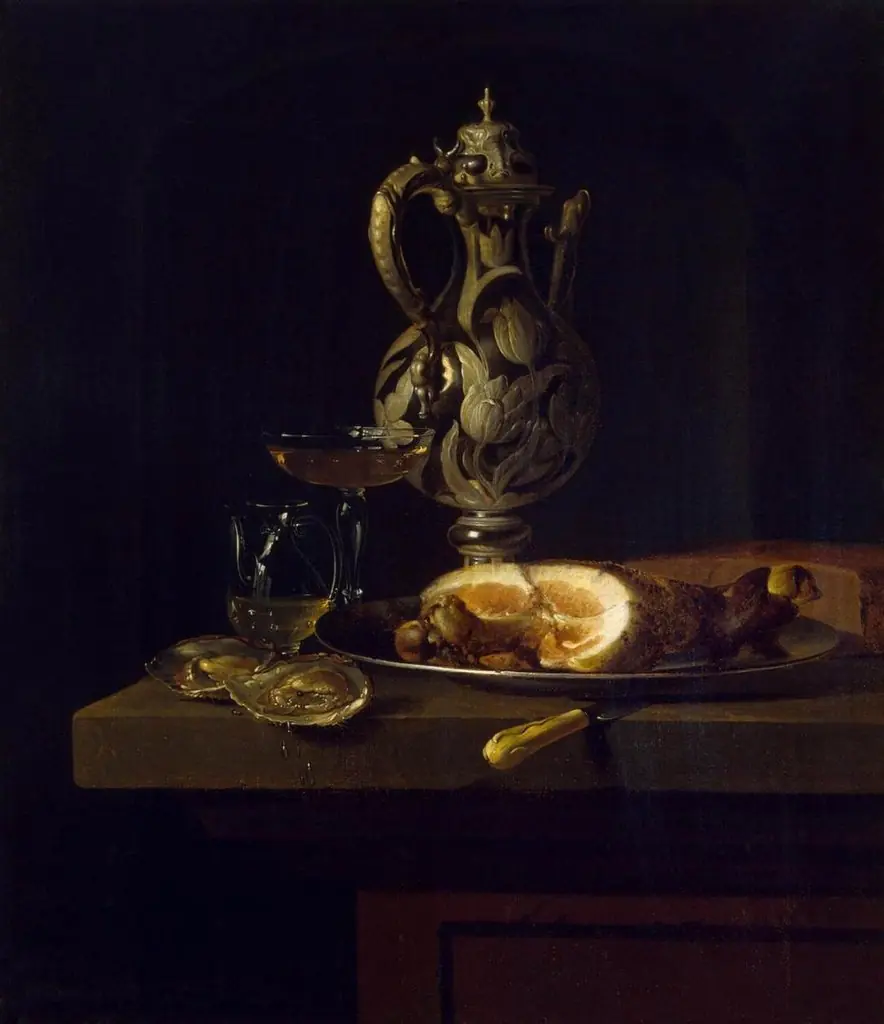 Breakfast with Ham
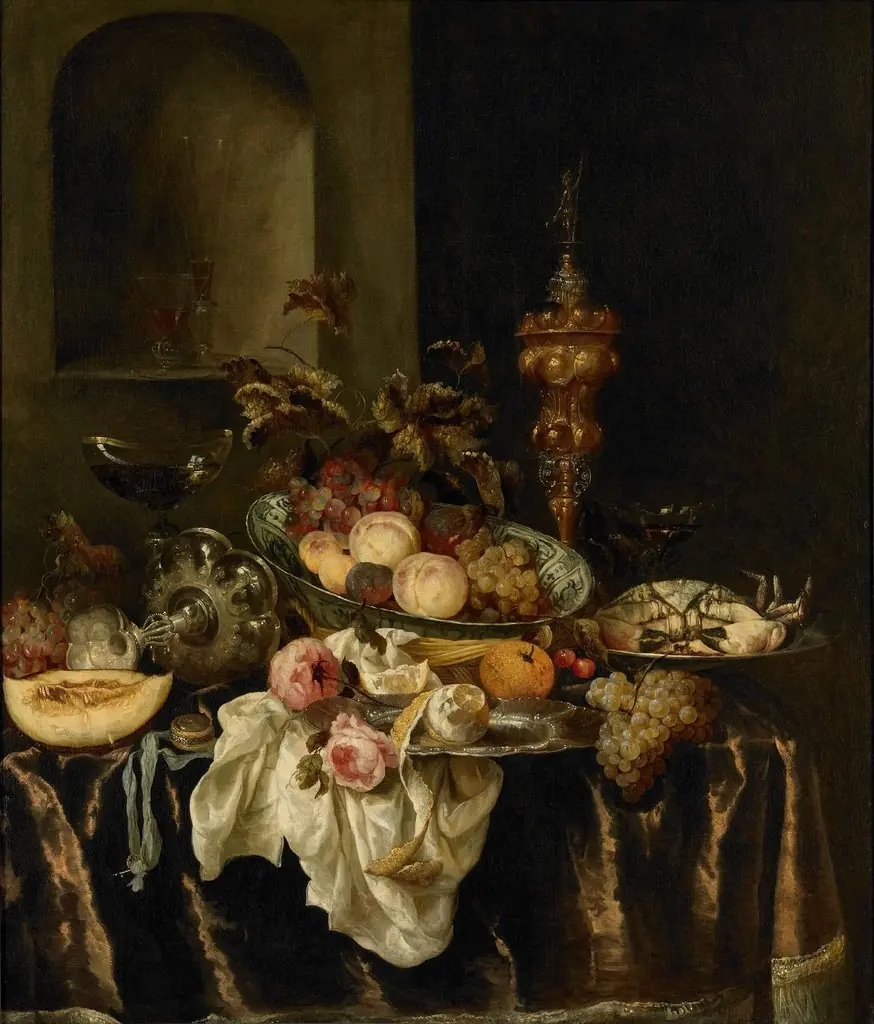 Stille life