Artwork
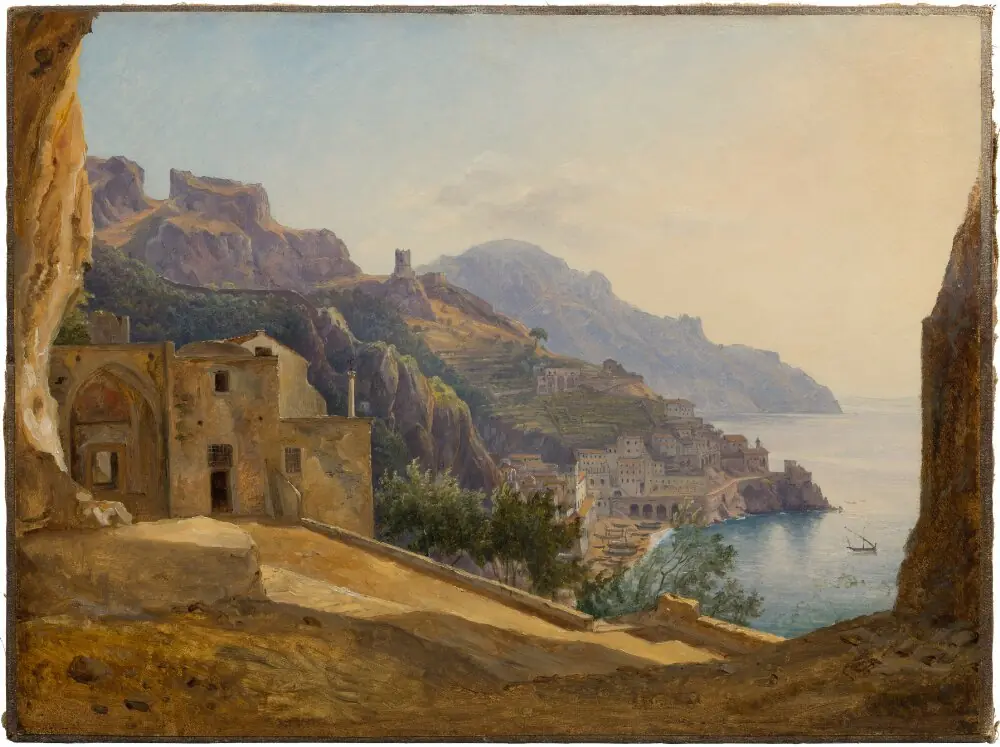
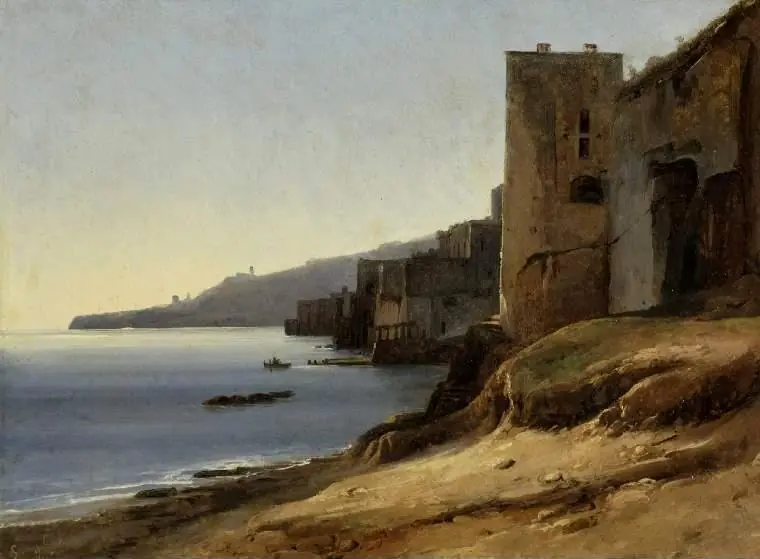
View of Amalfi with the Capucines Cloister
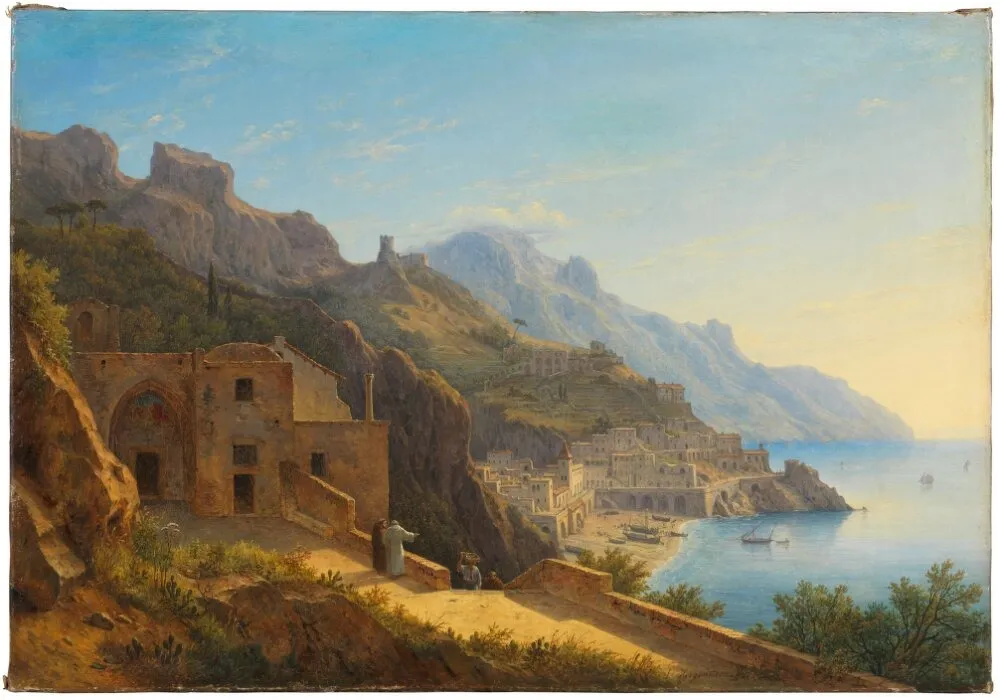
View of Amalfi with the Capucines Cloister is an oil painting by Carl Morgenstern. It dates from 1840 and is held in the collection of the Nationalmuseum.
About this work
Overview
View of Amalfi with the Capucines Cloister is an 1840 oil painting by Carl Morgenstern, currently housed at the Nationalmuseum. The work captures a serene portrayal of the Italian seaside town of Amalfi.
Subject & Meaning
The painting focuses on Amalfi, emphasizing its cliffside setting. Prominent architectural elements include a large stone building on the left and a smaller counterpart on the right, set against a backdrop of distant hills and buildings.
Technique & Style
Morgenstern employed oil paint to achieve a sense of tranquility, characterized by muted, earthy tones for the buildings, contrasting with the vivid blues of the sea and the light sky, accented by a few clouds.
History & Provenance
Created in 1840, the painting is part of the collection at the Nationalmuseum, though specific details of its acquisition or previous ownership are not provided in available information.
Context
The work reflects 19th-century European interest in Italian landscapes, often sought for their historical and aesthetic appeal. Amalfi, with its rich history and dramatic geography, was a popular subject.
Legacy
While specific influence or notable exhibitions of 'View of Amalfi with the Capucines Cloister' are not highlighted in provided sources, it contributes to the broader legacy of Carl Morgenstern’s landscape oeuvre.
Artist & collection