Artwork
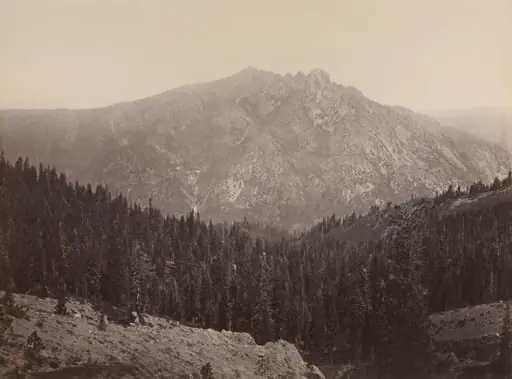
The Domes, from the Sentinel Domes, Yosemite
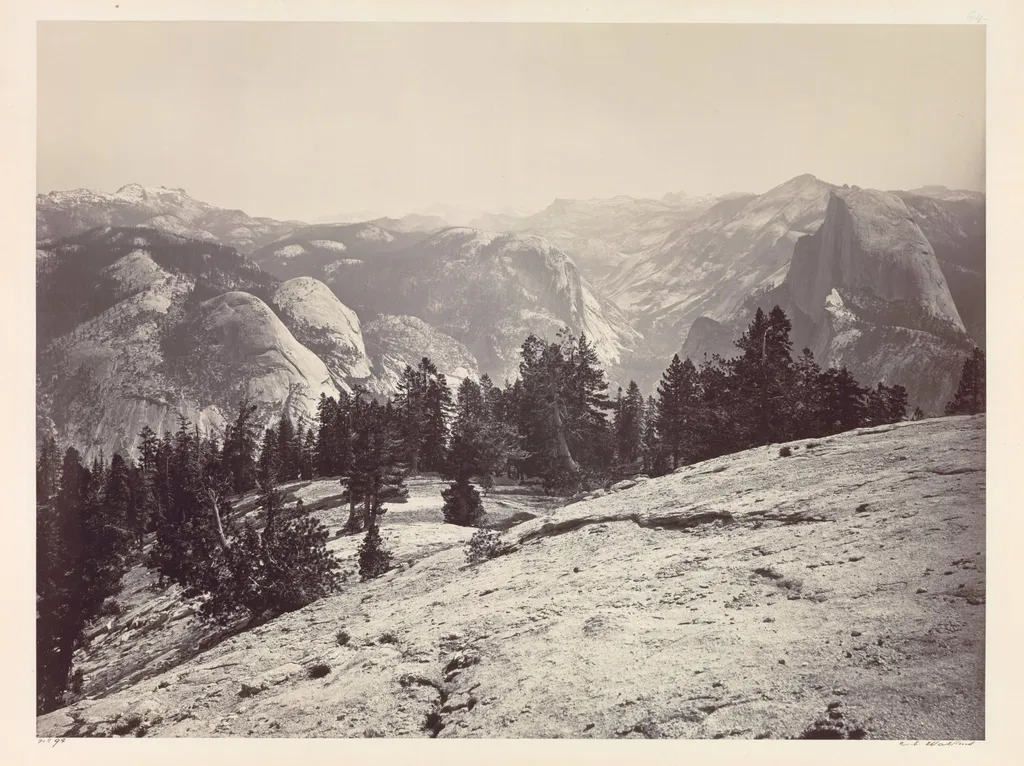
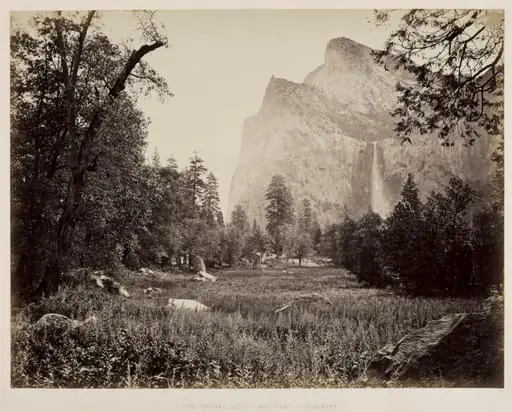
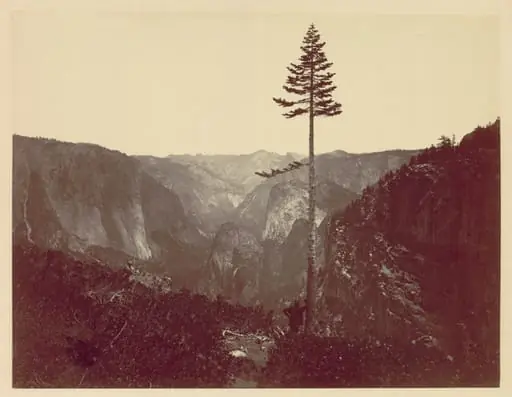
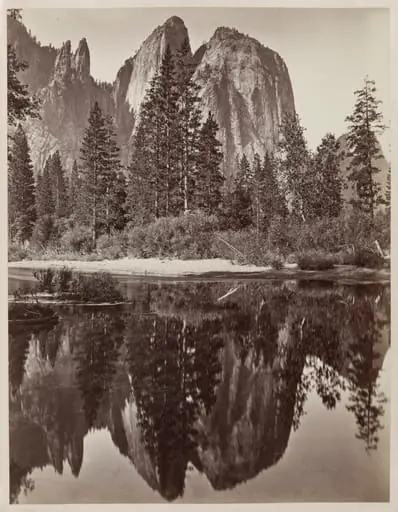
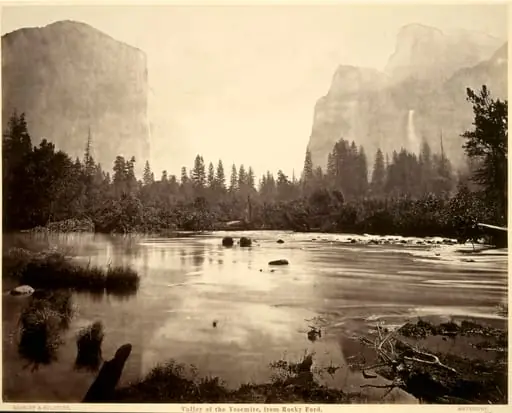
The Domes, from the Sentinel Domes, Yosemite is a photography by the Impressionist artist Carleton E. Watkins. It dates from 1866 and is held in the collection of the Cleveland Museum of Art. Carleton Watkins produced large-format photographs of Yosemite Valley using a mammoth-plate camera transported by mule.
About this work
Overview
Carleton Watkins produced large-format photographs of Yosemite Valley using a mammoth-plate camera transported by mule. His expeditions, beginning in 1861, yielded detailed images that captured the scale and serenity of the landscape. These photographs were not merely artistic records but played a direct role in shaping public and political perceptions of the region’s natural value.
Subject & Meaning
The photograph presents a panoramic view of Sentinel Domes, with foreground trees framing gently curved granite formations under a diffused sky. The composition emphasizes quiet grandeur rather than dramatic spectacle, suggesting an untouched wilderness. This visual quietude reinforced the idea of Yosemite as a shared natural heritage, not a commodity to be exploited.
Technique & Style
Watkins employed overlapping planes to create depth, guiding the viewer’s eye from sharp foreground details to hazy distant peaks. His use of atmospheric perspective softened distant elements, enhancing the illusion of vastness. The large negative allowed for fine tonal gradations, capturing subtle variations in light across rock surfaces and foliage with remarkable clarity.
History & Provenance
Watkins made multiple trips to Yosemite between 1861 and the 1870s, often under difficult logistical conditions. His images circulated among lawmakers and the public, contributing to the 1864 Congressional act that granted Yosemite federal protection. The photograph’s role in this legislative outcome marks it as a pivotal document in early American conservation history.
Context
In the mid-19th century, American landscapes were increasingly viewed through the lens of national identity and preservation. Watkins’s work emerged alongside emerging ideas about public land, contrasting with the era’s rapid industrialization and private land claims. His photographs offered a counter-narrative: nature as a collective resource deserving of legal safeguard.
Legacy
Watkins’s Yosemite images set a precedent for landscape photography as a tool for environmental advocacy. They influenced later photographers and conservationists, establishing a visual language for wilderness protection. The photograph remains a key artifact in the history of both American photography and the national park movement.
Artist & collection