Artwork
Davoncastle Butte, Sierra Nevada
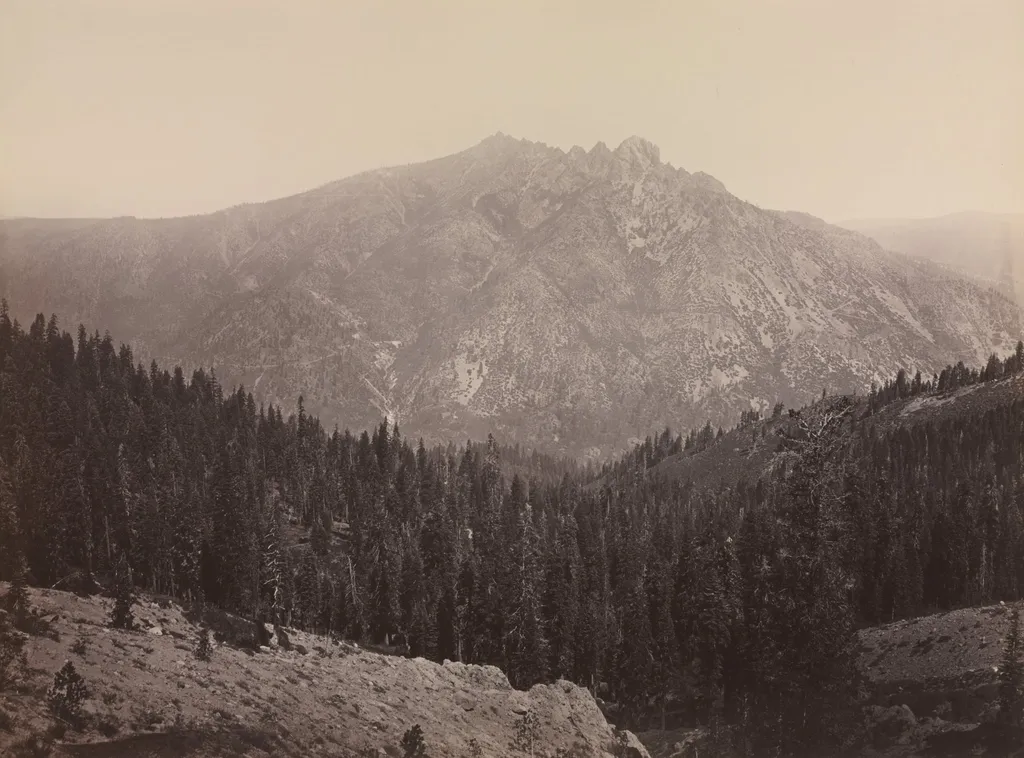
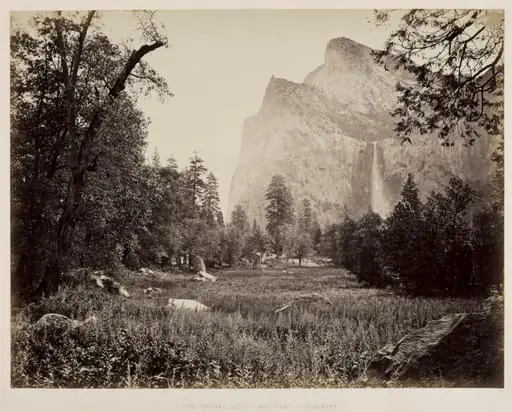
Davoncastle Butte, Sierra Nevada is a photography by the Impressionist artist Carleton E. Watkins. It dates from 1868 and is held in the collection of the Cleveland Museum of Art. The image captures Davoncastle Butte, a prominent, crag‑filled summit within the Sierra Nevada.
About this work
This photo shows a huge, rugged mountain called Davoncastle Butte.
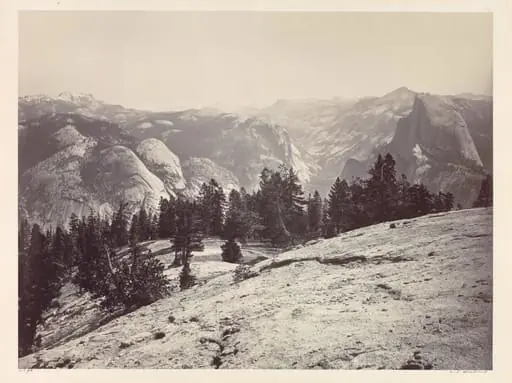
This photo shows a huge, rugged mountain called Davoncastle Butte. It stands tall in the Sierra Nevada range. A rocky slope drops down to a flat valley below. Tiny trees dot the mountainside.
Watkins took this photo in the 1860s. He used big glass-plate negatives. These made prints that were way larger than today’s photos. People could see every crack in the rocks.
His big prints changed how we view nature. If you like this, check out Carleton E. Watkins (American, 1829–1916).
Overview
The image captures Davoncastle Butte, a prominent, crag‑filled summit within the Sierra Nevada. The composition presents the steep, stone‑scarred face of the butte descending toward a relatively level valley, punctuated by sparse, stunted trees clinging to the slope. The photograph emphasizes the stark contrast between the massive, weathered rock and the modest vegetation that survives in its shadow.
Subject & Meaning
By foregrounding the sheer scale and ruggedness of the butte, the work conveys the formidable character of the western landscape during a period of expanding exploration. The isolated trees serve as a visual reminder of life persisting amid an otherwise austere environment, suggesting both the harshness and resilience inherent to the high Sierra.
Technique & Style
Created in the 1860s, the photograph was produced using large glass‑plate negatives, a process that allowed for exceptionally detailed, oversized prints. The high resolution of the glass plate captures fine fissures and textural nuances of the rock, while the tonal range renders the subtle gradations of light across the valley floor.
History & Provenance
The image originates from the work of Carleton E. Watkins, an American photographer active between 1829 and 1916, who documented the western United States during the mid‑nineteenth century. The print reflects the era’s shift toward monumental landscape photography, intended for public exhibition and publication rather than private album keeping.
Context
During the 1850s and 1860s, photographic technology evolved from intimate, hand‑held formats to larger, studio‑based processes, enabling images like this to be displayed at a scale comparable to paintings. Such works contributed to a growing public fascination with the American frontier, influencing contemporary perceptions of wilderness and its potential for settlement or preservation.
Artist & collection