Artwork
Salvator Mundi
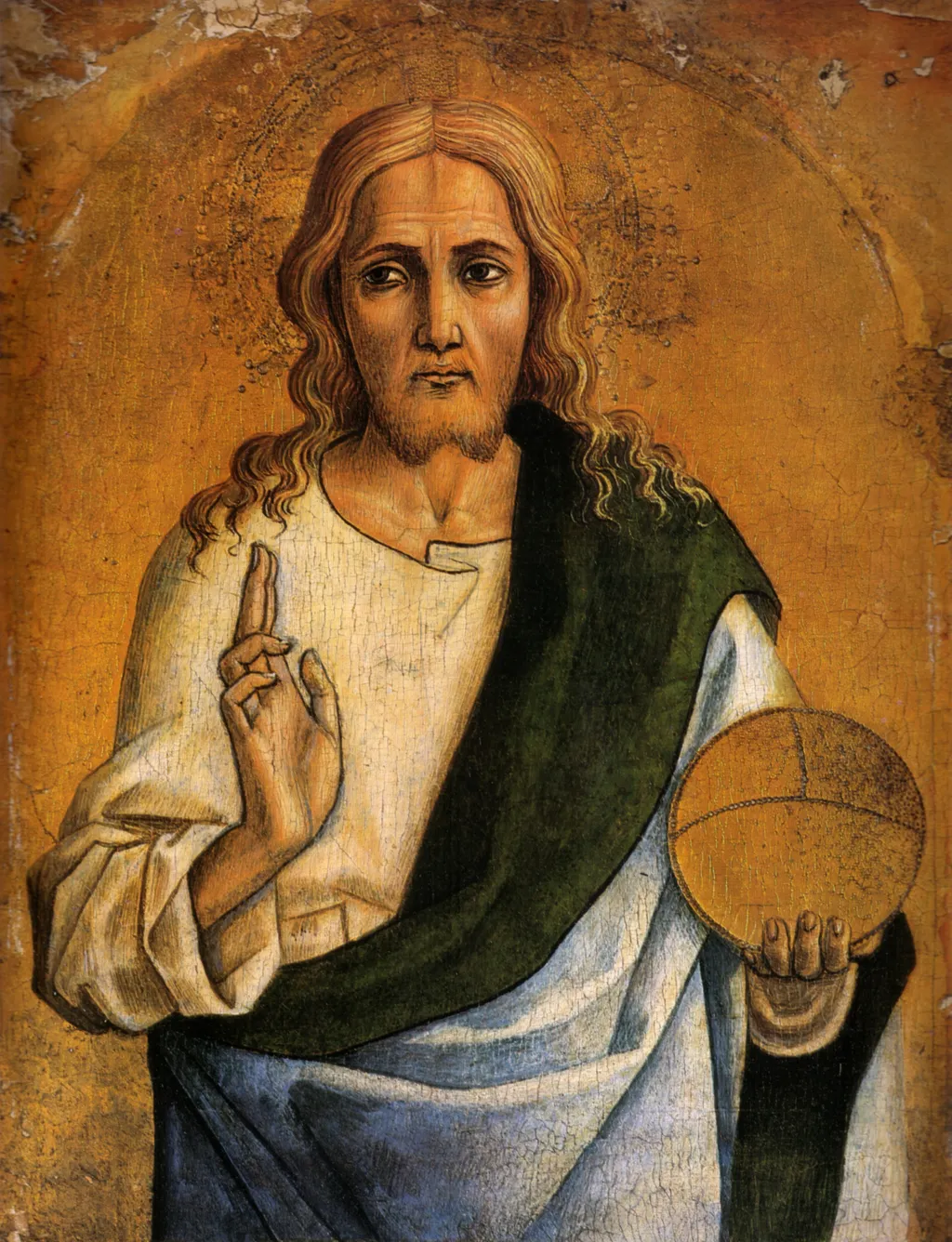
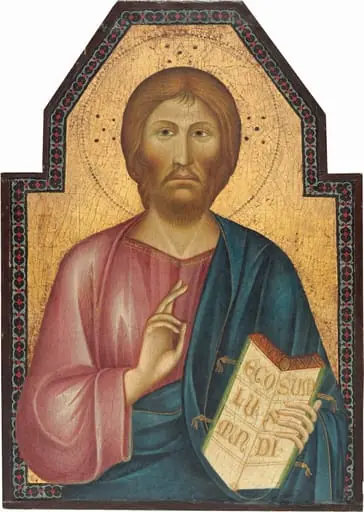
Salvator Mundi is an unspecified painting by the Early Renaissance artist Carlo Crivelli. It dates from 1471 and is held in the collection of the Clark Art Institute.
About this work
Overview
The painting Salvator Mundi is a work by Carlo Crivelli, created in 1471. It is now part of the Clark Art Institute's collection.
Subject & Meaning
The painting depicts Jesus Christ as Salvator Mundi, a traditional representation. Christ is shown with a serious expression, gazing directly at the viewer, and is dressed in a white robe with a green sash. He holds a round object and makes a blessing gesture with his right hand.
Technique & Style
Crivelli's use of chiaroscuro creates a sense of depth, emphasizing Christ's face and hands. The warm, golden background contrasts with the cooler tones of Christ's clothing, highlighting the figure. The artist's style reflects his Late Gothic decorative influences and his exposure to Venetian artists.
History & Provenance
Crivelli developed his style after being influenced by Venetian artists such as Vivarini, Squarcione, and Mantegna. By 1458, he had relocated from the Veneto to the March of Ancona, where he continued to refine his distinctive style.
Artist & collection

Artist
Carlo Crivelli (c. 1430 – c. 1495) was an Italian Renaissance painter of conservative Late Gothic decorative sensibility, who spent his early years in the Veneto, where he absorbed influences from the Vivarini,…

![Saint James Major [right panel], by Grifo di Tancredi](https://artifactworldgallery.com/img/grifo-di-tancredi--saint-james-major-right-panel--dc190378c0cddc8f-w320.webp)