Artwork
The penitent Magdalene
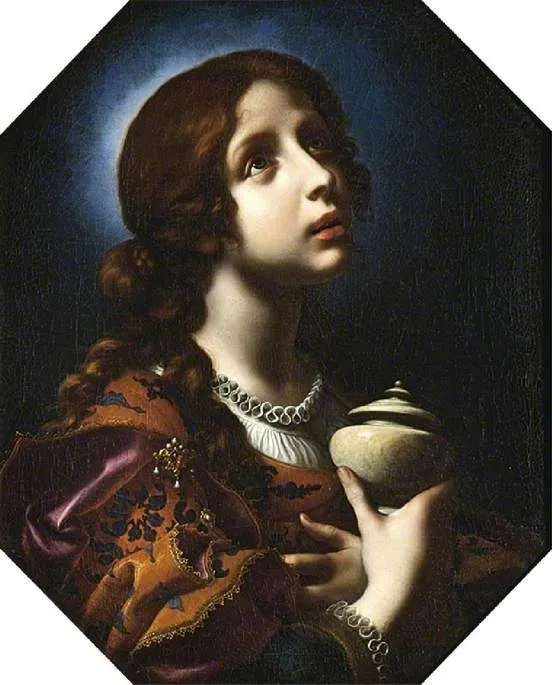
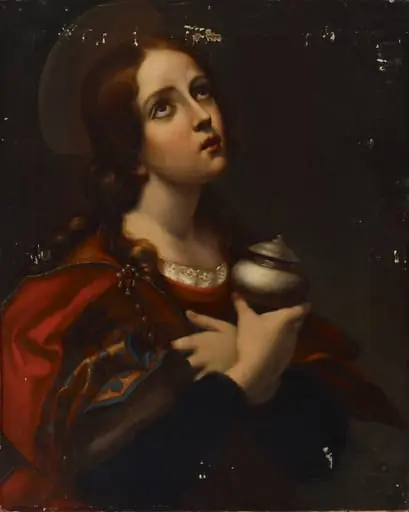
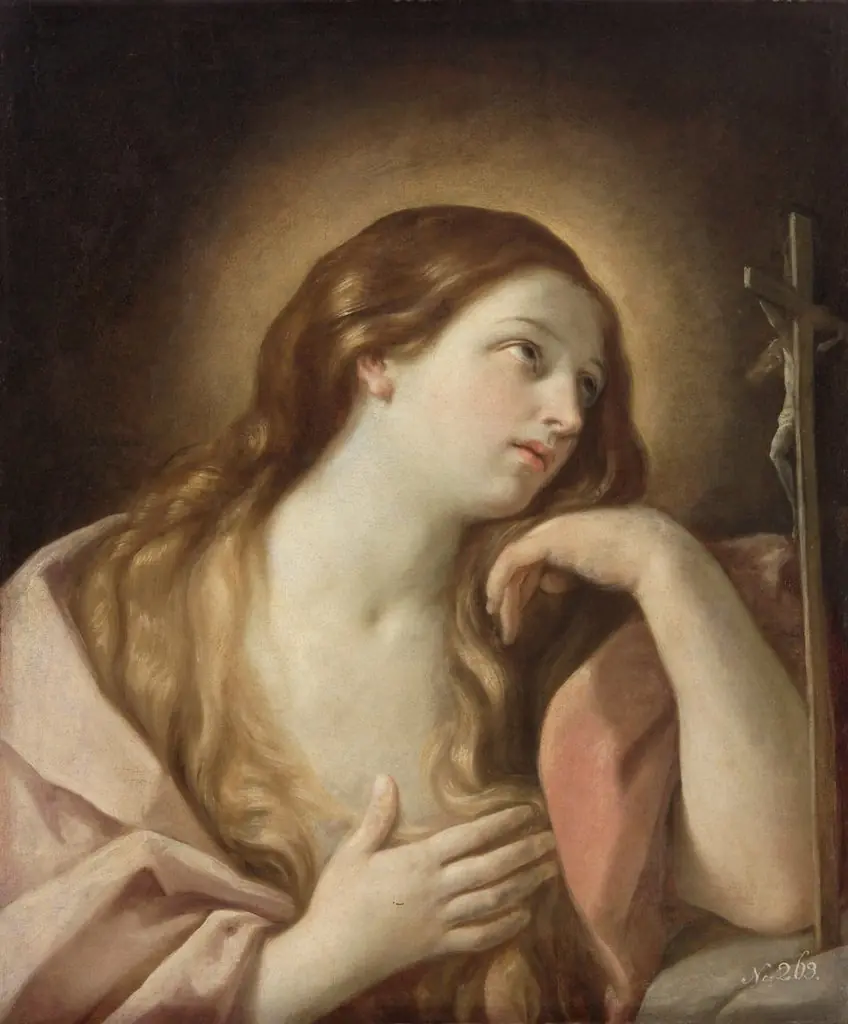
The penitent Magdalene is an oil painting by Carlo Dolci. It dates from 1650 and is held in the collection of the Fitzwilliam Museum.
About this work
Overview
Carlo Dolci, a Florentine painter of the mid‑seventeenth century, executed *The Penitent Magdalene* around 1650. Rendered in oil on canvas, the work presents a solitary female figure in a contemplative pose. The painting belongs to the collection of the Fitzwilliam Museum, where it is displayed among other Baroque religious images.
Subject & Meaning
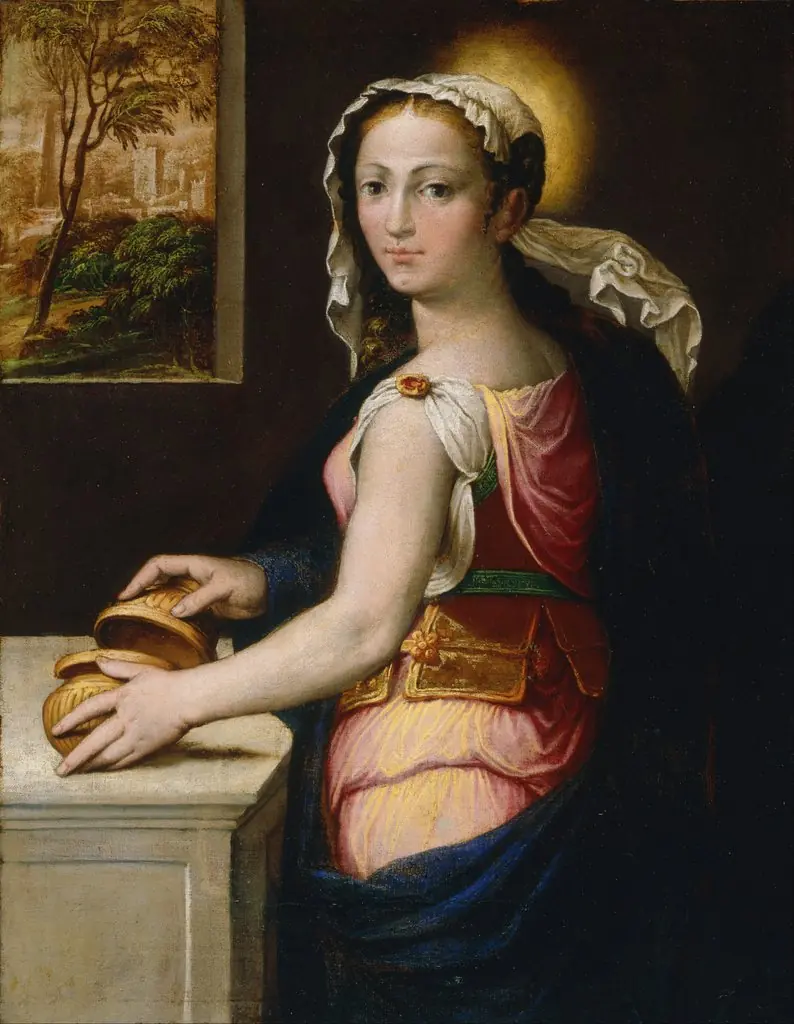
The composition centers on Mary Magdalene at the moment of repentance, a motif frequently explored in Counter‑Reformation art. She gazes upward with a serene expression, suggesting spiritual introspection. In her hands she holds a small, rounded stone vessel, traditionally associated with the ointments she used to anoint Christ, reinforcing her role as a penitent devotee.
Technique & Style
Dolci employs a restrained chiaroscuro, allowing the dark backdrop to accentuate the luminous quality of the figure’s skin. The red drapery, edged with gold embroidery, contrasts with a crisp white collar, while the delicate modeling of the hair and flesh creates a subtle three‑dimensional effect. The overall finish reflects Dolci’s reputation for meticulous, polished surfaces.
History & Provenance
The artist was known to produce several versions of the same religious subjects, and this Magdalene is one of a handful attributed to him. After remaining in private collections for centuries, the canvas entered the Fitzwilliam Museum’s holdings in the twentieth century, where it has been catalogued as a representative example of Dolci’s devotional output.
Artist & collection

Artist
Carlo (or Carlino) Dolci (25 May 1616 – 17 January 1686) was an Italian Baroque painter active mainly in Florence, known for highly finished religious pictures, often repeated in many versions.