Artwork
St Catherine of Alexandria
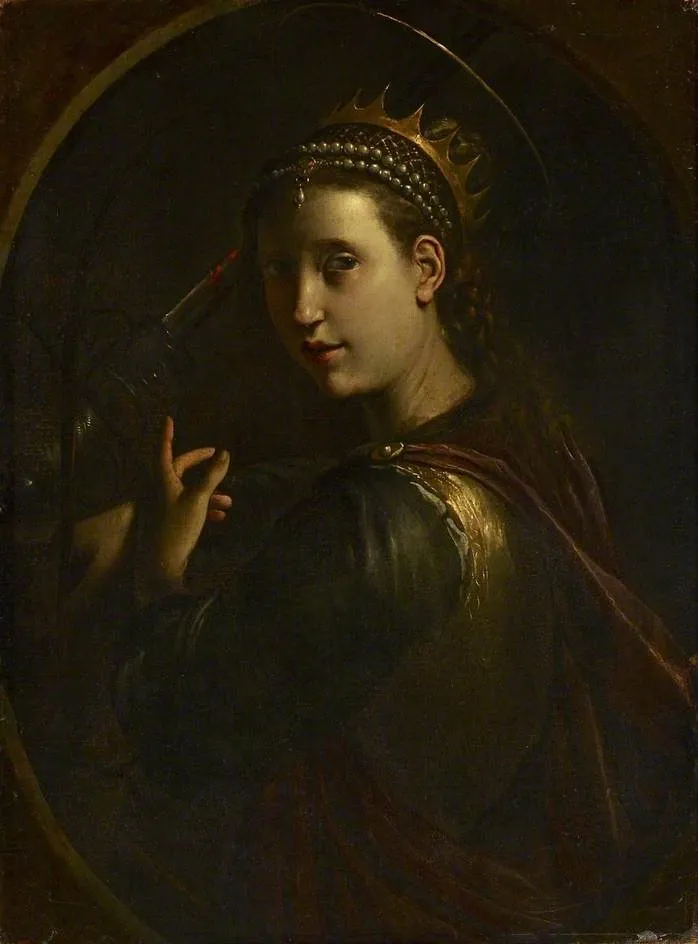
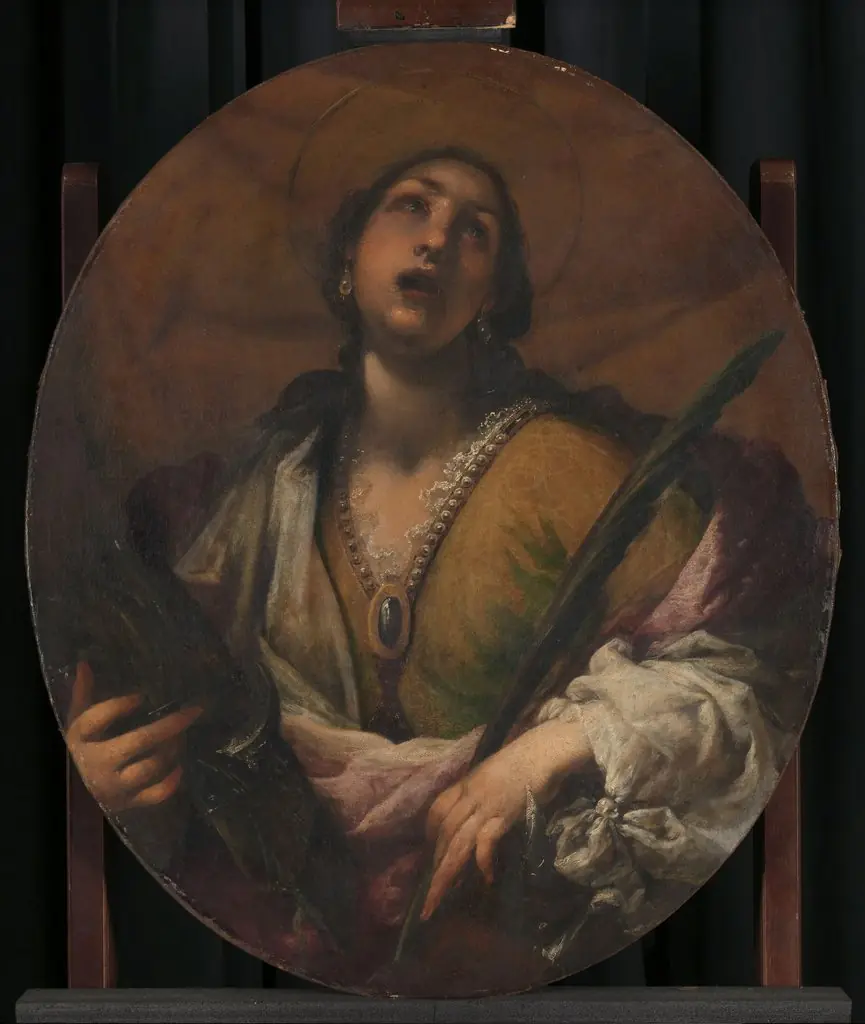
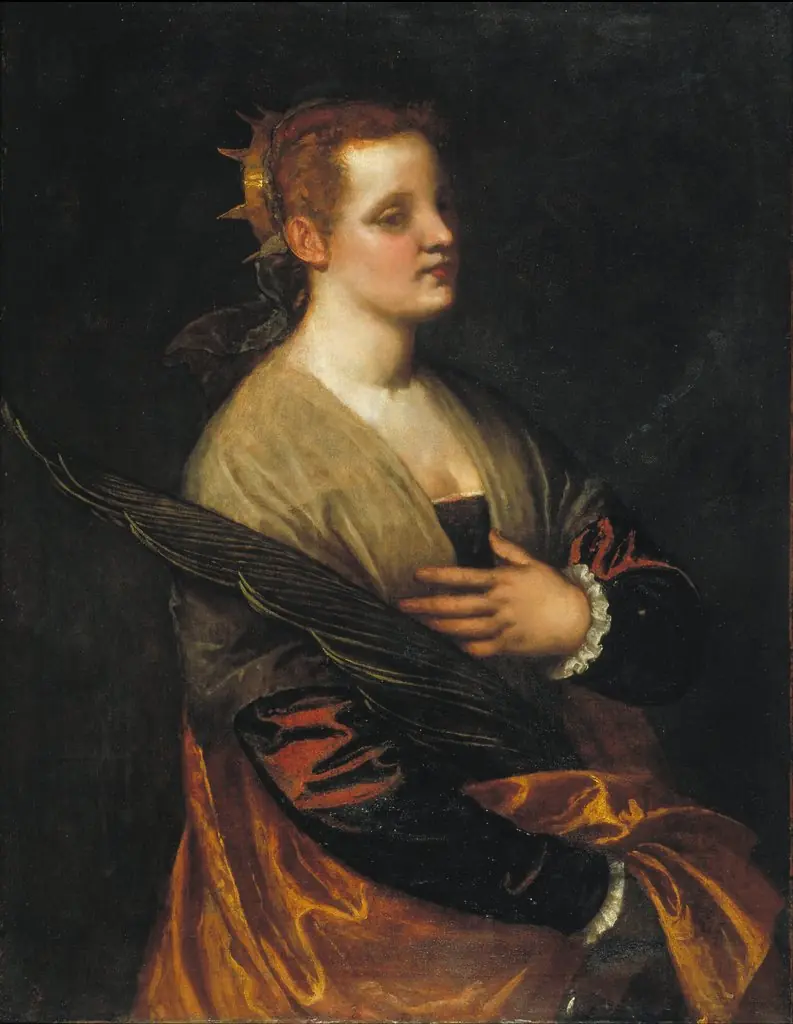
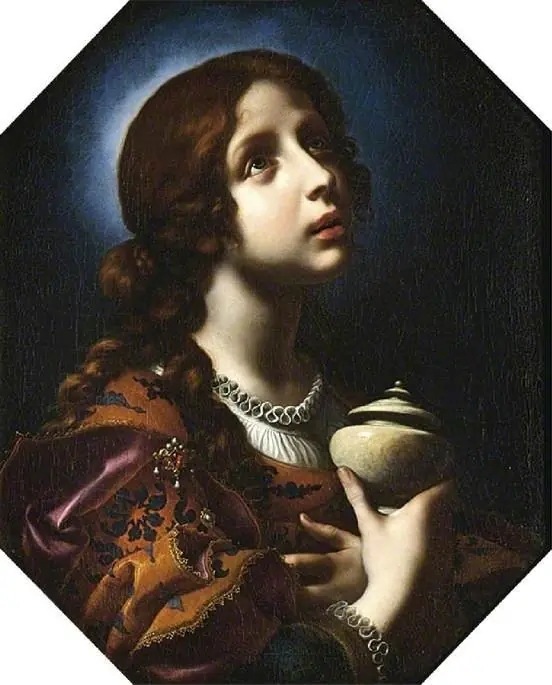
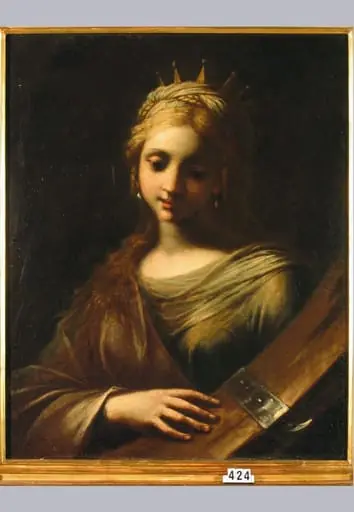
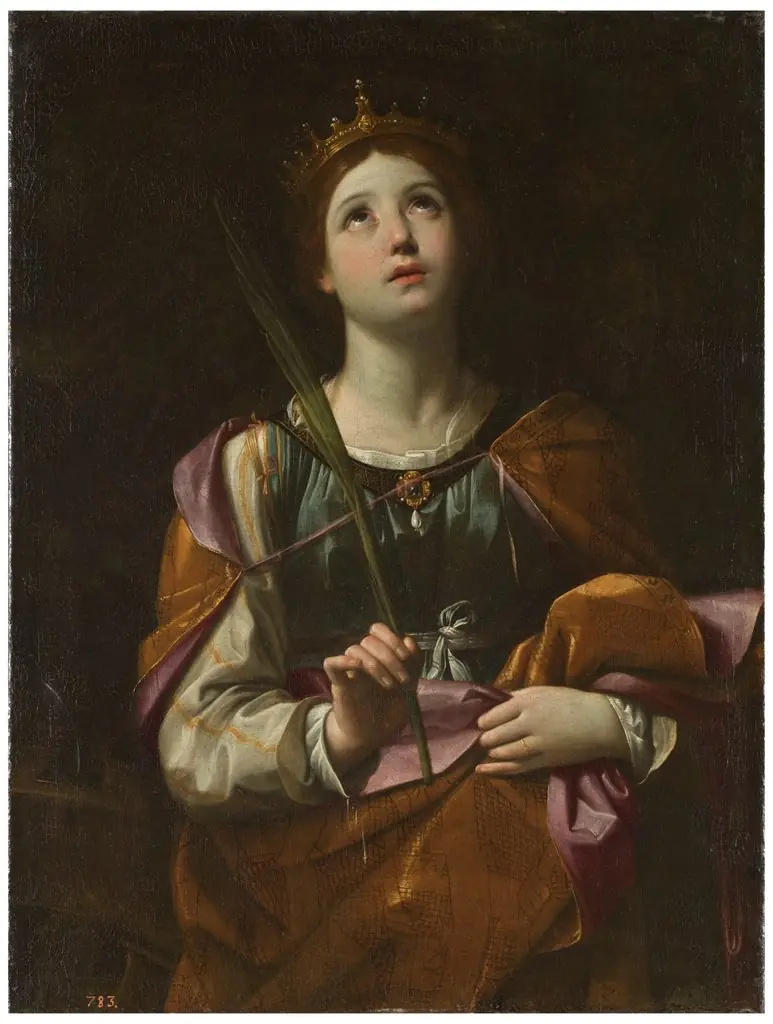
St Catherine of Alexandria is an oil painting by the Early Baroque Italian artist Pietro Paolini. It dates from 1652 and is held in the collection of the Ashmolean Museum.
About this work
Overview
Created circa 1652, this oil on canvas portrays St Catherine of Alexandria, a Christian martyr, within a dark, circular composition. The figure is illuminated against a deep background, emphasizing her solemn expression and the symbolic objects she holds.
Subject & Meaning
Catherine is shown wearing a spiked gold crown and a dark robe with a red cape draped over her left shoulder, attributes traditionally linked to her martyrdom and royal status. In her right hand she grasps a golden disc, interpreted as the breaking wheel of her legend or a halo, underscoring her sanctity.
Technique & Style
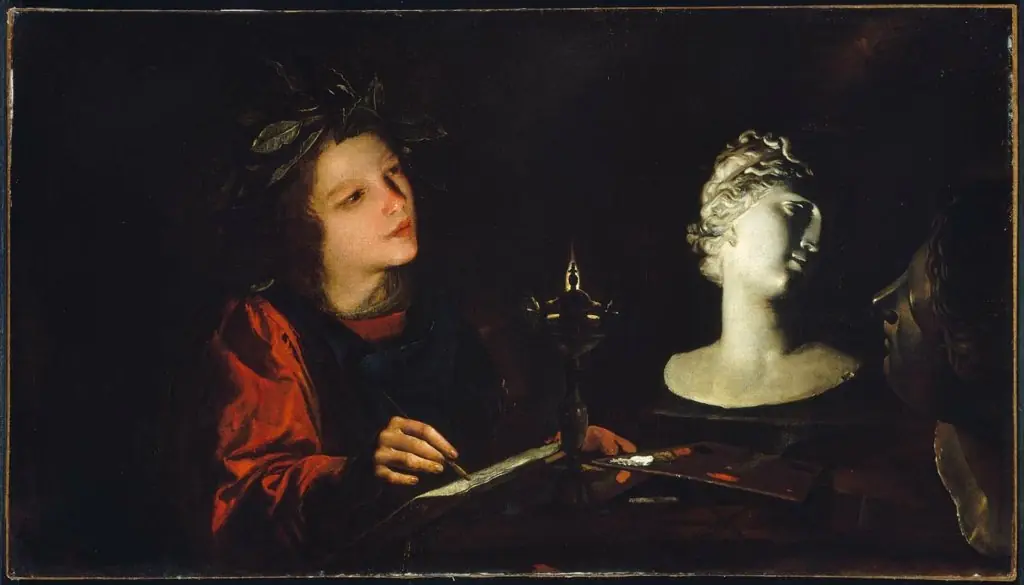
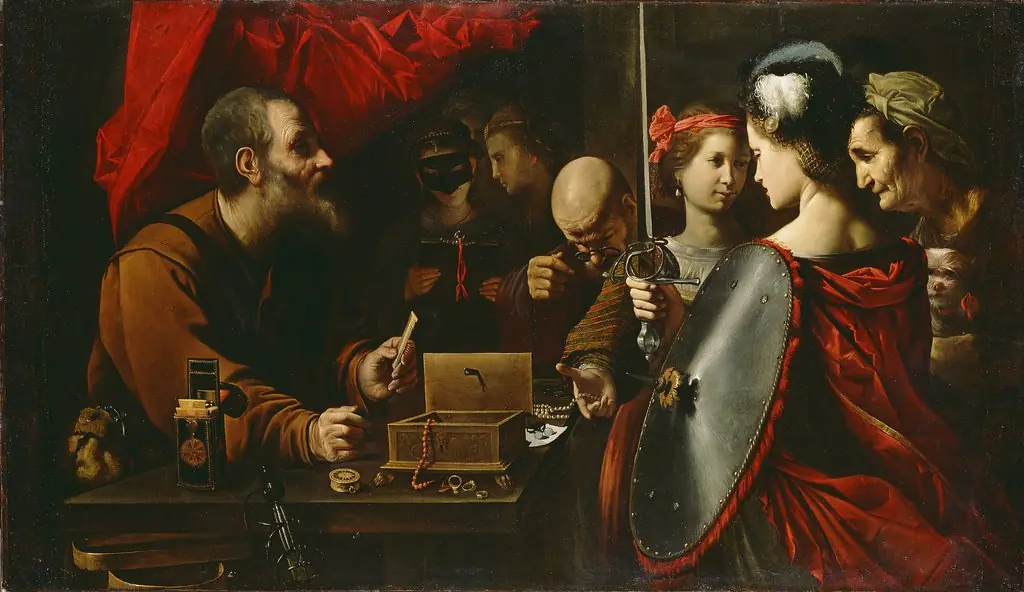
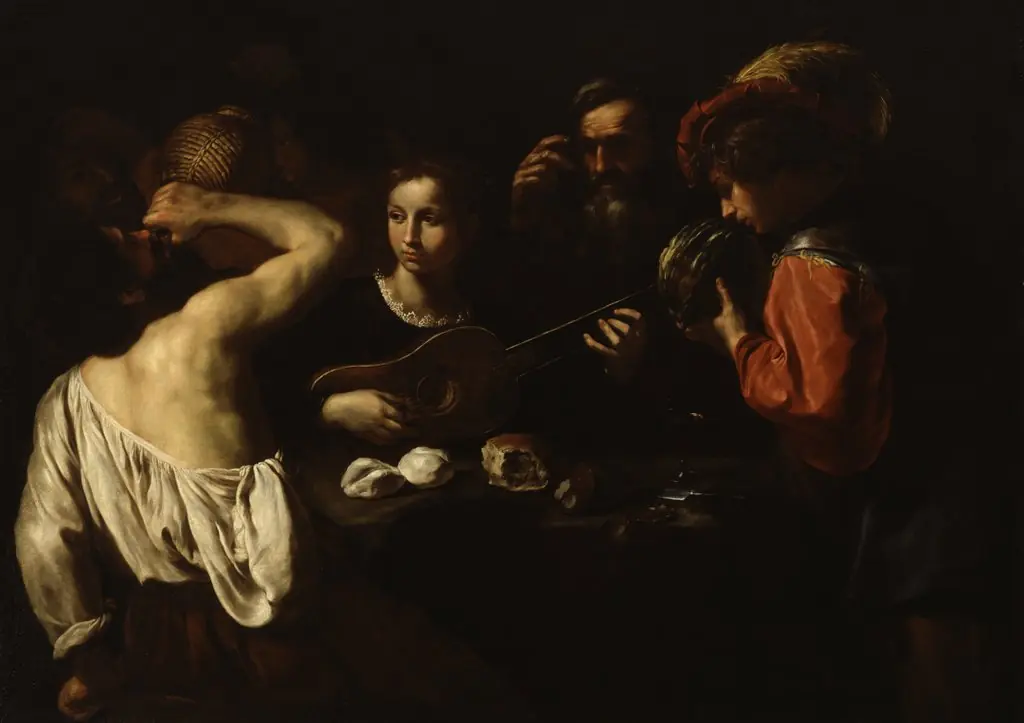
The work displays the dramatic chiaroscuro typical of early Baroque painting, with strong contrasts between light and shadow that model the figure’s face and garments. Thick, textured brushwork gives the drapery a tactile presence, reflecting the artist’s engagement with Caravaggio’s visual language while retaining a personal touch.
History & Provenance
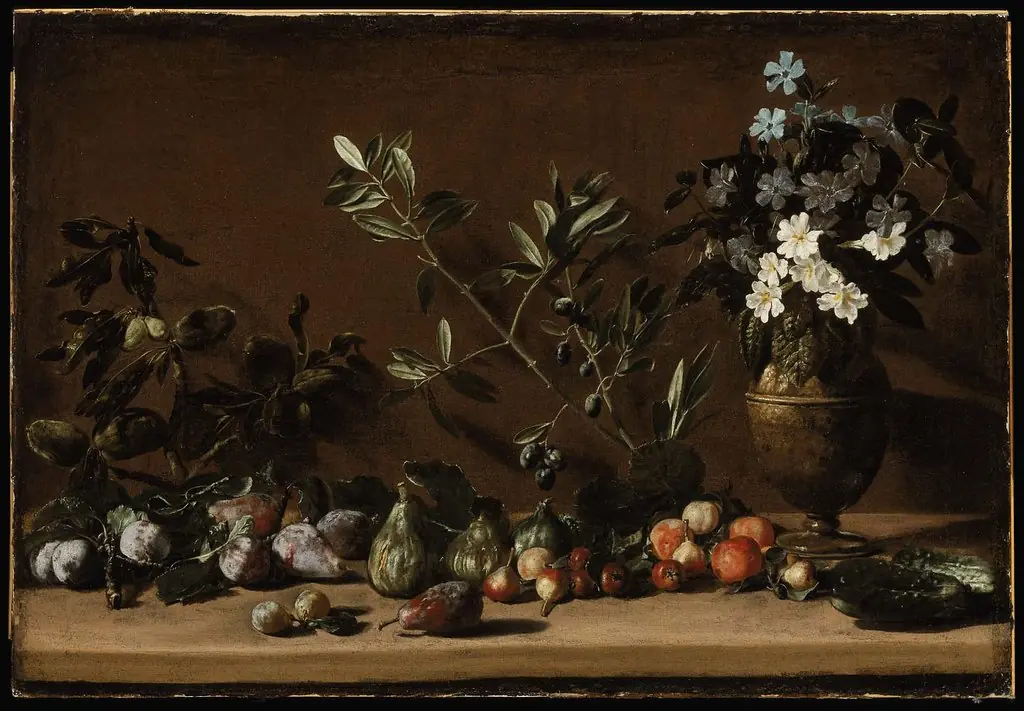
Attributed to Pietro Paolini, known as il Lucchese, the painting is part of the Ashmolean Museum’s collection. Paolini, a follower of Caravaggio who worked in Rome, Venice and his native Lucca, produced the piece during his mature period before founding an academy in Lucca that trained the next generation of regional painters.
Context
The painting belongs to the religious genre prevalent in mid‑17th‑century Italy, where depictions of saints served both devotional and didactic purposes. Paolini’s interpretation aligns with the Counter‑Reformation’s emphasis on clear, emotionally resonant imagery that could inspire piety among viewers.
Artist & collection

Artist
Pietro Paolini, called il Lucchese (3 June 1603 – 12 April 1681) was an Italian painter of the Baroque period.