Artwork
The Sacrifice of Iphigenia
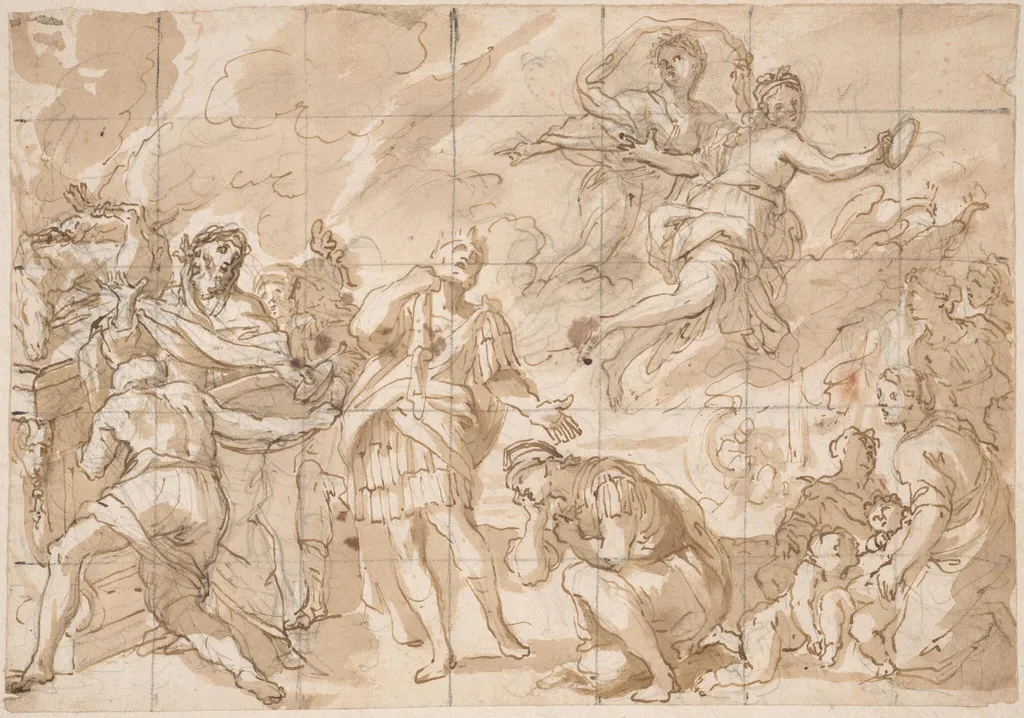
The Sacrifice of Iphigenia is a chalk drawing by the Baroque artist Giovanni Andrea Carlone. It dates from 1674 and is held in the collection of the National Gallery of Art.
About this work
Overview
Created around 1674 by Giovanni Andrea Carlone, this drawing depicts the mythological episode of Iphogenia’s sacrifice. Executed on laid paper, the work measures a modest size yet conveys a complex, crowded scene. It is part of the National Gallery of Art’s collection in Washington, where it is displayed as an example of late‑Seventeenth‑century Italian drawing.
Subject & Meaning
The composition centers on a woman in a flowing robe, seized by a male figure while another man reaches out in apparent protest. Surrounding them, a multitude of onlookers observe the unfolding drama, suggesting the tension between duty and compassion that defines the Iphigenia narrative. The arrangement emphasizes the emotional stakes of the sacrificial moment.
Technique & Style
Carlone employed pen and brown ink, enhanced with a brown wash applied over preliminary black chalk marks. The drawing is squared for transfer, a method that allowed precise replication of a larger design. Varied line work and shading generate depth, while overlapping figures and dynamic poses reflect the Baroque emphasis on movement and theatricality.
History & Provenance
The piece entered the National Gallery of Art’s holdings through acquisition in the twentieth century, though earlier ownership details remain sparse. Its attribution to Carlone, an Italian artist active in Genoa, aligns with his known practice of producing preparatory drawings for larger compositions during the Baroque period.
Artist & collection

Artist
Andrea Carlone was an Italian painter of the Baroque period, active mainly in his natal city of Genoa.

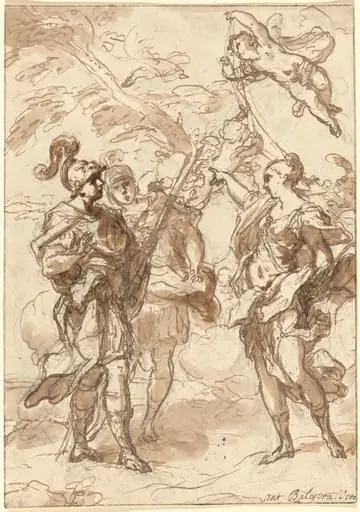 Venus as a Huntress Appearing to Aeneas and Achates
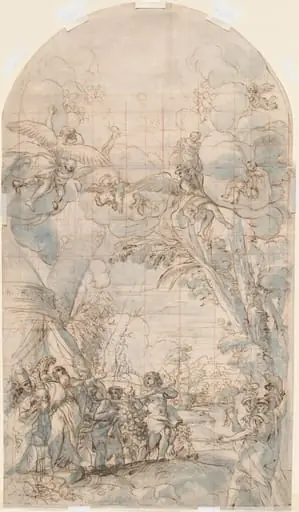 The Spies Returning from Canaan
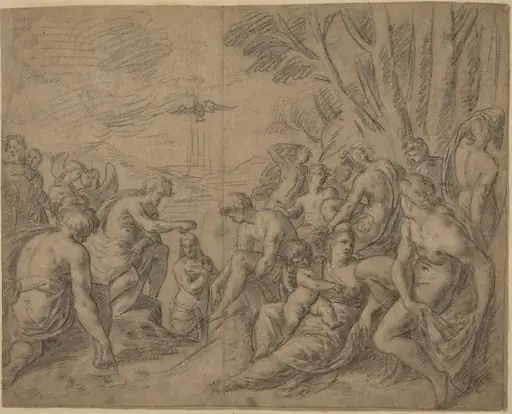 The Baptism of Christ
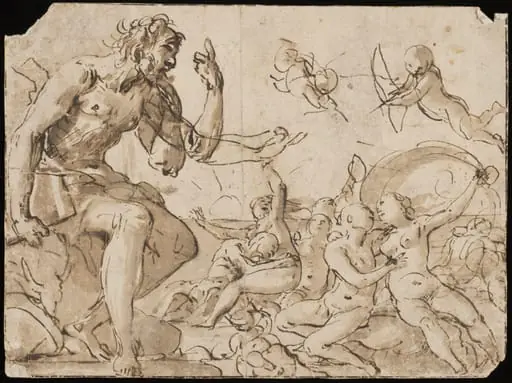 Sea-nymphs playing with tritons and a man; on the left a semi-draped giant, holding a book or stone, seated on a rock; possibly Polyphemus with Acis and Galatea
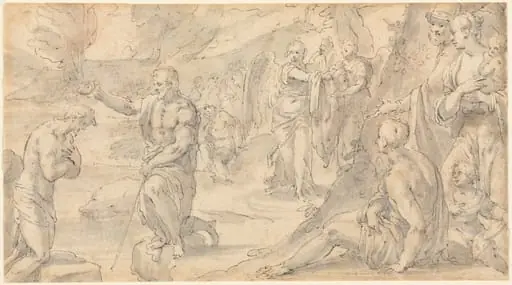 The Baptism of Christ
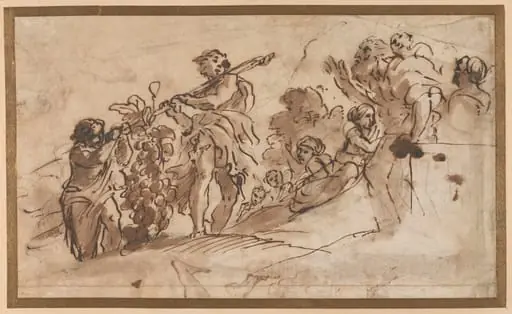 The Return of the Spies from the Promised Land
![Biblical Scene [verso], by Sebastiano Ricci](https://artifactworldgallery.com/img/sebastiano-ricci--biblical-scene-verso--d33f1e2abb3d29f7-w320.webp) Biblical Scene [verso]
Biblical Scene [verso]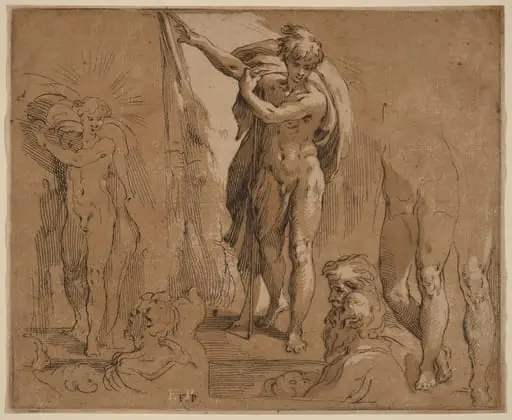 Saint John the Baptist
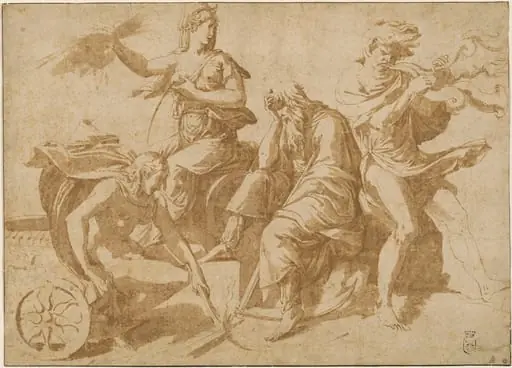 The Four Elements
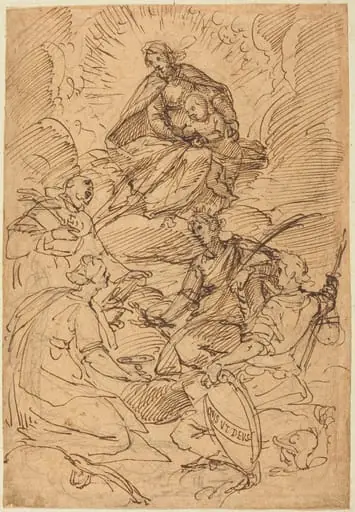 The Madonna and Child in Glory Adored by Saints
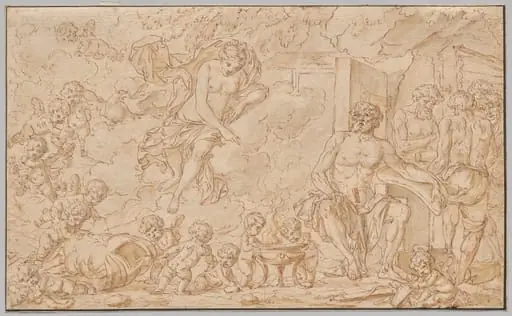 Venus at the Forge of Vulcan
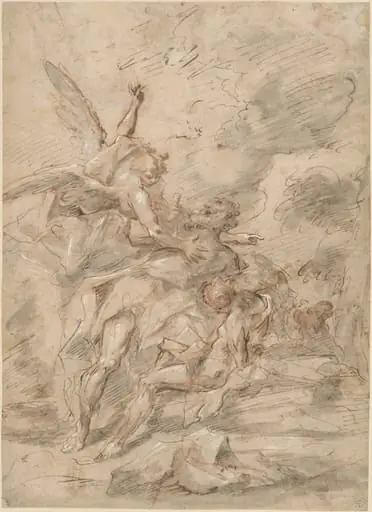 The Sacrifice of Isaac