Artwork
The Madonna and Child in Glory Adored by Saints
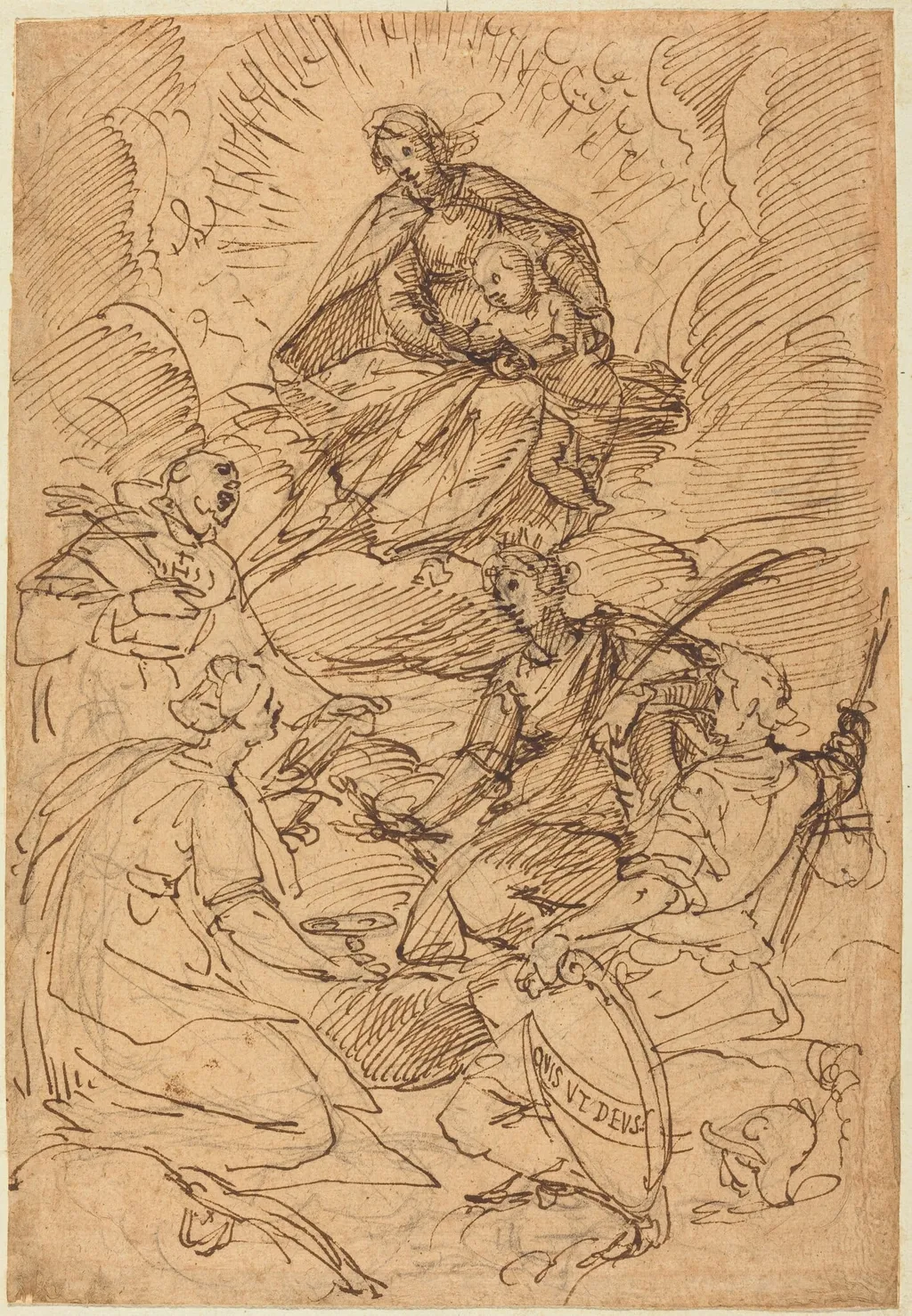
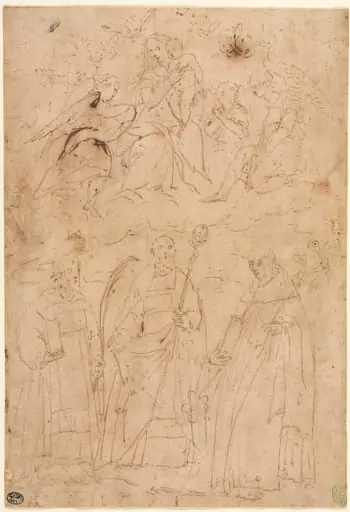
The Madonna and Child in Glory Adored by Saints is a chalk drawing by the Baroque artist Giovanni Battista Paggi. It dates from 1613 and is held in the collection of the National Gallery of Art.
About this work
Overview
The Madonna and Child in Glory Adored by Saints is a 1613 drawing by Giovanni Battista Paggi, created during the transitional period between the Late Renaissance and early Baroque. Executed in pen and brown ink over black chalk on buff laid paper, it is mounted on pale green paper, a typical presentation method for contemporary works on paper.
Subject & Meaning
The drawing portrays a religious scene with the Madonna and Child at the apex, surrounded by a group of adoring saints and figures reaching upwards, conveying a sense of veneration and spiritual ascent.
Technique & Style
Paggi's style in this work reflects the transitional period between artistic epochs. Characteristic features include thick, tangled lines creating a dynamic, swirling composition, and the use of cross-hatching to build up shadows and define forms.
History & Provenance
Created in 1613, the drawing's provenance is not detailed here, though its mounting on pale green paper aligns with common practices of the era for presenting artworks on paper.
Context
This drawing exemplifies Paggi's artistic position at the cusp of the Baroque period, blending Renaissance clarity with emerging Baroque dynamism, as seen in the energetic and layered drawing technique.
Legacy
While specific influence or notable exhibitions of this piece are not highlighted, it contributes to the understanding of Paggi's oeuvre and the broader artistic transition in early 17th-century Italy.
Artist & collection

Artist
Giovanni Battista Paggi (25 or 27 February 1554 – 12 March 1627) was an Italian painter, sculptor, and writer. His style spans the Late-Renaissance and early-Baroque.

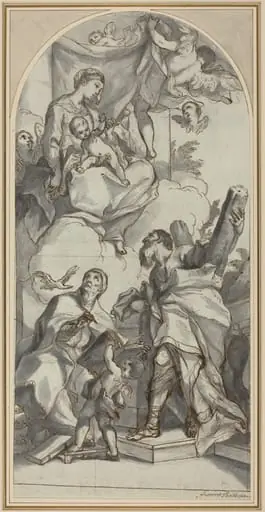 The Madonna and Child in Glory with Saints Gregory the Great and Andrew
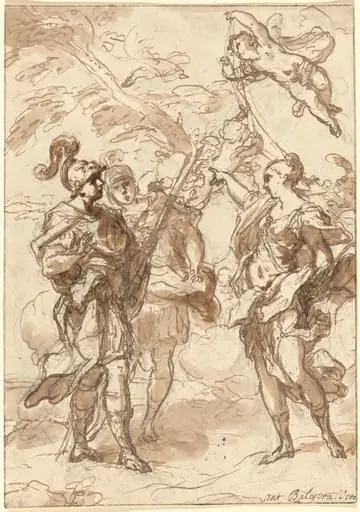 Venus as a Huntress Appearing to Aeneas and Achates
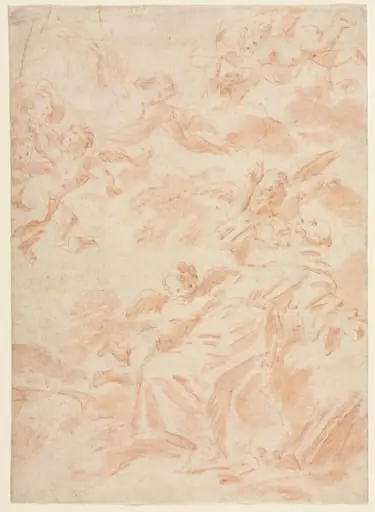 The Stigmatization of Saint Francis
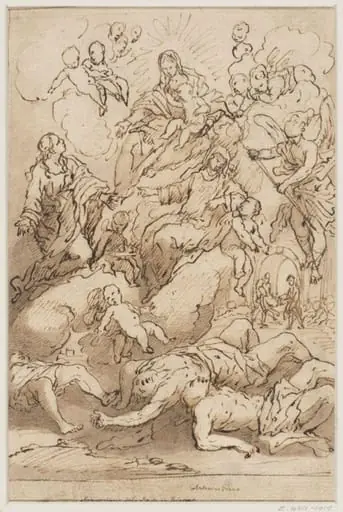 Anniversary of the Plague at Palermo
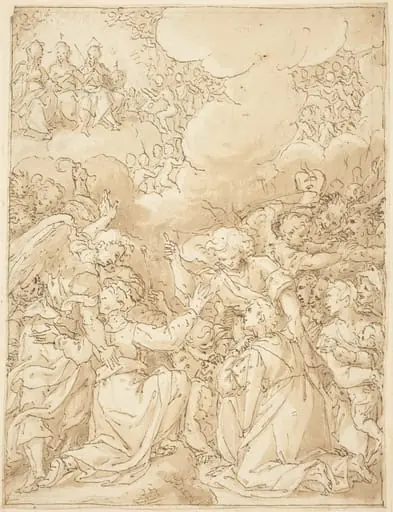 The Last Judgment
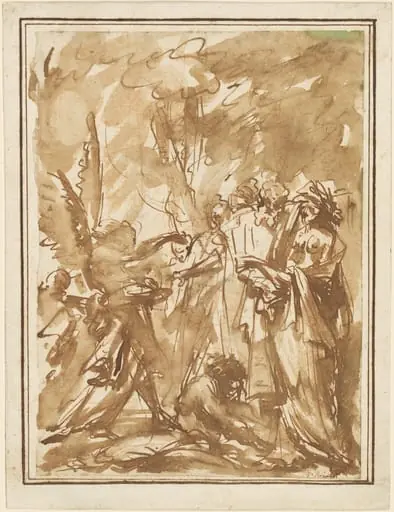 Scherzo with Antique Figures
 The Triumph of the Trinity (The Gloria)
 Virgin of the Immaculate Conception
 Classical Figures Gathered around an Urn
 The Assumption of the Virgin