Artwork
The Spies Returning from Canaan
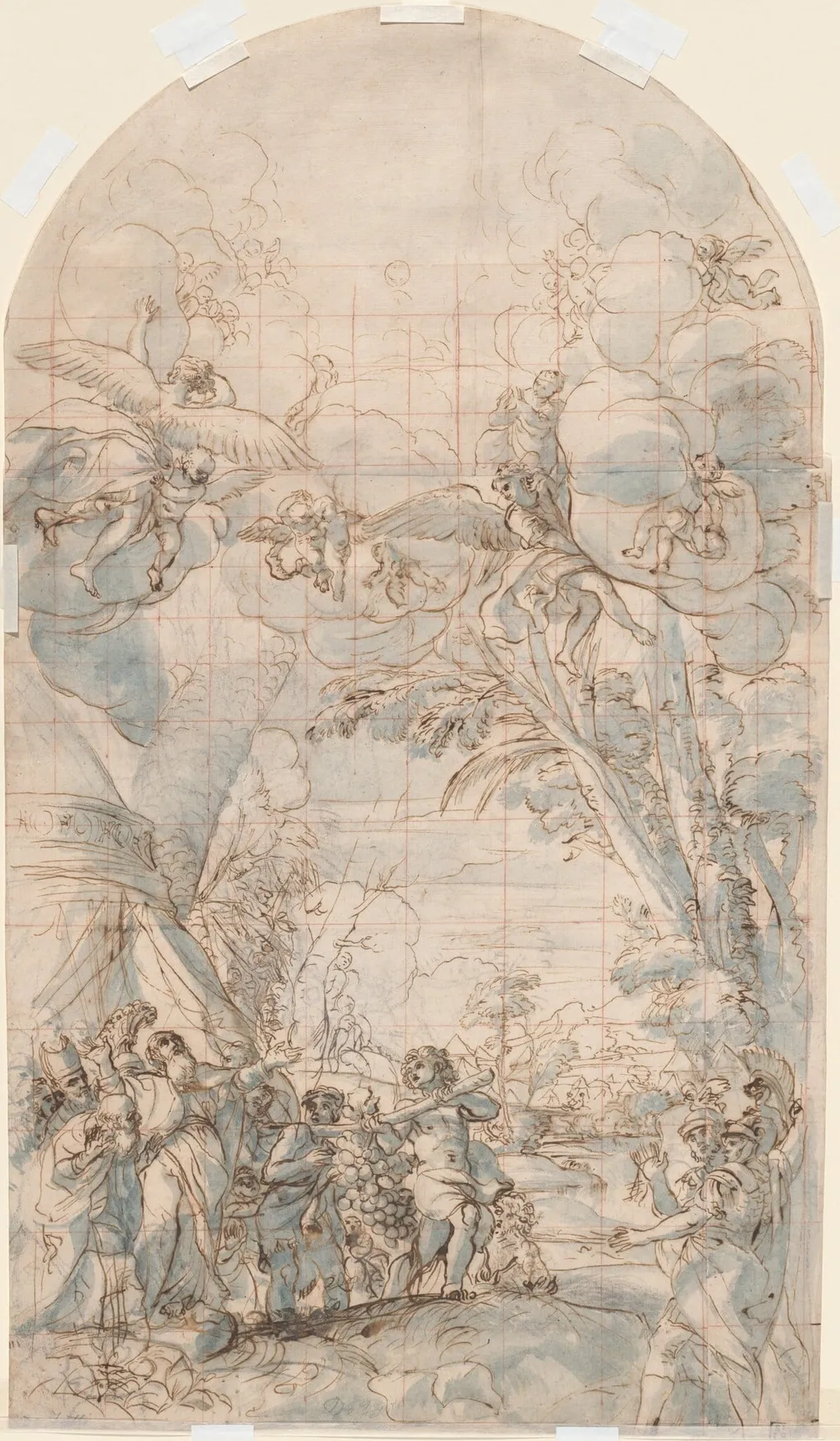
The Spies Returning from Canaan is a chalk drawing by the Baroque artist Giacinto Calandrucci. It dates from 1694 and is held in the collection of the National Gallery of Art.
About this work
Overview
Executed in pen and brown ink with blue wash over black chalk, it was made on laid paper and carefully squared with red chalk to facilitate scaling.
Created around 1694 by the Sicilian artist Giacinto Calandrucci, this drawing is a preparatory study for a larger decorative composition. Executed in pen and brown ink with blue wash over black chalk, it was made on laid paper and carefully squared with red chalk to facilitate scaling. Calandrucci, trained in Rome under Carlo Maratta and Giuseppe Passeri, specialized in fresco cycles for aristocratic residences, and this work reflects his role as a designer for monumental interiors.
Subject & Meaning
The scene illustrates the biblical account from Numbers 13, in which twelve spies return from scouting the land of Canaan, bearing a cluster of grapes on a pole. The figures are arranged in a dynamic group, some grounded, others seemingly lifted by motion, suggesting divine intervention or the weight of their report. The inclusion of vines and trees anchors the narrative in the promised land, while the composition conveys tension between awe and dread.
Technique & Style
Calandrucci employed loose, fluid lines in pen and ink, enhanced by subtle blue washes to suggest atmosphere and volume. Black chalk provided foundational structure, while red chalk squares guided the transfer of the design to a larger surface. The sketch-like quality reveals a focus on movement and gesture rather than finish, characteristic of preparatory drawings meant for mural execution. The aerial figures introduce a sense of theatrical motion typical of Baroque visual language.
History & Provenance
The drawing was likely made as a modello for a ceiling or wall fresco in a Roman palace, though the final painted version has not been identified. Its survival suggests it was valued as an independent work, possibly retained by the artist or a patron. Calandrucci’s known commissions in Rome during the 1690s align with the drawing’s date, placing it within his most active period as a decorative painter under papal and noble patronage.
Context
In late 17th-century Rome, religious narratives dominated decorative art, especially in elite interiors. Calandrucci’s style reflects the influence of his mentors, who upheld classical composition while embracing Baroque dynamism. The use of aerial figures and flowing drapery echoes the theatricality of Roman fresco cycles, where illusionistic space and emotional intensity were key to conveying sacred stories to viewers below.
Legacy
Though Calandrucci’s large-scale frescoes have largely faded or been lost, this drawing preserves his approach to narrative design. It exemplifies the collaborative, process-driven nature of Baroque decoration, where preparatory studies were essential to translating vision into monumental form. As a surviving artifact of studio practice, it offers insight into how artists translated biblical themes into immersive architectural environments.
Artist & collection
Artist
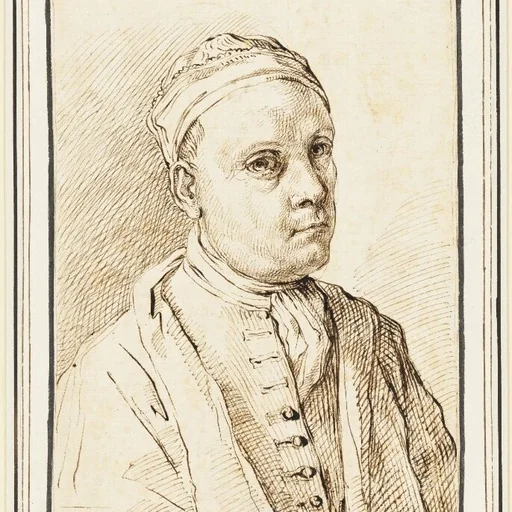
Giacinto Calandrucci (20 April 1646 – 22 February 1707) was an Italian painter of the Baroque period.

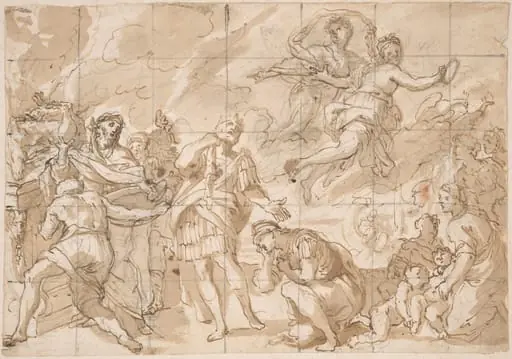 The Sacrifice of Iphigenia
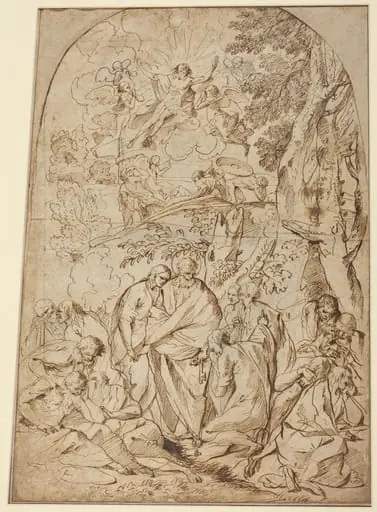 The Resurrection
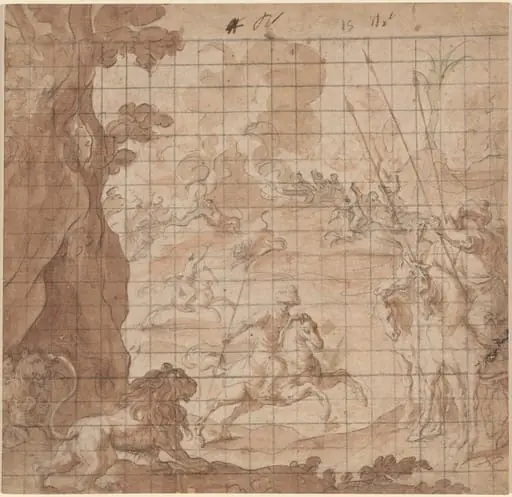 The Lion Hunt
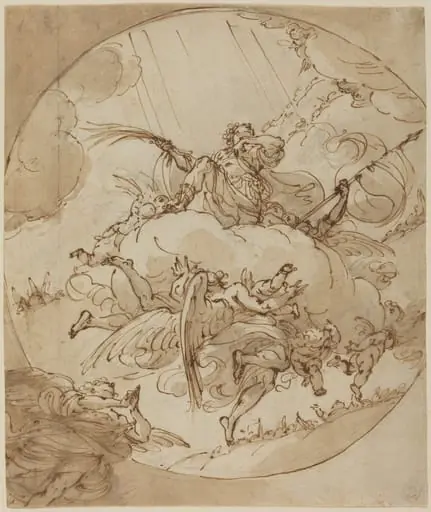 The Apotheosis of San Vitale
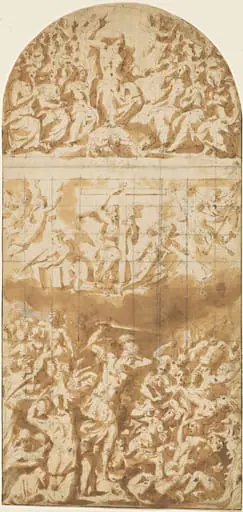 The Last Judgment
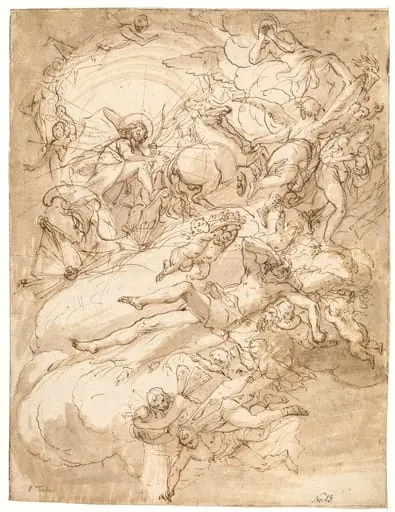 Apollo in his chariot, design for a ceiling painting
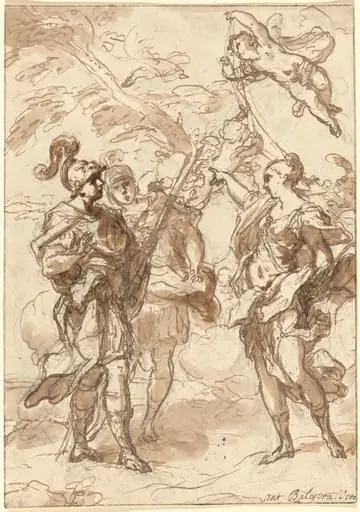 Venus as a Huntress Appearing to Aeneas and Achates
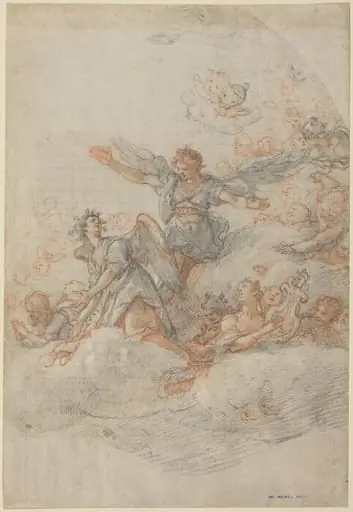 Angels and Putti in the Clouds
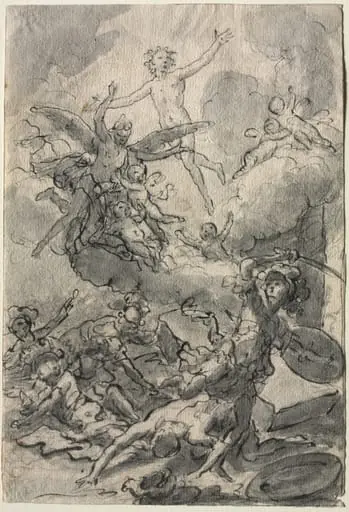 The Resurrection
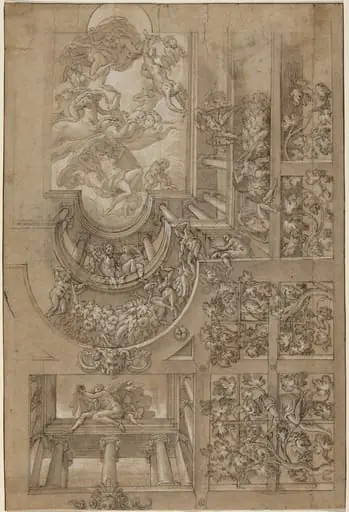 Illusionistic Ceiling with a Grape Arbor, Figures Poised on Galleries, and a Central Scene of Olympian Gods
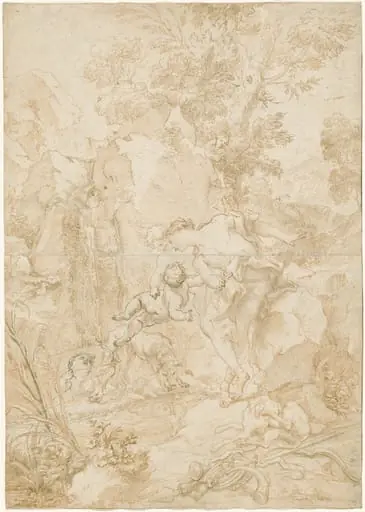 Echo and Narcissus
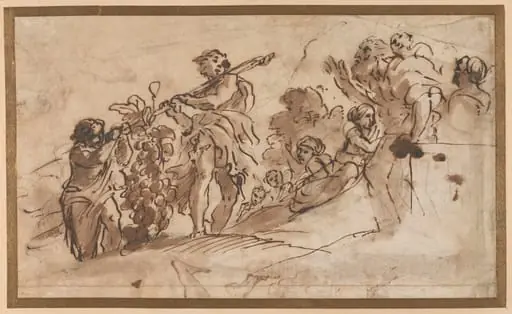 The Return of the Spies from the Promised Land