Artwork
La torre de la iglesia (cercanías de Douarnenez)
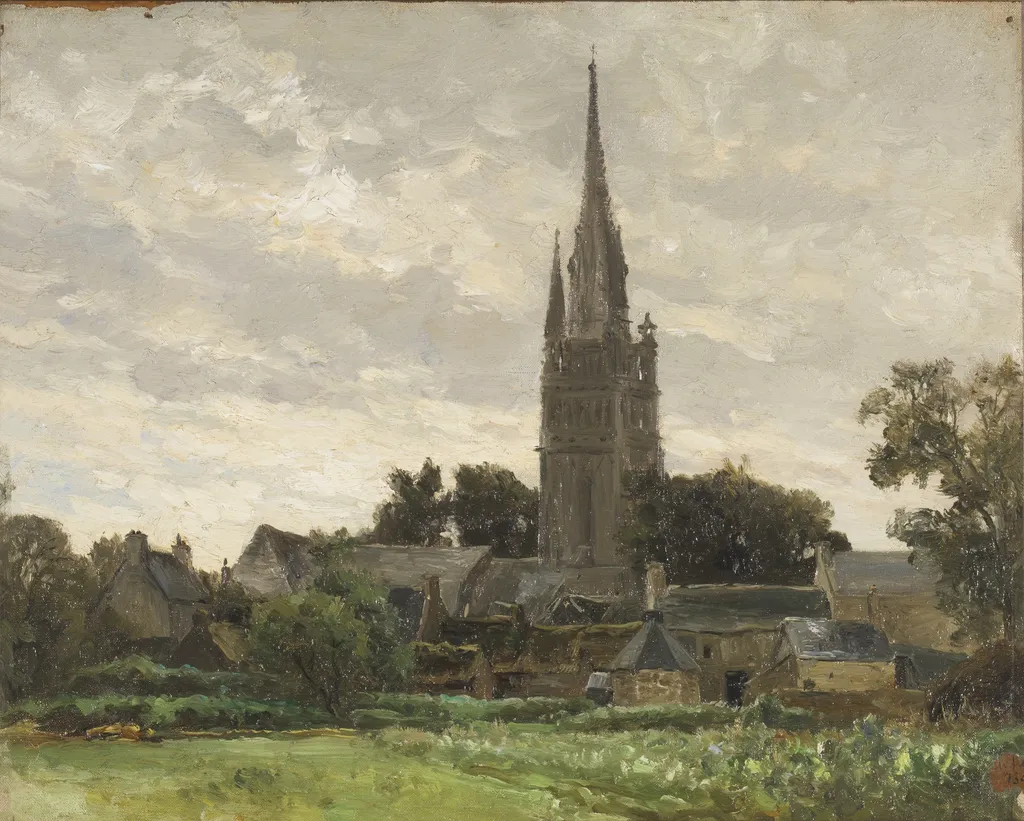
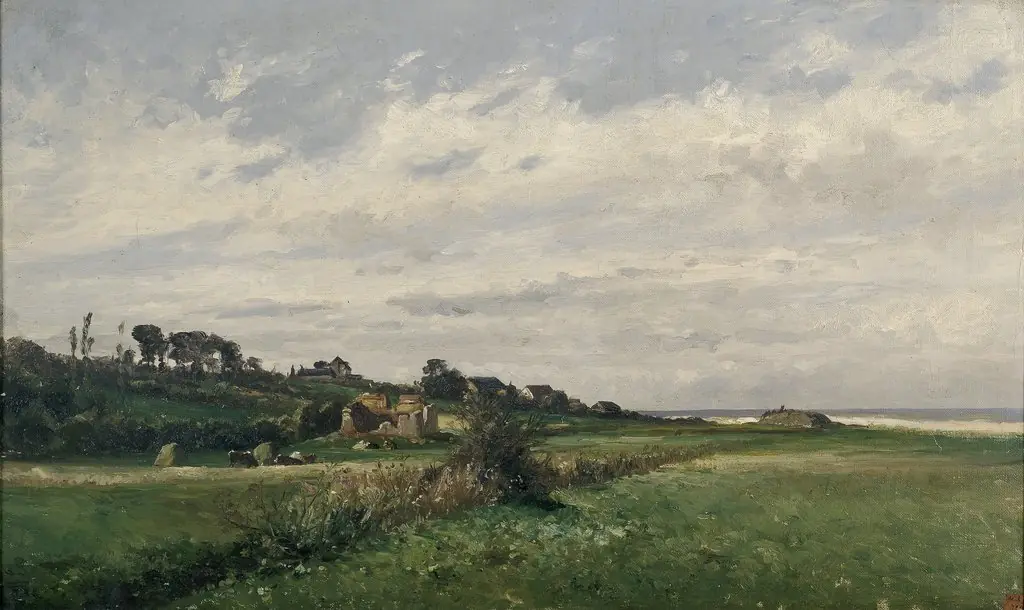
La torre de la iglesia (cercanías de Douarnenez) is an oil painting by the Impressionist artist Carlos de Haes. It dates from 1889 and is held in the collection of the Museo del Prado.
About this work
Overview
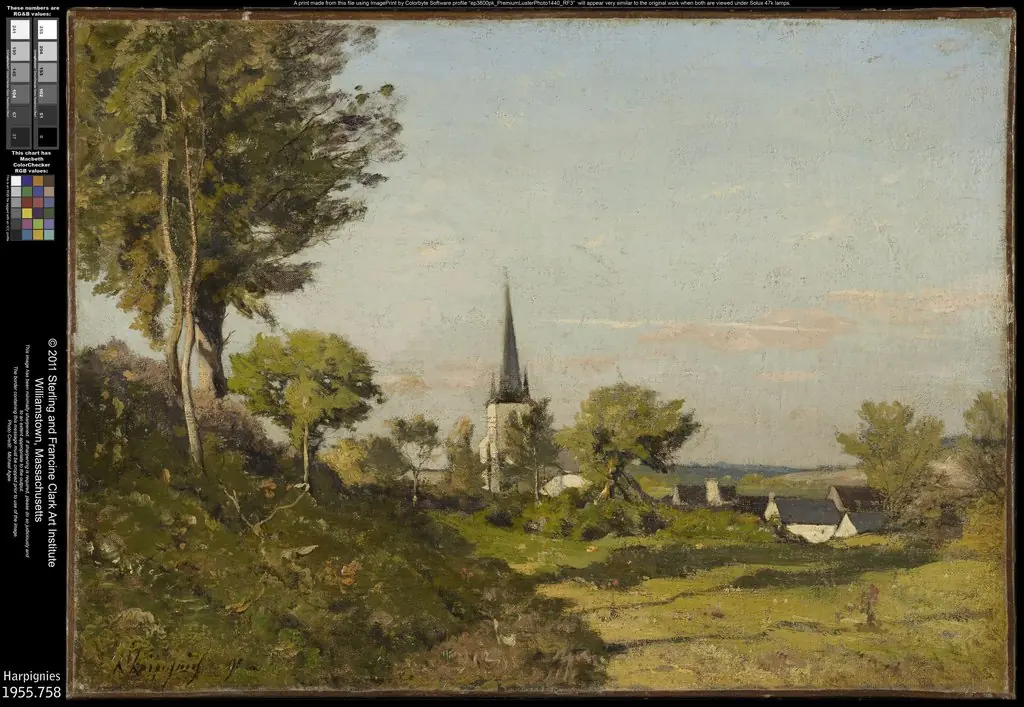
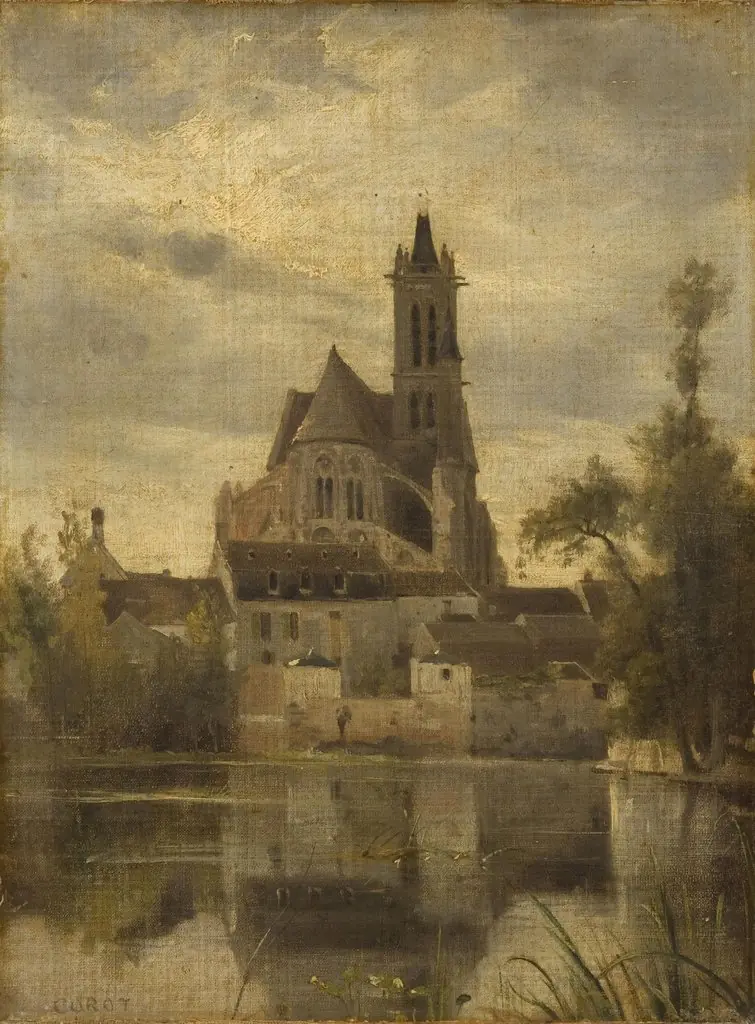
Created in 1889, *La torre de la iglesia (cercanías de Douarnenez)* is an oil painting by Carlos de Haes. The canvas presents a solitary church steeple rising above a modest settlement, its silhouette rendered against a pale, textured sky. The work belongs to the Prado Museum’s collection and exemplifies the artist’s blend of Realist observation with a looser, light‑filled approach.
Subject & Meaning
The composition centers on a tall, dark‑toned steeple that dominates the horizon, suggesting the prominence of religious architecture in a rural Breton landscape. Below, modest houses and scattered trees are suggested with quick, gestural strokes, conveying a sense of everyday life while the expansive sky hints at the openness of the surrounding countryside.
Technique & Style
Haes employs a visibly impastoed surface, especially in the sky where thick layers of paint catch the light. Brushwork remains loose and expressive, with rapid, rough strokes defining foliage and architecture. This handling, while rooted in Realist detail, aligns with Impressionist concerns for atmosphere and the fleeting effects of light.
History & Provenance
Born in Belgium but active in Spain, Carlos de Haes was a pivotal figure in mid‑nineteenth‑century Spanish landscape painting. After its creation, the canvas entered the holdings of the Museo del Prado, where it remains on display, reflecting the museum’s commitment to preserving works that mark the transition from strict Realism to a more atmospheric visual language.
Own this work as a print
Artist & collection
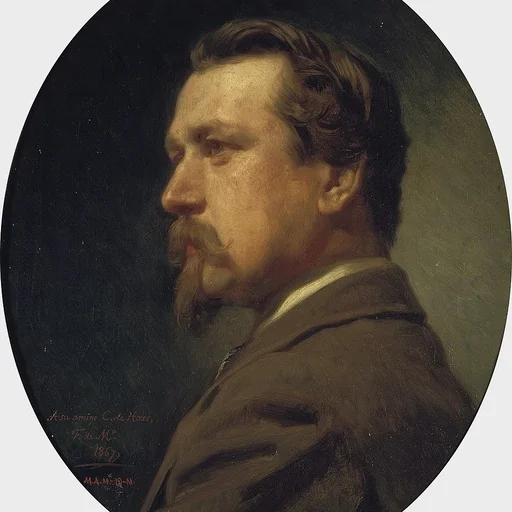
Artist
Carlos Sebastián Pedro Hubert de Haes (January 25, 1829 – June 17, 1898) was a Spanish painter from Belgium.