Artwork
Untitled
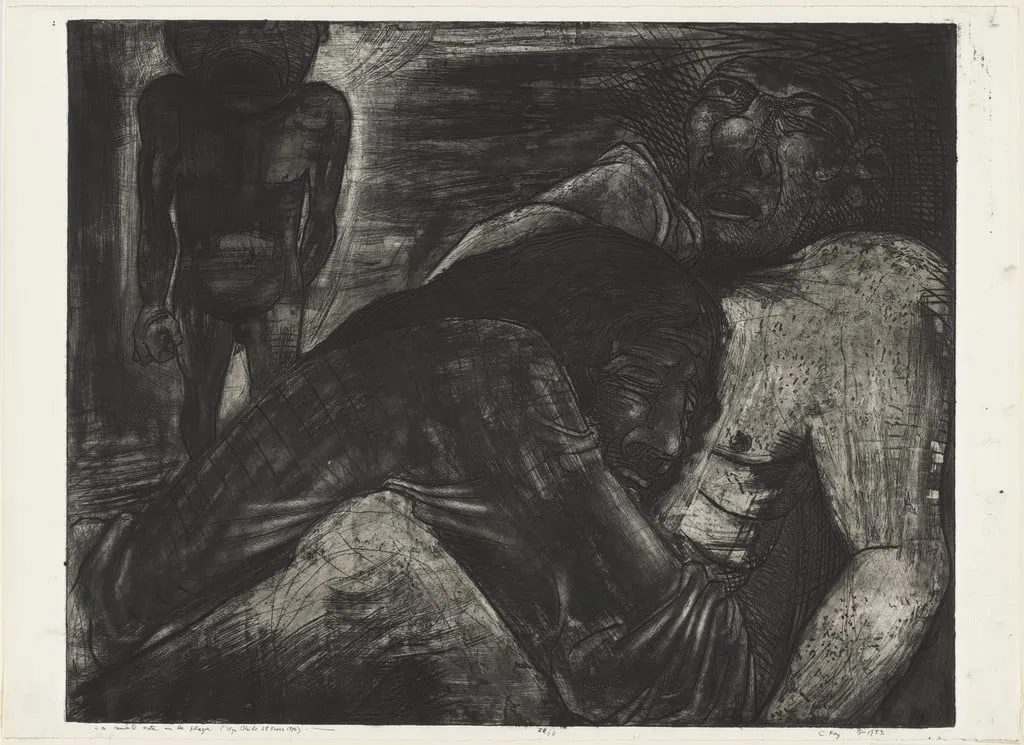
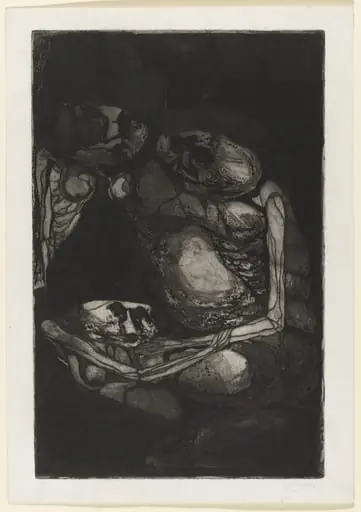
Untitled is an ink print by Carlos Faz Caimus. It dates from 1953 and is held in the collection of the Museum of Modern Art.
About this work
The lines are rough and scratchy—this is drypoint, where the artist scratches straight into the metal plate.
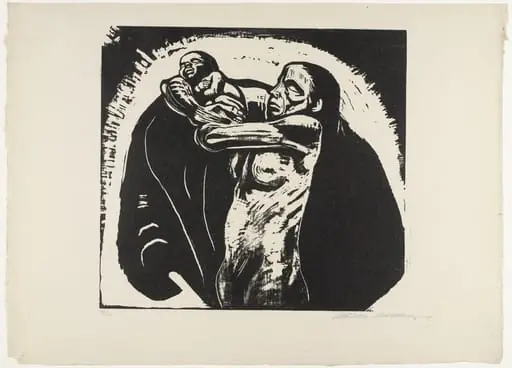
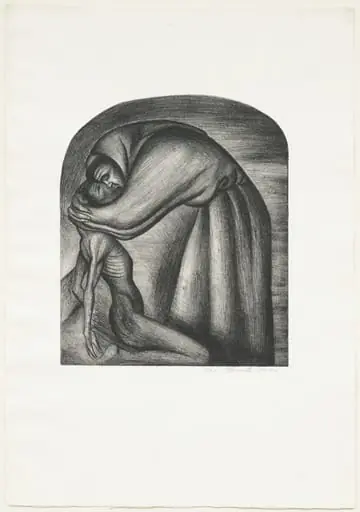
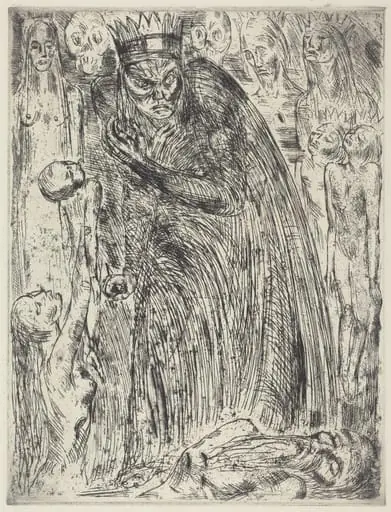
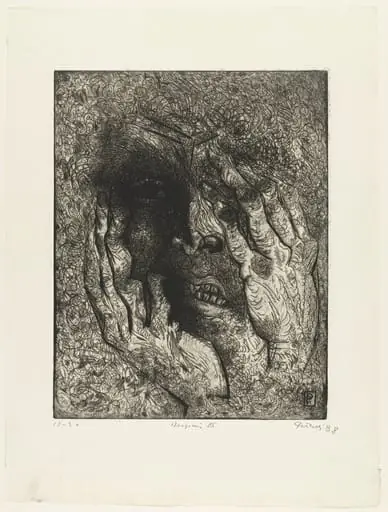
This etching shows a dark plaza at night with faint, ghostly figures and a shadowy building. The lines are rough and scratchy—this is drypoint, where the artist scratches straight into the metal plate. The scene feels eerie and still, like a moment frozen just before something happens.
Caimus made this in 1953, the same year he died. It’s his last known work, and the title hints at death lurking in everyday places.
Look for the sharp contrast between light and dark in the background. It’s a quiet hint at how he used shadows to shape the mood.
Find more of his work at The Museum of Modern Art.
Overview
Carlos Faz Caimus created this etching in 1953, the final known work before his death. Executed in drypoint, the piece is a nocturnal scene rendered with coarse, incised lines that produce a textured, atmospheric effect. It resides in the collection of The Museum of Modern Art, where it stands as a quiet testament to the artist’s late style—minimal in composition but rich in emotional resonance.
Subject & Meaning
The image depicts an empty, shadowed plaza under nightfall, with indistinct human forms and a looming structure barely visible in the distance. The absence of clear narrative invites contemplation of isolation and impermanence. The title, Untitled, underscores the ambiguity, suggesting that the unease embedded in ordinary spaces may be more telling than any named event.
Technique & Style
Using drypoint, Caimus scratched directly into a metal plate, creating dense, fuzzy lines that hold ink unevenly. This method produces a rich, grainy blackness and soft transitions between light and dark. The roughness of the lines enhances the sense of unease, transforming the etching into a tactile record of the artist’s hand and a visual echo of psychological tension.
History & Provenance
Made in 1953, the year of Caimus’s death, this print is his last documented work. It entered The Museum of Modern Art’s collection shortly after, likely through acquisition from the artist’s estate or a contemporary gallery. Its preservation as a singular artifact underscores its significance as a closing statement in a career cut short.
Context
In postwar Latin American art, many artists turned to introspective, somber imagery reflecting societal anxiety and personal loss. Caimus’s etching aligns with this trend, using urban solitude and chiaroscuro to convey emotional weight without overt symbolism. His work, though not widely exhibited, resonates with contemporaries who explored the psychological dimensions of the everyday.
Legacy
Though Caimus produced few works, this etching endures as a poignant example of his singular vision. Its quiet intensity and technical rawness have influenced later printmakers interested in emotional depth over formal polish. Held in a major institution, it ensures his brief but evocative contribution remains part of 20th-century printmaking discourse.
Artist & collection