Artwork
Untitled
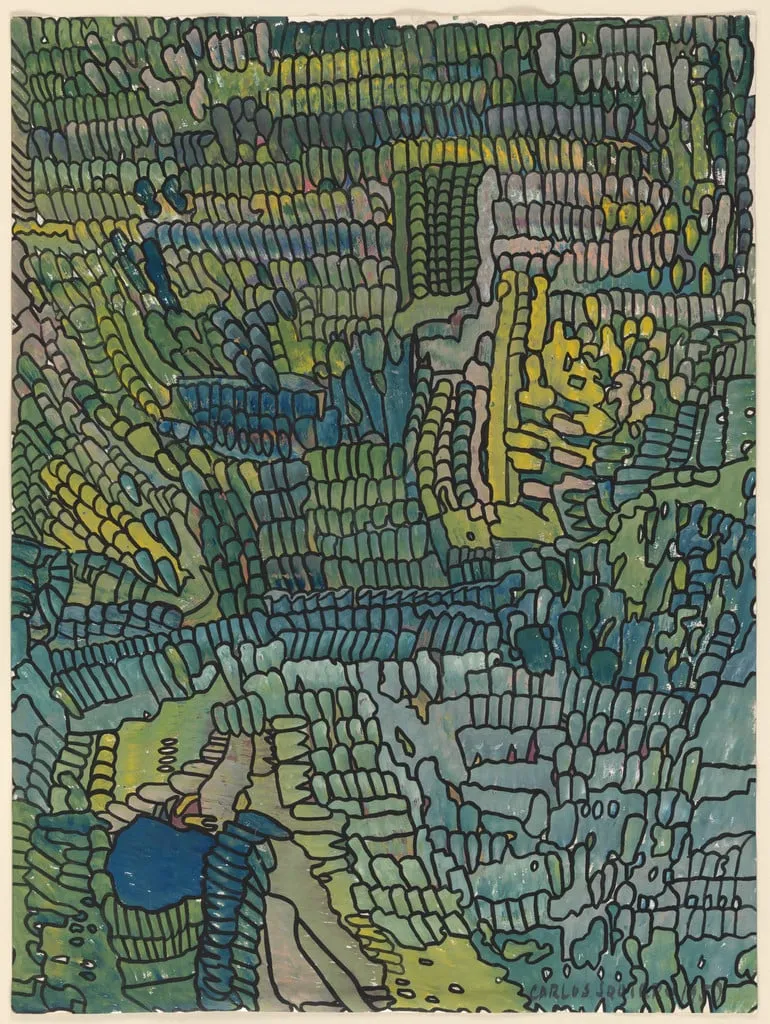
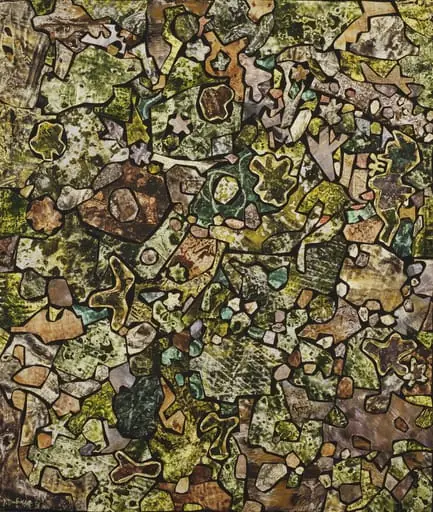
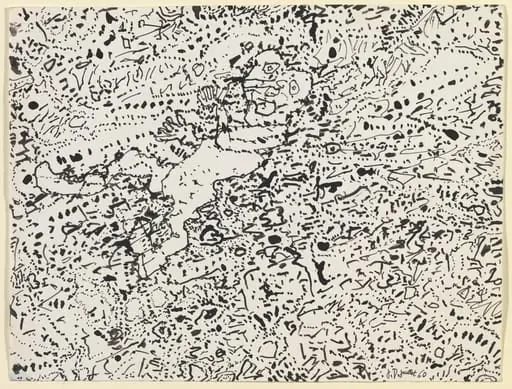
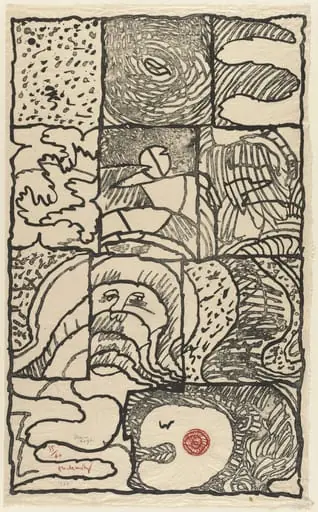
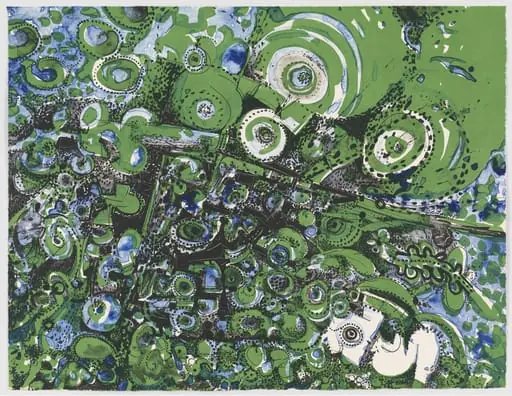
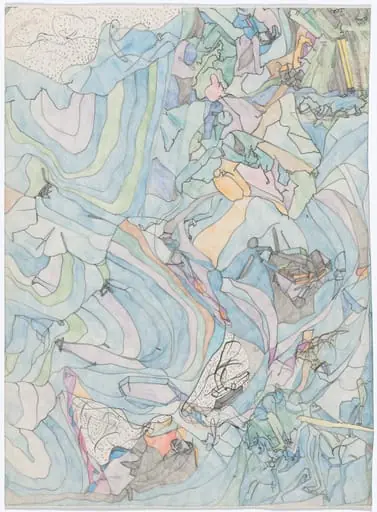
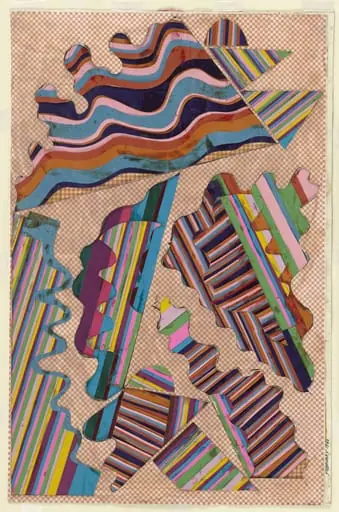
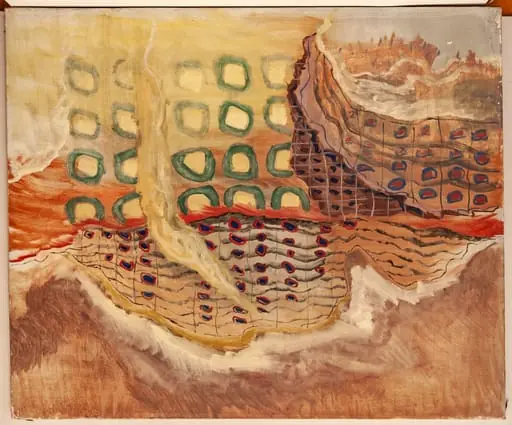
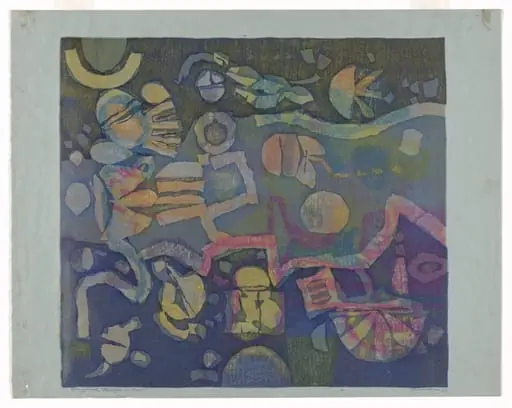
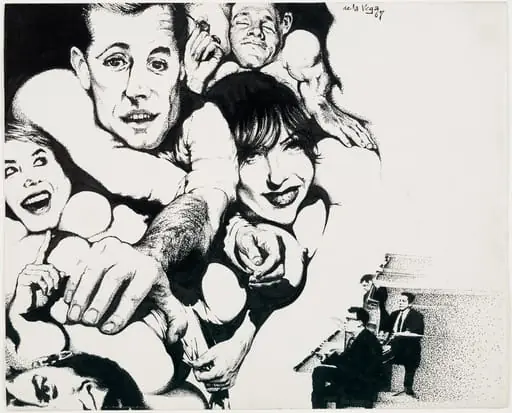
Untitled is a tempera drawing by Carlos Maria Miguel Squirru. It dates from 1957 and is held in the collection of the Museum of Modern Art. Created in 1957, this tempera drawing on paper by Carlos María Squirru is part of The Museum of Modern Art’s collection.
About this work
Overview
Created in 1957, this tempera drawing on paper by Carlos María Squirru is part of The Museum of Modern Art’s collection. It presents a non-representational composition dominated by dense, overlapping lines and muted natural tones. The work resists clear figuration, instead evoking a sense of organic turbulence through layered pigment and unrefined mark-making.
Subject & Meaning
Thick black strokes intertwine with washes of green, yellow, and blue, implying vegetation, light, and perhaps water in the lower left.
The piece does not depict a literal landscape but suggests an abstracted natural environment. Thick black strokes intertwine with washes of green, yellow, and blue, implying vegetation, light, and perhaps water in the lower left. Its chaotic structure conveys an emotional or psychological state rather than a physical place, inviting interpretation as a visual metaphor for wildness or inner turmoil.
Technique & Style
Tempera, a fast-drying medium, was applied with loose, gestural strokes that emphasize spontaneity over precision. The artist layered pigments to build texture, allowing edges to blur and colors to bleed slightly. The rough, scribbled lines and uneven application create a sense of urgency, aligning the work with postwar expressive abstraction rather than traditional representation.
History & Provenance
The work entered MoMA’s collection shortly after its creation, reflecting institutional interest in Latin American modernists during the 1950s. Squirru, an Argentine artist and critic, was active in avant-garde circles, and this piece exemplifies his experimental phase. Its acquisition underscores MoMA’s broader engagement with non-European modernisms during the Cold War era.
Context
Made during a period of intense cultural redefinition in Latin America, the work aligns with regional movements that rejected academic realism in favor of personal, expressive forms. While European abstraction influenced many artists, Squirru’s approach retained a distinct sensibility rooted in local landscapes and emotional intensity, diverging from purely geometric trends.
Legacy
Though not widely exhibited today, the piece remains a significant example of mid-century Argentine abstraction. It contributes to the understanding of how tempera, often associated with early Renaissance techniques, was reimagined by postwar artists for expressive, non-traditional ends. Its presence in MoMA’s collection affirms its role in expanding the canon of modern drawing.
Artist & collection