Artwork
Idle Days, Gloucester, Massachusetts
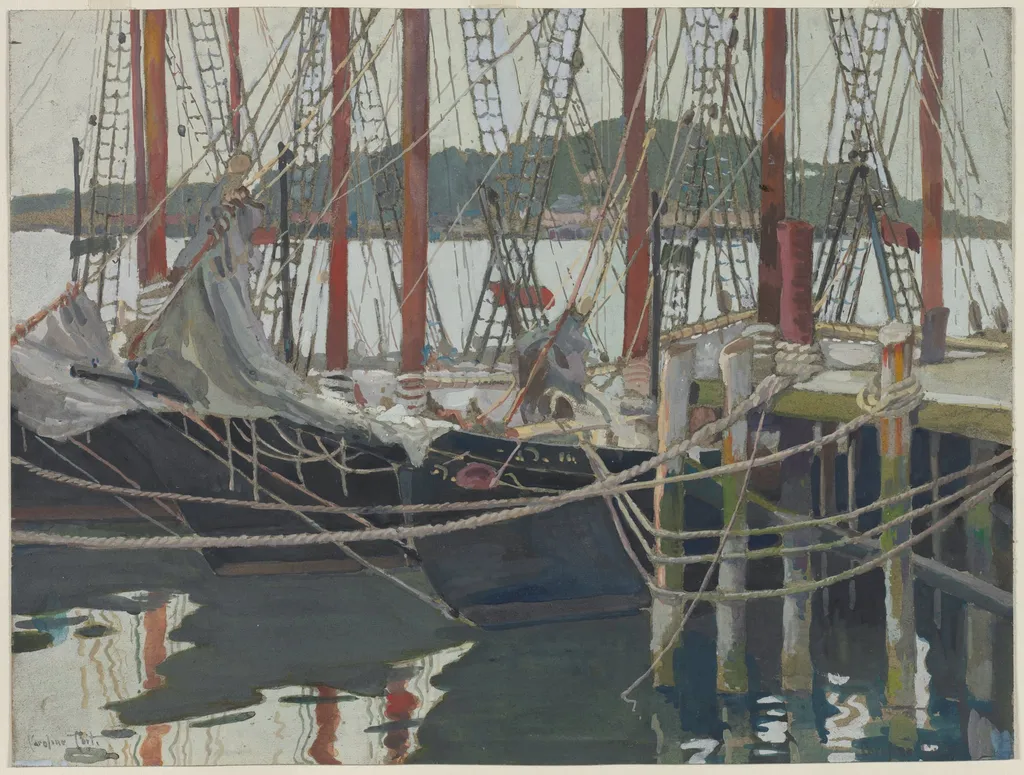
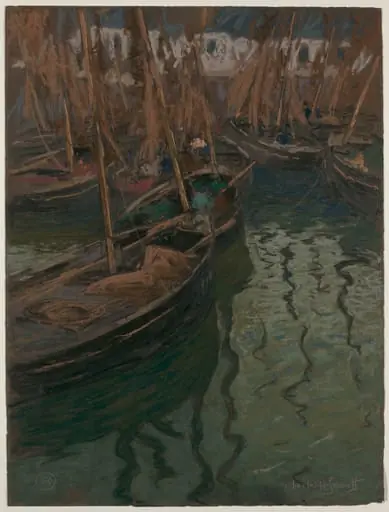
Idle Days, Gloucester, Massachusetts is a drawing by Caroline E. Coit. It dates from 1920 and is held in the collection of the Cleveland Museum of Art.
About this work
The overall effect is one of serenity and tranquility, as if the viewer has stumbled upon a quiet moment in a bustling harbor.
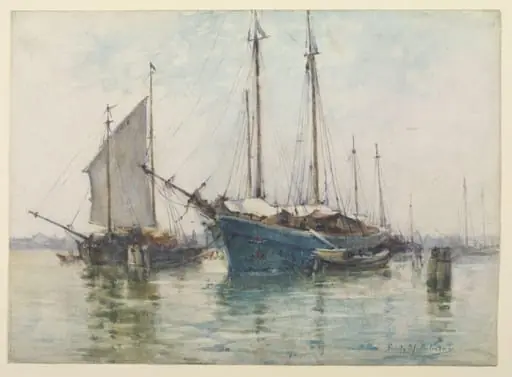
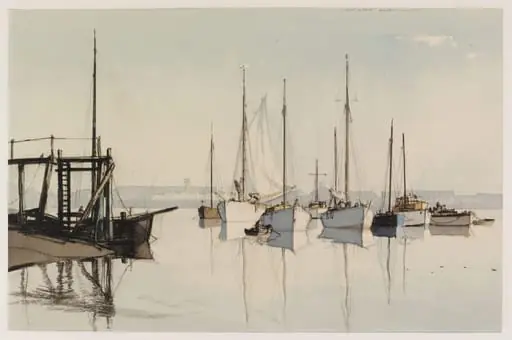
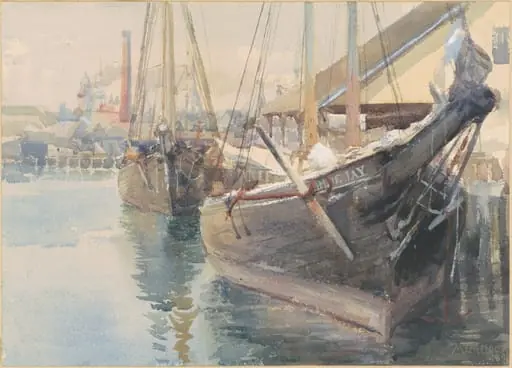
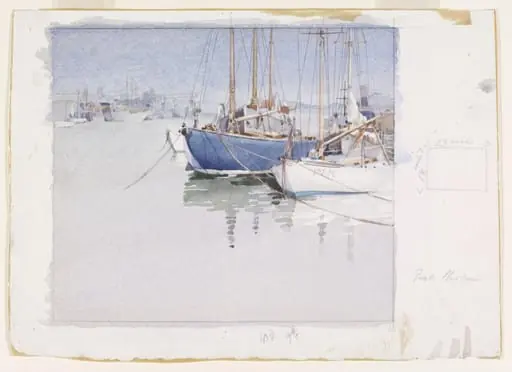
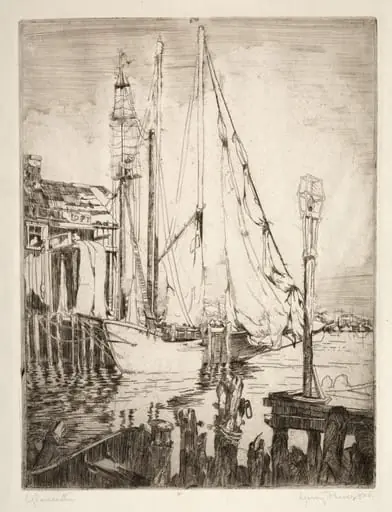
In front of you is a painting of a dock with several boats moored to it. The boats are all different sizes, and they have tall masts and ropes that crisscross the scene. The water is calm, reflecting the boats and the dock.
The painting is done in muted colors, with shades of gray, brown, and blue dominating the palette. The overall effect is one of serenity and tranquility, as if the viewer has stumbled upon a quiet moment in a bustling harbor.
The artist, Caroline E. Coit, was an American painter who was active in the early 20th century. You can learn more about her work at The Cleveland Museum of Art.
Overview
Idle Days, Gloucester, Massachusetts is a graphite and watercolor drawing by Caroline E. Coit, dated around 1920. It depicts a quiet harbor scene in Gloucester, a coastal fishing town in Massachusetts. The work is part of the collection at The Cleveland Museum of Art, where it is preserved as an example of early 20th-century American draftsmanship focused on maritime life.
Subject & Meaning
The drawing captures a moment of stillness among working vessels—small and large boats tied to a weathered dock, their masts and rigging forming a network of vertical and diagonal lines. The absence of figures and the calm water suggest a pause in daily labor, evoking a sense of quiet endurance rather than activity. The scene reflects the rhythm of coastal life, where rest is woven into the routine of fishing and trade.
Technique & Style
Coit employed a restrained palette of gray, brown, and muted blue, using delicate washes and precise linear details to define the boats, ropes, and reflections. The water’s surface is rendered with subtle tonal shifts, suggesting stillness without artificial polish. The composition balances structure and spontaneity, with loose strokes in the water contrasting the tighter rendering of the dock and rigging.
History & Provenance
The drawing entered The Cleveland Museum of Art’s collection in the 20th century, though its exact acquisition date is not widely documented. Coit, a lesser-known artist of the period, produced a modest body of work centered on New England coastal subjects. This piece remains one of the few surviving examples of her observational drawings, valued for its quiet authenticity rather than public acclaim.
Context
Created during a time when American artists increasingly turned to regional scenes, Coit’s work aligns with a broader interest in everyday maritime environments. Gloucester, a historic fishing port, attracted artists seeking unidealized subjects. Unlike grand seascapes, this drawing focuses on the quiet infrastructure of the harbor—docks, ropes, and anchored boats—reflecting a shift toward intimate, unembellished observation.
Legacy
Though Caroline E. Coit did not achieve widespread recognition, Idle Days contributes to the understanding of early 20th-century American women artists who documented local landscapes with sensitivity. The drawing stands as a quiet testament to the overlooked rhythms of coastal labor, offering a restrained yet evocative record of a place and time through careful, unadorned observation.
Own this work as a print
Artist & collection