Artwork
The Virgin Crowned by Two Angels
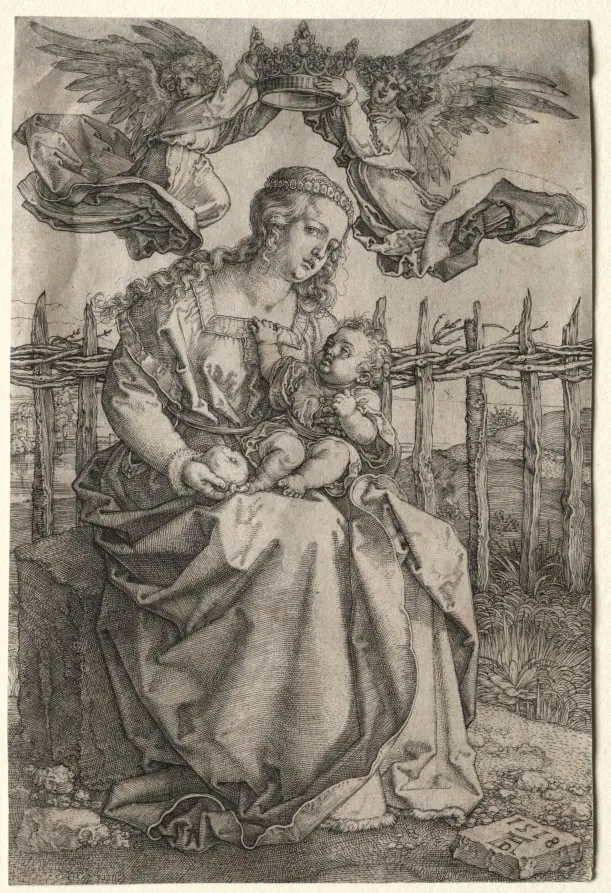
The Virgin Crowned by Two Angels is a print by the Renaissance artist Albrecht Dürer. It dates from 1518 and is held in the collection of the Cleveland Museum of Art.
About this work
Overview
Executed in fine line engraving, it reflects Dürer’s technical precision and his role as a leading Northern Renaissance artist.
Created in 1518, this print by Albrecht Dürer presents the Virgin Mary being crowned by two angels, a devotional image rooted in medieval and early Renaissance theology. Executed in fine line engraving, it reflects Dürer’s technical precision and his role as a leading Northern Renaissance artist. Though often associated with painting, Dürer’s influence was most widely felt through his prints, which circulated across Europe and shaped religious imagery for decades.
Subject & Meaning
The scene depicts Mary, seated with the Christ Child, receiving a crown from hovering angels — a visual affirmation of her role as Queen of Heaven. The intimate yet sacred composition elevates the moment beyond familial tenderness, emphasizing divine favor. The crown, halos, and upward gaze reinforce theological concepts of Mary’s sanctity and intercessory power, aligning with contemporary Marian devotion in Catholic Europe.
Technique & Style
Dürer employed meticulous engraving to render delicate textures: the soft folds of Mary’s robe, the feathery wings of the angels, and the subtle gradations of light across their forms. Fine, controlled lines model volume and depth, while the sparse background — a low fence and distant structure — focuses attention on the central figures. The absence of bold chiaroscuro suggests restraint, prioritizing clarity and spiritual serenity over dramatic contrast.
History & Provenance
Commissioned during Dürer’s mature period, the print likely served private devotion or as a gift among elite patrons. It was produced shortly after his second trip to the Netherlands, where his reputation had solidified among humanist circles and imperial patrons. The work’s survival in multiple impressions indicates its popularity and the efficiency of Dürer’s print workshop, which distributed his images widely across religious and secular audiences.
Context
In early 16th-century Germany, religious imagery was both a spiritual tool and a cultural artifact. Dürer’s engagement with Marian themes coincided with growing devotional practices and the looming Reformation. While Catholic institutions promoted such images, Protestant reformers later criticized their veneration. This print thus exists at a crossroads — affirming tradition even as the religious landscape began to fracture.
Legacy
The print contributed to the standardization of Marian iconography in Northern Europe, influencing later artists through its balance of naturalism and spiritual symbolism. Dürer’s technical approach to engraving set new benchmarks for detail and expressiveness in printmaking. Though not as widely reproduced as his later works, this image remains a key example of how religious themes were rendered with intellectual rigor and aesthetic discipline during the Renaissance.
Artist & collection
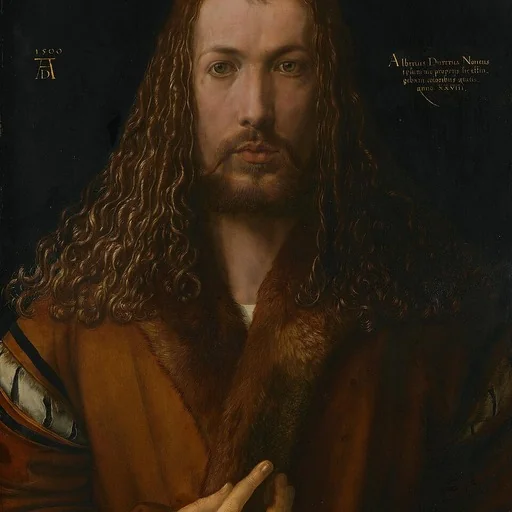
Artist
Albrecht Dürer spent his life in Nuremberg, a busy German city where artists traded prints like currency.

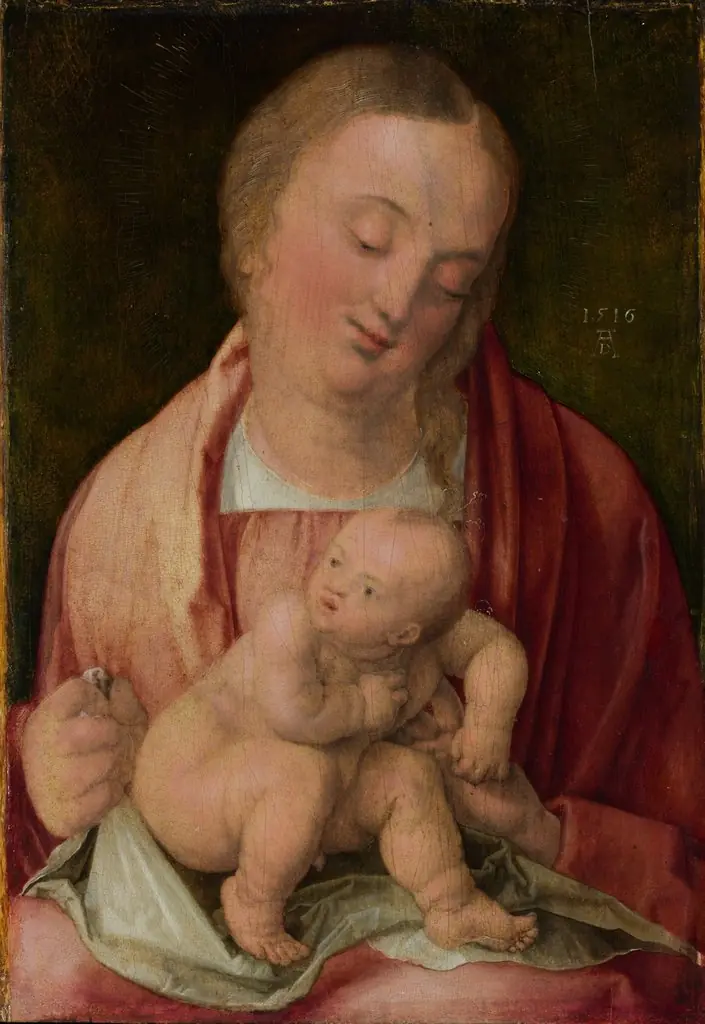
![Madonna and Child [obverse], by Albrecht Dürer](https://artifactworldgallery.com/img/albrecht-durer--madonna-and-child-obverse--d7b8ebf05d22ebe5-w320.webp)
![Lot and His Daughters [reverse], by Albrecht Dürer](https://artifactworldgallery.com/img/albrecht-durer--lot-and-his-daughters-reverse--b4ebf9b282faa17a-w320.webp)