Artwork
The Madonna Nursing the Christ Child
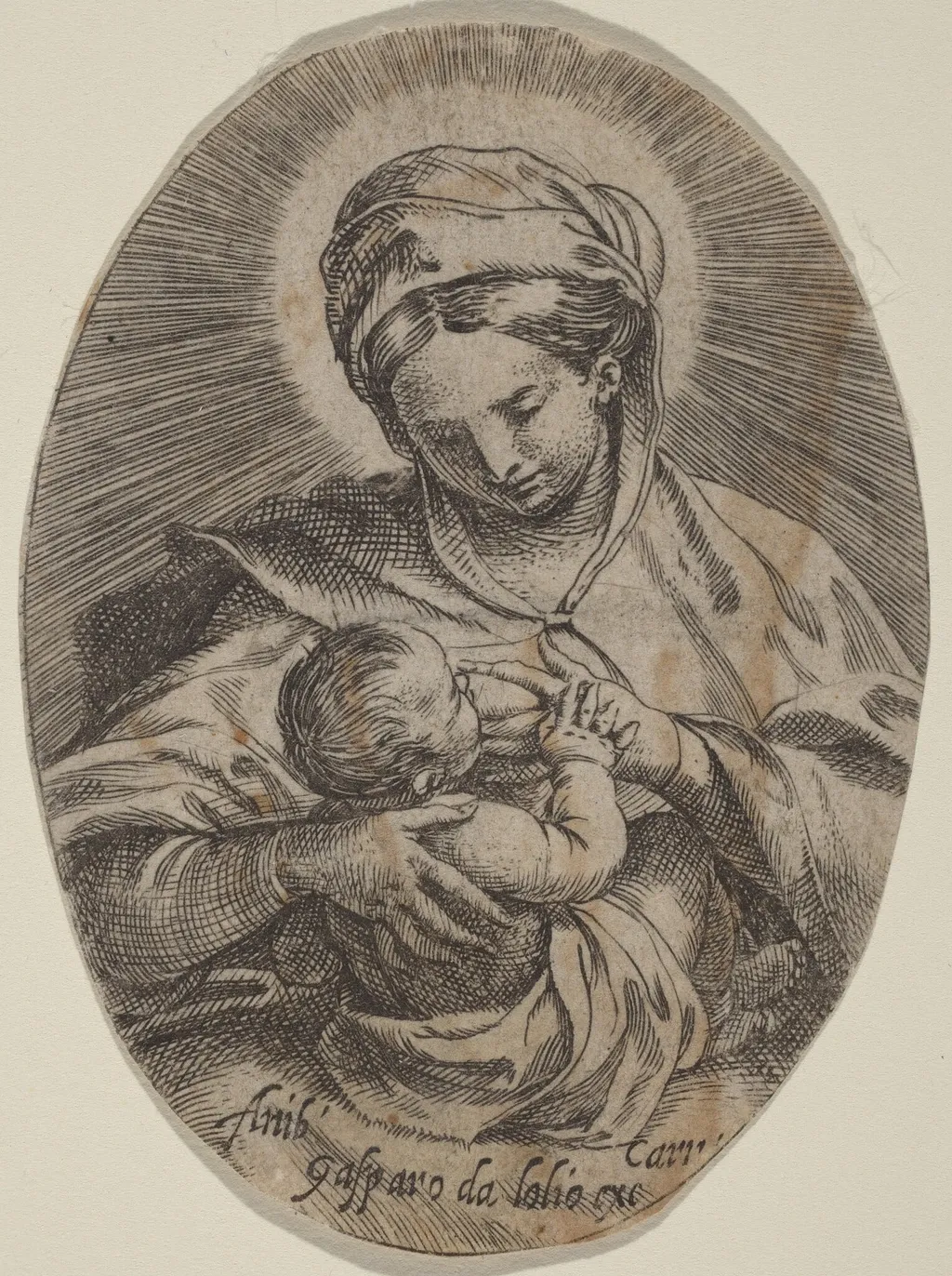
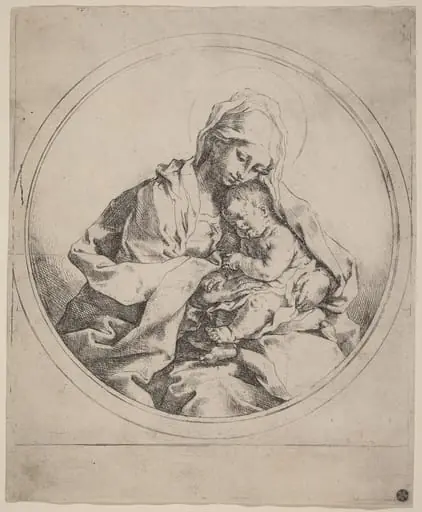
The Madonna Nursing the Christ Child is an ink print by the Renaissance artist Annibale Carracci. It dates from 1585 and is held in the collection of the National Gallery of Art.
About this work
The background of the engraving is left plain, allowing the viewer's focus to remain on the intimate moment between mother and child.
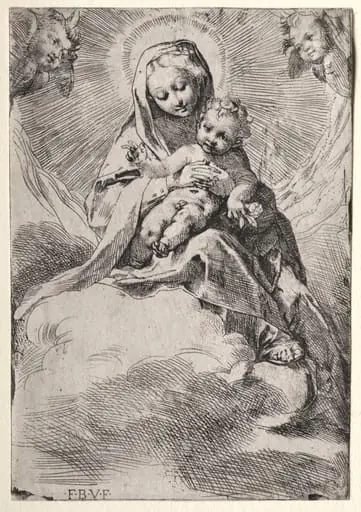
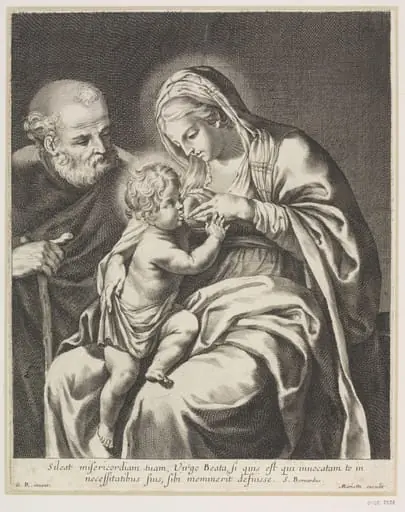
The Madonna Nursing the Christ Child is a tender engraving on laid paper, created by Annibale Carracci between 1583 and 1587. The image features the Virgin Mary gently cradling the infant Jesus in her arms, with her head tilted downward in a loving gaze. Her hair is neatly tied back, and she wears a simple yet elegant robe. The background of the engraving is left plain, allowing the viewer's focus to remain on the intimate moment between mother and child. The use of cross-hatching techniques adds depth and texture to the image, giving it a sense of warmth and humanity. To learn more about the artistic techniques used in this piece, explore the world of engraving.
Overview
Annibale Carracci’s engraving *Madonna Nursing the Christ Child* was produced in the mid‑1580s on laid paper. The print presents the Virgin Mary holding the infant Jesus, emphasizing a quiet, intimate exchange. Executed with fine cross‑hatching, the image balances delicate modeling with a restrained compositional space, drawing the eye to the tender interaction between mother and child.
Subject & Meaning
The work depicts the Virgin in a nurturing pose, her head inclined toward the infant as she gazes affectionately at him. The simplicity of the setting and the focus on the act of nursing underline themes of maternal care and divine humanity, inviting contemplation of the sacred bond without elaborate narrative distractions.
Technique & Style
Carracci employed traditional engraving methods, using cross‑hatching to build tonal variation and convey the softness of flesh and fabric. The laid‑paper surface enhances the subtle gradations of line, while the restrained background reflects a move toward naturalistic representation, characteristic of Carracci’s early Baroque sensibility.
Context
Created while Carracci was active in Rome, the print aligns with his broader effort to revive classical ideals through more dynamic, life‑like compositions. The piece illustrates the period’s shift toward emotional immediacy and realistic portrayal in religious imagery, a hallmark of the emerging Baroque aesthetic.
Legacy
As part of Carracci’s print output, this engraving contributed to the dissemination of his reformist ideas beyond frescoes and canvases. Its emphasis on naturalism and intimate devotion influenced contemporaries and later artists seeking to merge classical balance with expressive, humanized religious subjects.
Artist & collection
Artist
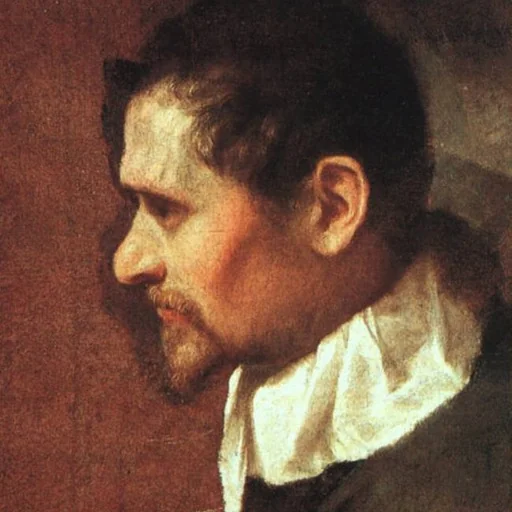
Annibale Carracci ( kə-RAH-chee, UK also kə-RATCH-ee, Italian: ; November 3, 1560 – July 15, 1609) was an Italian painter and instructor, active in Bologna and later in Rome.