Artwork
Virgin and Child
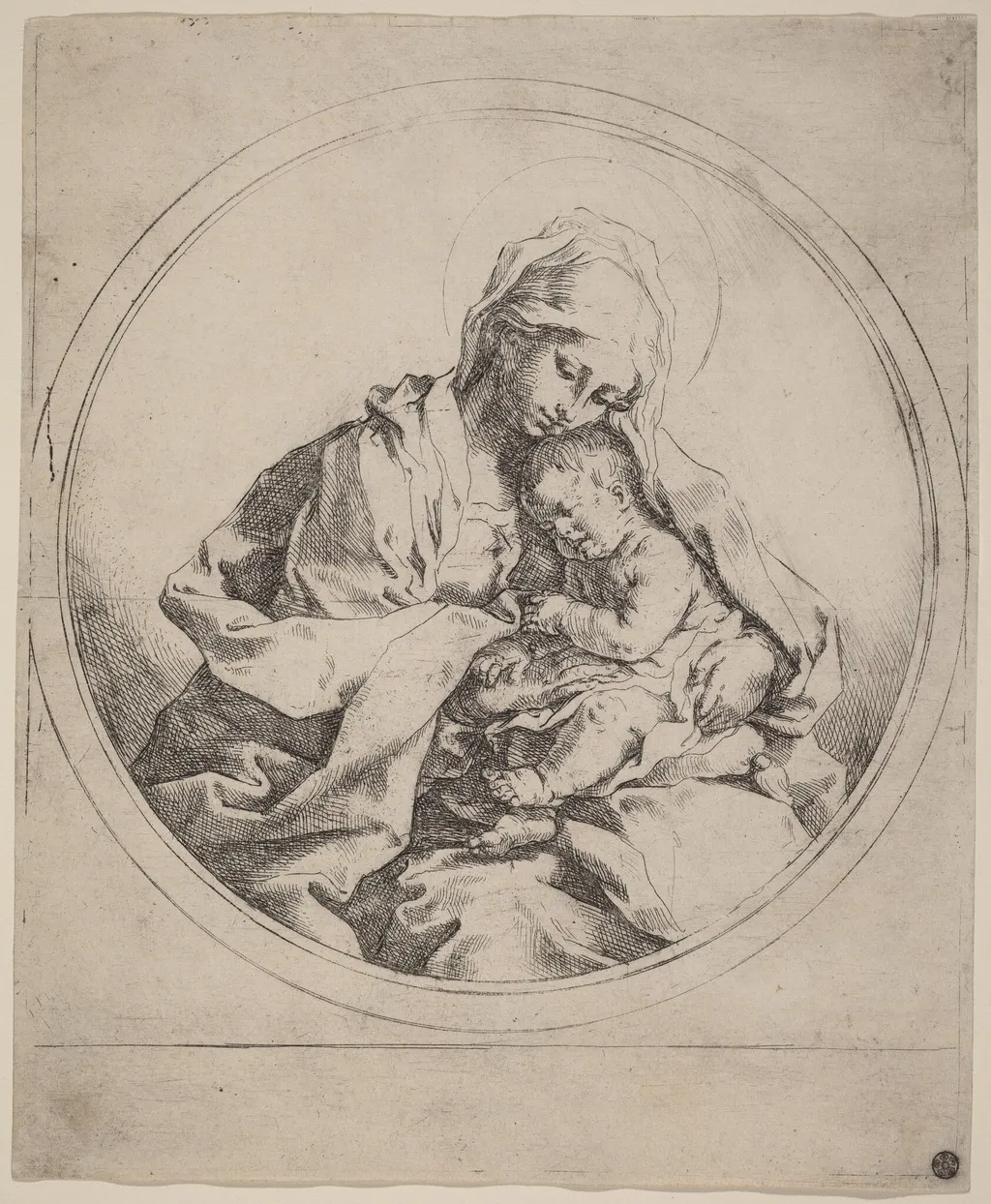
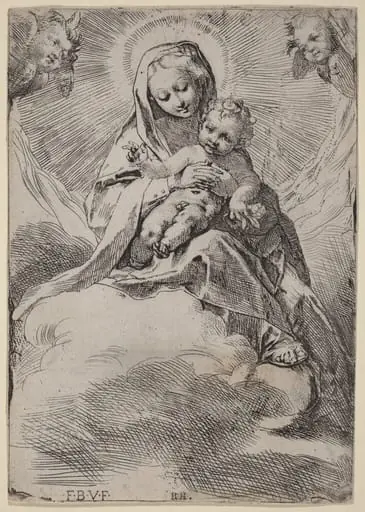
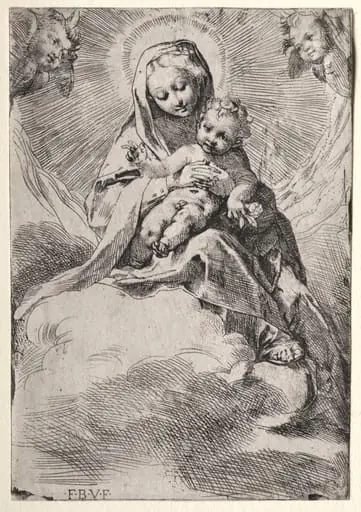
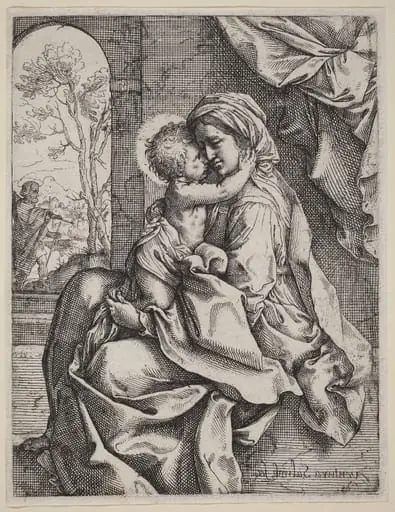
Virgin and Child is an ink print by the Renaissance artist Guido Reni. It dates from 1608 and is held in the collection of the National Gallery of Art.
About this work
Overview
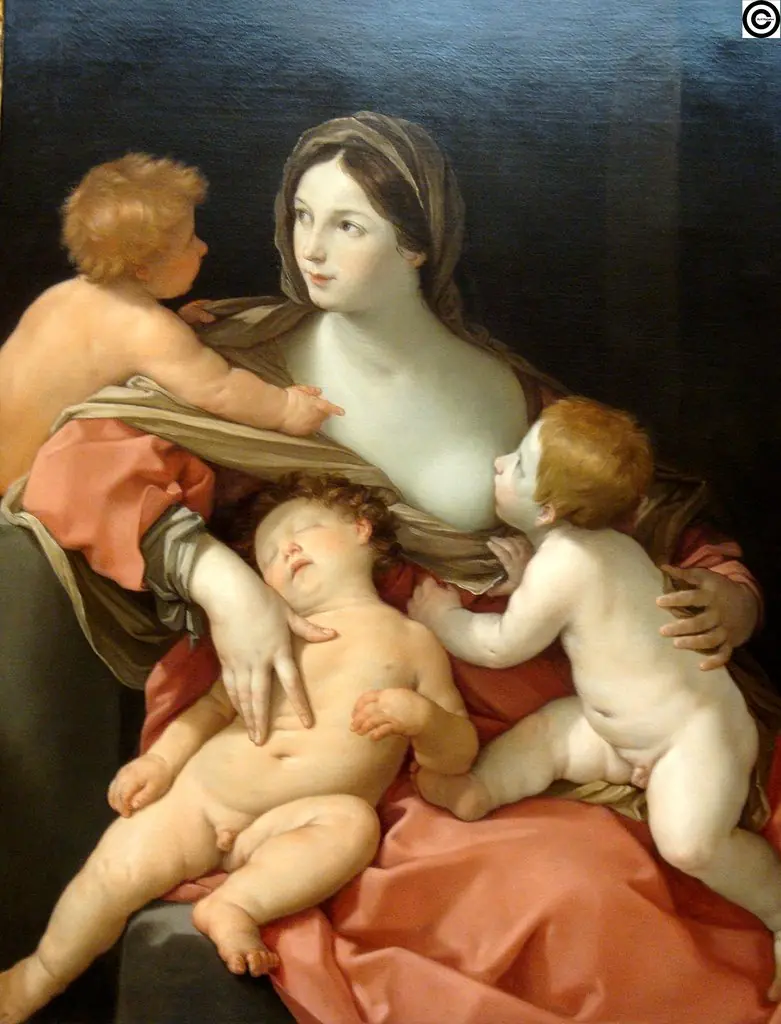
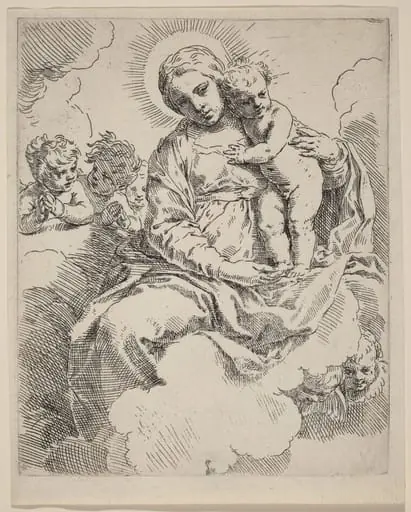
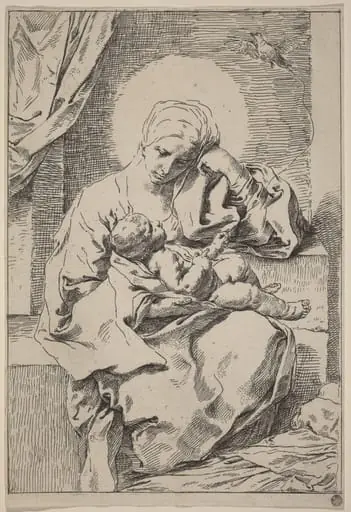
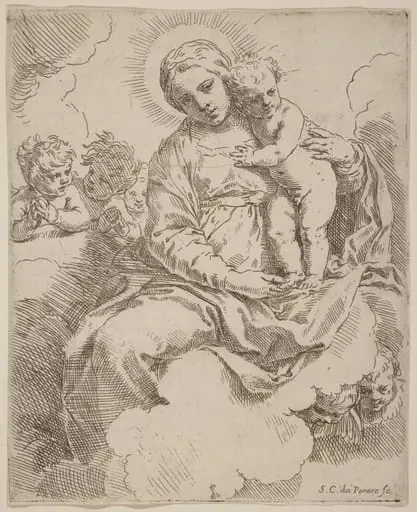
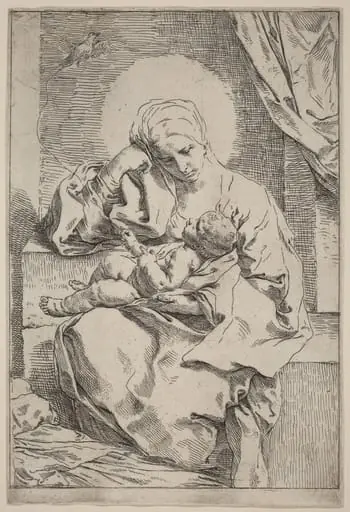
Guido Reni’s 1608 etching titled *Virgin and Child* presents a solemn depiction of Mary cradling the infant Jesus. Executed in the early seventeenth century, the work exemplifies Reni’s preference for compositional harmony and restrained emotion, characteristic of his broader output within the Bolognese artistic tradition.
Subject & Meaning
The image centers on the Virgin, her head inclined and her expression subdued, while the Christ Child rests calmly against her chest. The intimate pose underscores themes of maternal devotion and the theological significance of the Incarnation, aligning with the devotional purposes common to Reni’s religious repertoire.
Technique & Style
Reni employed the etching process, incising lines into a metal plate and using ink to render the design. The resulting marks are dark and scratchy, creating a sketch‑like quality that emphasizes chiaroscuro through dense shading, particularly in the drapery’s folds, lending the composition depth without overt Baroque theatricality.
Context
Working across Bologna, Rome, and Naples, Reni was a leading figure of the Bolognese School, shaped by the Carracci reformers who advocated classical balance over the era’s prevailing drama. This etching reflects his measured approach, offering a refined alternative to the more exuberant Baroque visual language of his contemporaries.
Artist & collection
Artist
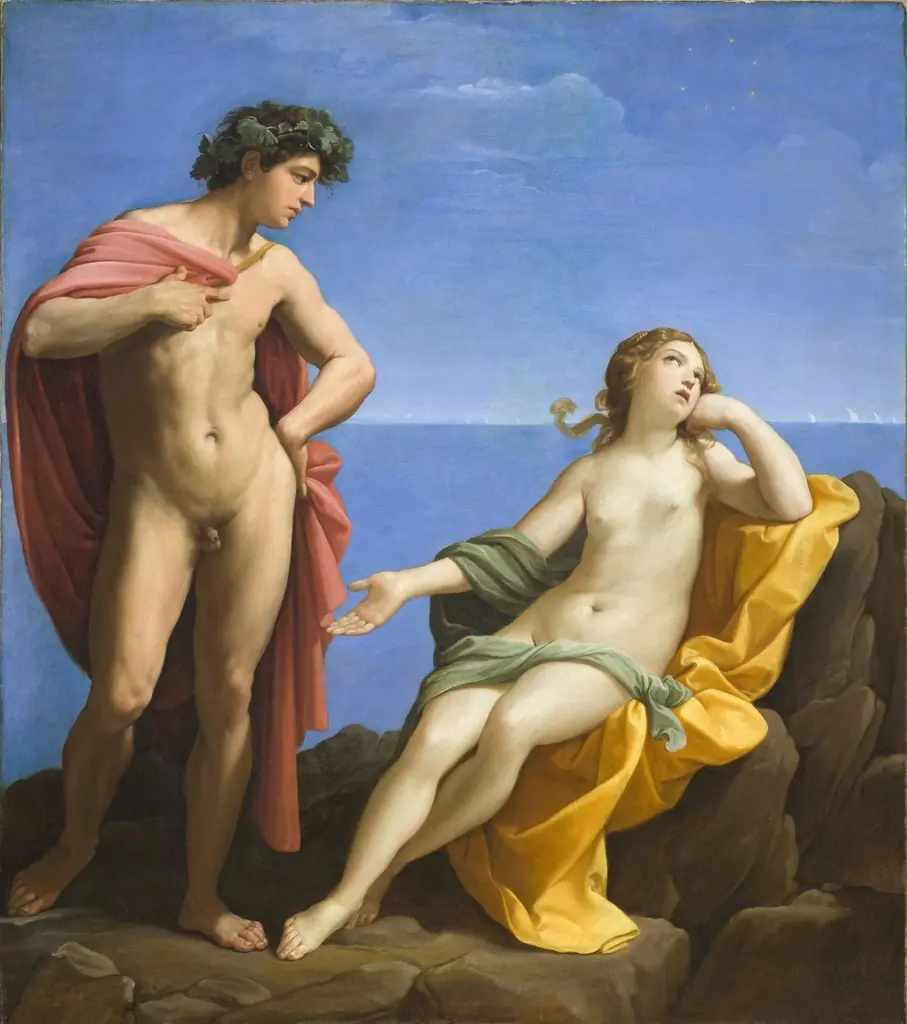
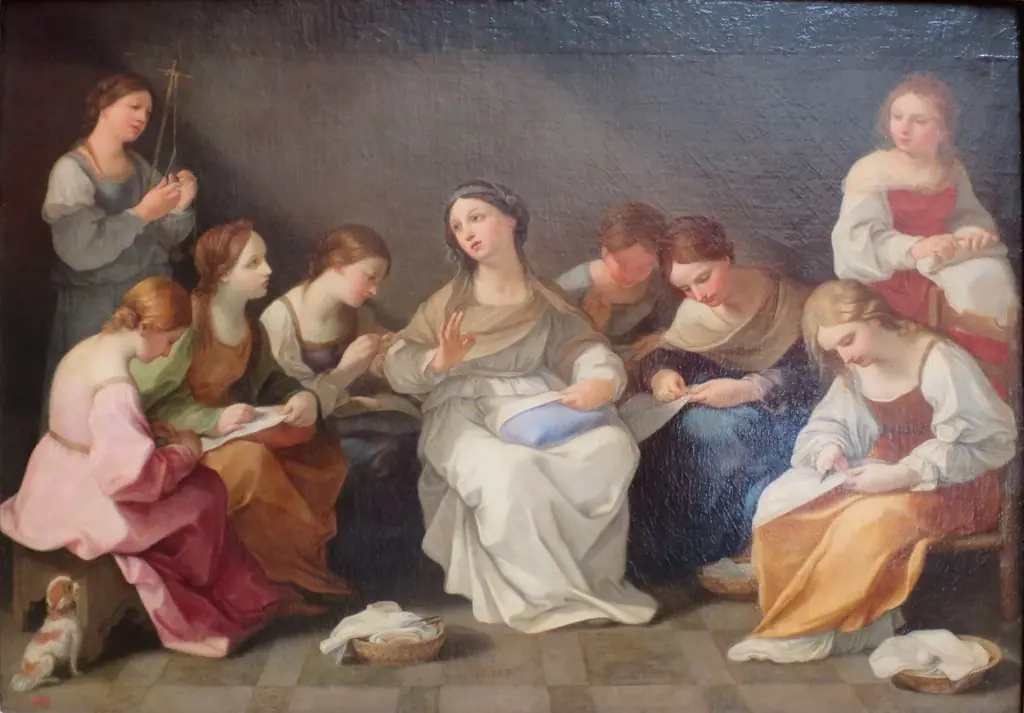
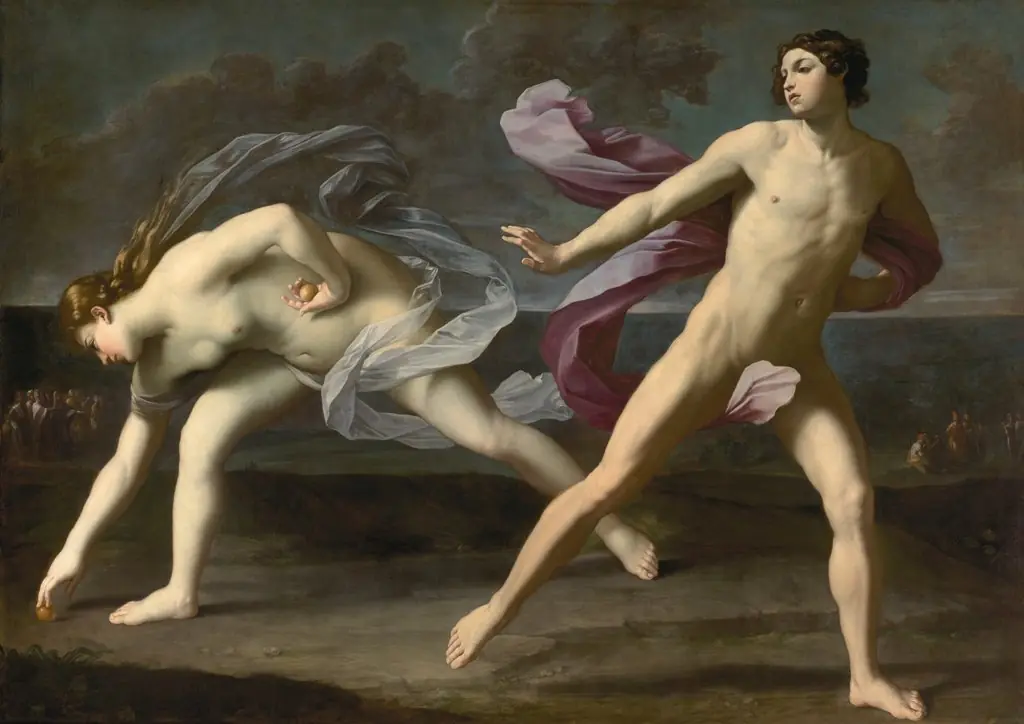
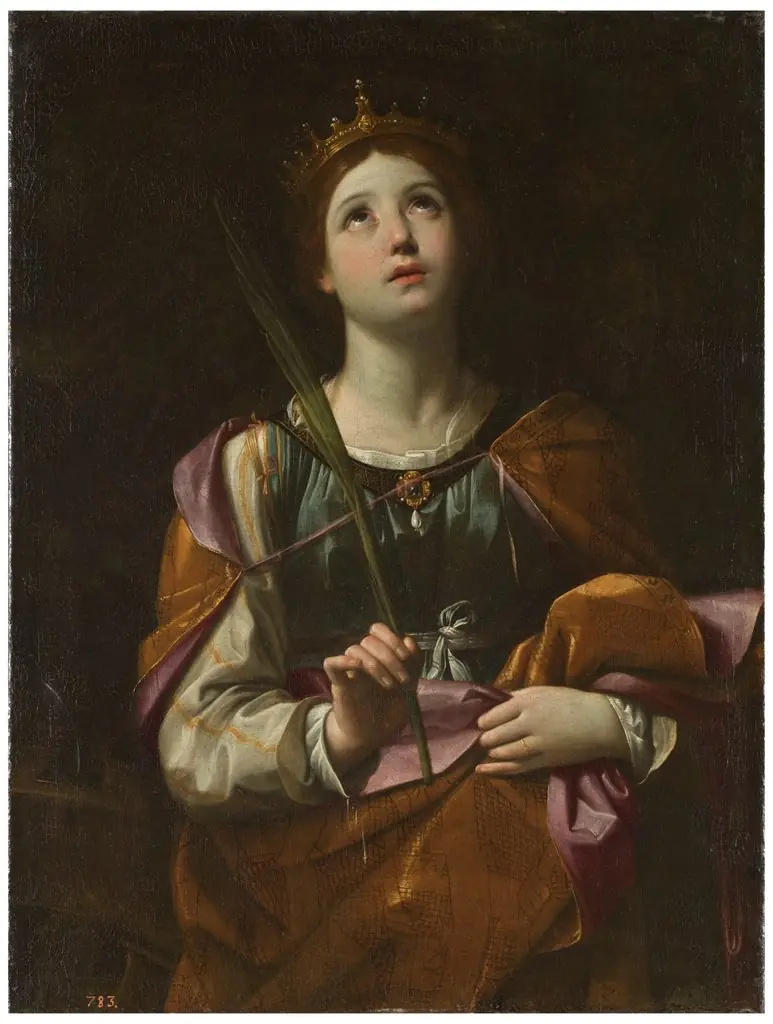
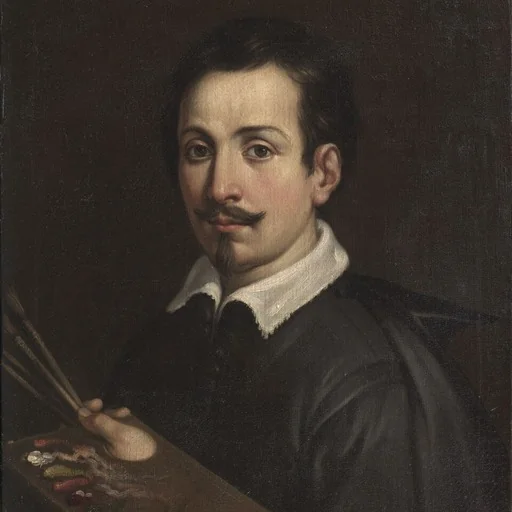
Guido Reni was an Italian Baroque painter, although his works showed a classical manner, similar to Simon Vouet, Nicolas Poussin, and Philippe de Champaigne.