Artwork
Sleep
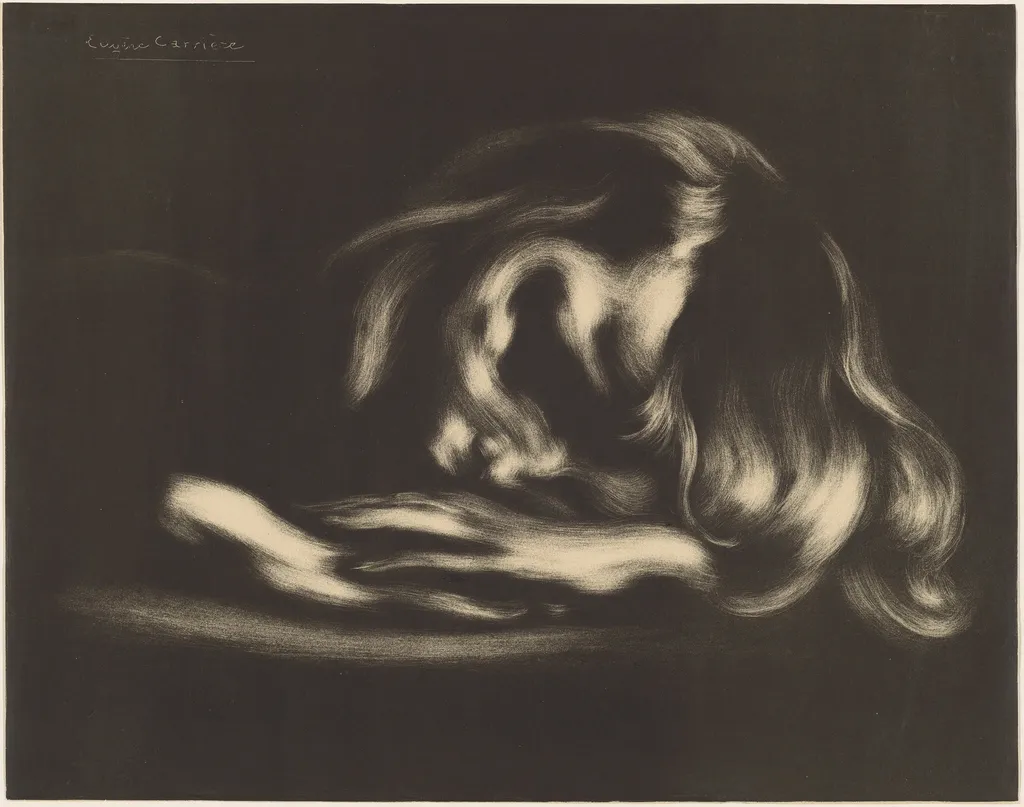
Sleep is an ink print by the Impressionist artist Eugène Carrière. It dates from 1897 and is held in the collection of the National Gallery of Art.
About this work
Overview
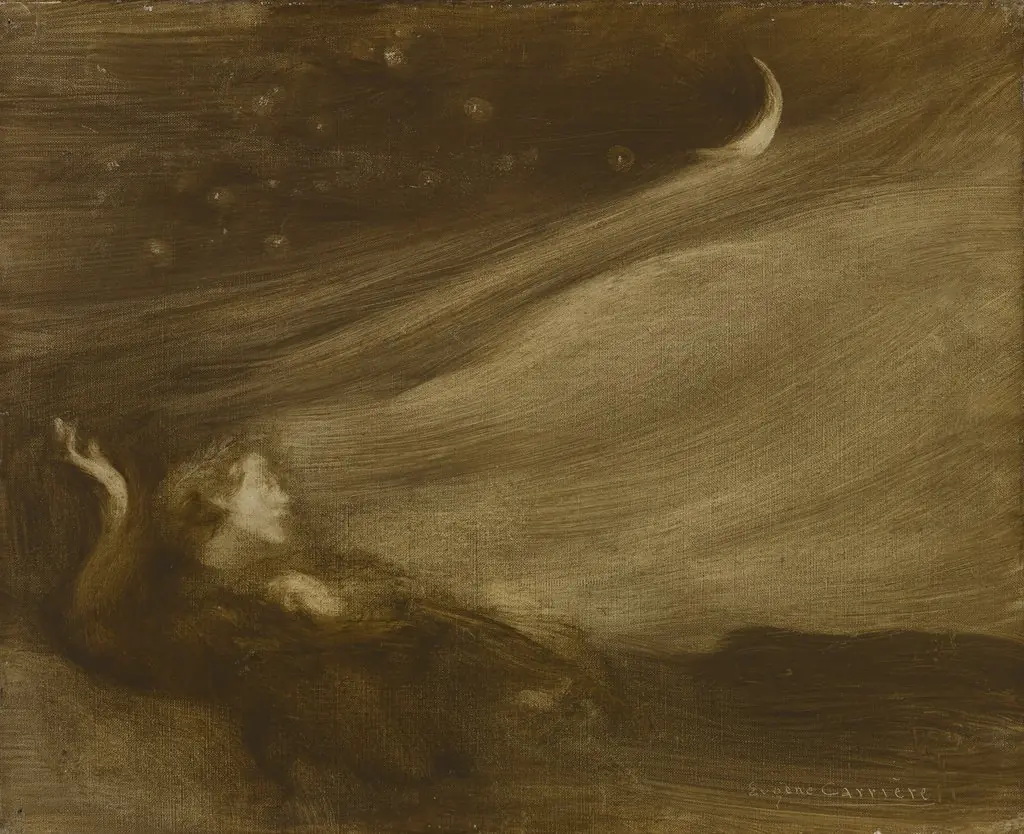
Created in 1897, *Sleep* is a lithographic print by French Symbolist painter Eugène Carrière. The work presents a solitary figure in a curled, reclining pose, rendered in muted tones that emphasize the quiet intimacy of rest. Carrière’s reputation for atmospheric, near‑monochrome compositions informs the piece’s overall sense of stillness and contemplation.
Subject & Meaning
The image depicts a lone individual lying on their side, head supported by an arm and legs drawn close to the torso. The softened, almost vaporous outlines suggest a dreamlike state, aligning with Symbolist interests in inner experience and the ineffable qualities of sleep as a metaphor for escape from the external world.
Technique & Style
Executed as a lithograph, the print relies on a limited palette of black and white, allowing Carrière to concentrate on tonal contrast and the subtle gradations of light. The lines are deliberately blurred, creating a smoky atmosphere that dissolves the figure’s edges into the surrounding darkness, a hallmark of the artist’s ethereal visual language.
History & Provenance
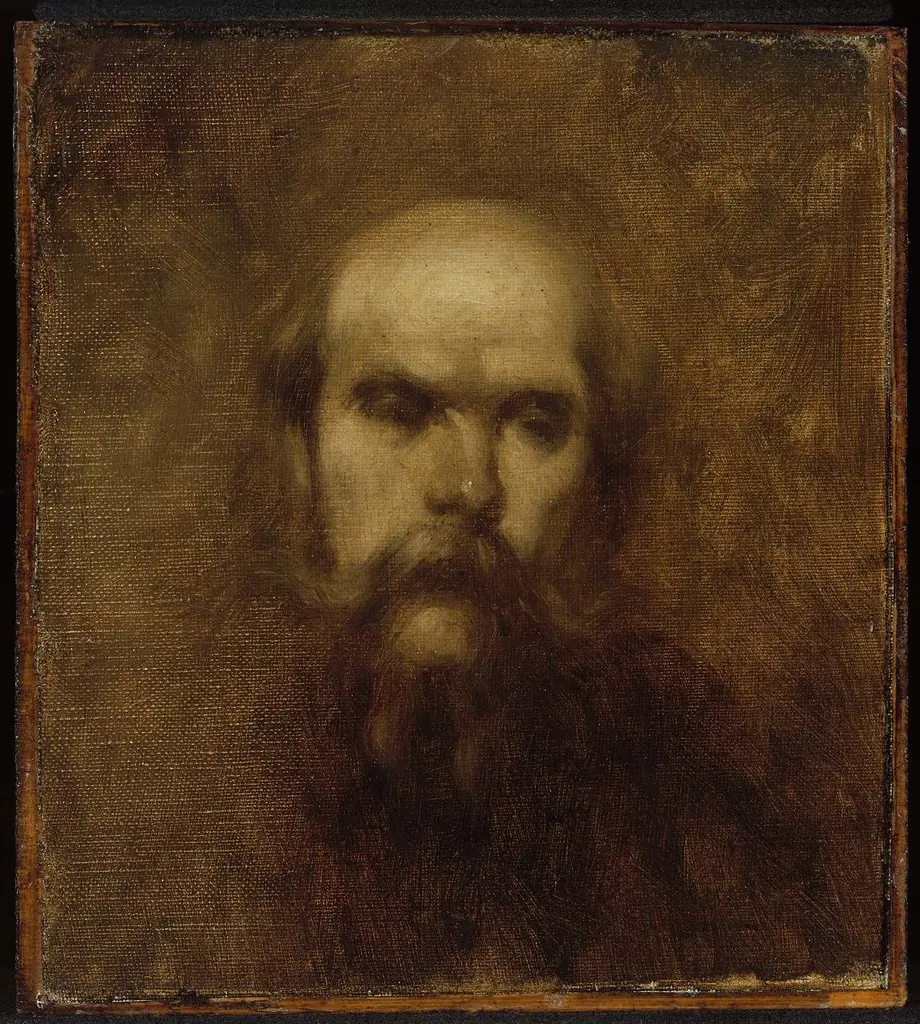
Carrière, active in the late nineteenth century, was closely linked to literary figures such as Paul Verlaine and Stéphane Mallarmé, and his work contributed to the visual vocabulary that later influenced Pablo Picasso’s Blue Period. *Sleep* reflects the artist’s engagement with Symbolist ideals and was produced during a prolific phase of his printmaking career.
Artist & collection

Artist
Eugène Anatole Carrière was a French Symbolist artist of the fin-de-siècle period.

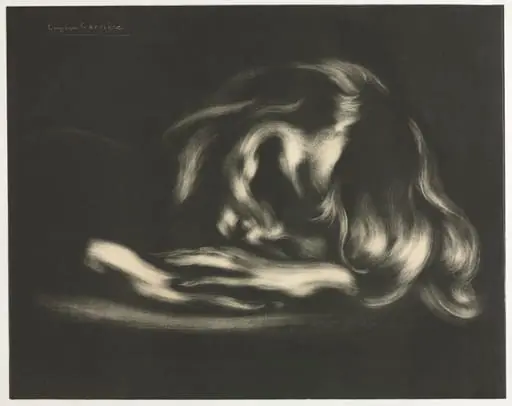 Sleep (Jean-René Carrière), from L'Album d'estampes originales de la Galerie Vollard
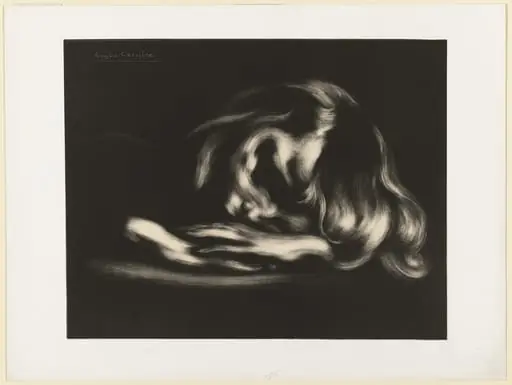 Untitled
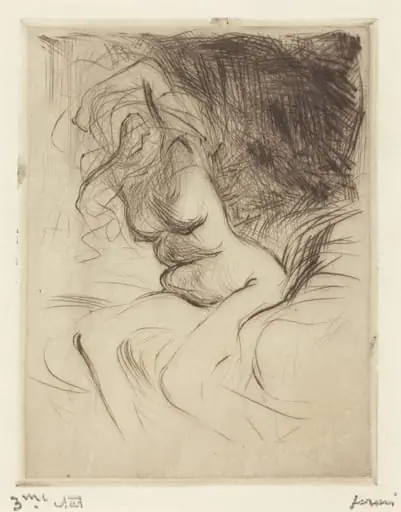 Femme nue passant sa chemise (Nude Woman Taking Off Her Chemise)
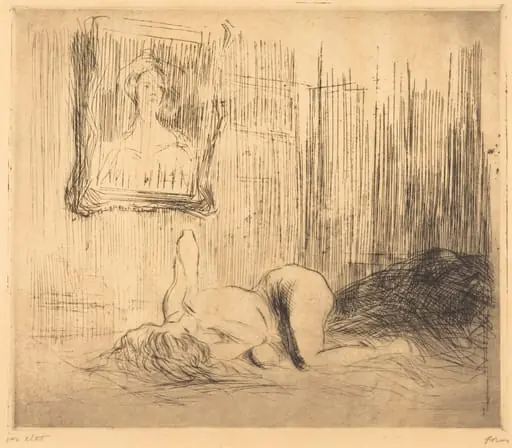 Sur le lit (On the Bed)
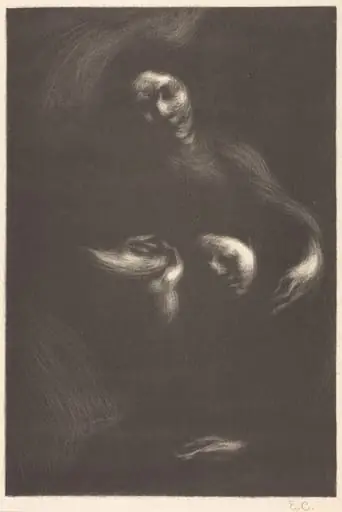 Hommage à Tolstoï
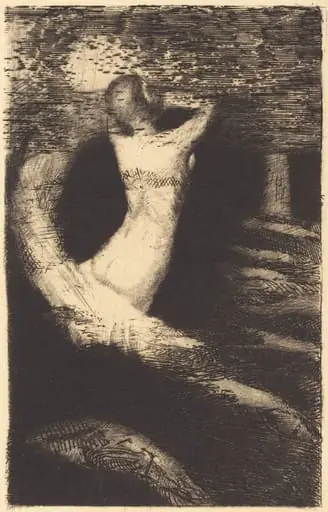 Passage d'une Ame (Passage of a Spirit)
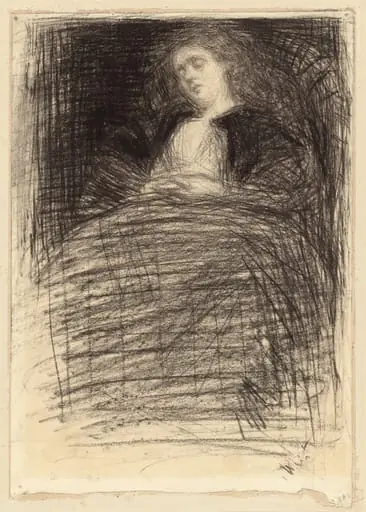 Sleeping Woman
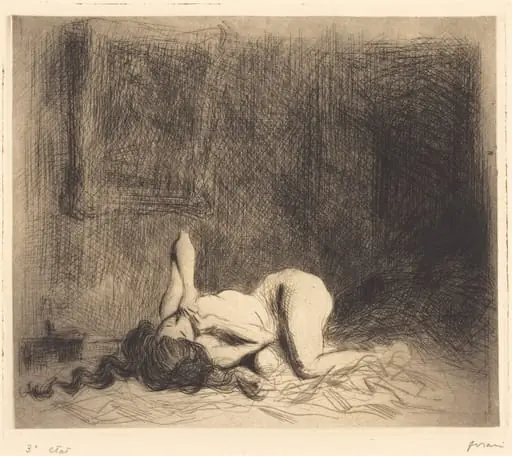 Sur le lit (On the Bed)
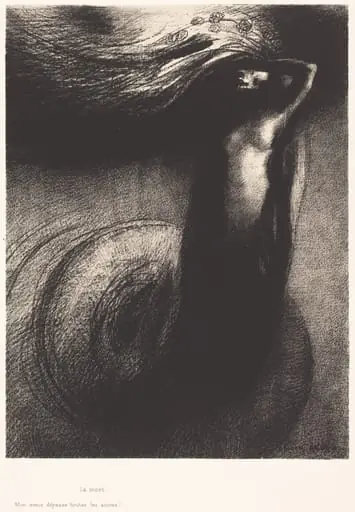 La Mort: Mon ironie depasse toutes les autres! (Death: My iron surpasses all others!)
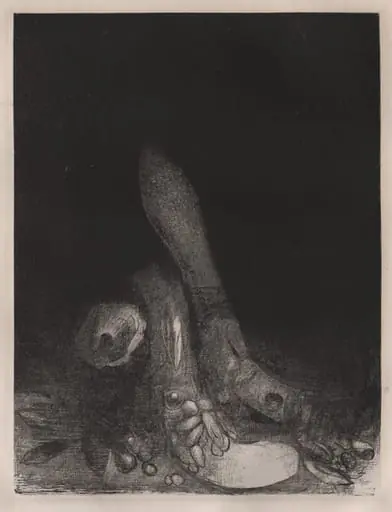 Flowers Fall and the Head of a Python Appears
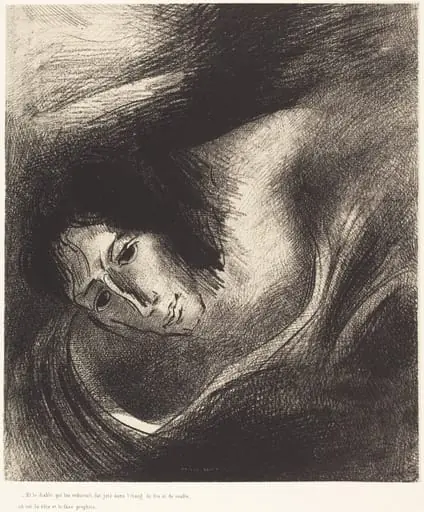 Et le diable qui les seduisait, fut jete dans l'etang de feu et de soufre, ou es la b ete et le faux prophete (And the devil thatdeceived them was cast into the lake of fire and brimstone, where the beast and the false prophet are)
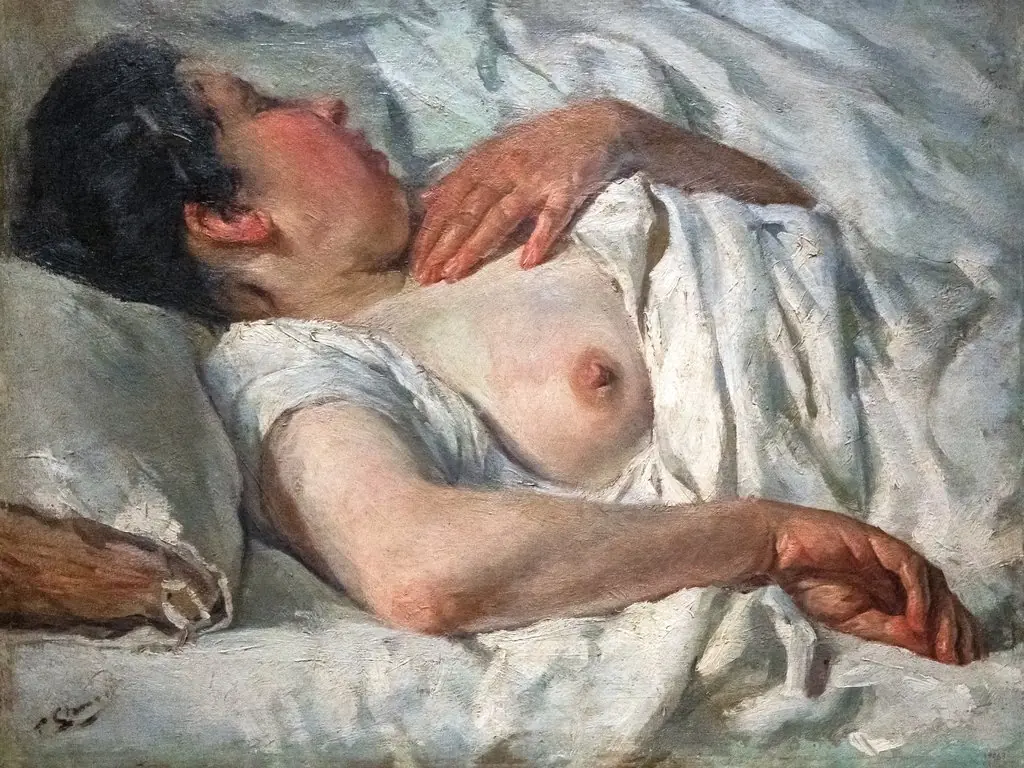 Woman Sleeping