Artwork
'163'
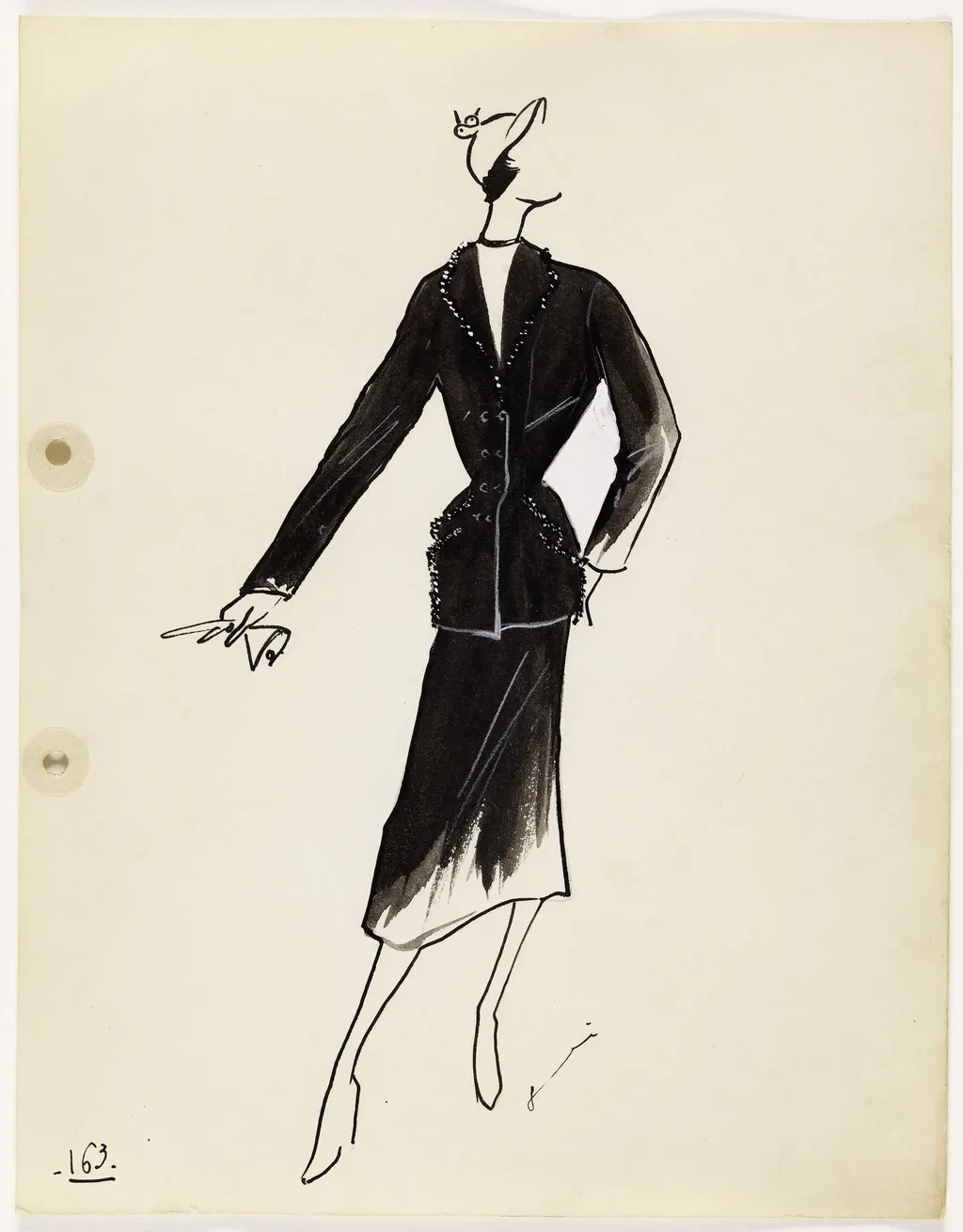
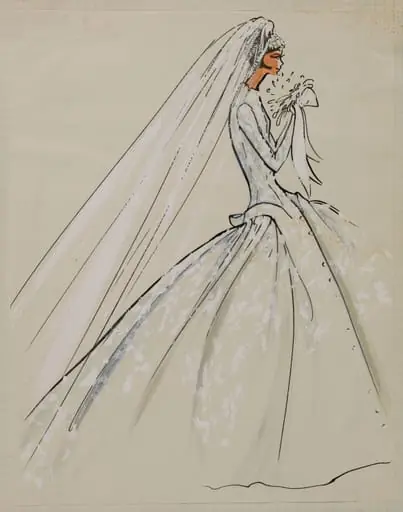
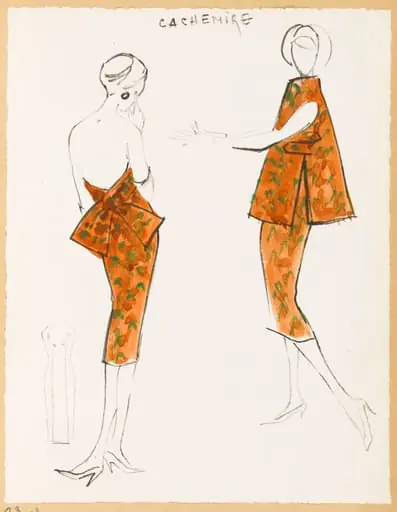
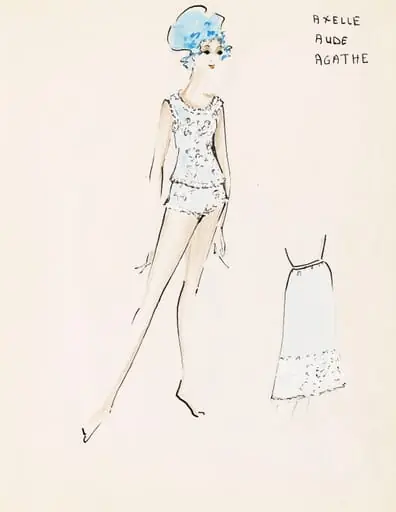
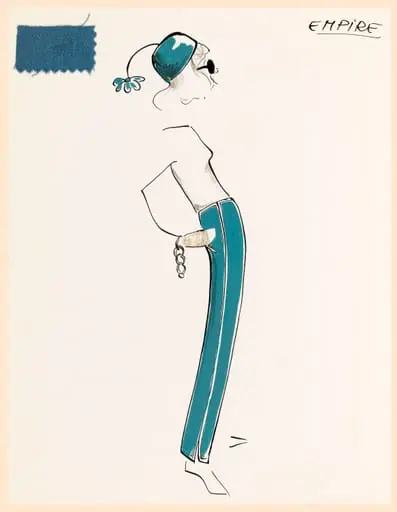
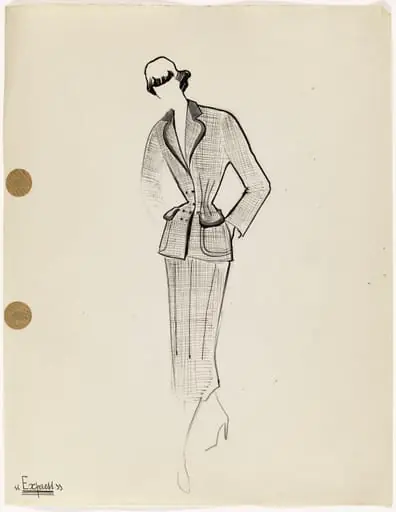
'163' is a drawing by Carven. It dates from 1949 and is held in the collection of the Palais Galliera - Musée de la Mode de la Ville de Paris.
About this work
Overview
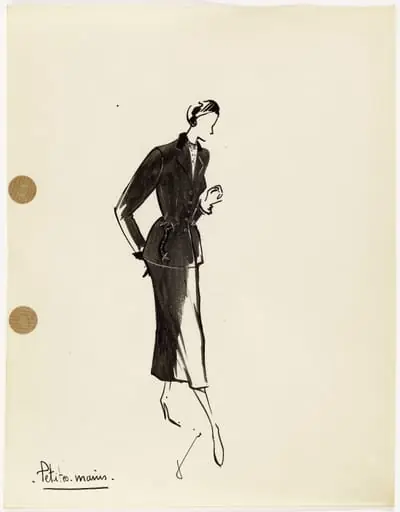
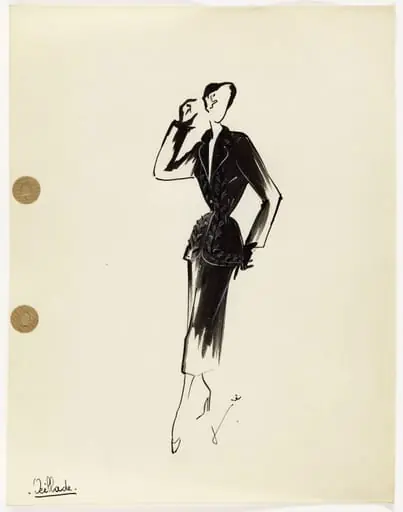
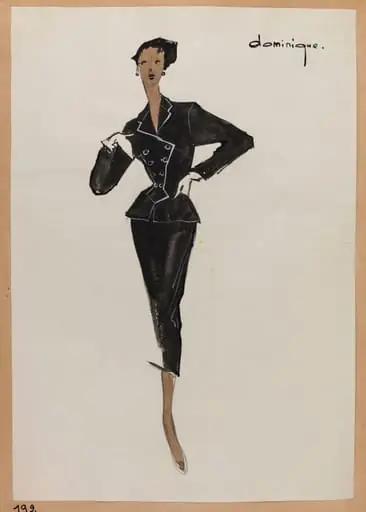
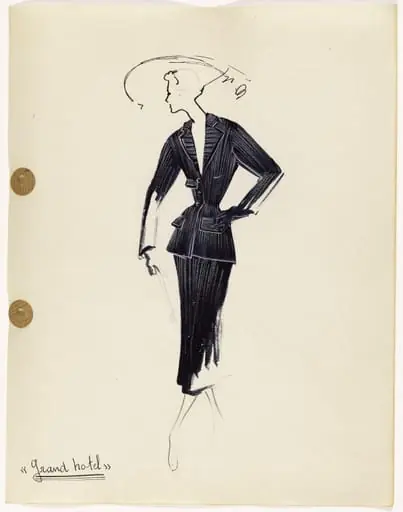
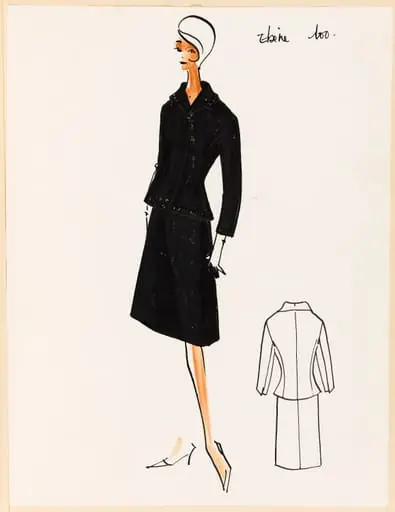
The image presents a full-length female figure in a stylized pose, rendered with precise linework and minimal tonal variation.
The work titled '163' is a black ink drawing on cream paper, dated around 1949 and attributed to the designer Carven. It resides in the collection of the Museum of Ethnography. The image presents a full-length female figure in a stylized pose, rendered with precise linework and minimal tonal variation. Its modest scale and restrained palette suggest a study or presentation piece rather than a finished illustration.
Subject & Meaning
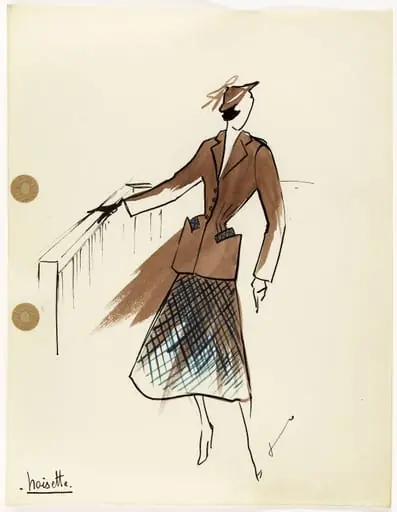
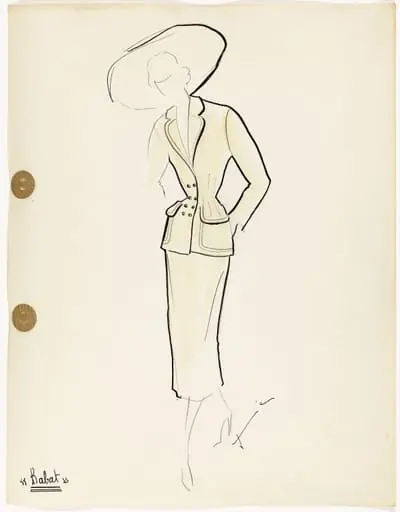
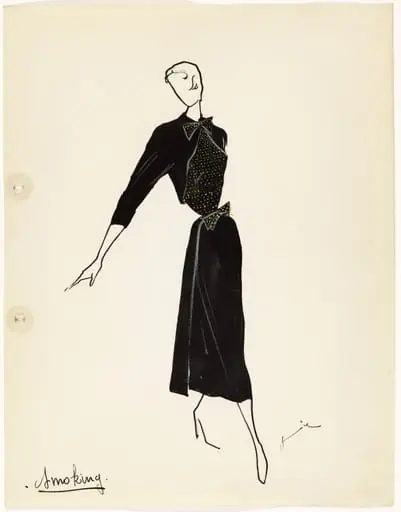
The figure is depicted in a tailored ensemble typical of late 1940s women’s fashion: a fitted black jacket with buttons and decorative trim, paired with a knee-length skirt. The hands are held in a composed, slightly formal posture—one at the side, the other extended forward. This stance conveys poise and restraint, aligning with the era’s ideals of refined femininity and understated elegance in dress.
Technique & Style
The drawing employs fine, controlled ink lines to define form and texture, with subtle shading suggesting volume without heavy cross-hatching. The absence of color emphasizes structure and silhouette, focusing attention on the garment’s cut and detailing. The cream background enhances contrast, allowing the black ink to define the figure with clarity and quiet precision, characteristic of fashion illustration from this period.
History & Provenance
The work entered the Museum of Ethnography’s collection as part of a broader acquisition of mid-century fashion materials. Its origin as a design study by Carven’s studio is documented in internal archives, though no exhibition history or prior ownership is publicly recorded. The piece likely served as a reference for production or client presentation during the designer’s postwar operations in Paris.
Context
Created in the immediate aftermath of World War II, the drawing reflects the revival of Parisian haute couture and the return to structured, feminine silhouettes. While American fashion leaned toward practicality, European designers like Carven emphasized craftsmanship and refined detail. This image aligns with the era’s emphasis on elegance as a cultural rebirth, communicated through meticulous garment representation.
Legacy
Though not widely reproduced, '163' remains a representative example of postwar fashion illustration from a lesser-known but influential designer. It contributes to scholarly understanding of how clothing was visualized and communicated before the dominance of photography. The drawing’s quiet precision continues to inform studies of mid-century textile design and gendered aesthetics in fashion media.
Artist & collection
Artist
These delicate ink-on-paper drawings capture the quiet poetry of everyday things: pinecones, reeds, apples.
Museum
Palais Galliera - Musée de la Mode de la Ville de Paris
Continue through works from the same source collection.