Artwork
Algue
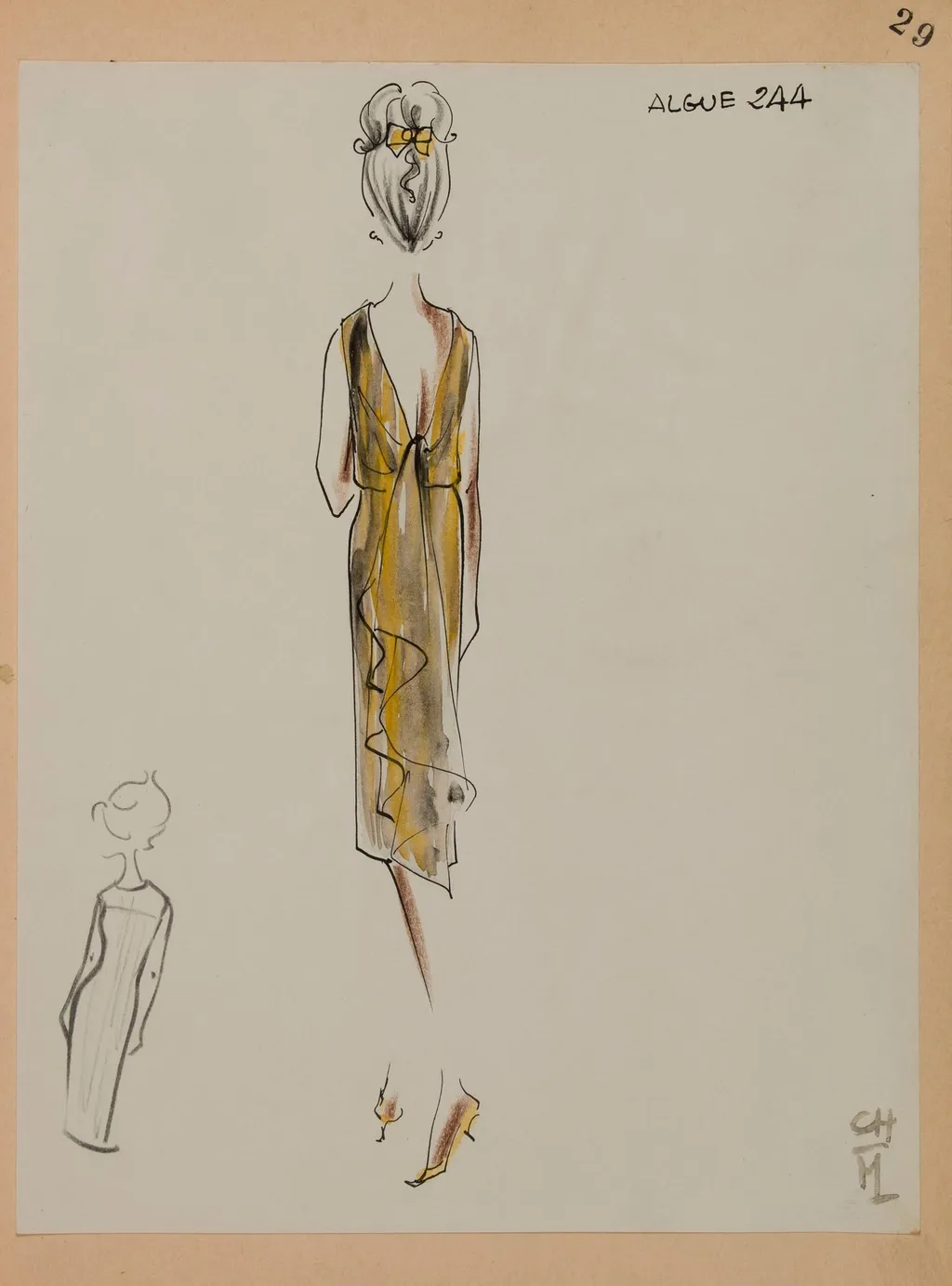
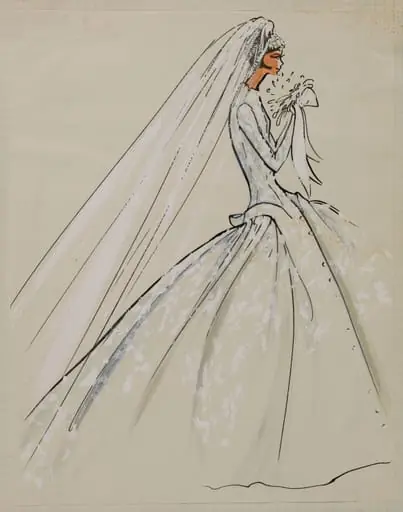
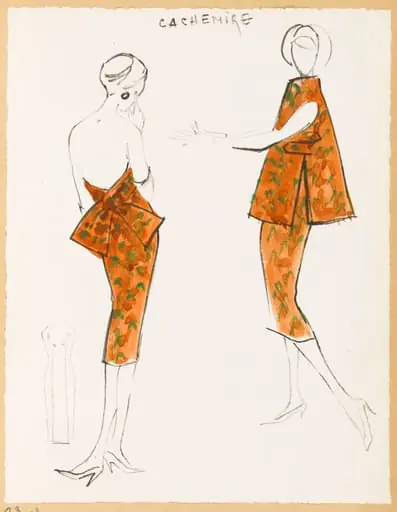
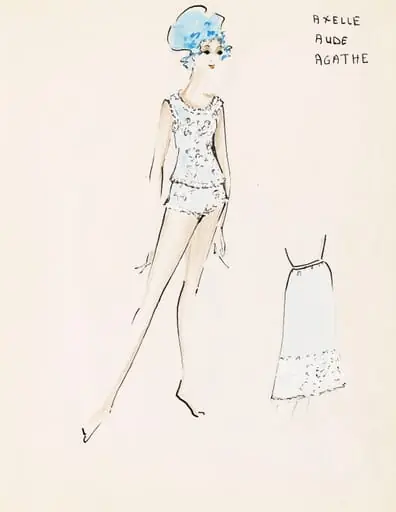
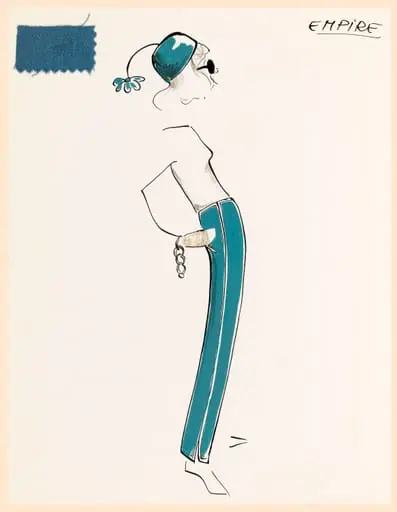
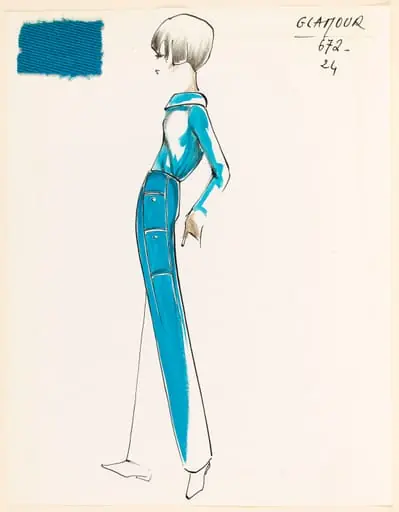
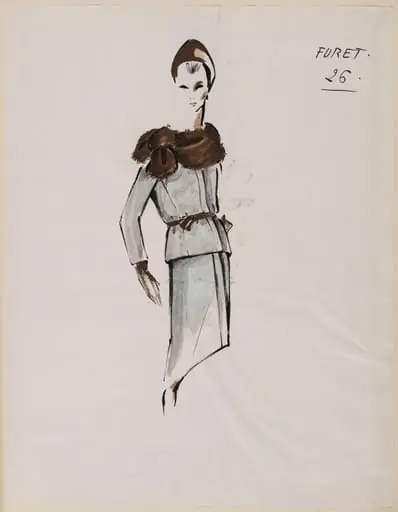
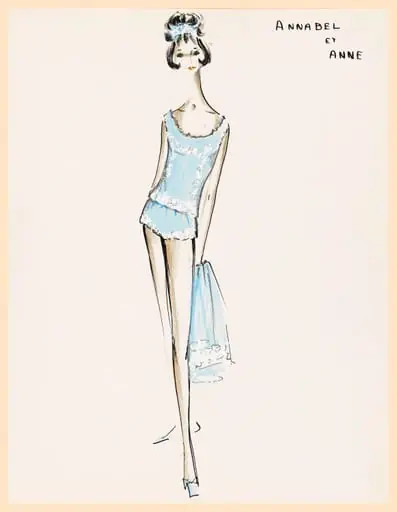
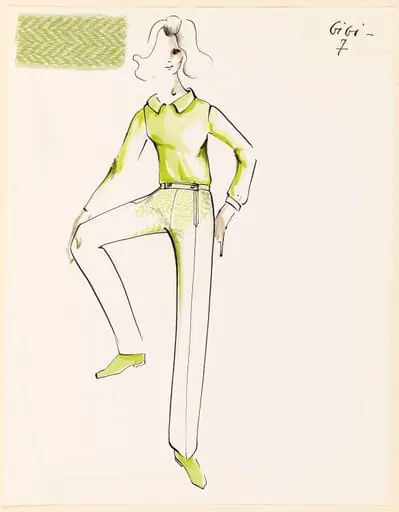
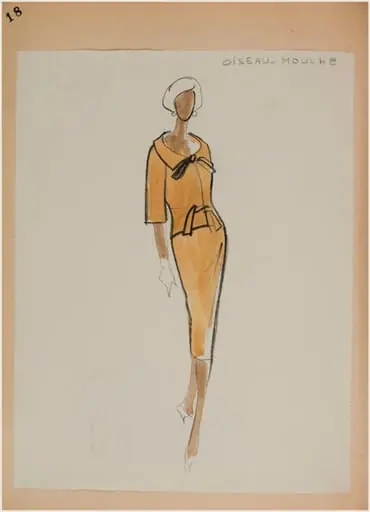
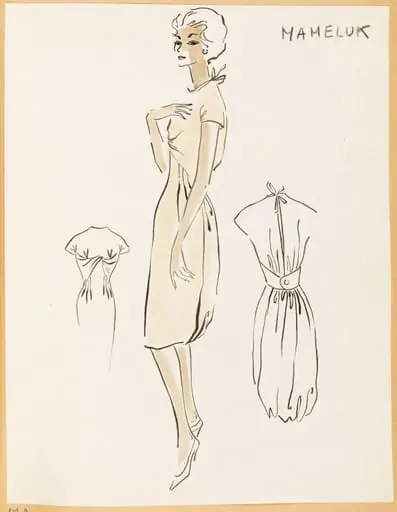
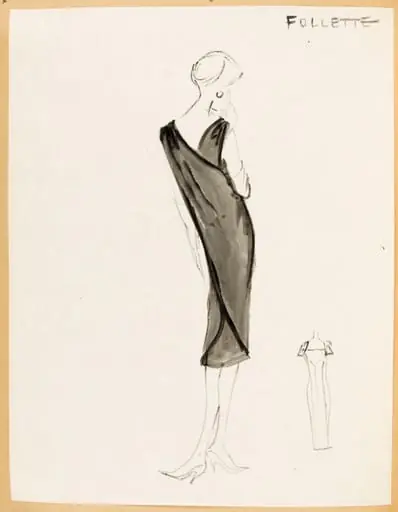
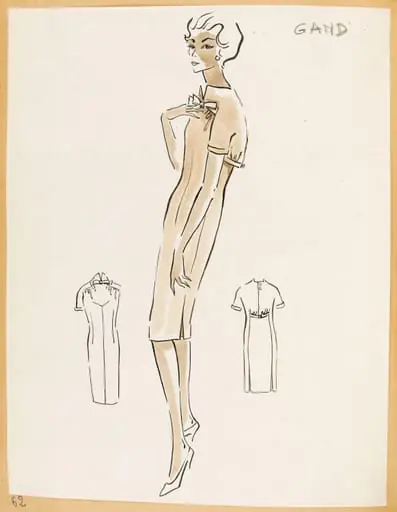
Algue is a drawing by Carven. It dates from 1963 and is held in the collection of the Palais Galliera - Musée de la Mode de la Ville de Paris.
About this work
Overview
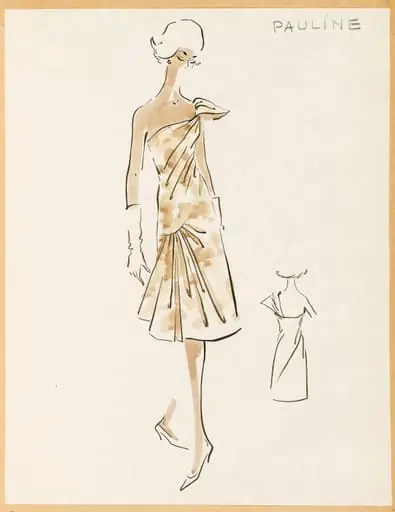
Neither figure is detailed; instead, the focus lies in the silhouette and movement of draped fabric, suggesting a study of form rather than portraiture.
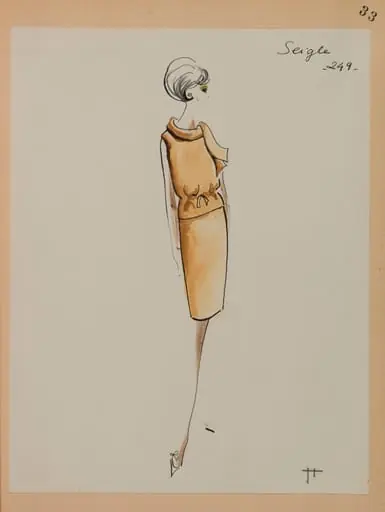
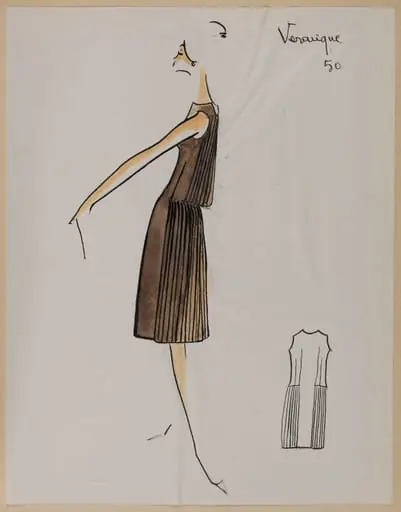
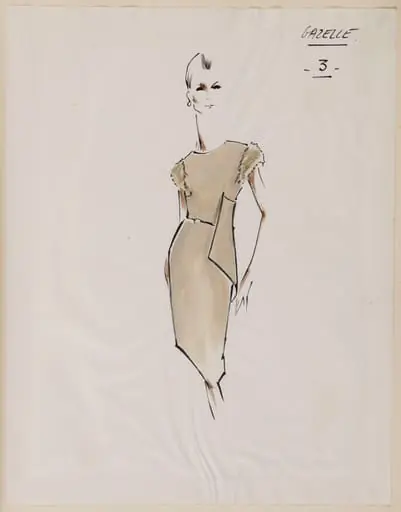
Algue is a pencil and wash drawing from around 1963 by the French designer Carven. It resides in the collection of the Museum of Ethnography. The work consists of two minimalist figures rendered in muted earth tones—soft browns, beiges, and a faint touch of yellow. Neither figure is detailed; instead, the focus lies in the silhouette and movement of draped fabric, suggesting a study of form rather than portraiture.
Subject & Meaning
The two figures appear to represent women in simple, flowing garments, possibly inspired by traditional or folk dress. The larger figure, with its draped neckline and smooth contours, suggests a sense of grace; the smaller, stick-like figure may serve as a compositional counterpoint or shorthand notation. Neither face nor identity is rendered, emphasizing the garment’s form over the individual, hinting at an interest in cultural attire as abstracted structure.
Technique & Style
Carven employed loose, economical linework with subtle washes to suggest volume without detail. The larger figure’s dress flows as a single, unbroken plane, avoiding seams or texture. The smaller figure reduces the form to essential lines, resembling a rapid sketch or annotation. The restrained palette and absence of shading reinforce a focus on contour and rhythm, aligning with a modernist tendency toward reduction and abstraction.
History & Provenance
Created circa 1963, Algue entered the Museum of Ethnography’s collection shortly after its making. Its origin as a personal study or design note is implied by its informal quality. No record of public exhibition prior to its acquisition exists, suggesting it was not intended for public display but preserved for its conceptual value within the designer’s archive.
Context
In the early 1960s, Carven was transitioning from haute couture toward more experimental, research-driven design. Algue reflects this shift—its simplicity echoes ethnographic documentation practices and mid-century modernist drawing traditions. The work aligns with broader artistic interests in non-Western textiles and anonymous craft, where form was valued over ornamentation.
Legacy
Algue remains a quiet example of Carven’s intellectual engagement with textile and silhouette beyond commercial fashion. It contributes to understanding how designers used sketching as a tool for cultural observation. While not widely reproduced, its presence in an ethnographic museum signals its recognition as a document of design thinking rather than finished art.
Artist & collection
Artist
These delicate ink-on-paper drawings capture the quiet poetry of everyday things: pinecones, reeds, apples.
Museum
Palais Galliera - Musée de la Mode de la Ville de Paris
Continue through works from the same source collection.