Artwork
Alicante
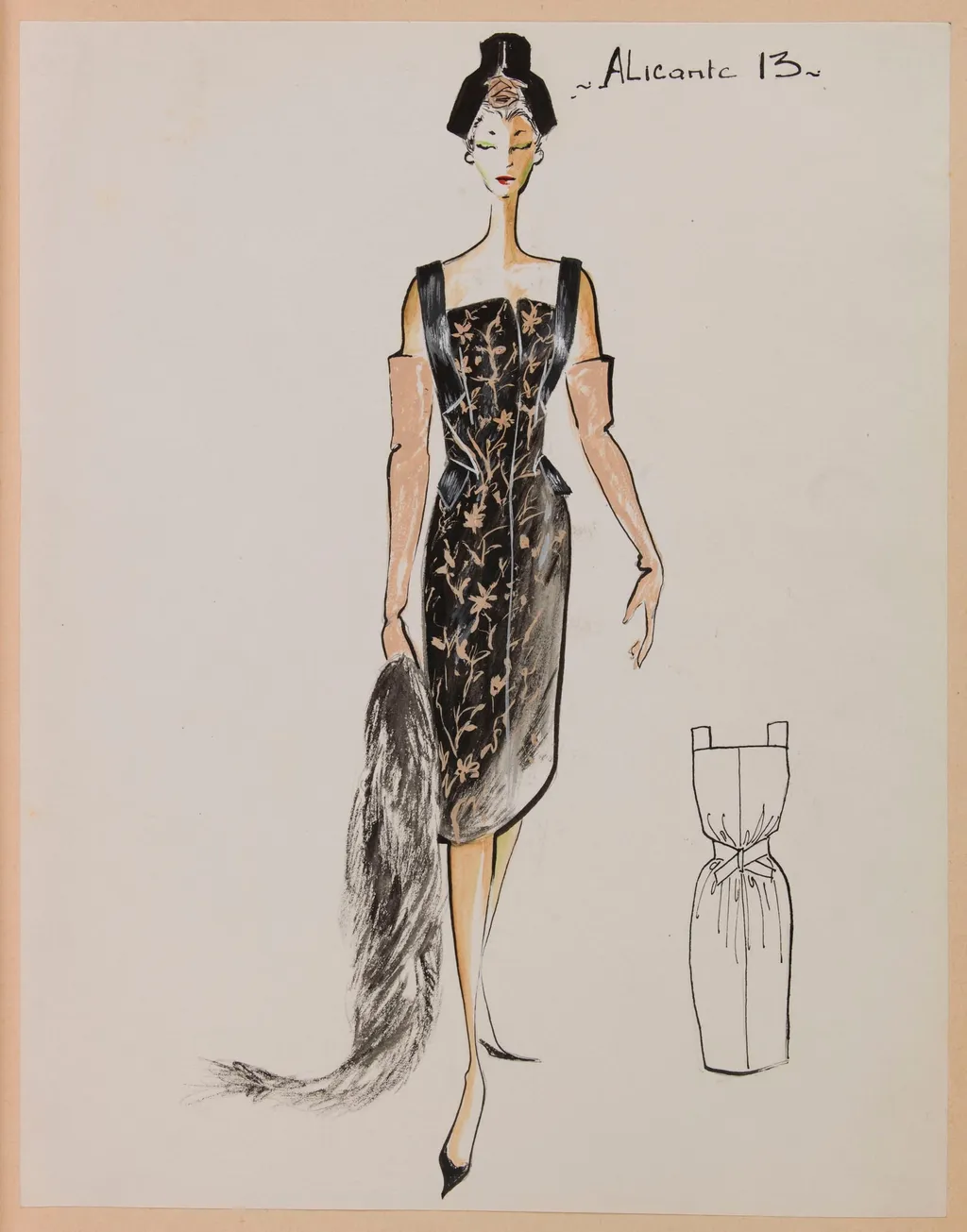
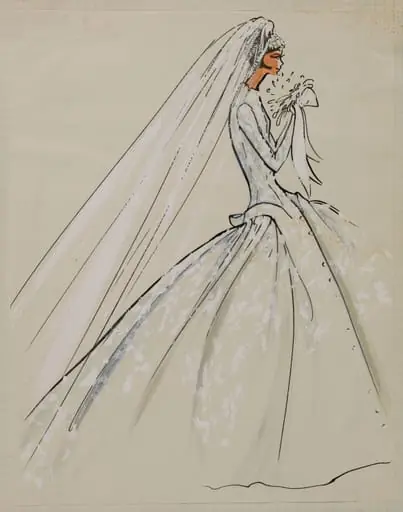
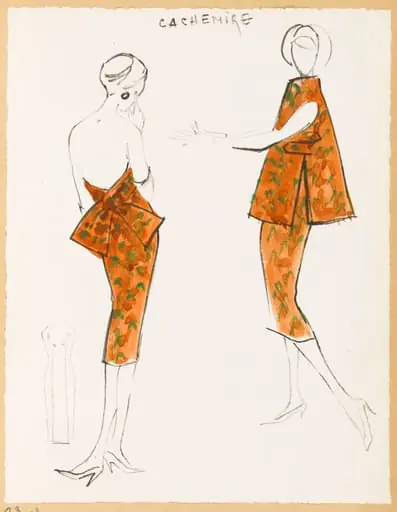
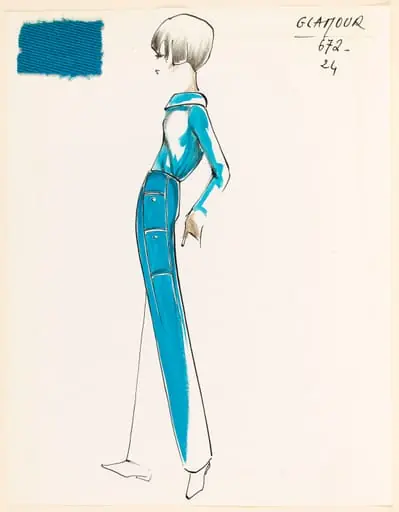
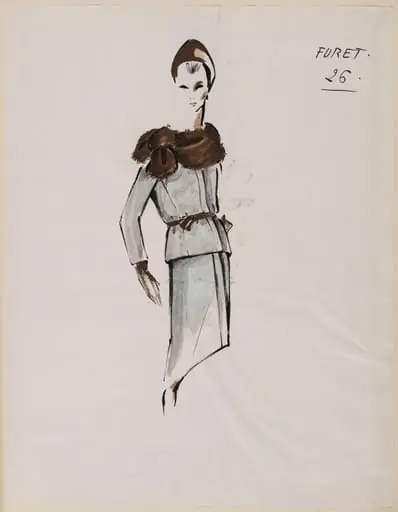
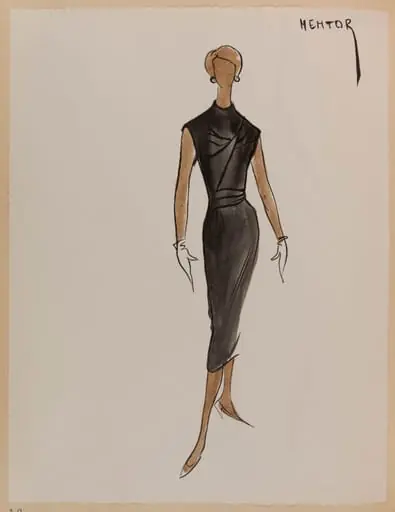
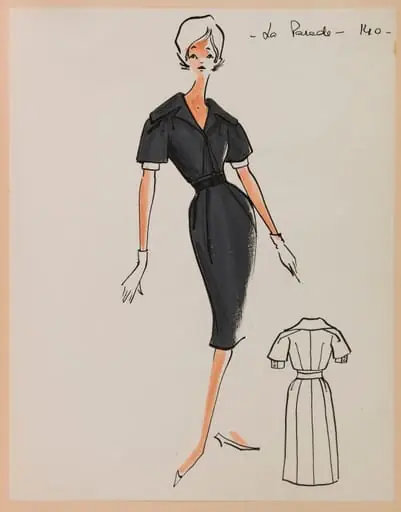
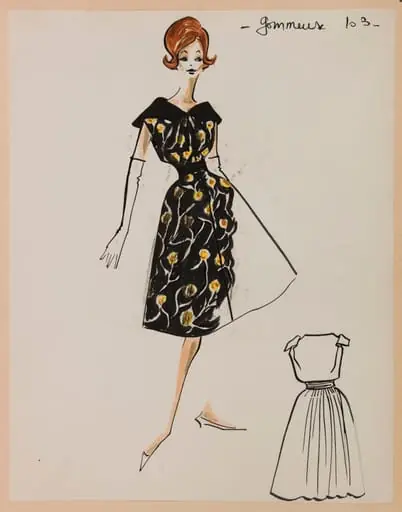
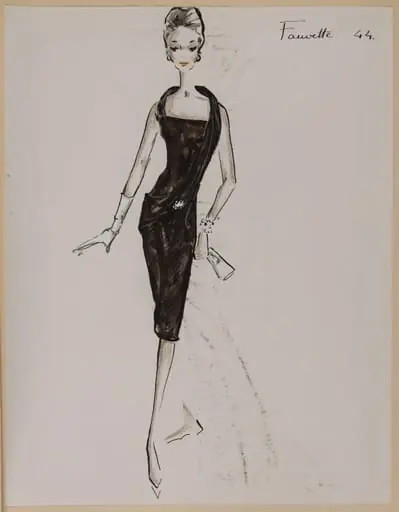
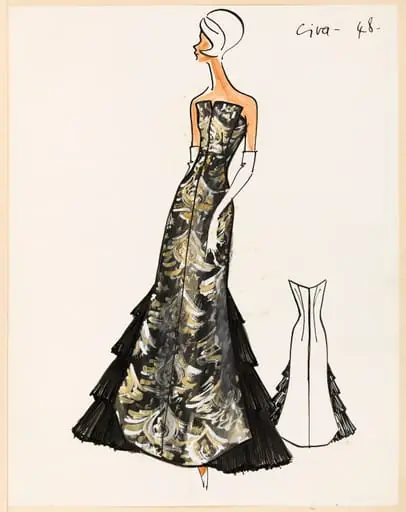
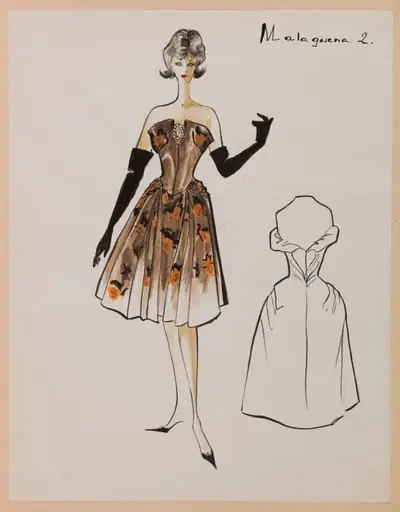
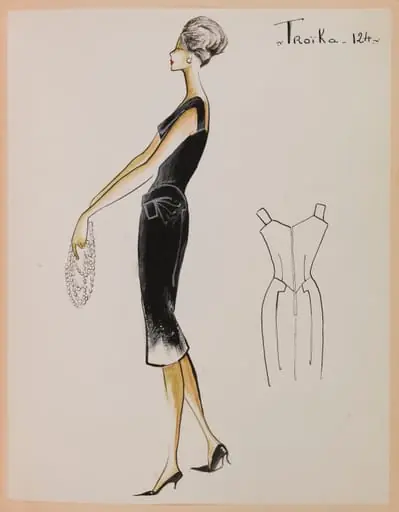
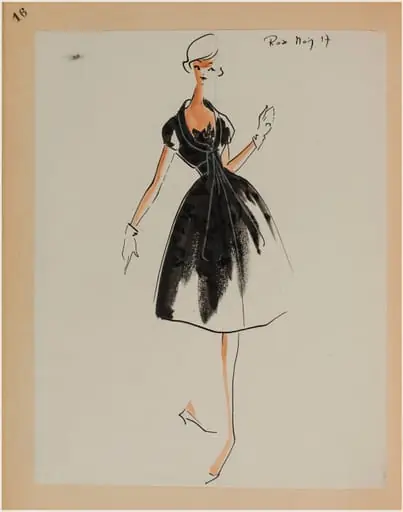
Alicante is a drawing by Carven. It dates from 1958 and is held in the collection of the Palais Galliera - Musée de la Mode de la Ville de Paris.
About this work
Overview
Created around 1958, Alicante is a pencil sketch by the artist Carven, currently held in the collection of the Museum of Ethnography. The work captures a single figure in a moment of quiet stillness, rendered with minimal but deliberate strokes. Its informal quality suggests a study or preparatory drawing rather than a finished composition, emphasizing immediacy over polish.
Subject & Meaning
The small sketch of a vase with a bow in the corner may hint at domestic or ritual objects associated with her identity or setting.
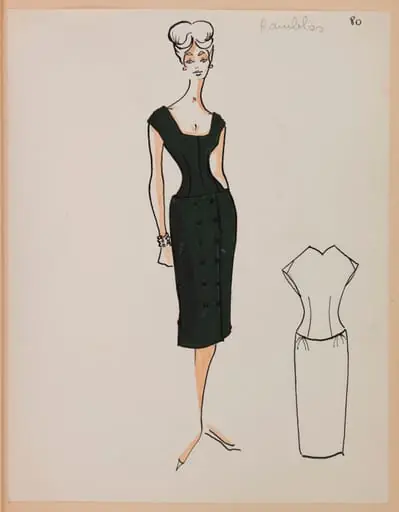
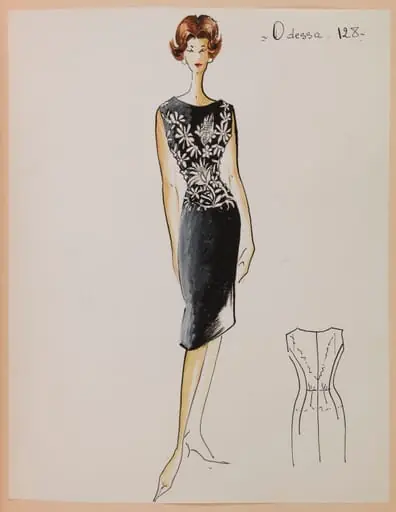
The figure is a woman dressed in a long black gown adorned with a subtle floral motif on the bodice. Her hair is tightly gathered, and she wears modest jewelry, suggesting a formal or ceremonial context. The relaxed posture and trailing dress imply a sense of dignity and containment. The small sketch of a vase with a bow in the corner may hint at domestic or ritual objects associated with her identity or setting.
Technique & Style
Carven employed light, fluid pencil lines to suggest form without heavy definition. Shading is sparse and atmospheric, used only to indicate volume or depth where necessary. The loose, rapid handling conveys a sense of spontaneity, as if the artist responded directly to the subject in real time. The inclusion of the vase sketch in the margin reveals an associative, perhaps intuitive, approach to composition.
History & Provenance
The drawing entered the Museum of Ethnography’s collection in the late 20th century, though its exact acquisition path remains undocumented. It is not known whether Carven intended it for public display or kept it as a personal study. Its presence in an ethnographic institution suggests it may have been collected as part of a broader interest in cultural representation or costume.
Context
Made in the late 1950s, the work reflects a period when many artists turned to figural studies as a means of exploring identity and cultural dress beyond formal portraiture. Carven’s focus on attire and posture aligns with ethnographic interests in clothing as a marker of social or regional identity, even as the sketch resists overt anthropological categorization.
Legacy
Alicante remains a quiet example of Carven’s engagement with figure drawing and cultural detail. It has not been widely exhibited or reproduced, but its inclusion in an ethnographic museum underscores its value as a visual record of dress and demeanor. The work invites consideration of how informal sketches can preserve cultural nuance outside of official documentation.
Artist & collection
Artist
These delicate ink-on-paper drawings capture the quiet poetry of everyday things: pinecones, reeds, apples.
Museum
Palais Galliera - Musée de la Mode de la Ville de Paris
Continue through works from the same source collection.