Artwork
Gommeuse
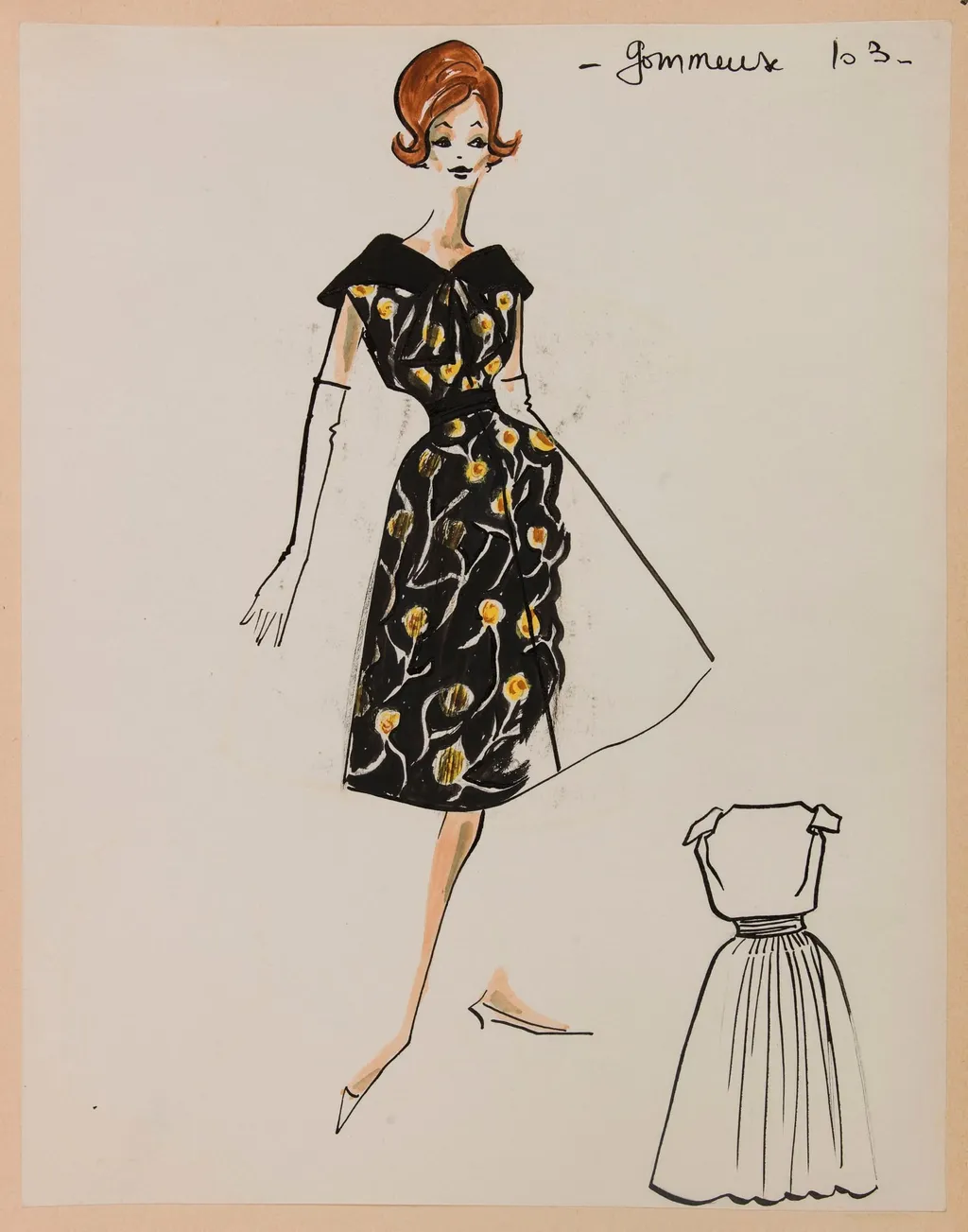
Gommeuse is a drawing by Marie-Louise Carven. It dates from 1958 and is held in the collection of the Palais Galliera - Musée de la Mode de la Ville de Paris.
About this work
Overview
Created circa 1958 by French designer Marie‑Louise Carven, *Gommeuse* is a fashion illustration that resides in the Museum of Ethnography’s collection. The drawing captures a single‑piece dress rendered in bold black with gold polka‑dot detailing, accompanied by a flat‑pattern outline of the garment.
Subject & Meaning
The image depicts a woman in a sleek, knee‑length dress, her hair gathered in an updo and one hand placed on her hip, suggesting poised movement. The striking contrast between the dark fabric and bright gold dots emphasizes a modern, playful aesthetic that aligns with Carven’s focus on lightweight, petite‑friendly designs.
Technique & Style
Carven’s sketch employs loose, confident lines that convey immediacy, while the accompanying flat pattern presents the garment’s construction in a simplified, technical manner. The juxtaposition of freehand illustration and schematic drawing reflects the designer’s dual interest in artistic expression and practical tailoring.
History & Provenance
Marie‑Louise Carven founded her eponymous fashion house in 1945 and was among the first couturiers to launch a ready‑to‑wear line. *Gommeuse* exemplifies her mid‑century work and was later acquired by the Museum of Ethnography, where it remains part of the permanent holdings.
Context
The late 1950s saw a shift toward accessible fashion, with designers like Carven bridging haute couture and everyday wear. The illustration’s emphasis on a streamlined silhouette and bold graphic detail mirrors contemporary trends toward simplicity and visual impact in post‑war European fashion.
Artist & collection
Artist
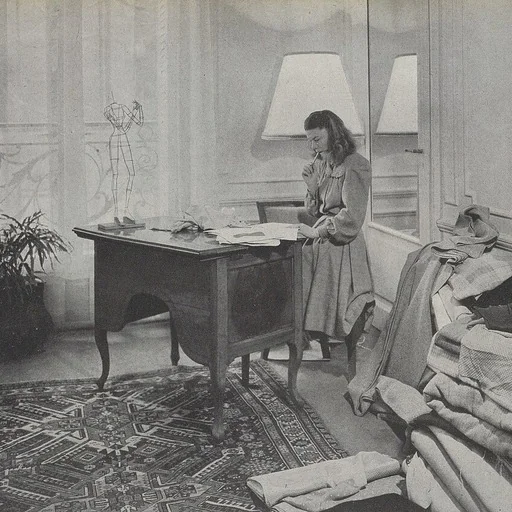
Marie-Louise Carven (31 August 1909 – 8 June 2015), born Carmen de Tommaso, was a French fashion designer who founded the house of Carven in 1945.
Museum
Palais Galliera - Musée de la Mode de la Ville de Paris
Continue through works from the same source collection.
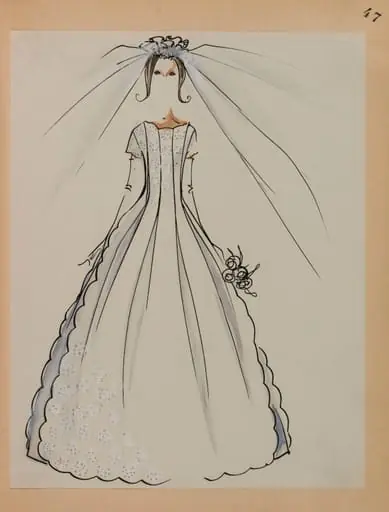 Robe de mariée festonnée et son voile
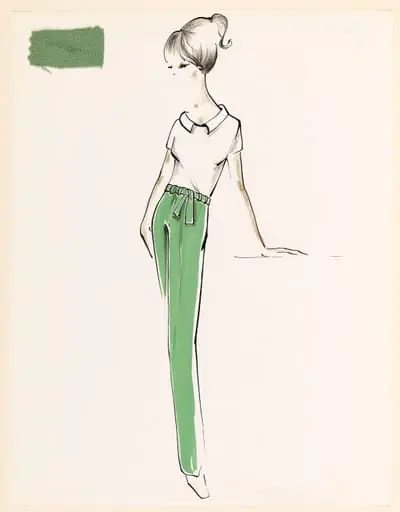 Haut blanc à manches courtes et pantalon vert à ceinture nouée
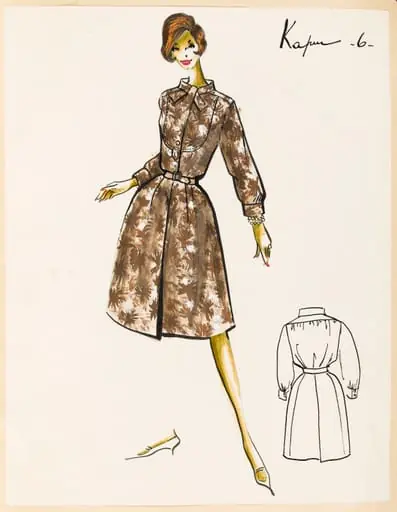 Kapur
Kapur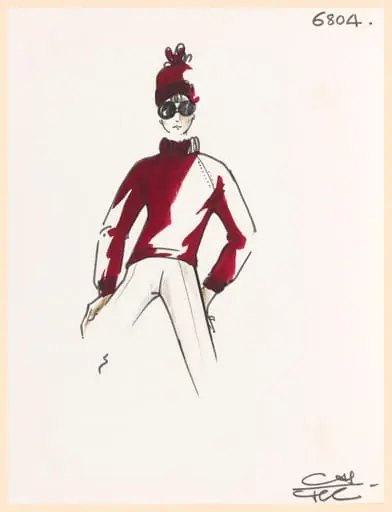 Pull-over à manches longues pourpre, bonnet assorti, pantalon et lunettes de soleil
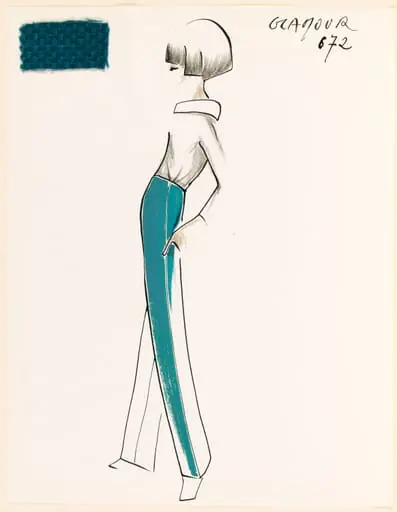 GLAMOUR
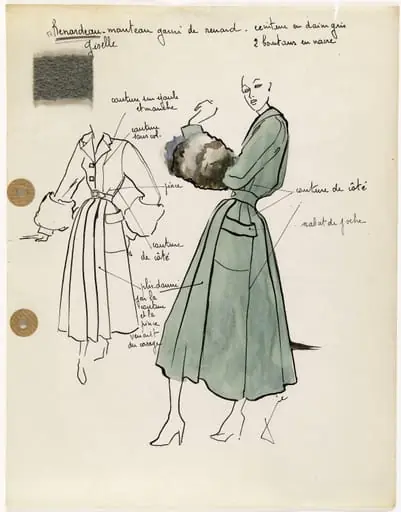 'Renardeau'
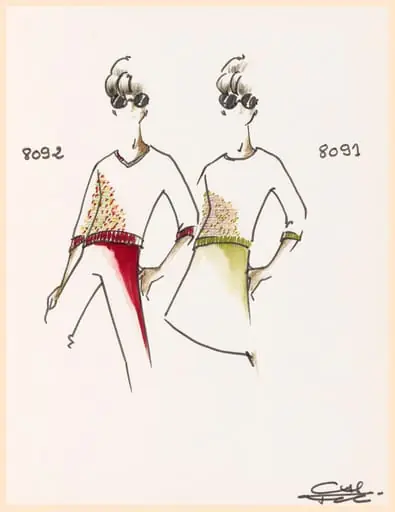 Pull-over à manches trois quarts et à encolure V à motifs multicolores, pantalon cerise et lunettes de soleil
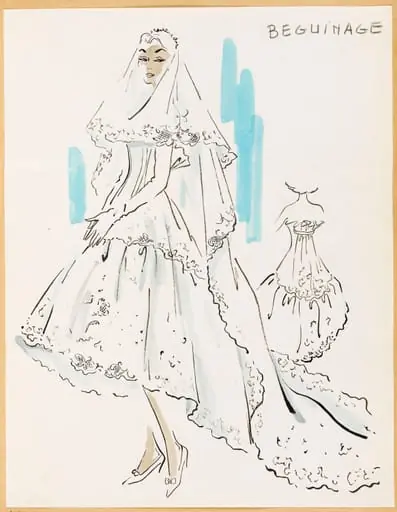 Béguinage