Artwork
Alhambra
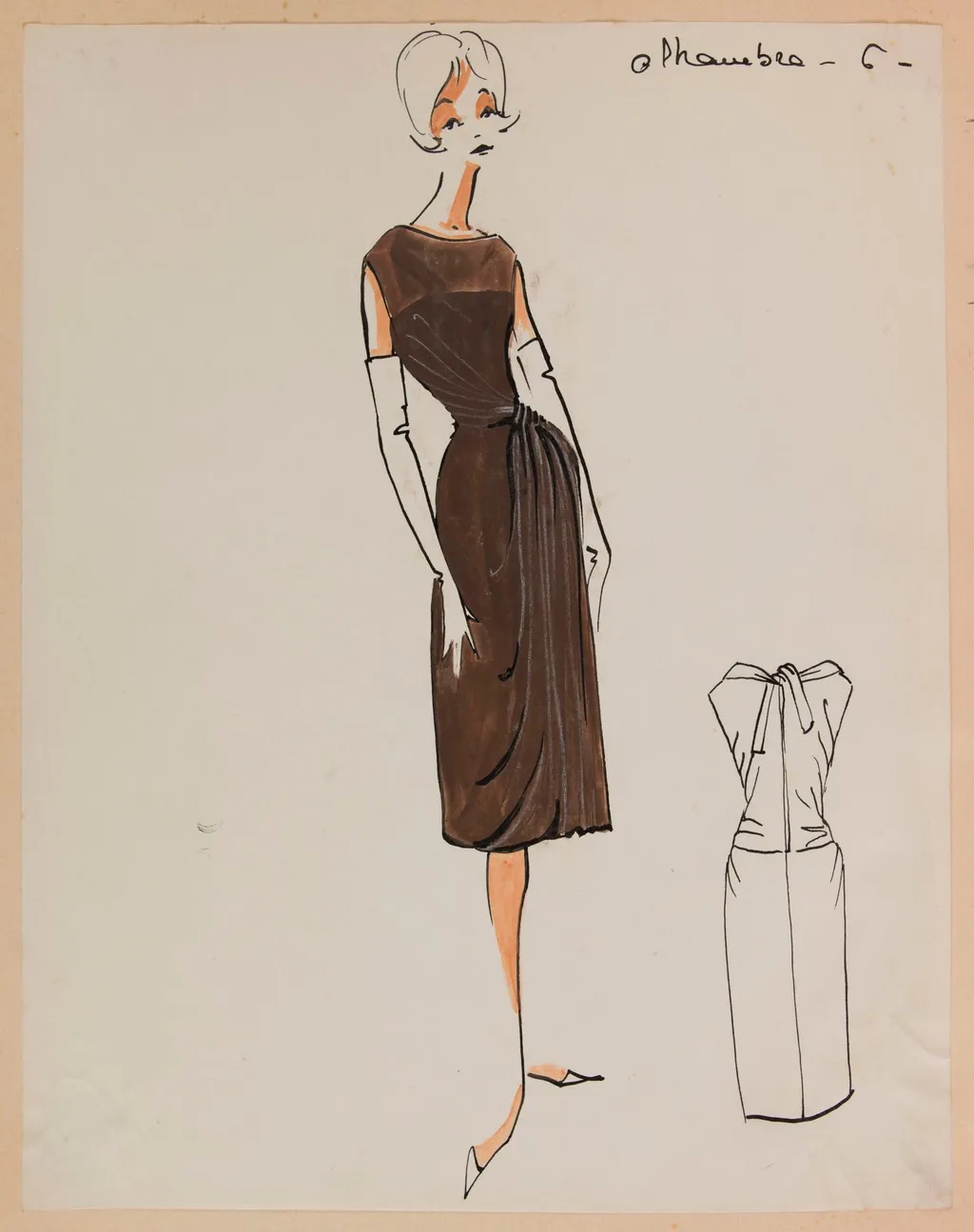
Alhambra is a drawing by Marie-Louise Carven. It dates from 1958 and is held in the collection of the Palais Galliera - Musée de la Mode de la Ville de Paris.
About this work
Overview
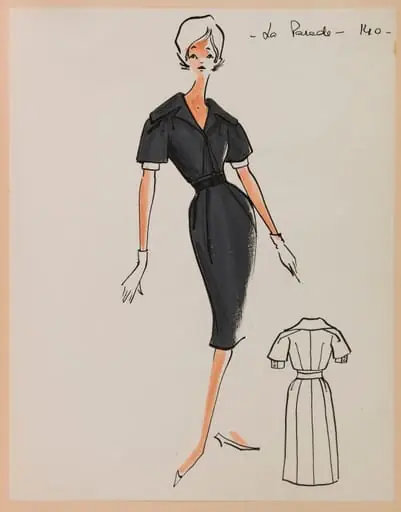
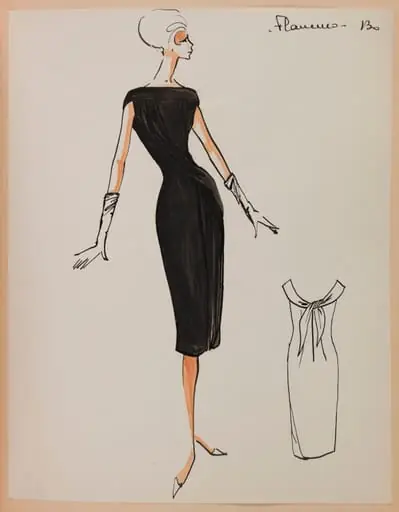
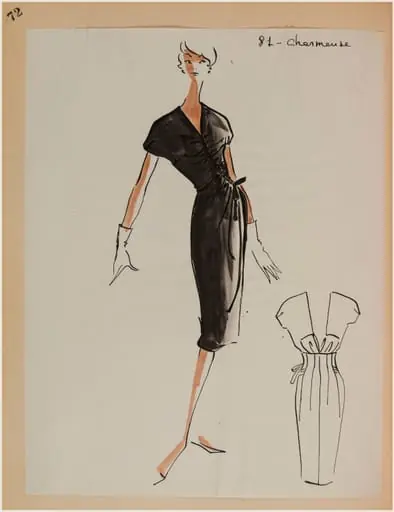
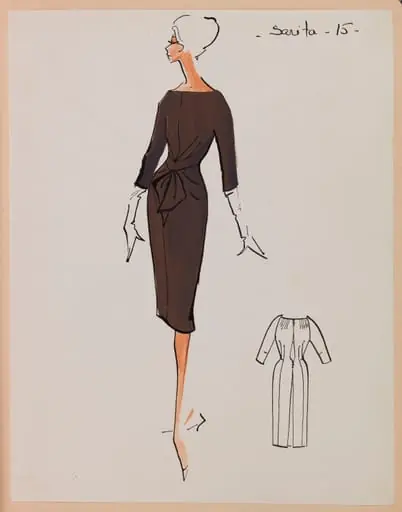
It captures a model wearing a brown, sleeveless dress with a gathered waist, white elbow-length gloves, and heels, set against a pale beige backdrop.
Created around 1958, *Alhambra* is a photographic image associated with French designer Marie-Louise Carven. It captures a model wearing a brown, sleeveless dress with a gathered waist, white elbow-length gloves, and heels, set against a pale beige backdrop. Beside her, a white sketch of another garment appears, suggesting a moment in the design process. The image is held in the Museum of Ethnography, reflecting its role in documenting fashion as cultural artifact.
Subject & Meaning
The image presents a woman in a tailored, mid-century ensemble that reflects Carven’s focus on petite silhouettes and wearable elegance. The juxtaposition of the finished dress with a separate design sketch underscores the iterative nature of fashion creation. The contrast between the dark garment and the light drawing emphasizes the transition from concept to reality, framing fashion as both art and craft.
Technique & Style
The photograph employs clean lines and soft lighting to highlight the dress’s structure and the model’s poised posture. The sketch beside her, rendered in white, functions as a graphic counterpoint, suggesting a studio environment. Carven’s aesthetic favored simplicity and proportion, evident in the dress’s knee-length cut and minimal detailing, aligning with her broader design philosophy of understated refinement.
History & Provenance
Marie-Louise Carven founded her fashion house in 1945 and was among the early French designers to embrace prêt-à-porter. *Alhambra* emerged during a period when her work gained recognition for blending couture precision with accessible design. The image entered the Museum of Ethnography’s collection as part of efforts to preserve mid-century fashion as a reflection of social and cultural norms of the time.
Context
In the late 1950s, Parisian fashion was transitioning from exclusive haute couture to more democratic ready-to-wear. Carven’s designs catered to a growing market of women seeking stylish yet practical clothing. The inclusion of a design sketch in *Alhambra* reflects this era’s emphasis on process and innovation, positioning fashion not merely as consumption but as a creative discipline.
Legacy
Carven’s contributions to fashion, including her early adoption of prêt-à-porter and innovations like the push-up bra, influenced postwar design practices. *Alhambra* endures as a visual record of this shift, illustrating how fashion studios documented their work. Its preservation in an ethnographic context affirms its value as a cultural document beyond the runway.
Artist & collection
Artist
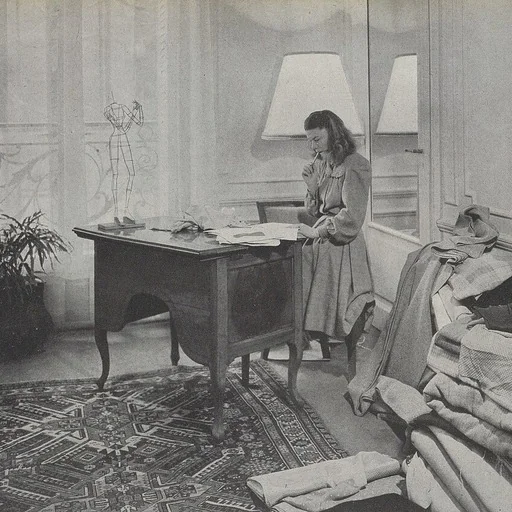
Marie-Louise Carven (31 August 1909 – 8 June 2015), born Carmen de Tommaso, was a French fashion designer who founded the house of Carven in 1945.

Museum
Palais Galliera - Musée de la Mode de la Ville de Paris
Continue through works from the same source collection.
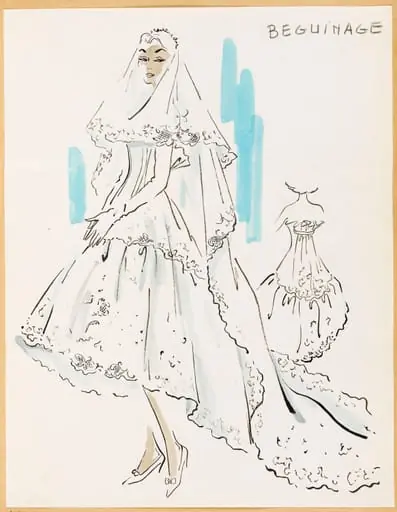
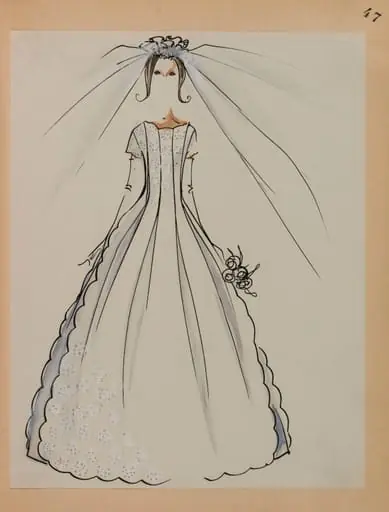 Robe de mariée festonnée et son voile
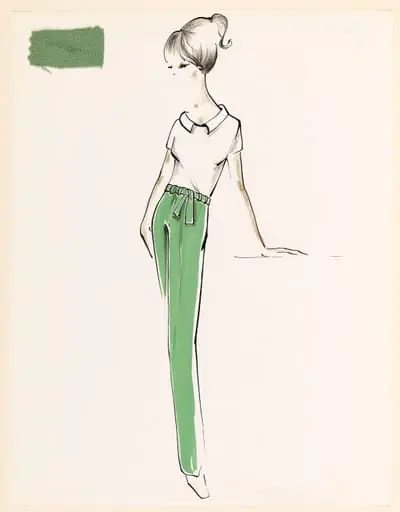 Haut blanc à manches courtes et pantalon vert à ceinture nouée
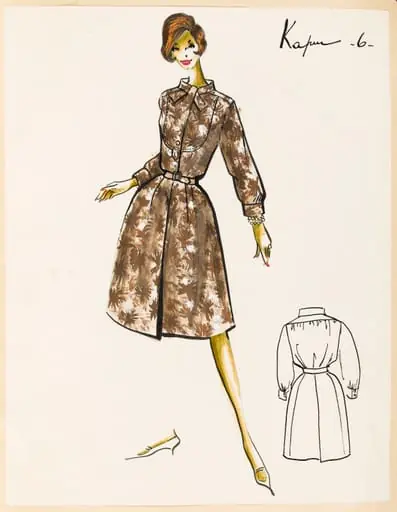 Kapur
Kapur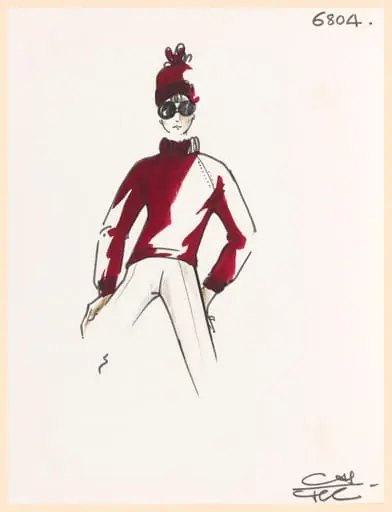 Pull-over à manches longues pourpre, bonnet assorti, pantalon et lunettes de soleil
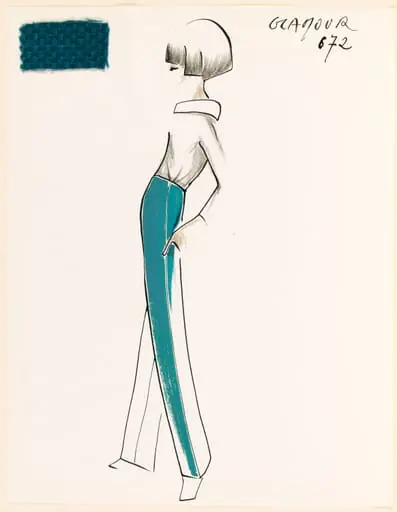 GLAMOUR
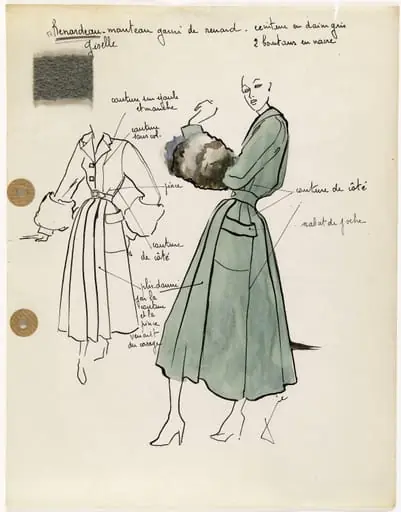 'Renardeau'
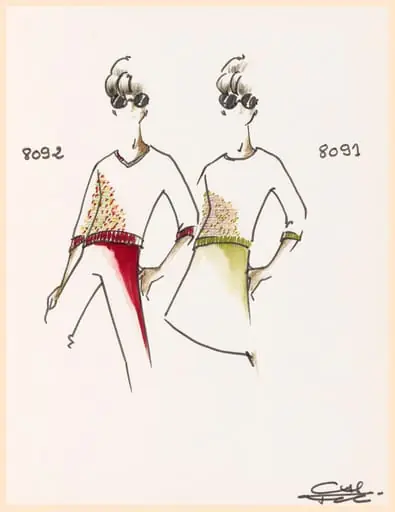 Pull-over à manches trois quarts et à encolure V à motifs multicolores, pantalon cerise et lunettes de soleil
 Béguinage