Artwork
Angkor
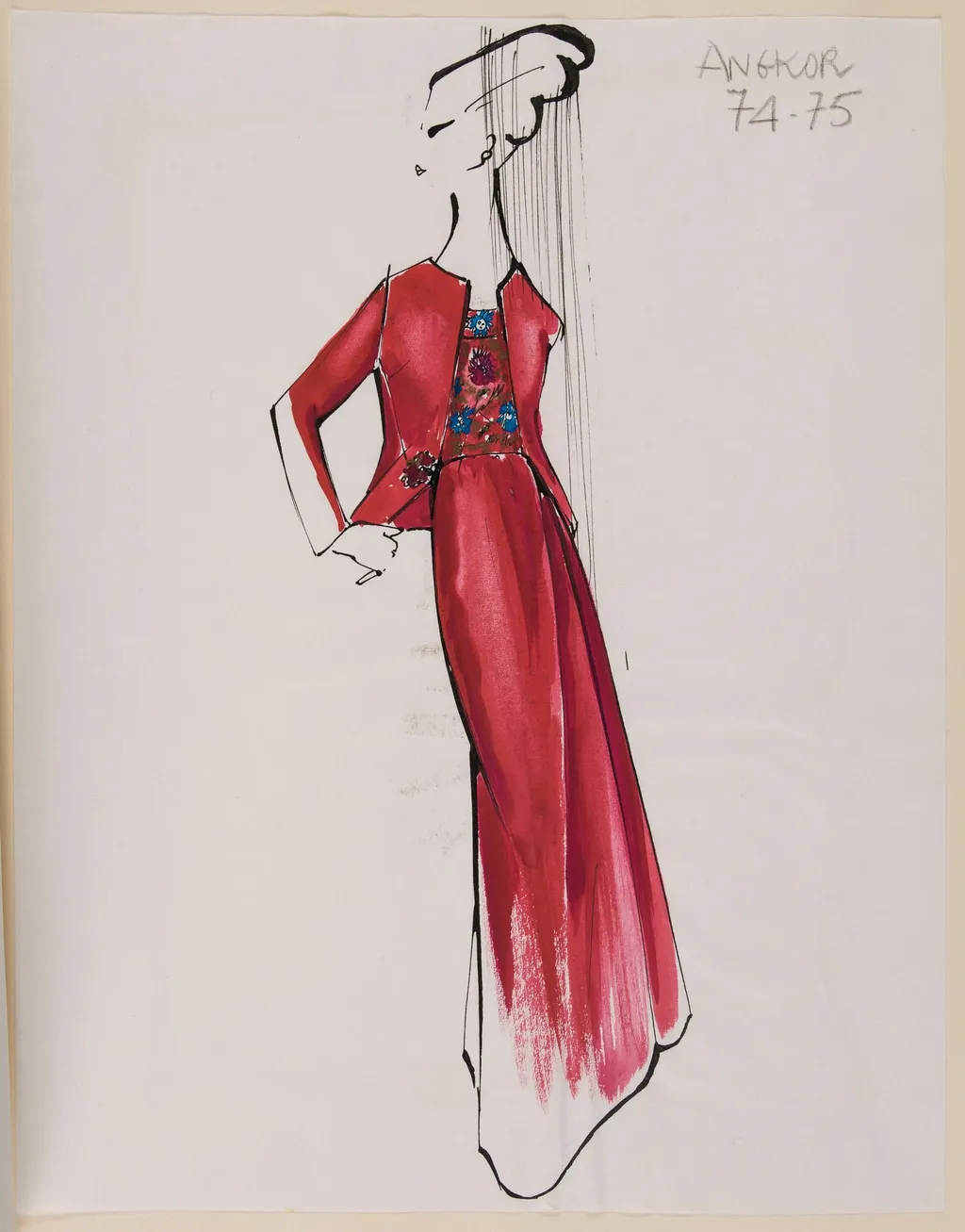
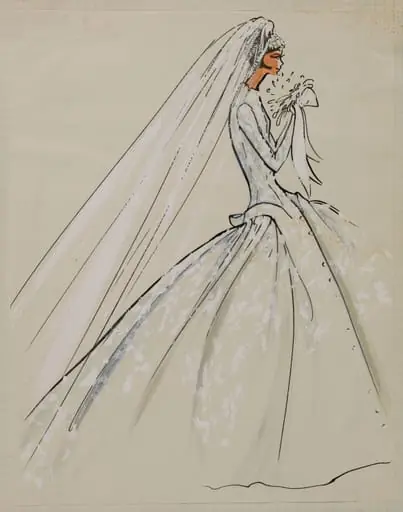
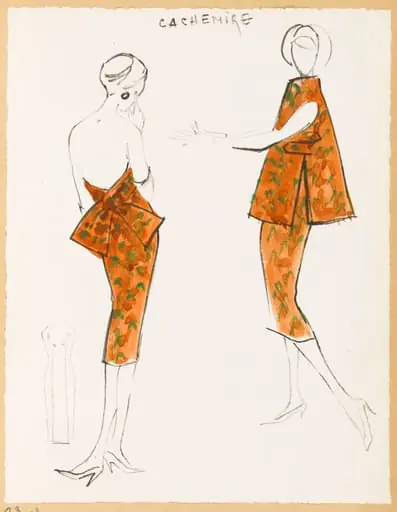
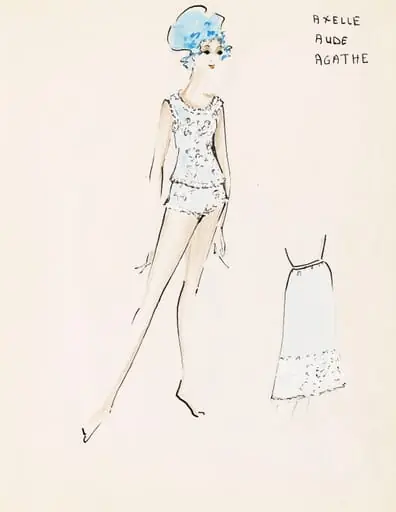
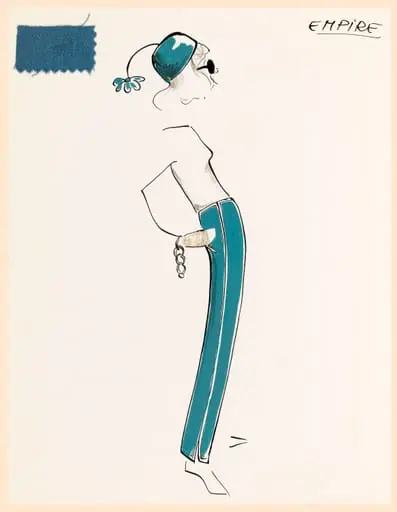
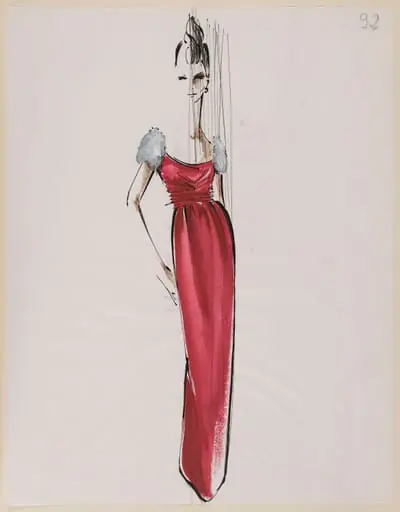
Angkor is a drawing by Carven. It dates from 1963 and is held in the collection of the Palais Galliera - Musée de la Mode de la Ville de Paris.
About this work
Overview
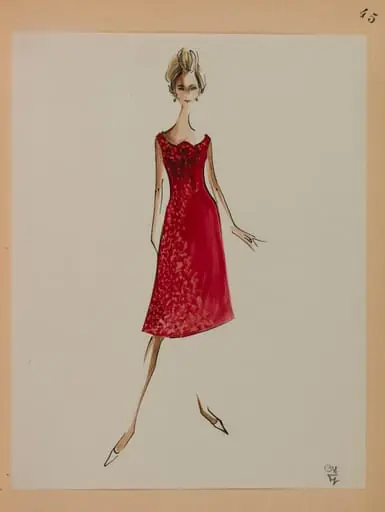
Created around 1963 by the artist known as Carven, “Angkor” is a drawing held in the collection of the Museum of Ethnography. The work presents a solitary female figure rendered in a brisk, gestural manner that emphasizes movement and form over detailed finish.
Subject & Meaning
The composition centers on a woman dressed in a flowing red garment adorned with a floral motif on the bodice. Her hair is gathered back, and she rests a hand on her hip, suggesting a poised, perhaps self‑assured stance. The elongated train trailing behind her evokes a sense of lingering presence.
Technique & Style
Carven employs loose, rapid strokes that give the image an unfinished, sketch‑like quality. Bold outlines define the figure while simple geometric shapes keep the visual language clear. Subtle cross‑hatching adds tonal depth, illustrating how line work can suggest shading without heavy modeling.
History & Provenance
The drawing was produced in the early 1960s, a period marked by experimentation with line and abstraction. It entered the Museum of Ethnography’s holdings sometime after its creation, where it remains part of the institution’s representation of mid‑century graphic work.
Context
“Angkor” reflects broader trends of the 1960s in which artists explored economical drawing techniques to capture the essence of a subject. The emphasis on line, minimal detail, and a hint of narrative aligns it with contemporary explorations of fashion illustration and figurative sketching.
Artist & collection
Artist
These delicate ink-on-paper drawings capture the quiet poetry of everyday things: pinecones, reeds, apples.
Museum
Palais Galliera - Musée de la Mode de la Ville de Paris
Continue through works from the same source collection.