Artwork
Robe à bretelles rose à motif rose clair nouée sur la poitrine
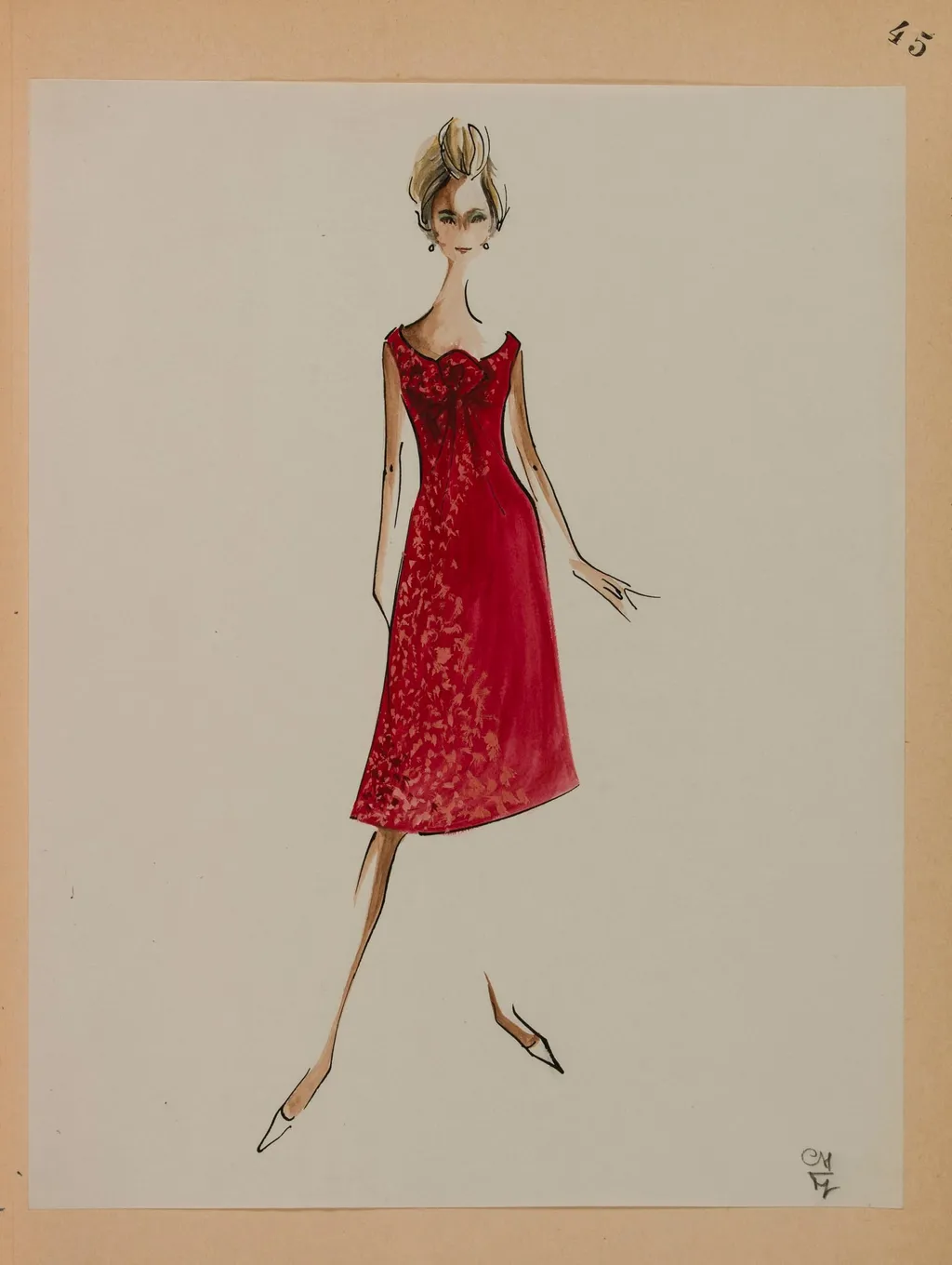
Robe à bretelles rose à motif rose clair nouée sur la poitrine is a drawing by Marie-Louise Carven. It dates from 1963 and is held in the collection of the Palais Galliera - Musée de la Mode de la Ville de Paris.
About this work
Overview
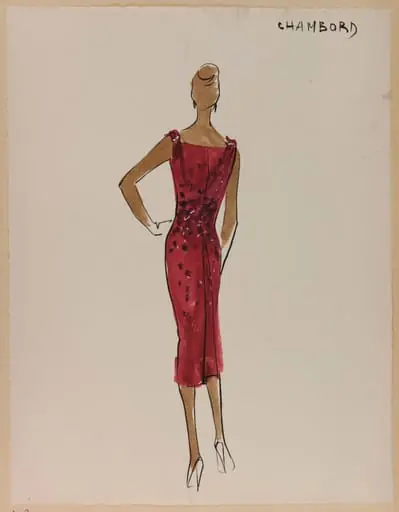
This artwork depicts a woman wearing a sleeveless pink dress with a light pink floral pattern, designed by French couturier Marie-Louise Carven around 1963.
This artwork depicts a woman wearing a sleeveless pink dress with a light pink floral pattern, designed by French couturier Marie-Louise Carven around 1963. The dress is secured at the chest with delicate straps tied in a bow, and its hem falls just below the knee. The subject stands against a soft beige background, her posture calm and composed, with hair styled in an updo and minimal jewelry. The image captures a moment of quiet refinement, reflecting Carven’s focus on wearable elegance for petite figures.
Subject & Meaning
The figure in the painting embodies a restrained femininity, neither theatrical nor overtly ornamental. Her relaxed posture and understated accessories suggest an everyday grace, aligning with Carven’s philosophy of clothing as an extension of personal ease. The dress, though decorative, is not extravagant—its tied straps and light motif imply practicality fused with charm. The image conveys a sense of modern womanhood: composed, self-assured, and unburdened by excess.
Technique & Style
The painting employs soft brushwork and muted tonal contrasts to emphasize the dress’s texture and the figure’s poise. The background’s pale beige allows the dress’s pink hues to dominate without competition, enhancing its delicate pattern. The artist renders fabric with subtle gradations, suggesting lightweight material, while the bow and straps are rendered with precision to highlight their structural role. The composition is balanced, with the figure centered and the arms positioned to suggest natural stillness.
History & Provenance
Marie-Louise Carven founded her fashion house in Paris in 1945 and was among the first French designers to develop a ready-to-wear line, making couture-inspired design accessible beyond elite clients. This dress, created circa 1963, reflects her postwar aesthetic: light fabrics, feminine silhouettes, and attention to proportion for smaller frames. The painting likely served as promotional or archival material for her brand, documenting a signature style during a period of expanding women’s fashion markets.
Context
In the early 1960s, Parisian fashion was shifting toward more casual, youthful styles, and Carven’s designs aligned with this movement. Her work stood apart from the heavier silhouettes of earlier decades, favoring airy construction and subtle decoration. This piece reflects broader cultural changes—women’s increasing participation in public life, the rise of ready-to-wear, and a preference for clothing that combined charm with practicality, without sacrificing refinement.
Legacy
Carven’s influence endures in the integration of couture detail into accessible fashion. Her emphasis on proportion and lightness helped redefine postwar femininity in dress. Though the painting itself is not widely exhibited, it documents a design ethos that paved the way for later designers who prioritized wearable art. The garment’s simplicity and precision continue to resonate in contemporary interpretations of minimalist elegance.
Artist & collection
Artist
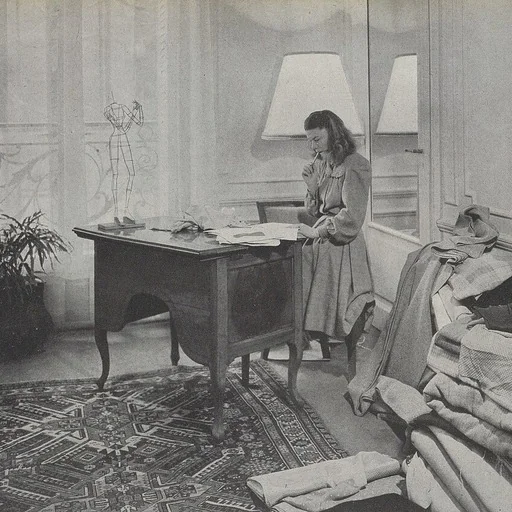
Marie-Louise Carven (31 August 1909 – 8 June 2015), born Carmen de Tommaso, was a French fashion designer who founded the house of Carven in 1945.
Museum
Palais Galliera - Musée de la Mode de la Ville de Paris
Continue through works from the same source collection.
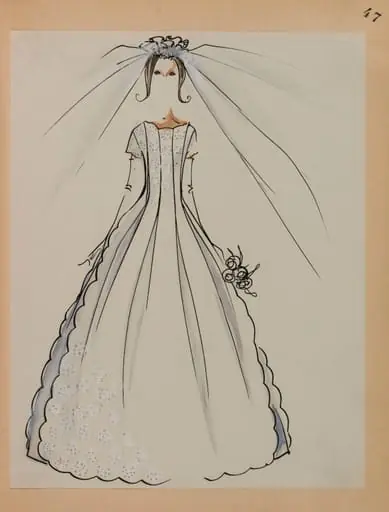 Robe de mariée festonnée et son voile
 Haut blanc à manches courtes et pantalon vert à ceinture nouée
 Kapur
Kapur Pull-over à manches longues pourpre, bonnet assorti, pantalon et lunettes de soleil
 GLAMOUR
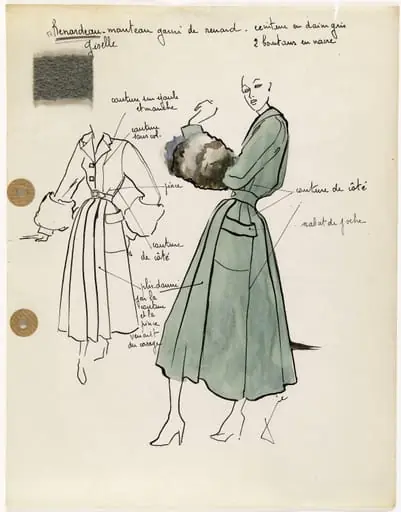 'Renardeau'
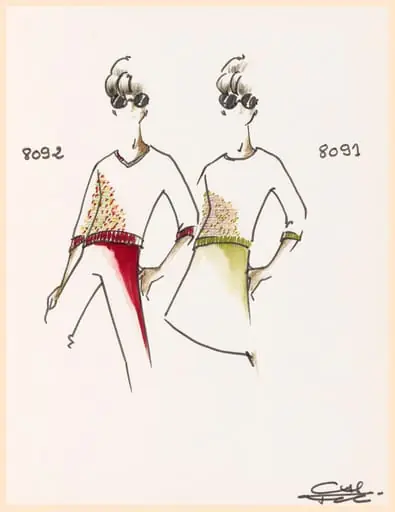 Pull-over à manches trois quarts et à encolure V à motifs multicolores, pantalon cerise et lunettes de soleil
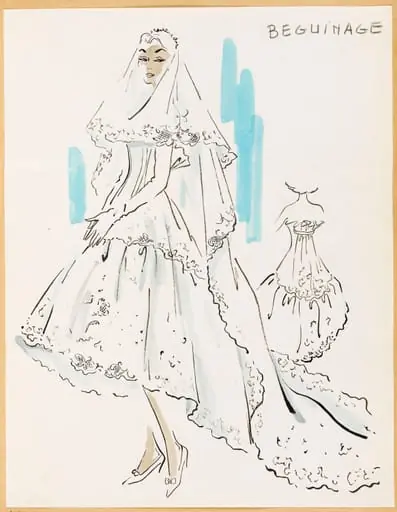 Béguinage