Artwork
Banjo
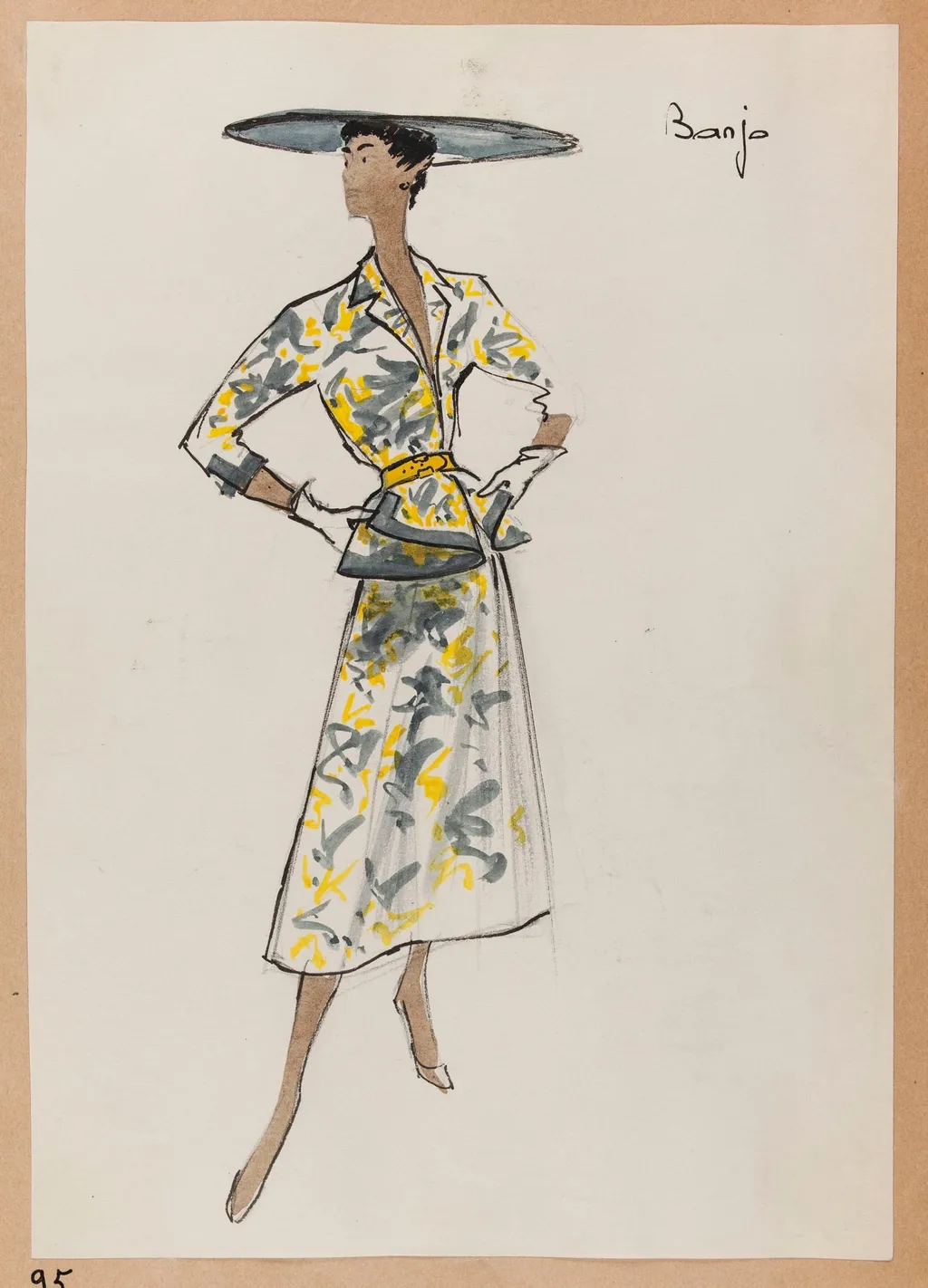
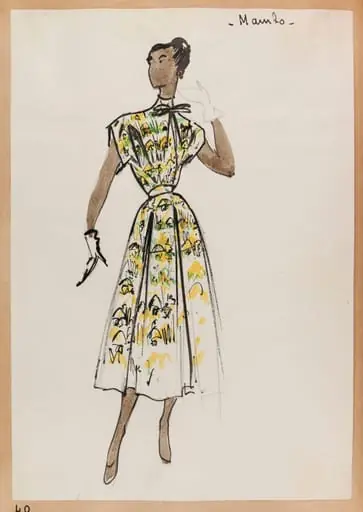
Banjo is a drawing by Carven. It dates from 1951 and is held in the collection of the Palais Galliera - Musée de la Mode de la Ville de Paris.
About this work
Overview
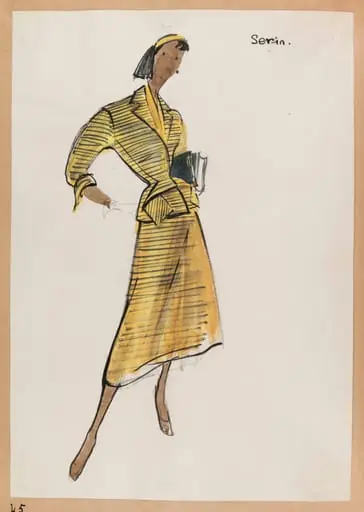
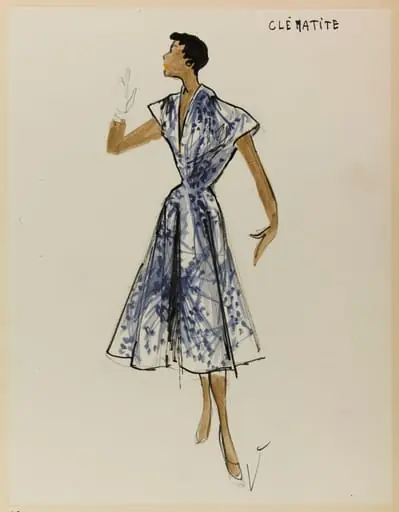
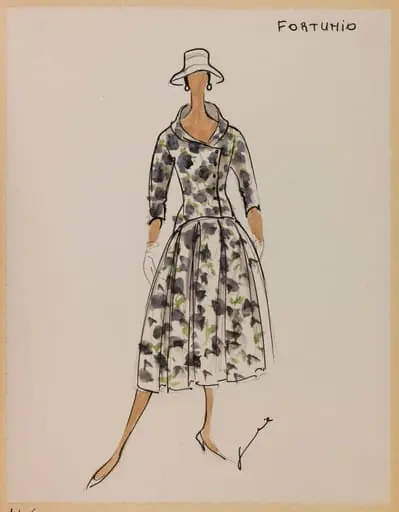
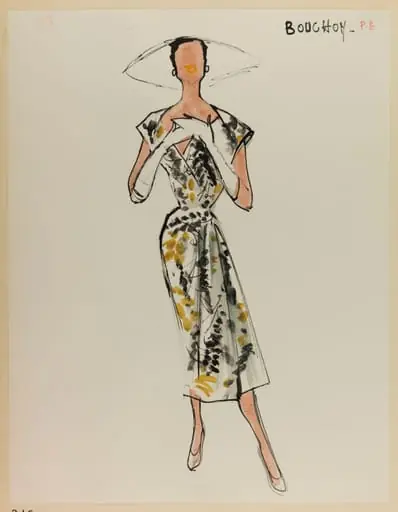
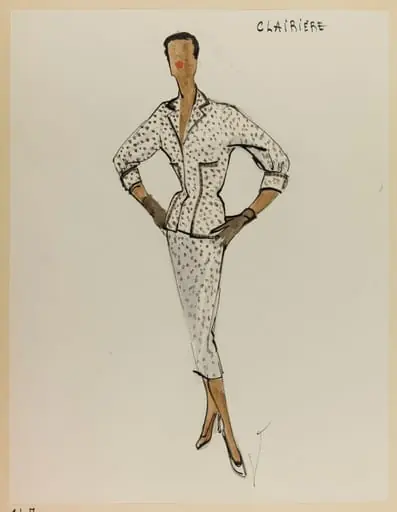
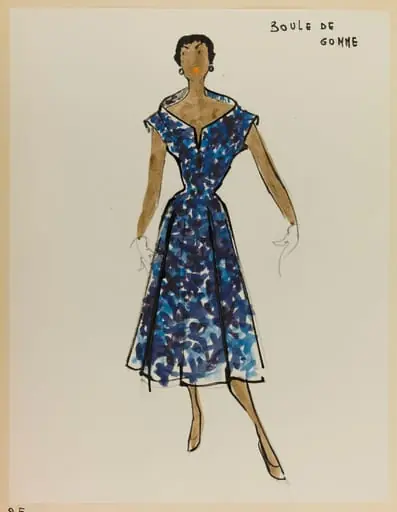
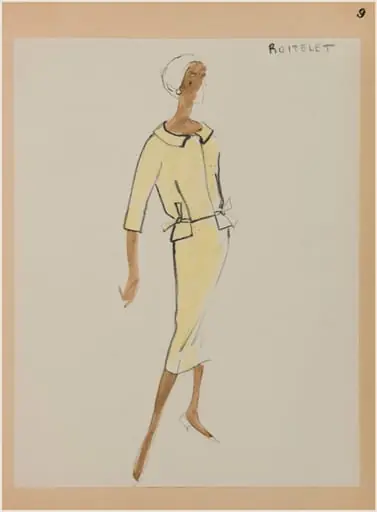
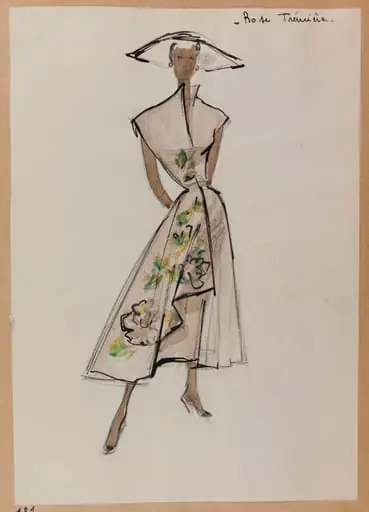
Created around 1951, Banjo is a pencil sketch attributed to the designer Carven. It resides in the collection of the Museum of Ethnography. The work captures a single figure in motion, rendered with swift, assured lines that suggest spontaneity rather than detailed finish. Its modest scale and informal quality align it with preparatory studies rather than finished compositions.
Subject & Meaning
The posture and attire convey a sense of casual elegance, reflecting mid-century urban femininity without overt narrative or symbolism.
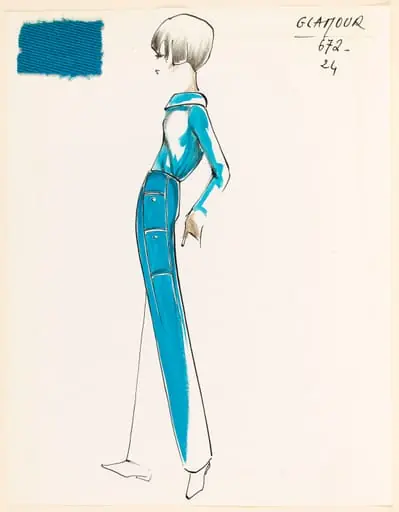
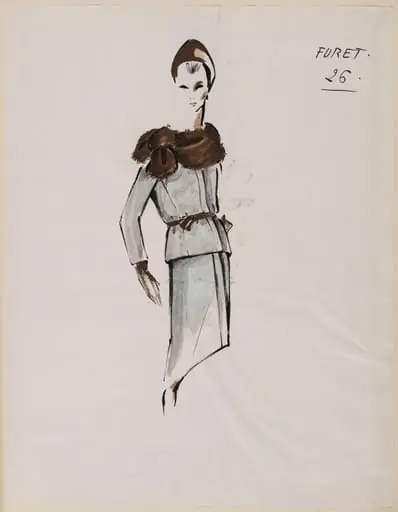
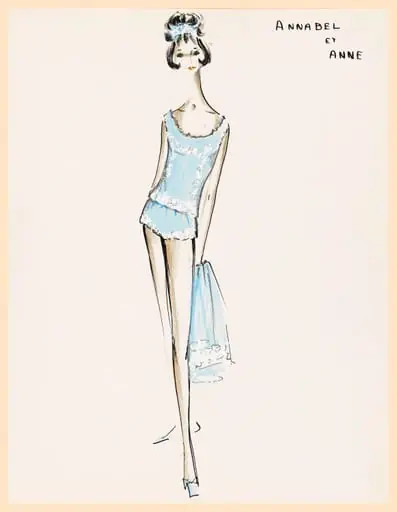
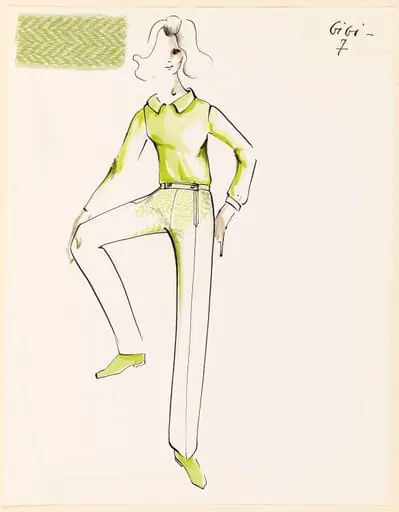
The figure is a woman dressed in a loose, patterned garment featuring alternating yellow and gray geometric forms. She wears a broad-brimmed hat and carries a small handbag, suggesting an everyday outing. The posture and attire convey a sense of casual elegance, reflecting mid-century urban femininity without overt narrative or symbolism. The image prioritizes silhouette and rhythm over psychological depth.
Technique & Style
Executed in pencil, the drawing employs fluid, confident strokes that emphasize contour and movement. Details are minimized; fabric folds and hat brim are suggested with minimal lines. The use of bold, flat color areas implies an underlying awareness of textile design, consistent with Carven’s fashion background. The sketch’s energy resembles fashion illustrations of the period, valuing immediacy over precision.
History & Provenance
The work entered the Museum of Ethnography’s collection as part of a broader acquisition of mid-20th-century fashion-related materials. Its origin as a personal sketch or design study is undocumented, but its presence in the museum suggests it was deemed representative of contemporary dress culture. The artist’s signature, visible in the corner, confirms attribution to Carven.
Context
Made during a period when Parisian fashion houses emphasized wearable, modern silhouettes, Banjo reflects the shift toward relaxed yet intentional styling. The figure’s attire aligns with postwar trends favoring comfort and subtle pattern. As a sketch, it offers insight into how designers visualized clothing in motion, bridging the gap between textile design and lived experience.
Legacy
Though not widely exhibited, Banjo contributes to the archive of fashion-related drawings that document everyday aesthetics of the early 1950s. It stands as a quiet testament to the role of informal sketches in shaping public dress, preserving a moment where design, identity, and movement intersected without grandeur or ceremony.
Artist & collection
Artist
These delicate ink-on-paper drawings capture the quiet poetry of everyday things: pinecones, reeds, apples.
Museum
Palais Galliera - Musée de la Mode de la Ville de Paris
Continue through works from the same source collection.