Artwork
Clématite
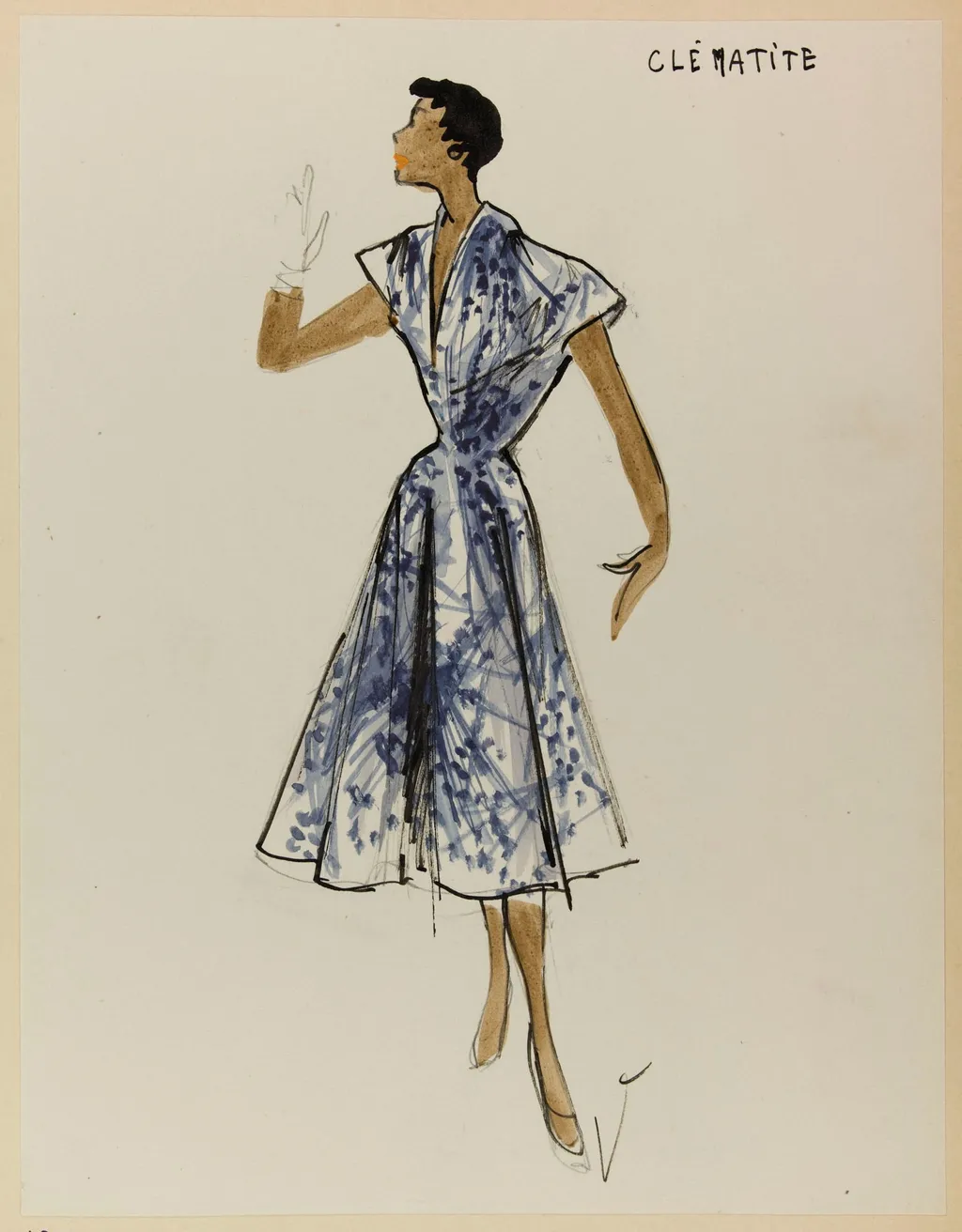
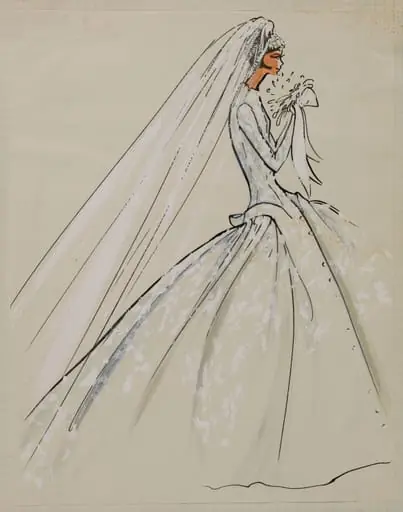
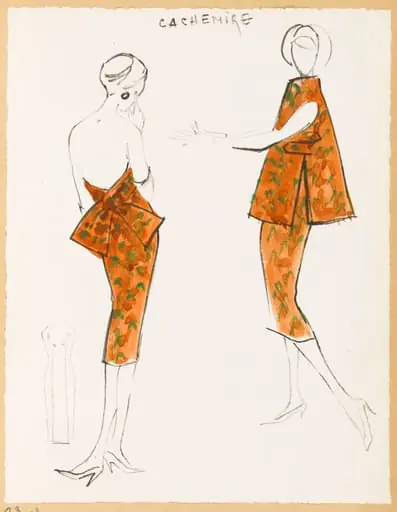
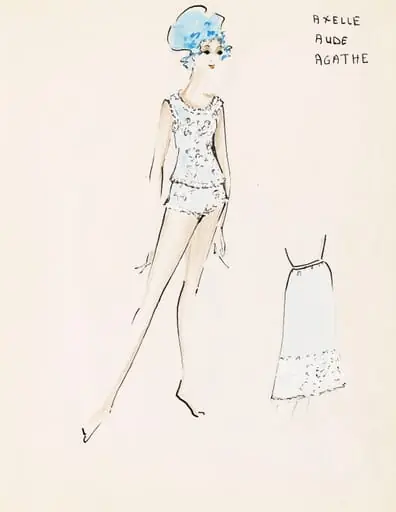
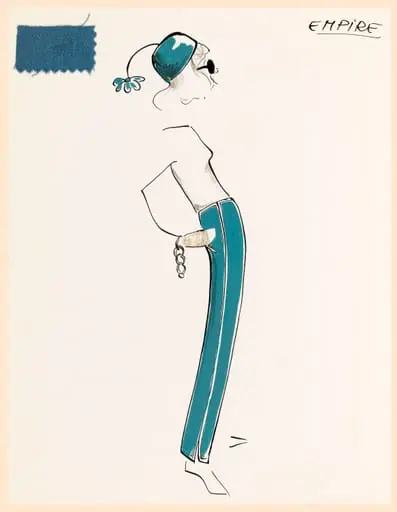
Clématite is a drawing by Carven. It dates from 1953 and is held in the collection of the Palais Galliera - Musée de la Mode de la Ville de Paris.
About this work
Overview
Created around 1953 by the designer Carven, this ink sketch depicts a woman in a flowing dress, rendered with delicate, fluid lines. The work is part of the Museum of Ethnography’s collection and reflects Carven’s interest in translating fashion into visual art. Though labeled as an image, it functions as a study in textile movement and feminine form, bridging design and drawing.
Subject & Meaning
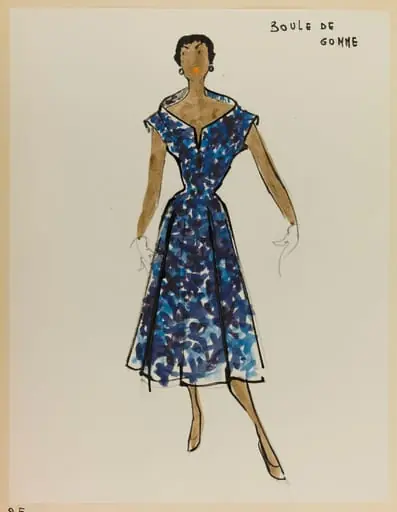
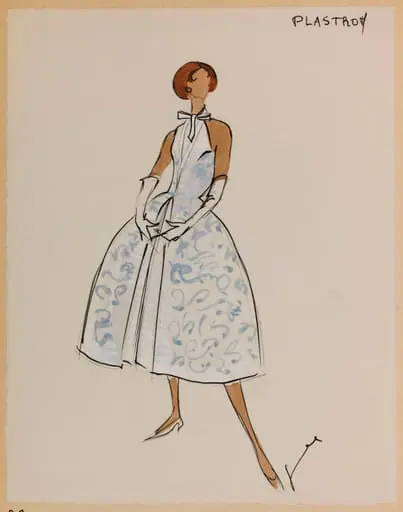
The figure wears a sleeveless dress with a dark blue floral motif, its silhouette fitted at the waist before flaring into a full skirt.
The figure wears a sleeveless dress with a dark blue floral motif, its silhouette fitted at the waist before flaring into a full skirt. Her hair is neatly gathered, and she holds a small, indistinct object in her right hand. The title, referencing the clematis vine, suggests a connection between the dress’s pattern and the plant’s delicate, climbing blooms, implying an organic harmony between fashion and nature.
Technique & Style
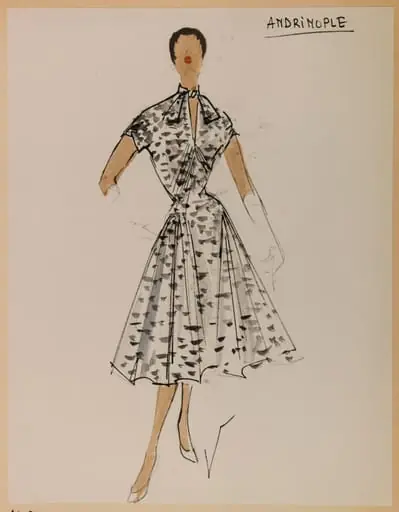
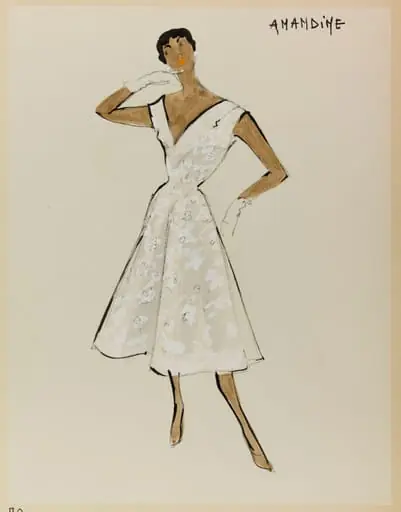
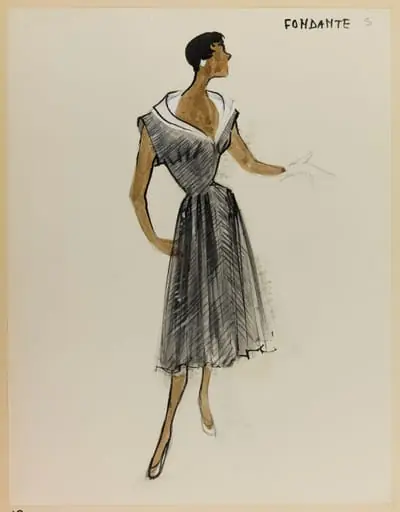
Executed in ink, the drawing emphasizes loose, rhythmic lines that suggest motion and lightness. The dress’s folds are suggested rather than meticulously defined, allowing the viewer’s eye to trace its flow. Minimal detail is given to the figure’s face or surroundings, focusing attention on the garment’s silhouette and the elegance of its drapery.
History & Provenance
The work entered the Museum of Ethnography’s collection following Carven’s active period in mid-century fashion design. Its preservation there reflects institutional interest in fashion as cultural artifact. No documented exhibition history is available prior to its inclusion in the museum’s holdings, suggesting it may have been a personal study or private commission.
Context
In the early 1950s, Carven was known for blending Parisian elegance with accessible design. This sketch aligns with a broader trend among designers to document their creations through drawing, not just pattern-making. The emphasis on natural motifs and fluid forms reflects postwar aesthetics that favored grace over rigidity, echoing contemporary shifts in women’s fashion.
Legacy
Though not widely reproduced, the sketch remains a quiet testament to Carven’s ability to merge fashion with artistic expression. It contributes to scholarly understanding of how designers visualized garments beyond the runway, using drawing as a tool to explore texture, movement, and symbolic association between clothing and the natural world.
Artist & collection
Artist
These delicate ink-on-paper drawings capture the quiet poetry of everyday things: pinecones, reeds, apples.
Museum
Palais Galliera - Musée de la Mode de la Ville de Paris
Continue through works from the same source collection.