Artwork
Bayon
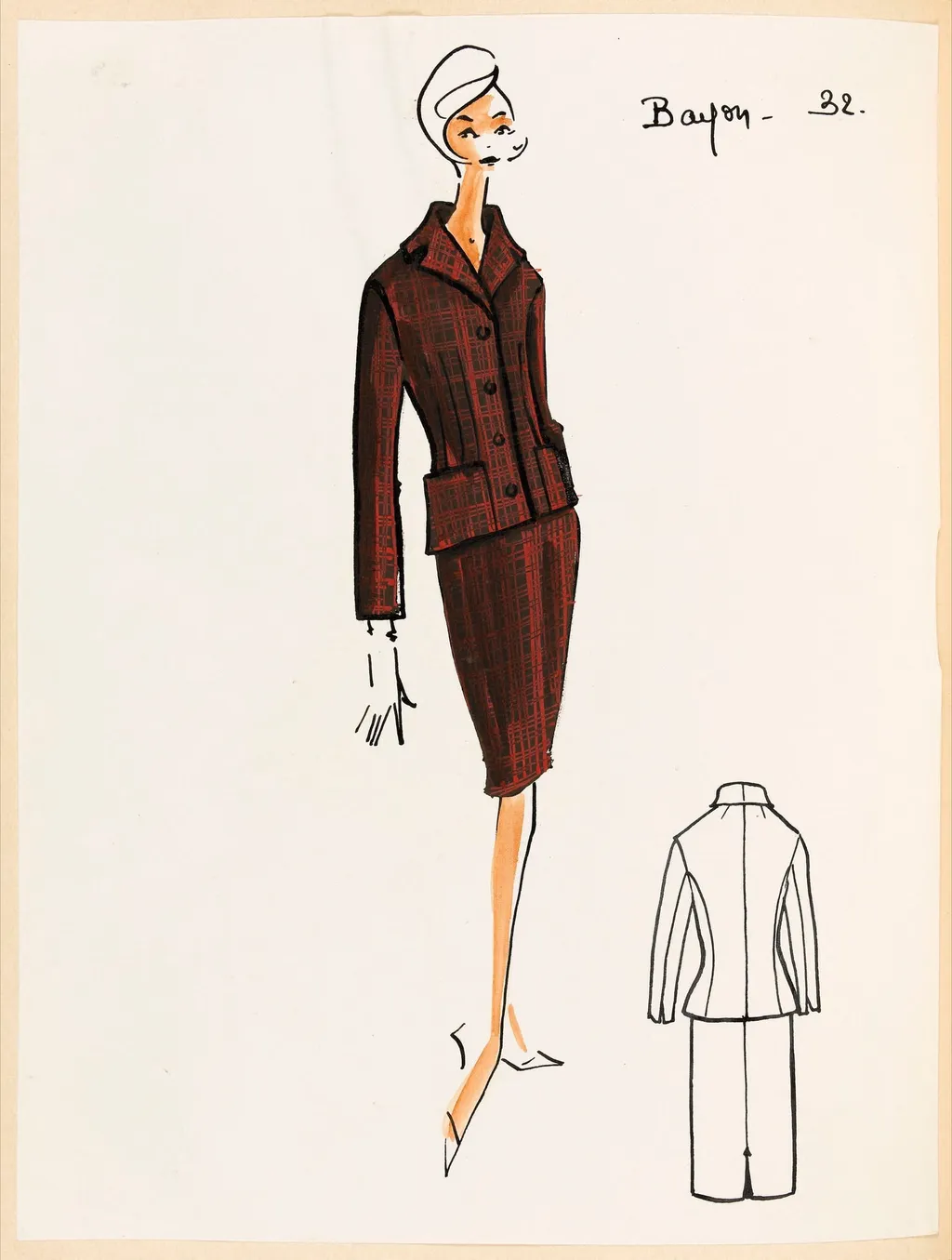
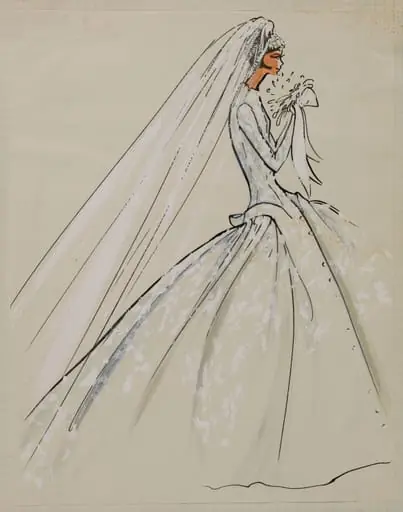
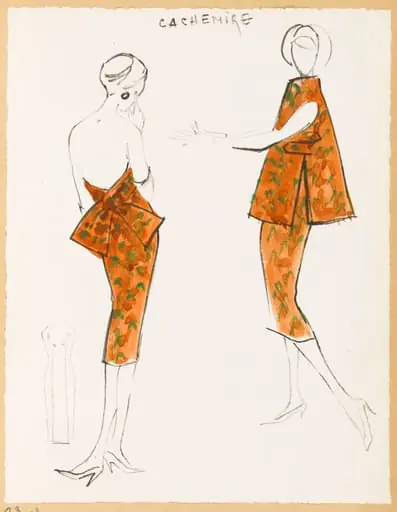
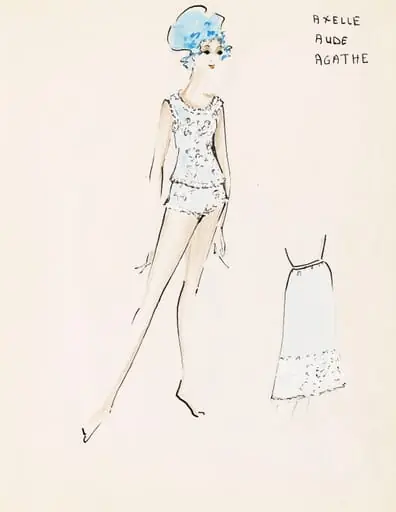
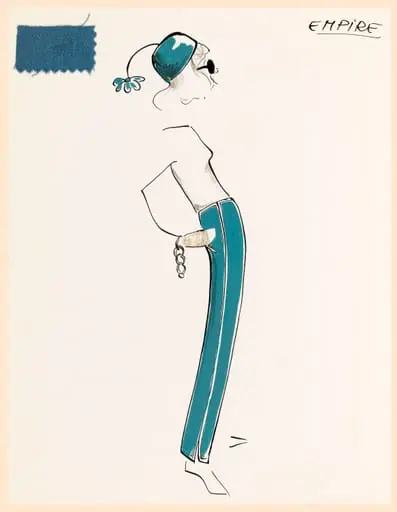
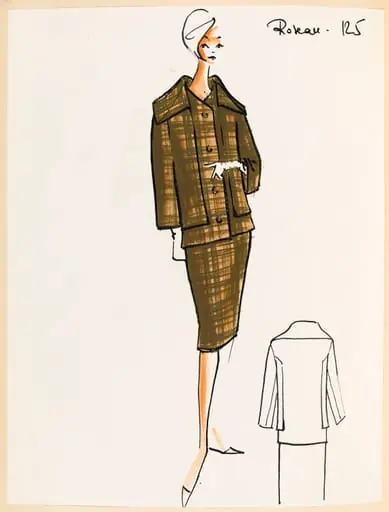
Bayon is a drawing by Carven. It dates from 1959 and is held in the collection of the Palais Galliera - Musée de la Mode de la Ville de Paris.
About this work
Overview
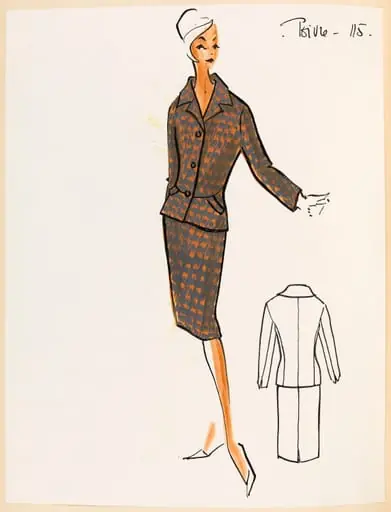
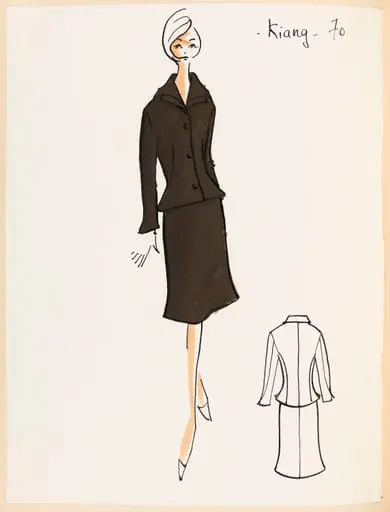
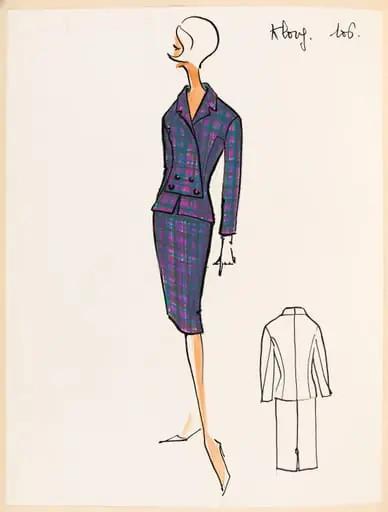
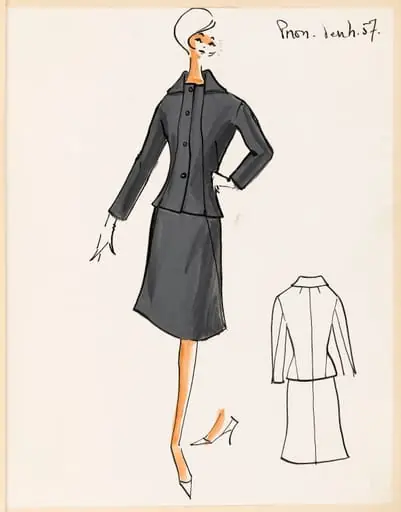
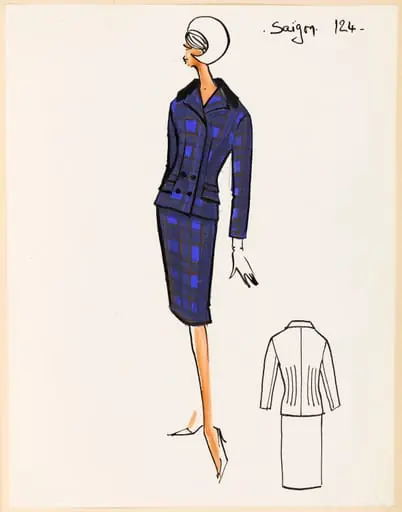
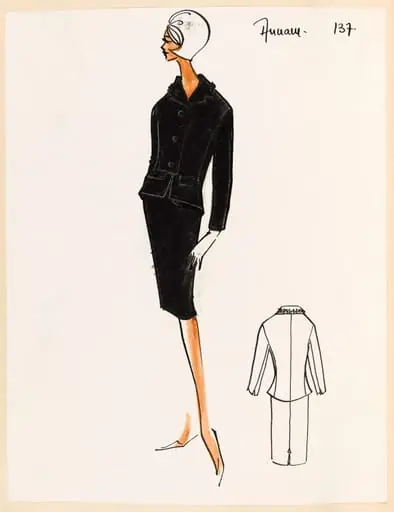
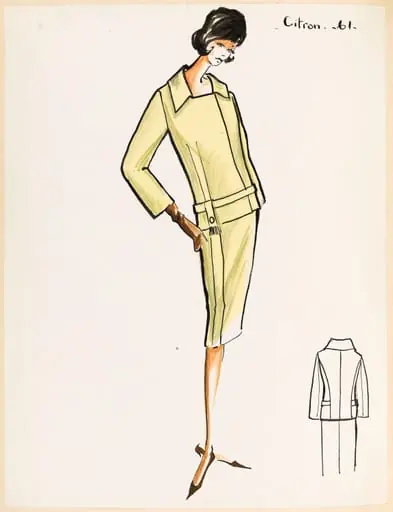
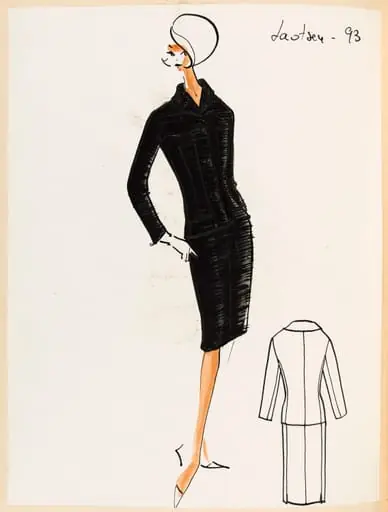
Created around 1959 by the French designer Carven, this ink sketch is part of the Museum of Ethnography’s collection. It captures a tailored ensemble in minimal line work, reflecting the designer’s focus on clean structure and understated elegance. The piece is labeled 'Bayon - 32,' suggesting it was one of many design studies produced during this period of postwar French fashion.
Subject & Meaning
The figure depicted is a woman wearing a matching plaid jacket and skirt, rendered with quiet confidence. The posture—hand at the side, head held upright—conveys poise without theatricality. The design avoids ornamentation, emphasizing fit and proportion over decoration. The label implies this was a numbered prototype, likely intended for production or client review, not display.
Technique & Style
The jacket’s oversized cut and three-button closure are clearly indicated, while the back view highlights structural simplicity.
Executed in fine ink, the drawing uses restrained linework to define form without shading or texture. The plaid pattern is suggested through intersecting lines, not detailed rendering. The jacket’s oversized cut and three-button closure are clearly indicated, while the back view highlights structural simplicity. The handwritten annotation in the corner adds a private, working-drawing quality to the piece.
History & Provenance
The sketch entered the Museum of Ethnography’s holdings as part of a broader collection of mid-century fashion documentation. Its origin traces to Carven’s atelier in Paris, where such sketches served as internal references for tailoring and production. No public exhibition history is recorded prior to its acquisition, suggesting it was preserved for its archival value rather than aesthetic prominence.
Context
In the late 1950s, French fashion emphasized refined silhouettes and practical luxury. Carven, known for wearable designs aimed at modern women, often worked with bold patterns and subtle tailoring. This sketch aligns with that ethos—plaid, once associated with menswear, was being reinterpreted for feminine, urban wear, reflecting broader shifts in postwar dress codes.
Legacy
Though not widely published, the sketch contributes to understanding Carven’s design process and the evolution of mid-century ready-to-wear. Its preservation in an ethnographic museum underscores its role as a cultural artifact of everyday fashion, rather than haute couture spectacle. It remains a quiet testament to the precision and restraint that defined a generation of French designers.
Artist & collection
Artist
These delicate ink-on-paper drawings capture the quiet poetry of everyday things: pinecones, reeds, apples.
Museum
Palais Galliera - Musée de la Mode de la Ville de Paris
Continue through works from the same source collection.