Artwork
Poivre
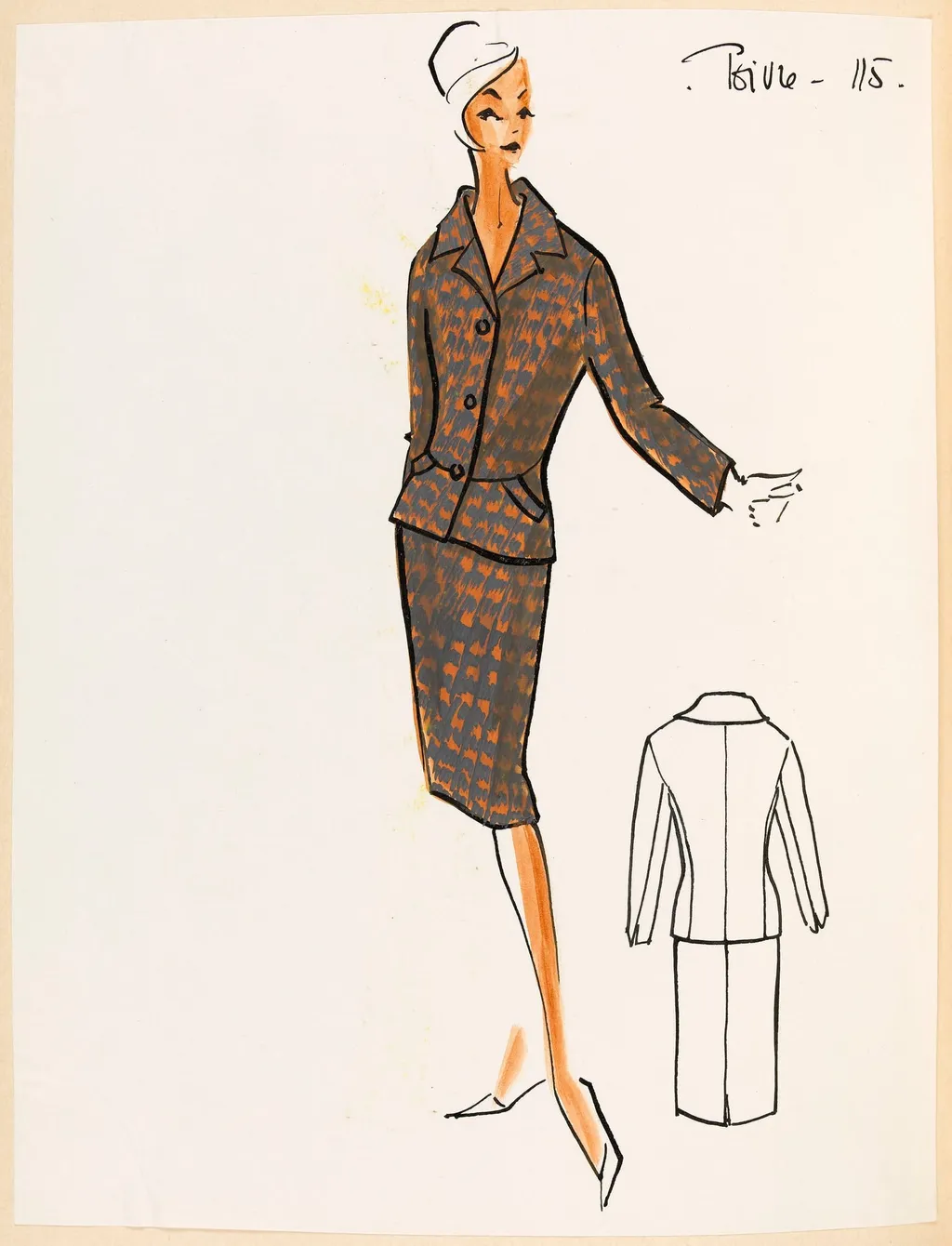
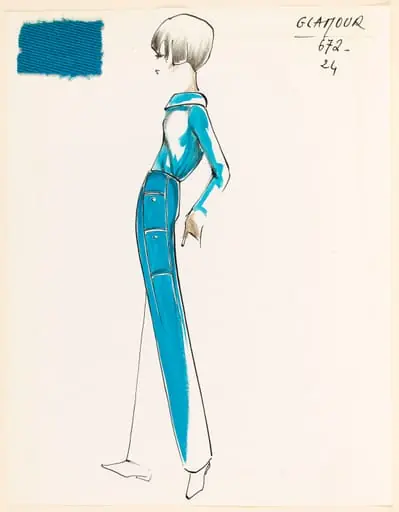
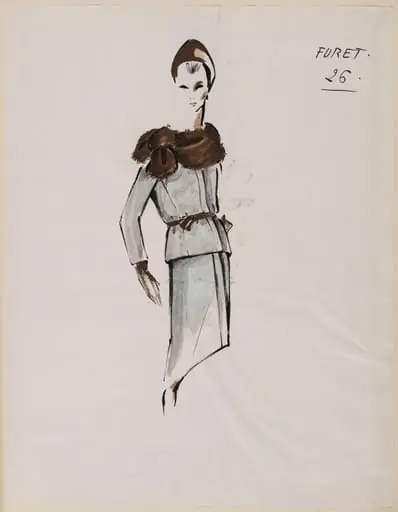
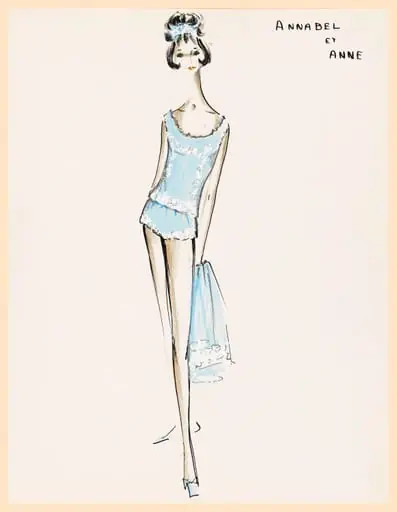
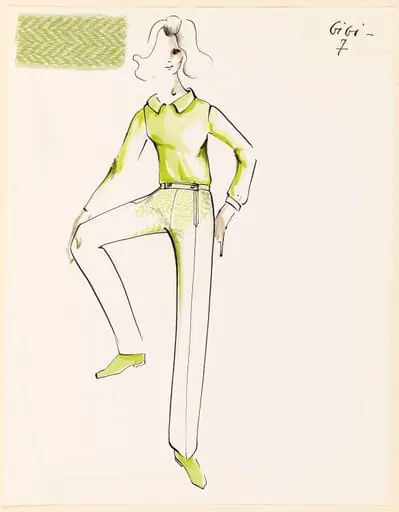
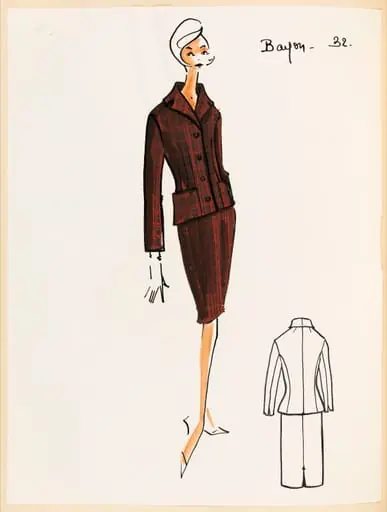
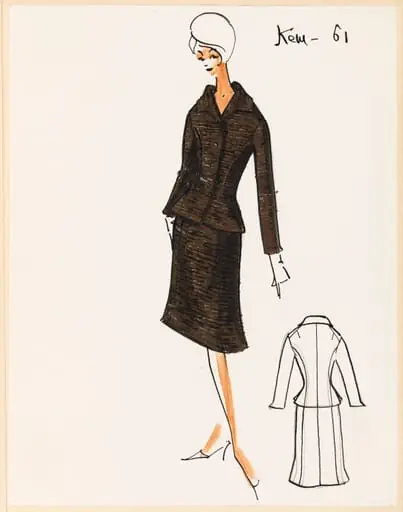
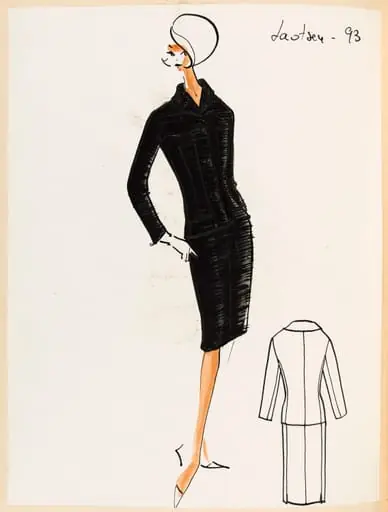
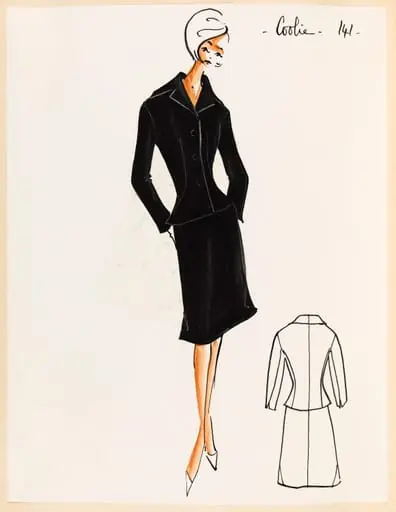
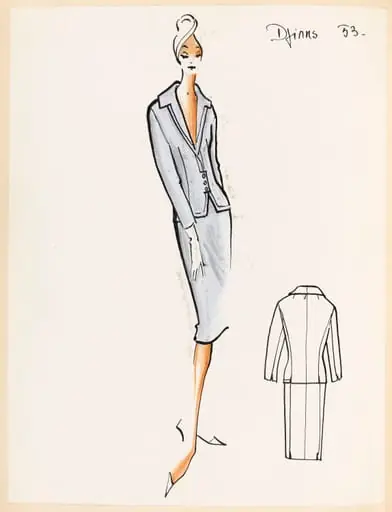
Poivre is a drawing by Carven. It dates from 1959 and is held in the collection of the Palais Galliera - Musée de la Mode de la Ville de Paris.
About this work
Overview
It is part of the collection at the Museum of Ethnography, where it functions as a cultural artifact rather than a traditional fine art piece.
Created around 1959 by the French designer Carven, this image captures a moment of mid-century fashion through painted representation. It is part of the collection at the Museum of Ethnography, where it functions as a cultural artifact rather than a traditional fine art piece. The work blends observational detail with stylized presentation, reflecting the era’s interest in documenting everyday elegance.
Subject & Meaning
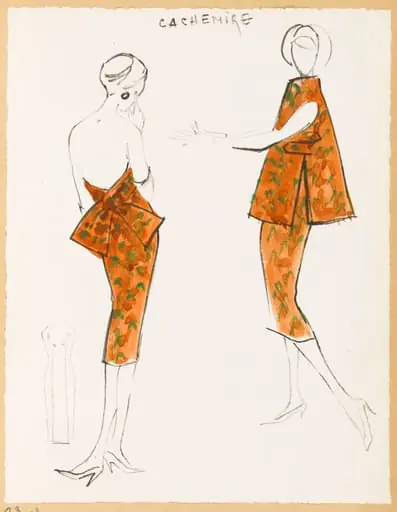
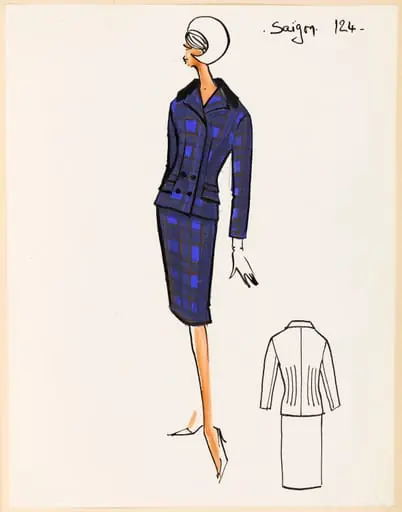
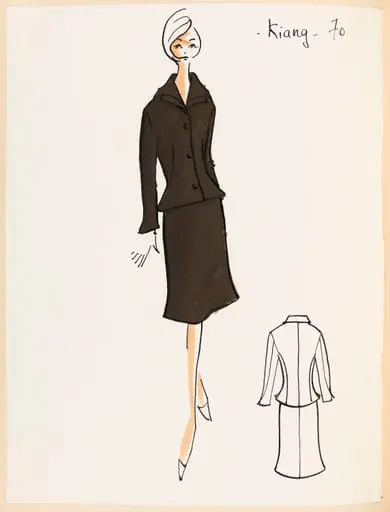
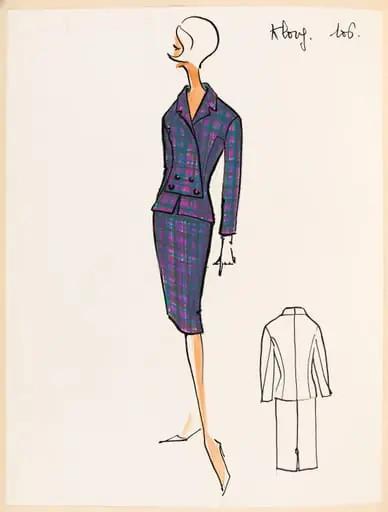
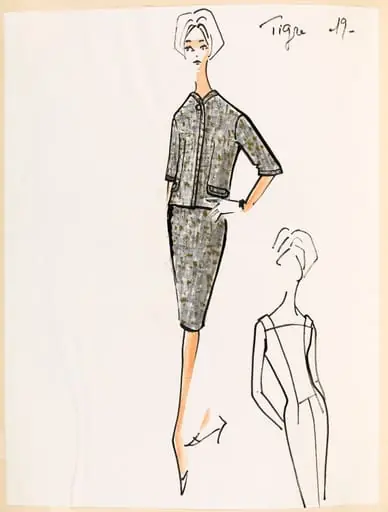
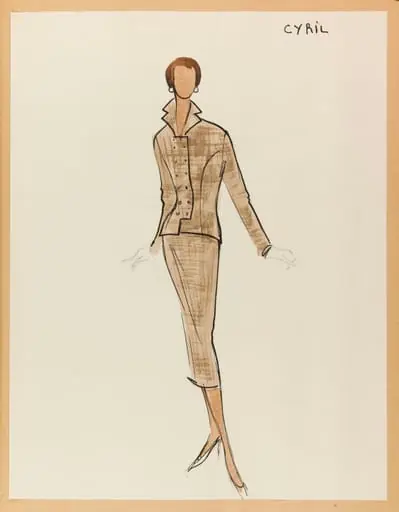
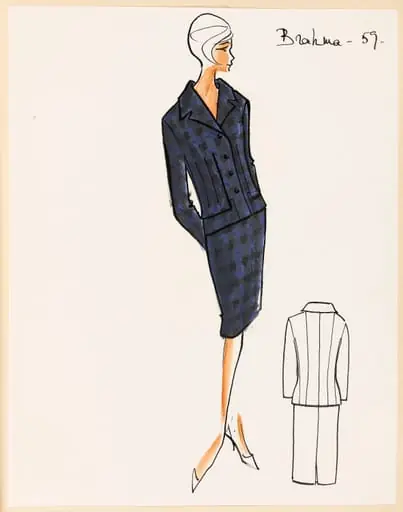
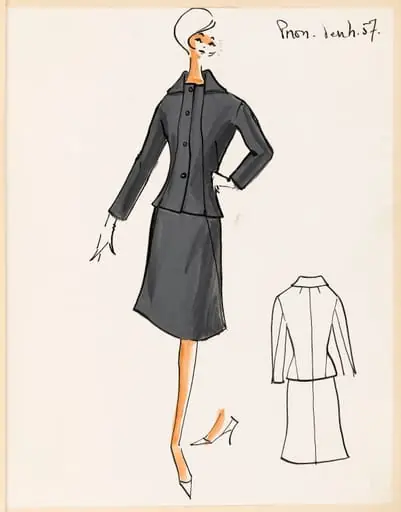
The central figure is a woman dressed in a tailored, patterned jacket and knee-length skirt, accessorized with a white hat and high heels. Her poised posture and refined attire suggest a deliberate presentation of modern femininity in postwar France. The inclusion of a simplified line drawing of a jacket in the corner may indicate a conceptual link between the garment and its wearer, hinting at design as an extension of identity.
Technique & Style
The painting employs a controlled, illustrative approach with crisp outlines and flat areas of color. The woman’s clothing is rendered with attention to texture and pattern, while the background remains minimal, focusing attention on the figure. The contrast between the detailed outfit and the sparse, schematic jacket sketch in the corner introduces a layer of visual commentary, suggesting a dialogue between fashion and its blueprint.
History & Provenance
The work entered the Museum of Ethnography’s collection as part of a broader effort to preserve mid-20th-century fashion as cultural expression. While Carven’s fashion house was well known in Parisian design circles, this particular image appears to be a lesser-known, possibly experimental piece. Its preservation suggests an institutional recognition of fashion as worthy of anthropological study.
Context
Made in the late 1950s, the image reflects the rise of ready-to-wear fashion and the increasing visibility of women as consumers and subjects of design. Paris remained a global fashion capital, and Carven’s designs were known for their refined simplicity. This work aligns with a broader cultural moment in which clothing became a medium for expressing personal and social identity beyond mere utility.
Legacy
Though not widely exhibited, the piece contributes to scholarly understanding of how fashion was visually documented outside commercial advertising. Its presence in an ethnographic museum underscores a shift in academic perspectives, recognizing design as a reflection of social norms. It remains a quiet but significant record of how style was perceived and recorded in its time.
Artist & collection
Artist
These delicate ink-on-paper drawings capture the quiet poetry of everyday things: pinecones, reeds, apples.
Museum
Palais Galliera - Musée de la Mode de la Ville de Paris
Continue through works from the same source collection.