Artwork
Bisque
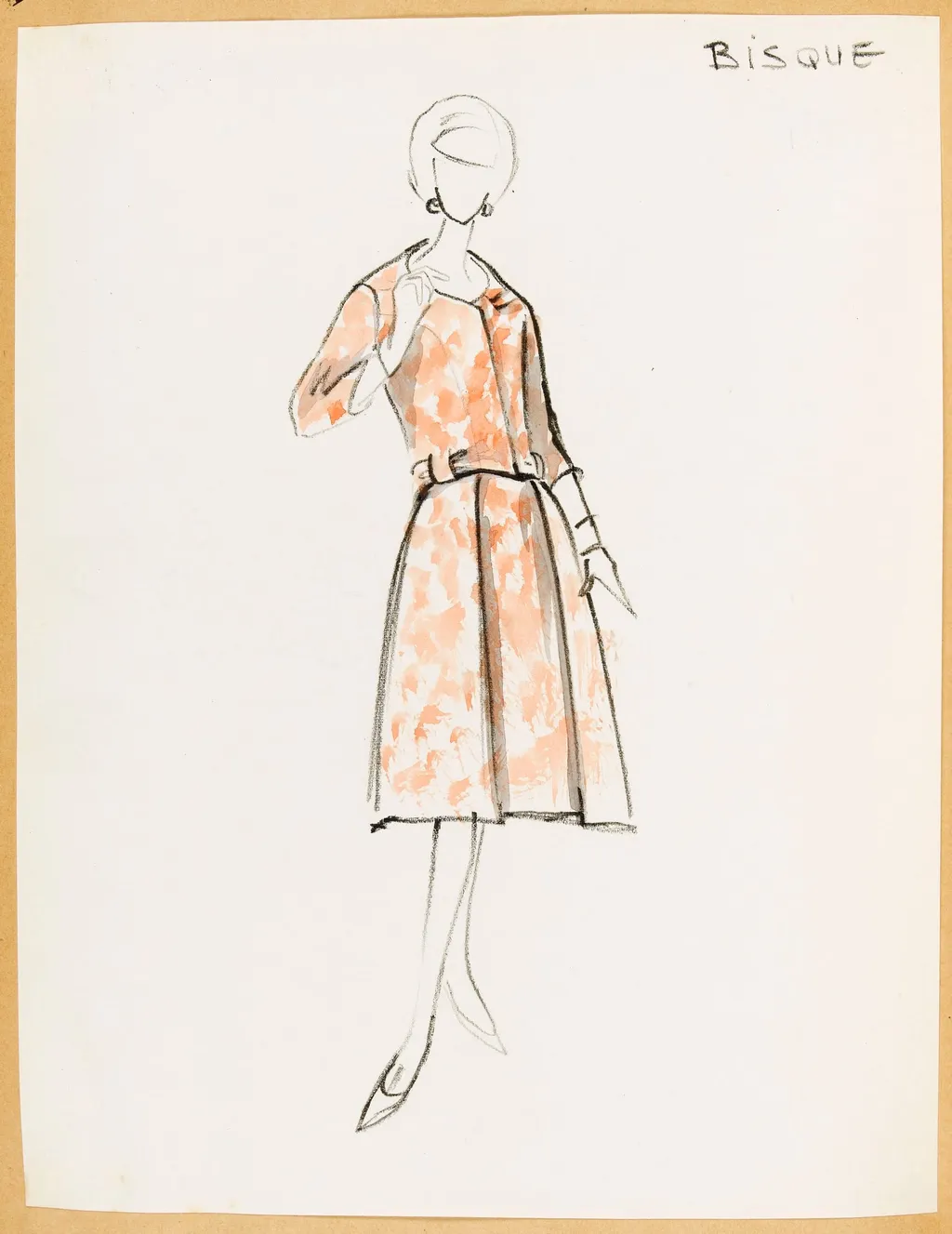
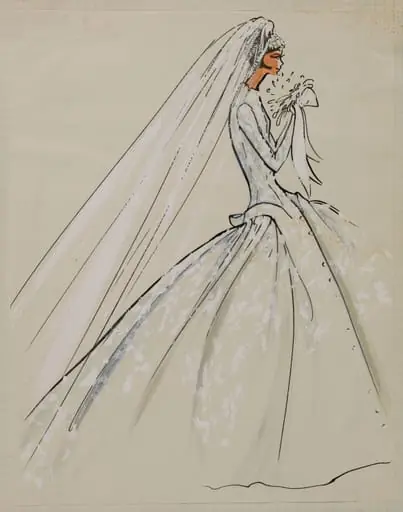
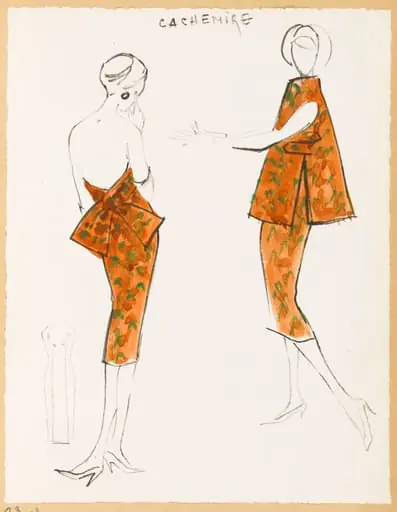
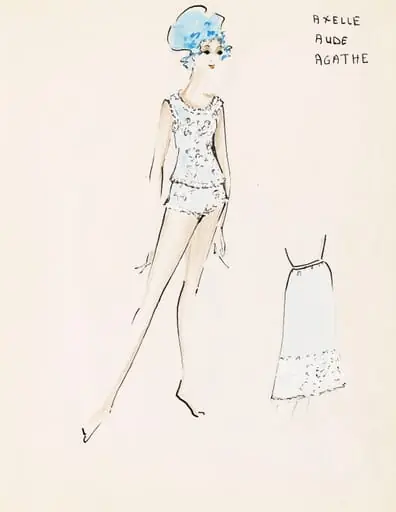
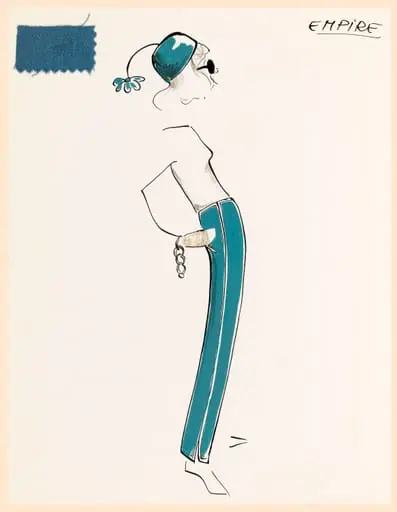
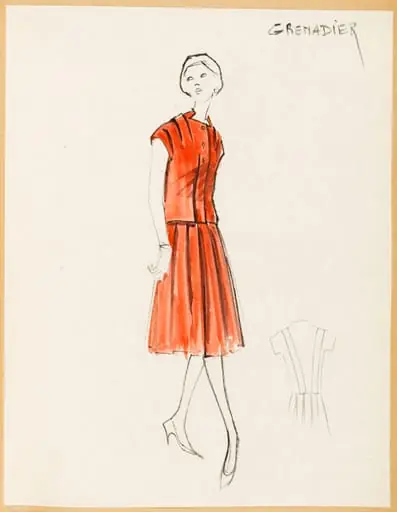
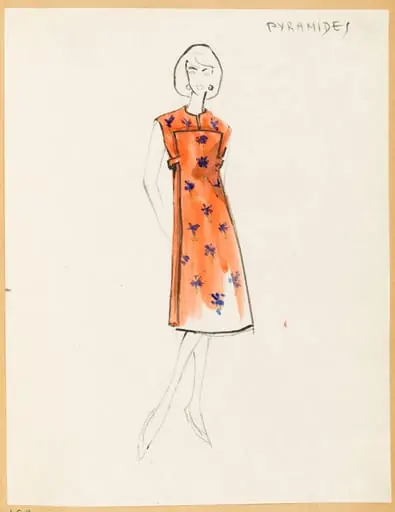
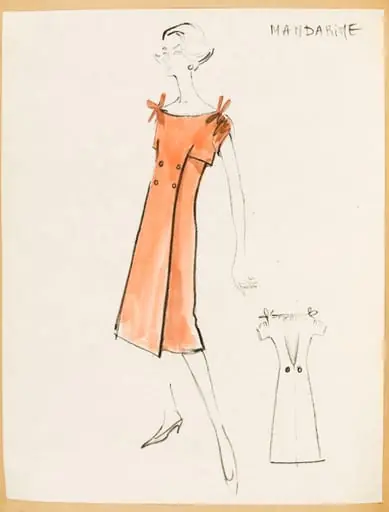
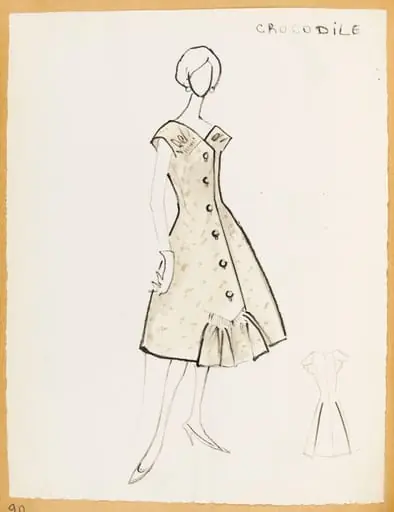
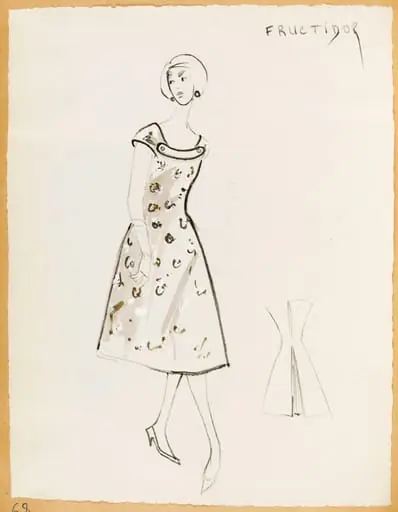
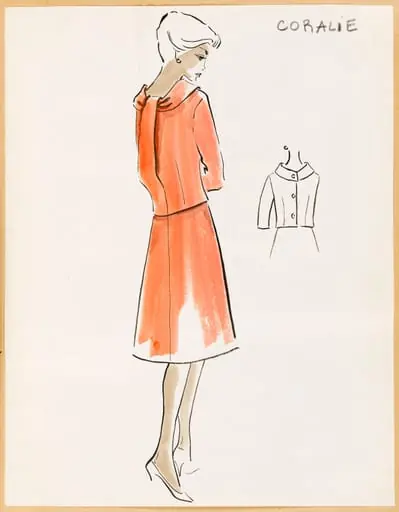
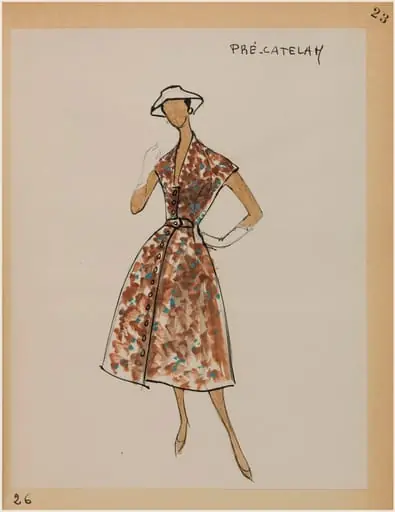
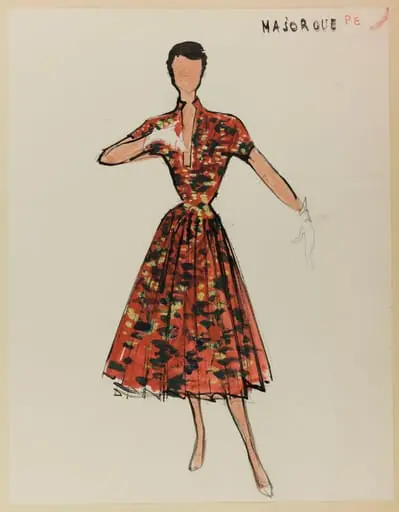
Bisque is a drawing by Carven. It dates from 1957 and is held in the collection of the Palais Galliera - Musée de la Mode de la Ville de Paris.
About this work
Overview
The work is part of the Museum of Ethnography’s collection, where it is preserved as a record of mid-century fashion design rather than as a finished artwork.
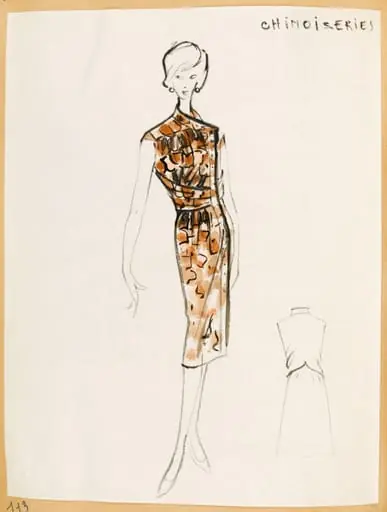
Bisque is a pencil sketch dated around 1957 by the French designer Carven. Executed in a spontaneous, gestural style, it captures a woman’s silhouette in a modest, patterned dress. The work is part of the Museum of Ethnography’s collection, where it is preserved as a record of mid-century fashion design rather than as a finished artwork. Its informal quality suggests it was made as a personal reference or design note.
Subject & Meaning
The figure depicts a woman wearing a knee-length dress with a soft peach-and-white floral print and a defined waist belt. Her posture—hand resting on hip—and neatly pinned-back hair convey a sense of quiet composure. The title 'Bisque,' inscribed in the corner, may reference the pale, delicate tone of the fabric or serve as an internal designation. The sketch does not aim for narrative but rather documents a specific garment’s form and texture.
Technique & Style
Rendered in loose, fluid pencil lines, the drawing prioritizes immediacy over detail. Contours are lightly sketched, with minimal shading, allowing the dress’s pattern to emerge through implied rhythm rather than precise rendering. The absence of background or context focuses attention on the garment’s silhouette. This approach reflects a designer’s habit of capturing ideas quickly, as visual shorthand for later development.
History & Provenance
Created circa 1957 during Carven’s active years in Parisian fashion, the sketch entered the Museum of Ethnography’s collection as part of a broader acquisition of design materials. Its preservation suggests institutional recognition of fashion sketches as cultural artifacts. No documented exhibition history or prior ownership is recorded, indicating it likely remained in the designer’s personal archive before institutional acquisition.
Context
In the late 1950s, fashion designers often used quick sketches to explore silhouettes and textile patterns before production. Carven, known for refined, wearable designs, frequently documented garments with minimalistic drawings. This piece aligns with contemporaneous practices among Parisian couturiers who treated sketches as functional tools, not public-facing art, reflecting a quiet, private side of fashion creation.
Legacy
Bisque contributes to the understanding of how fashion designers recorded ideas before mass production. While not widely exhibited, its presence in an ethnographic museum underscores the value placed on design process as cultural documentation. It stands as an example of how everyday working drawings, once considered ephemeral, now offer insight into mid-century aesthetic sensibilities and labor practices.
Artist & collection
Artist
These delicate ink-on-paper drawings capture the quiet poetry of everyday things: pinecones, reeds, apples.
Museum
Palais Galliera - Musée de la Mode de la Ville de Paris
Continue through works from the same source collection.