Artwork
Chinoiseries
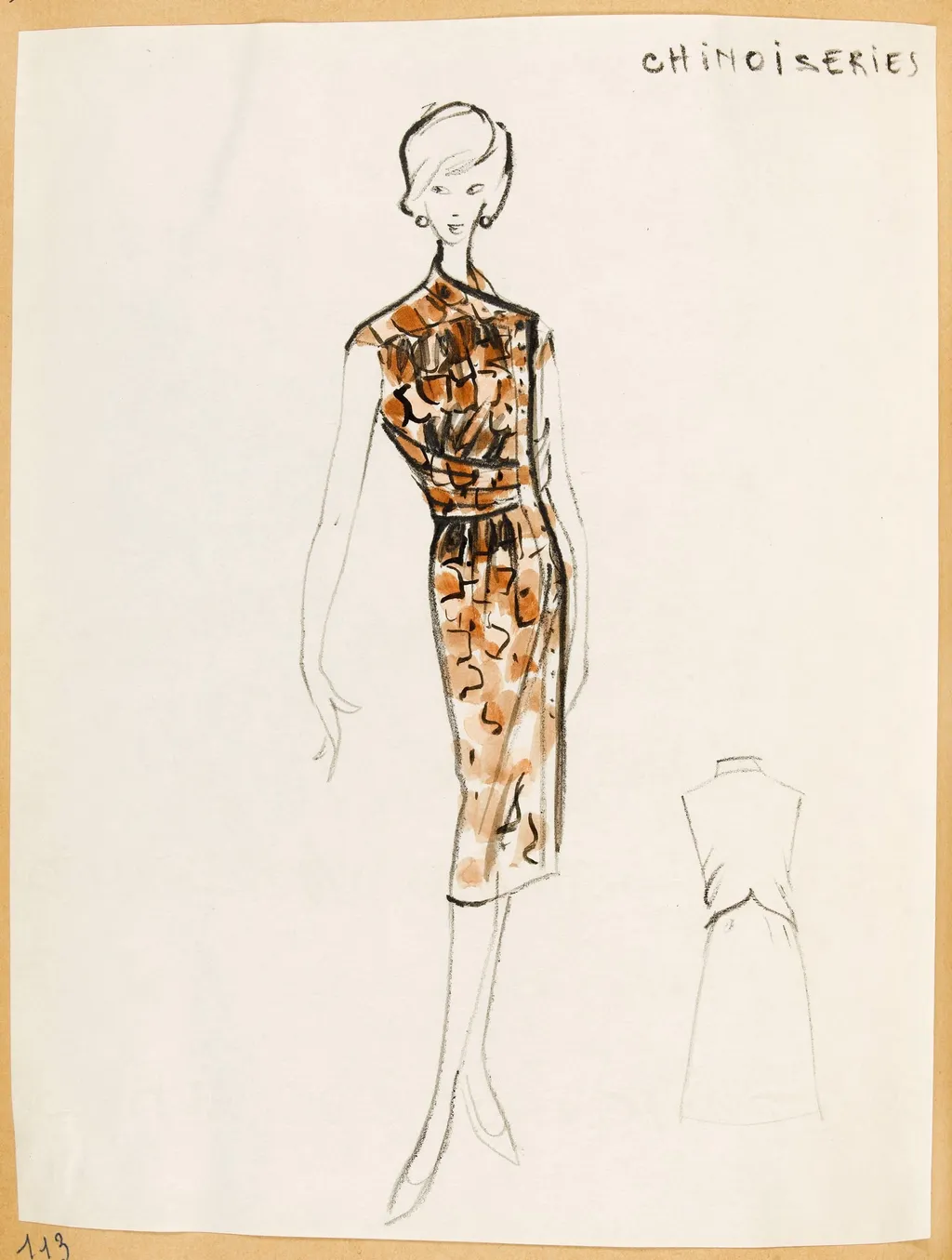
Chinoiseries is a drawing by Carven. It dates from 1957 and is held in the collection of the Palais Galliera - Musée de la Mode de la Ville de Paris.
About this work
Overview
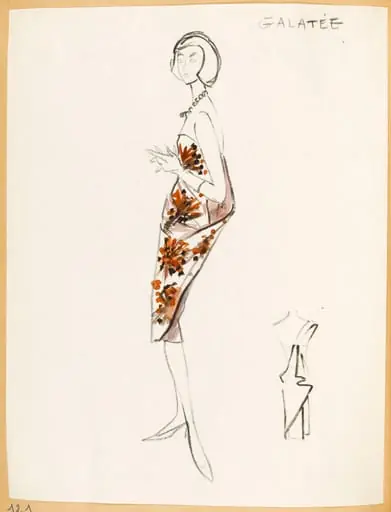
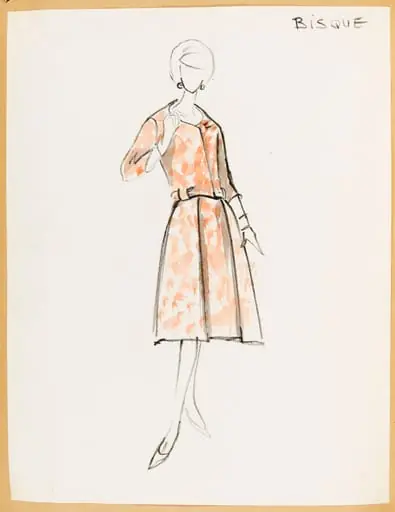
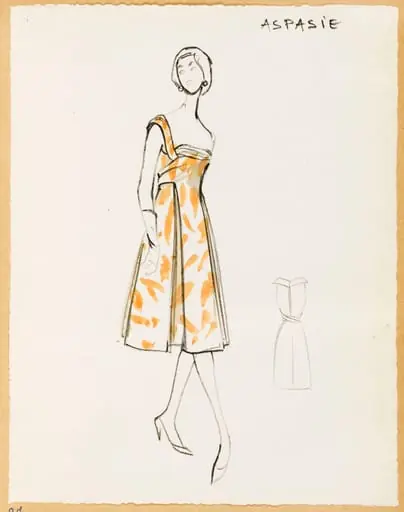
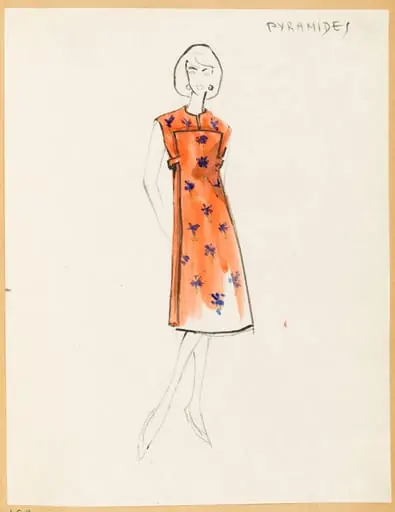
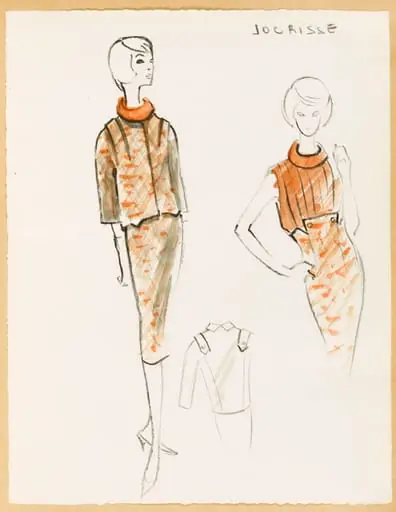
Created around 1957 by the French fashion house Carven, this image captures a single figure in a designed garment, presented against a plain white background. The work is cataloged at the Museum of Ethnography as part of a collection documenting mid-century fashion aesthetics. Its focus on form and detail reflects a deliberate emphasis on textile and silhouette rather than narrative or setting.
Subject & Meaning
The style suggests an interpretation of Eastern motifs, common in postwar European fashion, though not directly representative of any specific culture.
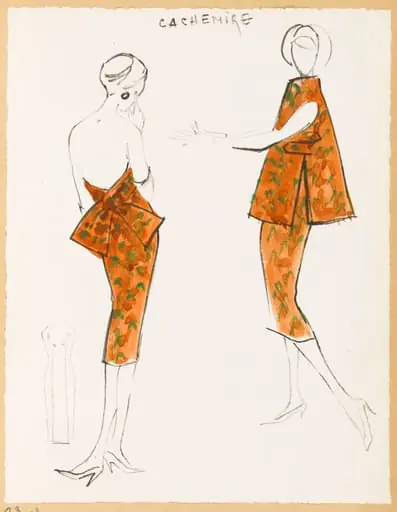
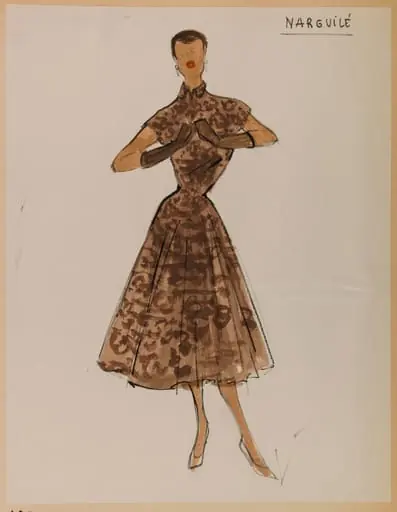
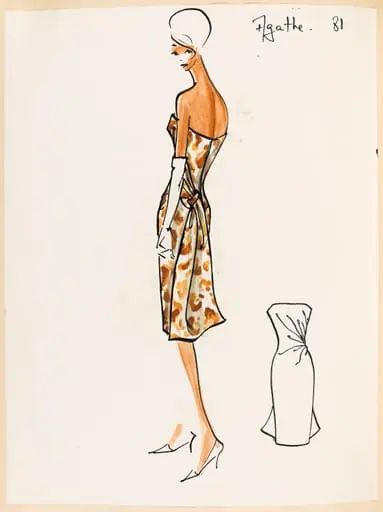
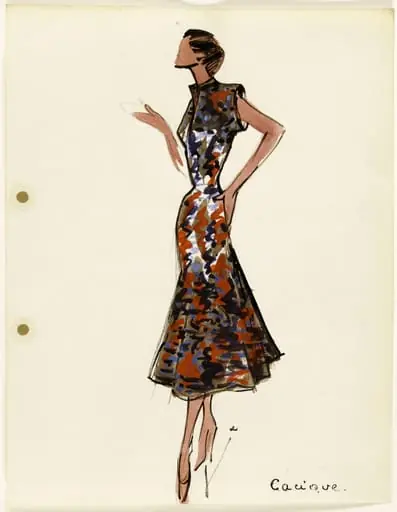
The subject is a woman dressed in a sleeveless gown with a high neckline, fitted bodice, and flared skirt, rendered in a pattern of orange and white. The style suggests an interpretation of Eastern motifs, common in postwar European fashion, though not directly representative of any specific culture. The minimal accessories and neat bob hairstyle reinforce a restrained, modern ideal of femininity prevalent in the late 1950s.
Technique & Style
The image employs a clean, studio-lit composition with no contextual elements, directing attention entirely to the garment’s structure and pattern. The flat, even lighting eliminates shadows, enhancing the two-dimensionality of the fabric design. The contrast between the bold orange-and-white motif and the neutral background creates a graphic, almost abstract effect, typical of fashion photography of the period.
History & Provenance
Produced by Carven during a period when the house was known for its refined, feminine silhouettes, the image likely served as promotional material or archival documentation. It entered the collection of the Museum of Ethnography as part of a broader effort to preserve fashion as cultural artifact, reflecting how Western designers interpreted non-Western aesthetics in the postwar era.
Context
In the 1950s, European fashion frequently drew from so-called 'Chinoiserie'—a decorative tradition romanticizing Asian motifs. Carven’s design aligns with this trend, using stylized patterns rather than ethnographic accuracy. The image reflects a broader cultural moment in which exoticism was filtered through Western design sensibilities, often divorced from its original contexts.
Legacy
This image remains a quiet example of how mid-century fashion houses engaged with global influences without direct cultural engagement. It contributes to scholarly understanding of how textile patterns functioned as symbolic language in postwar design, and how museums later began to treat clothing as material culture worthy of preservation.
Artist & collection
Artist
These delicate ink-on-paper drawings capture the quiet poetry of everyday things: pinecones, reeds, apples.
Museum
Palais Galliera - Musée de la Mode de la Ville de Paris
Continue through works from the same source collection.