Artwork
Crocodile
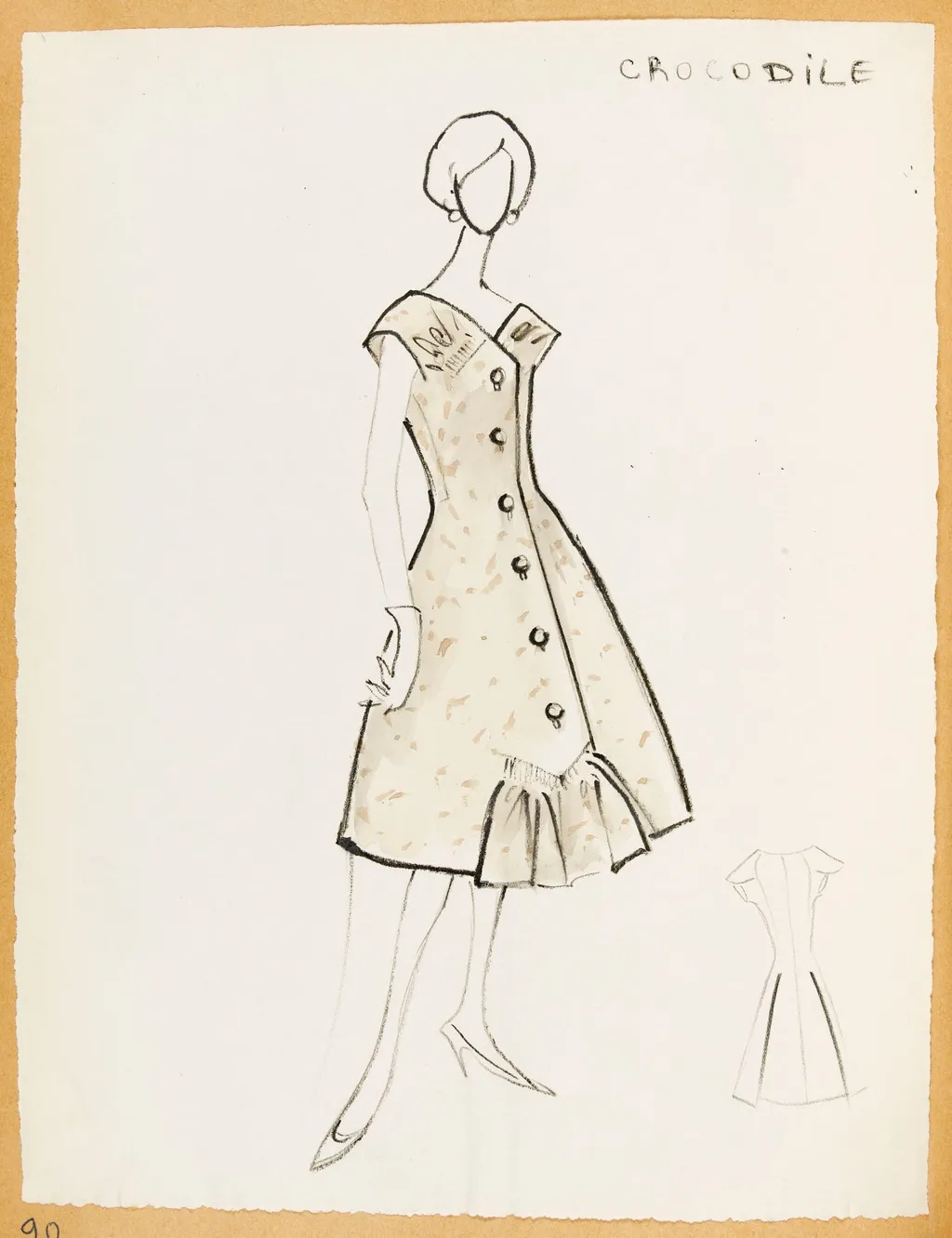
Crocodile is a drawing by Carven. It dates from 1957 and is held in the collection of the Palais Galliera - Musée de la Mode de la Ville de Paris.
About this work
Overview
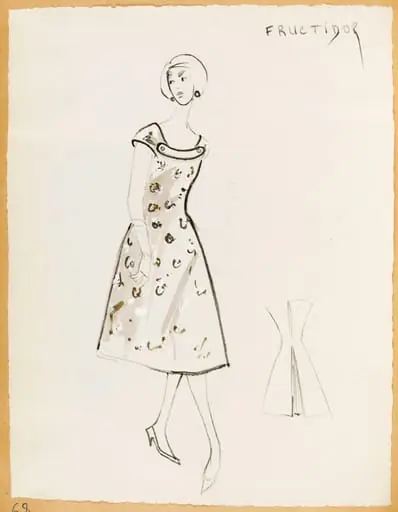
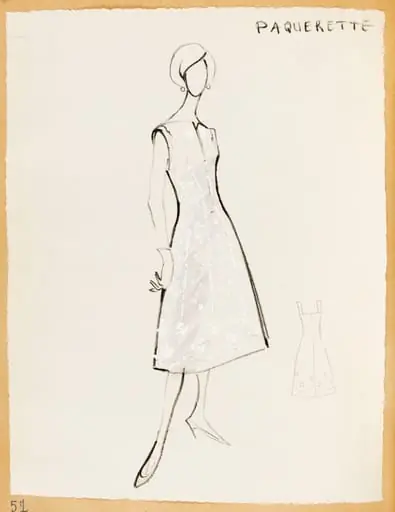
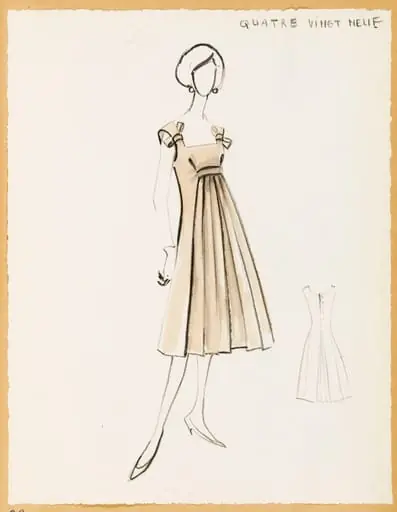
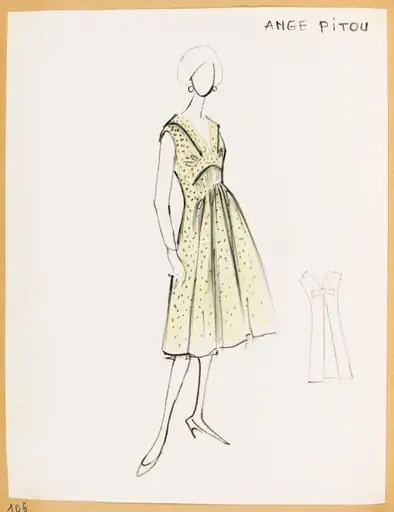
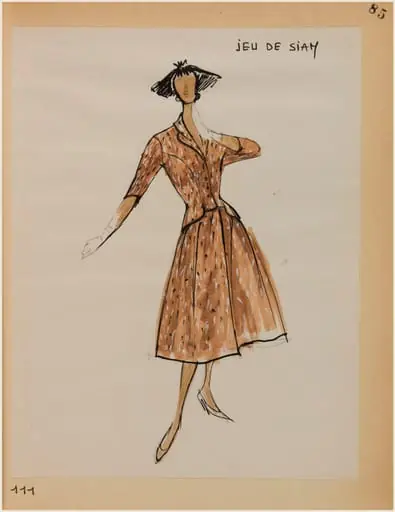
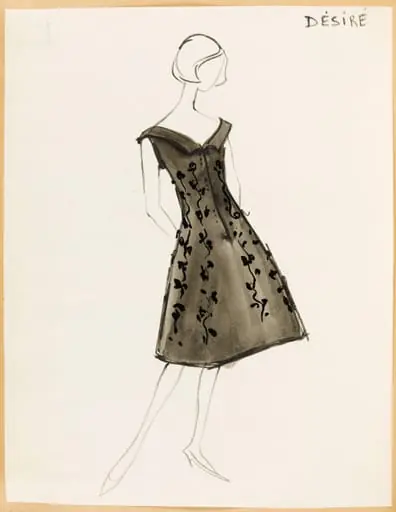
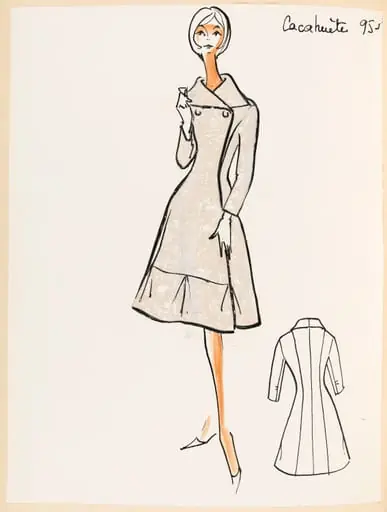
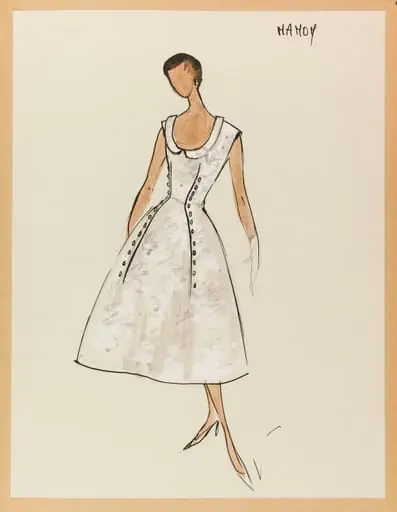
Created around 1957 by the French designer Carven, this ink sketch depicts a woman wearing a simple dress with a short hem and three front buttons.
Created around 1957 by the French designer Carven, this ink sketch depicts a woman wearing a simple dress with a short hem and three front buttons. The drawing is held in the collection of the Museum of Ethnography. Its informal, spontaneous quality suggests it was made as a design study rather than a finished illustration. The title 'Crocodile' is handwritten in the corner, pointing to the intended material.
Subject & Meaning
The figure is rendered in a relaxed, natural stance—one hand in a pocket, the other hanging loosely—conveying ease rather than formality. The dress, though minimal in detail, is implied to be made of a textured, reptilian material, likely crocodile skin. The choice of material suggests a deliberate contrast between the animal’s wild origin and the garment’s refined silhouette, reflecting mid-century fascination with exotic leathers in fashion.
Technique & Style
The sketch is executed in fluid ink lines with minimal shading, emphasizing contour over volume. The texture of the fabric is suggested through irregular, broken strokes that mimic scale patterns. The loose, gestural quality of the drawing gives it a sense of immediacy, typical of fashion designers’ working sketches. The handwritten title adds an informal, personal touch, reinforcing its function as a private design note.
History & Provenance
The sketch entered the Museum of Ethnography’s collection as part of a broader acquisition of mid-century fashion materials. Its provenance traces back to Carven’s atelier in Paris, where such sketches were used to communicate design ideas to tailors and clients. Unlike formal presentation drawings, this piece was likely retained for its conceptual clarity and material specificity rather than its aesthetic finish.
Context
In the late 1950s, exotic animal skins—particularly crocodile, snake, and lizard—gained popularity among Parisian couturiers as symbols of luxury and modernity. Carven, known for her clean lines and accessible elegance, incorporated these materials into ready-to-wear designs. This sketch reflects a broader trend in postwar fashion where wild textures were domesticated into everyday wear, bridging the exotic and the ordinary.
Legacy
Though not widely published during Carven’s lifetime, this sketch remains a quiet testament to the designer’s attention to material innovation. It illustrates how fashion designers used informal drawings to explore texture and form, often prioritizing function over ornament. Today, it serves as a primary source for understanding the material choices and working methods of mid-century French fashion.
Artist & collection
Artist
These delicate ink-on-paper drawings capture the quiet poetry of everyday things: pinecones, reeds, apples.
Museum
Palais Galliera - Musée de la Mode de la Ville de Paris
Continue through works from the same source collection.