Artwork
Bonze
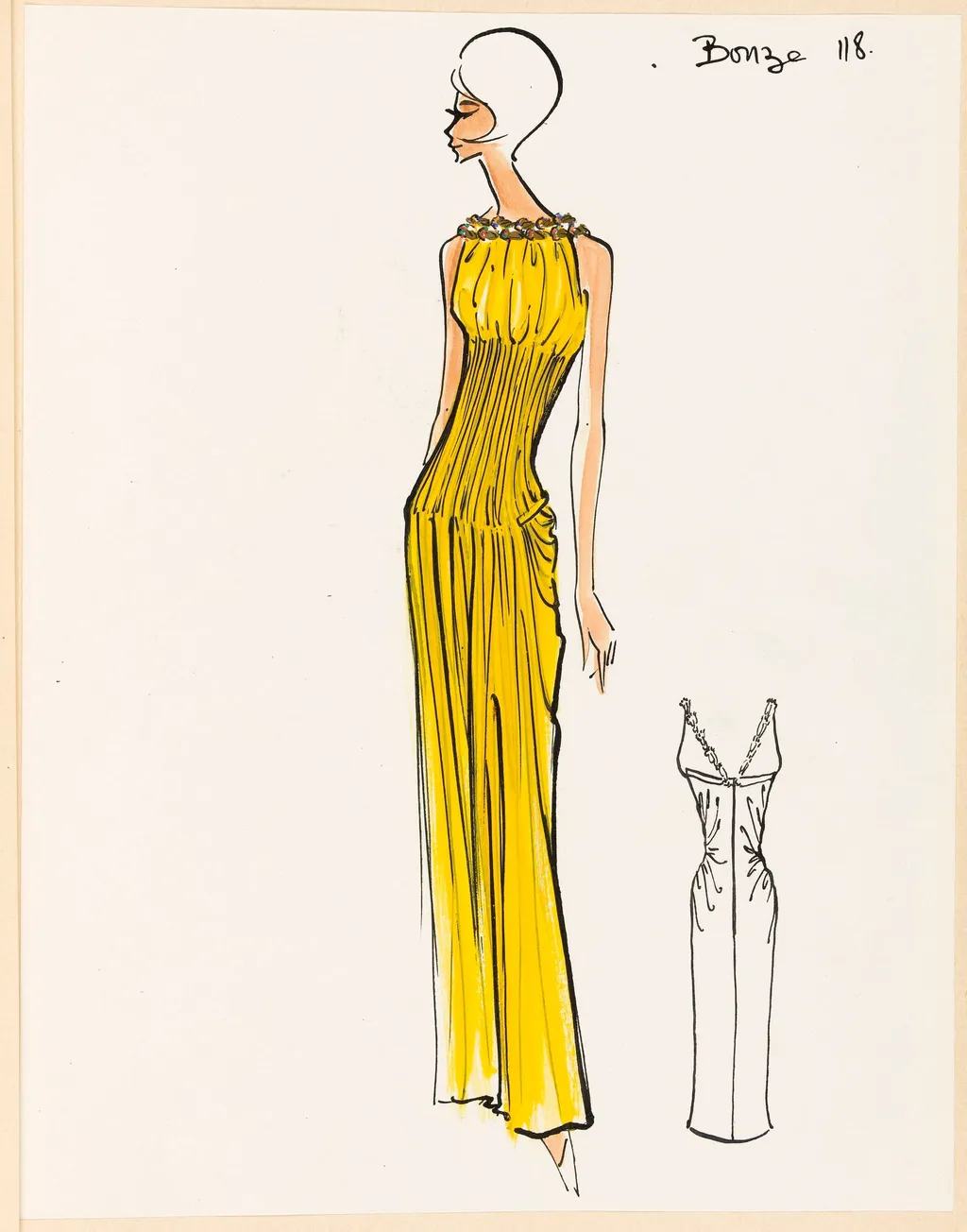
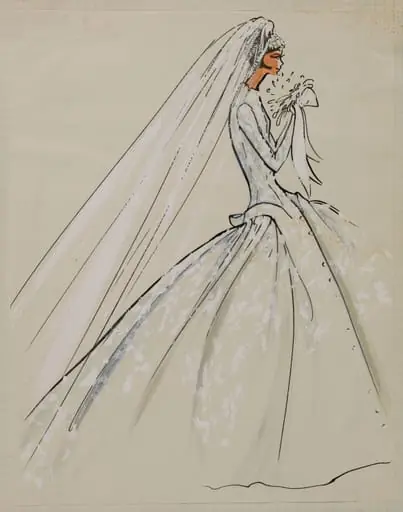
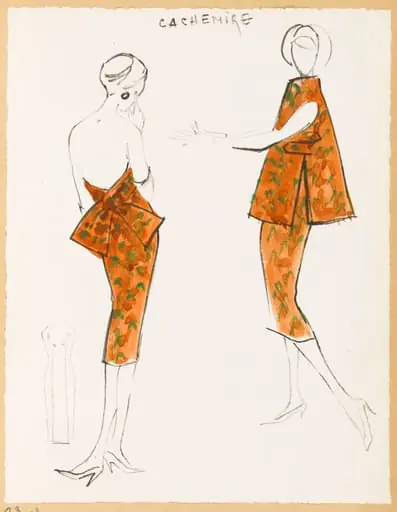
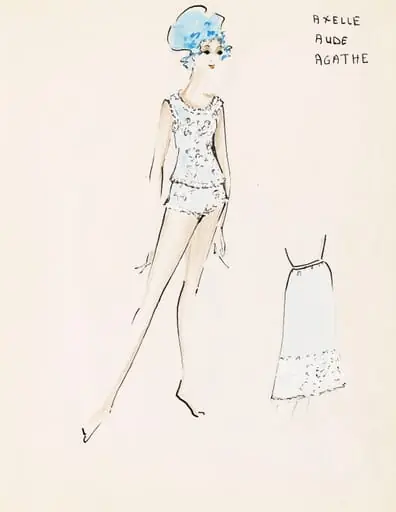
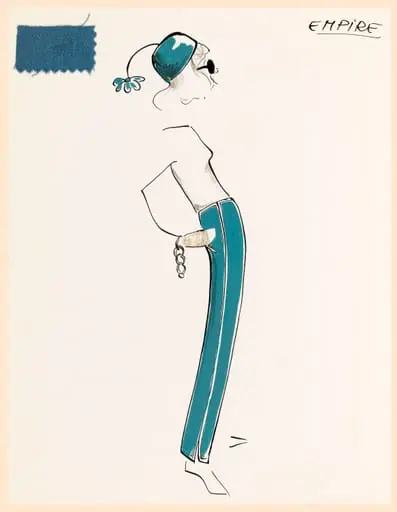
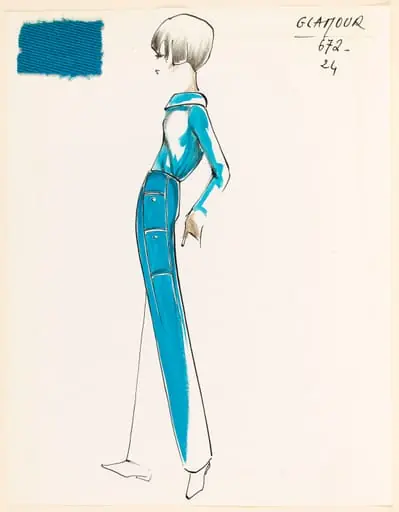
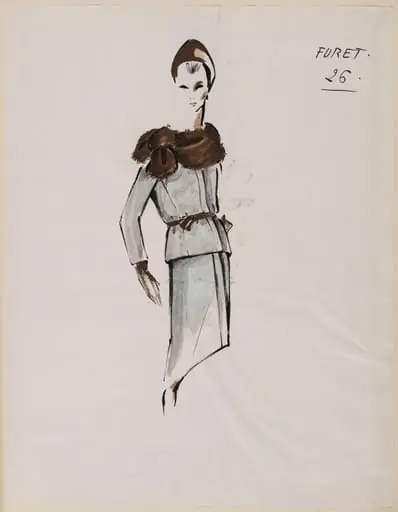
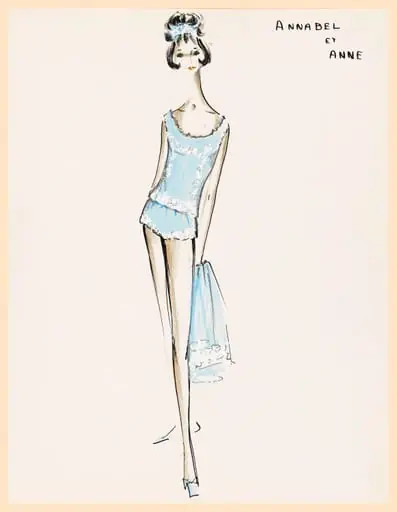
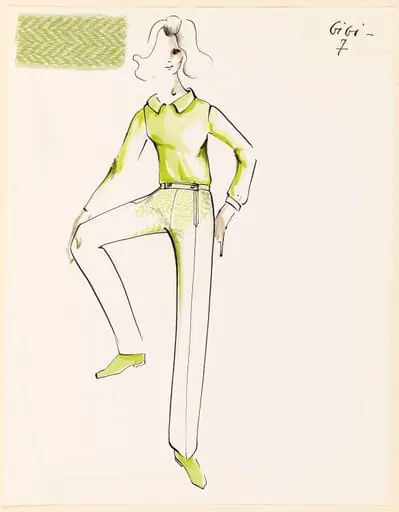
Bonze is a drawing by Carven. It dates from 1959 and is held in the collection of the Palais Galliera - Musée de la Mode de la Ville de Paris.
About this work
Overview
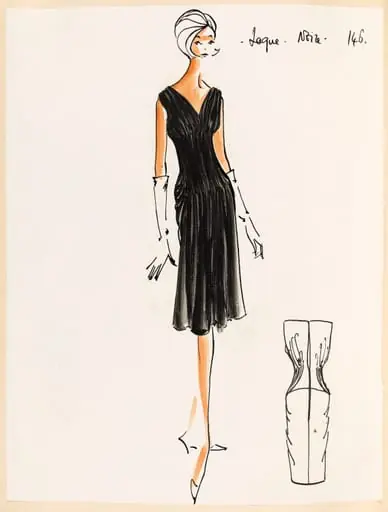
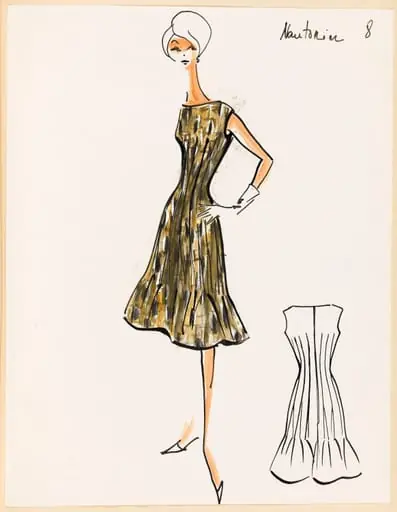
A secondary sketch of a sleeveless dress appears beside the main figure, indicating exploratory work typical of fashion drafting.
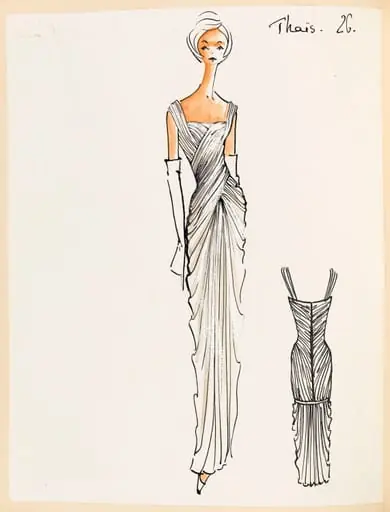
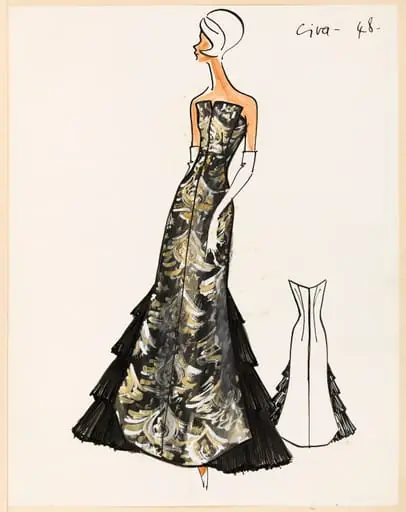
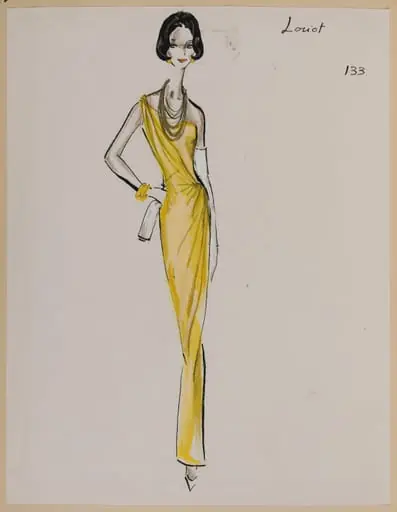
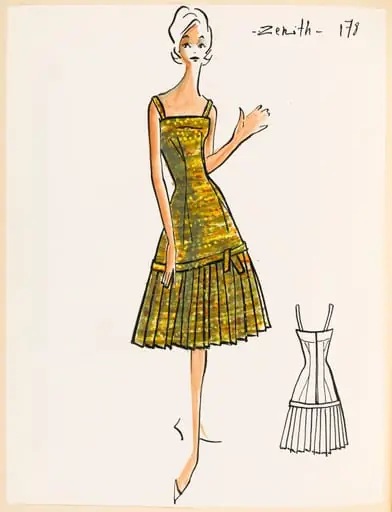
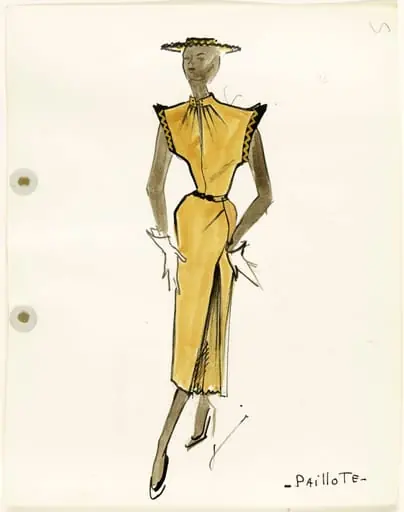
Created around 1959, this drawing by Carven is part of the Museum of Ethnography’s collection. It presents a detailed fashion study of a woman in a long yellow dress, rendered with precision in line and form. The composition centers on the garment’s structure, suggesting its function as a design reference rather than a portrait. A secondary sketch of a sleeveless dress appears beside the main figure, indicating exploratory work typical of fashion drafting.
Subject & Meaning
The figure is not identified by name or context, and her face is not depicted, emphasizing the clothing over identity. The high-necked, pleated dress dominates the composition, signaling an interest in textile construction and silhouette. The accompanying sketch of a sleeveless variant implies comparative design thinking, possibly for a seasonal collection. The work reflects the designer’s focus on form and fabric rather than narrative or cultural symbolism.
Technique & Style
Executed in fine linear draftsmanship, the drawing highlights fabric folds, trim details, and the drape of the gown with controlled precision. The use of minimal shading and clean contours aligns with mid-century fashion illustration practices. The secondary sketch, less refined, suggests an iterative process—common in design studios—where variations are tested visually before finalization. The medium appears to be ink or graphite on paper.
History & Provenance
The drawing entered the Museum of Ethnography’s holdings as part of a broader collection of fashion-related materials. Its attribution to Carven is based on stylistic consistency with known design archives. While no documentation of its original commission survives, its inclusion in an ethnographic context suggests an interest in 20th-century dress as cultural artifact, rather than haute couture.
Context
In the late 1950s, fashion houses increasingly documented design development through preparatory sketches. Carven, known for refined tailoring and modest silhouettes, operated within this tradition. The Museum of Ethnography’s acquisition reflects a growing institutional recognition of fashion as material culture, preserving functional design studies alongside more traditional ethnographic objects.
Legacy
This drawing contributes to the historical record of postwar French fashion design, illustrating how garments were conceptualized before production. While not widely exhibited, it remains a valuable resource for researchers studying the evolution of dress construction and the role of sketching in design practice. Its preservation underscores the shift toward viewing fashion as a legitimate field of cultural study.
Artist & collection
Artist
These delicate ink-on-paper drawings capture the quiet poetry of everyday things: pinecones, reeds, apples.
Museum
Palais Galliera - Musée de la Mode de la Ville de Paris
Continue through works from the same source collection.