Artwork
'Diane'
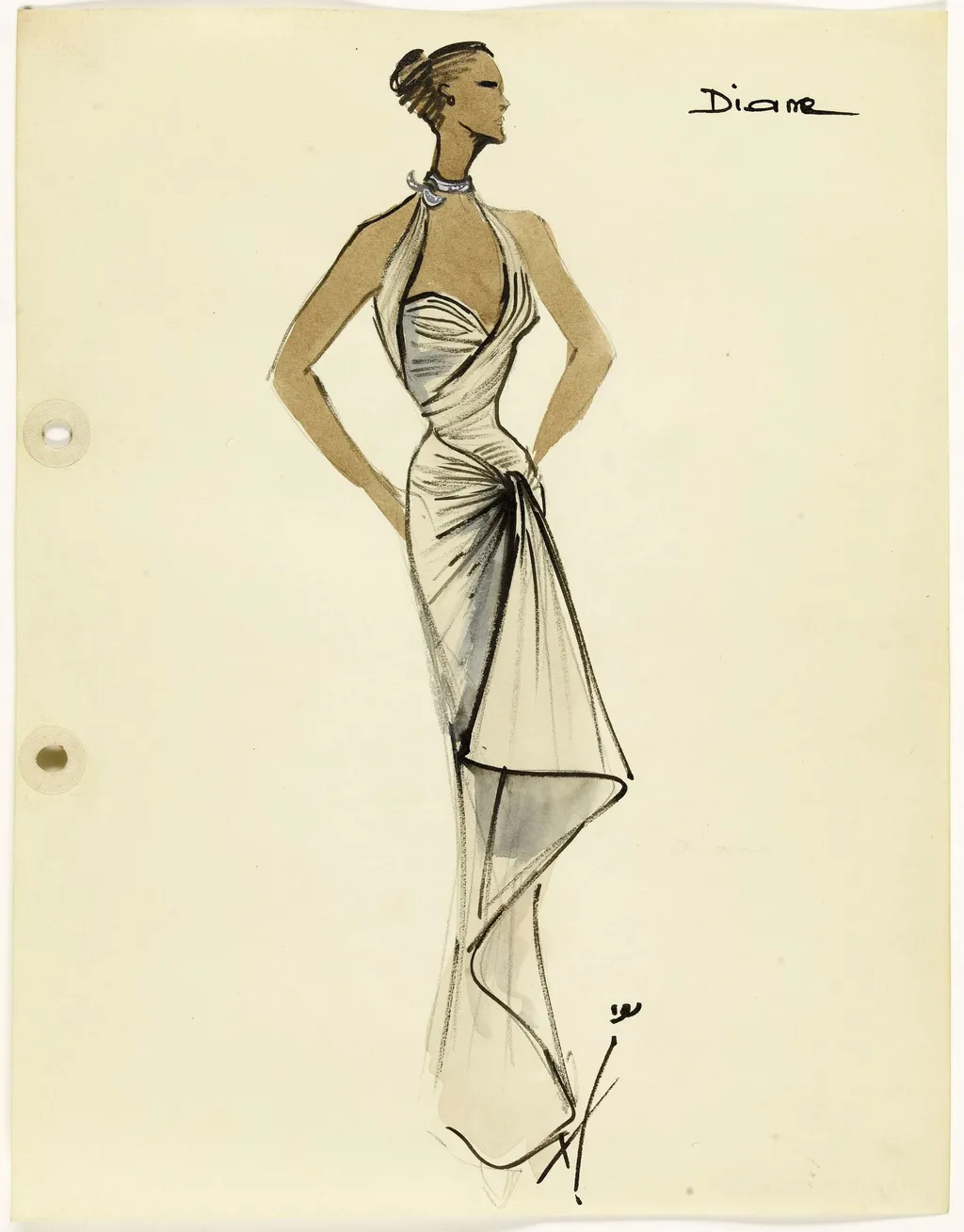
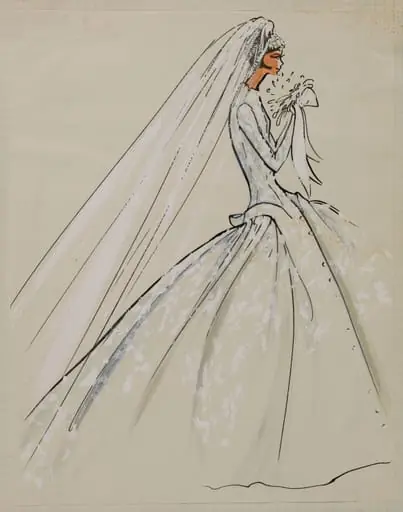
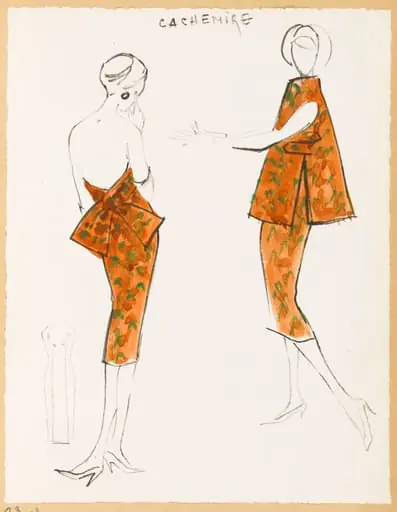
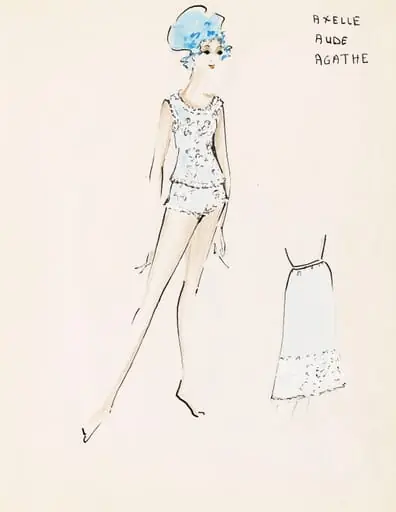
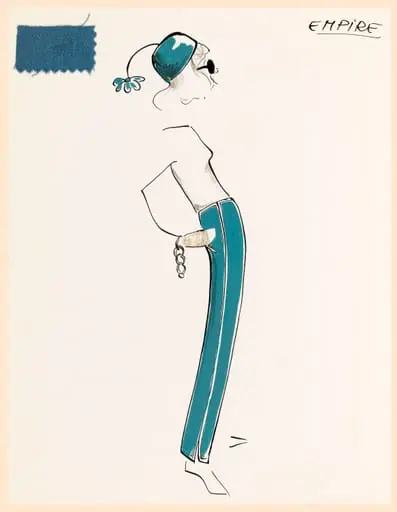
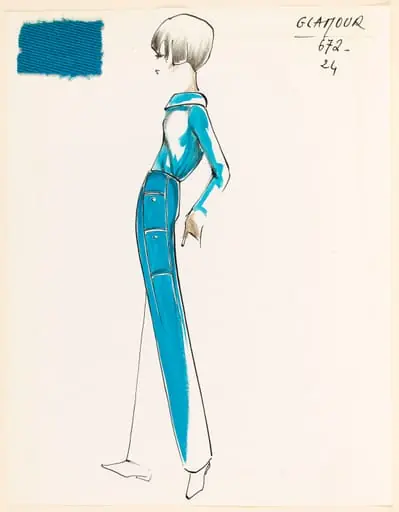
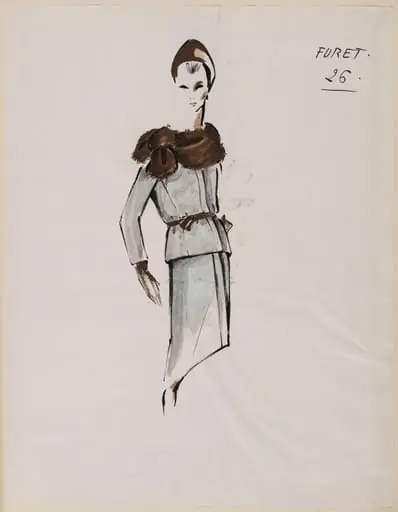
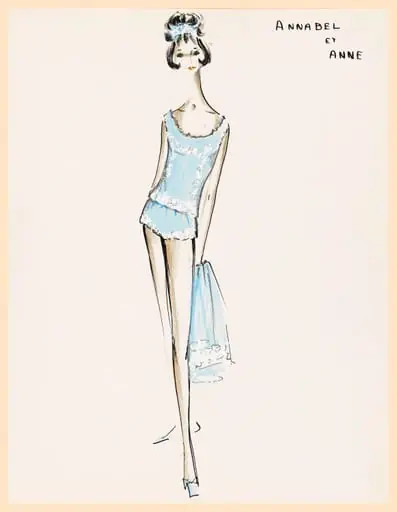
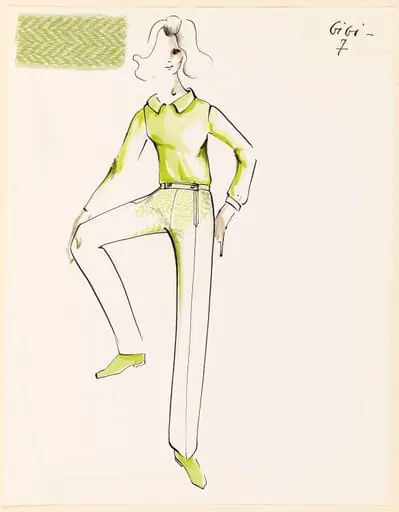
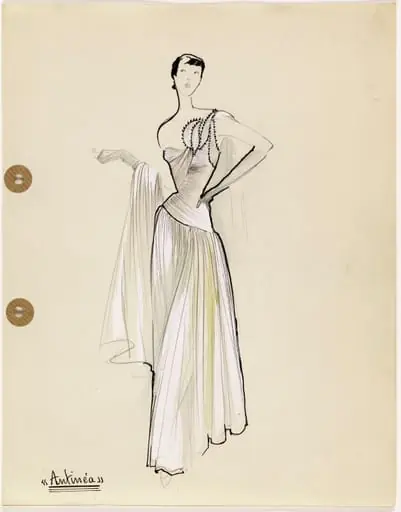
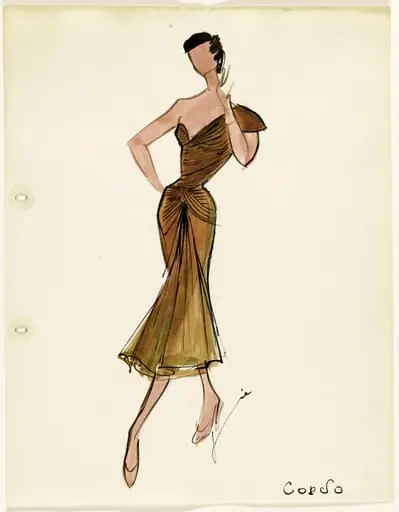
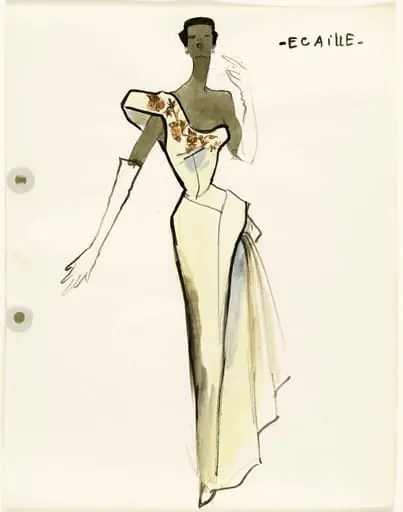
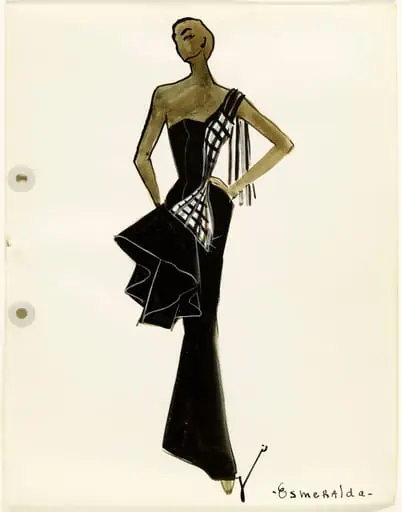
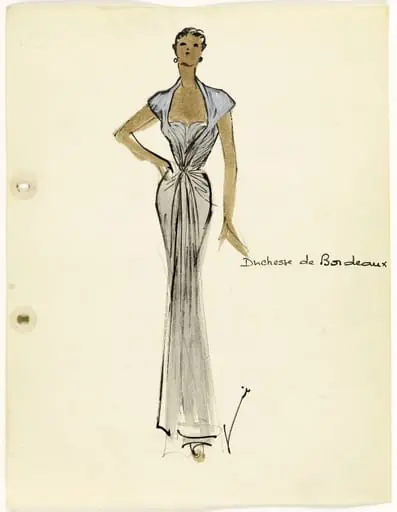
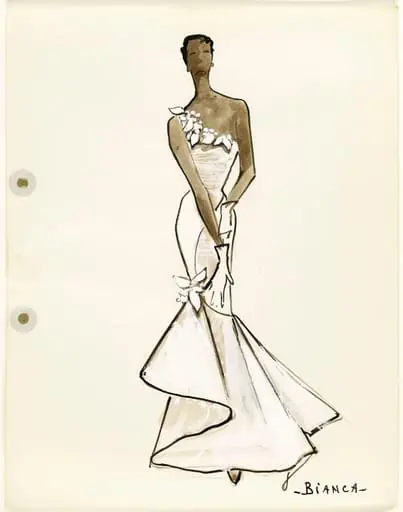
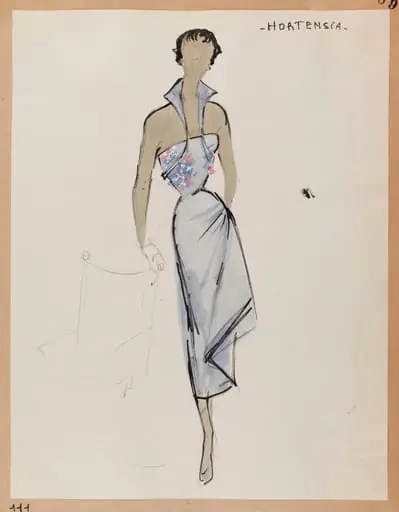
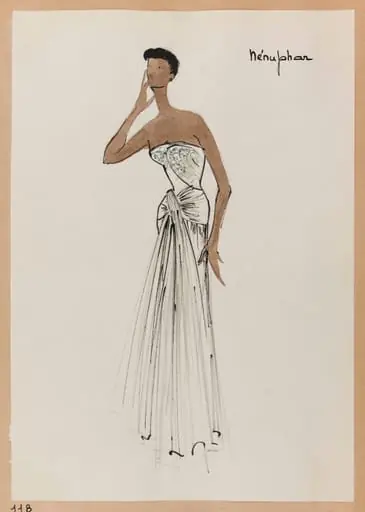
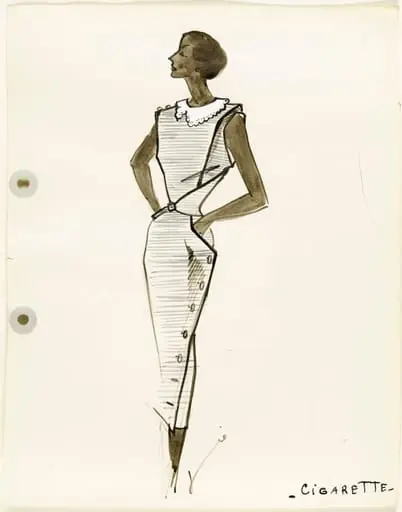
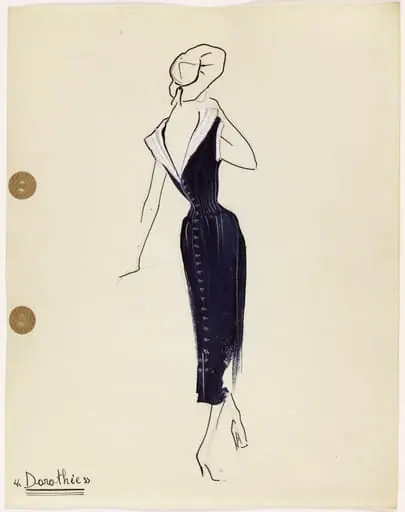
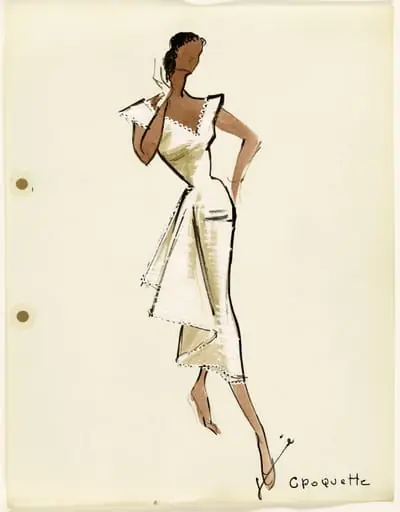
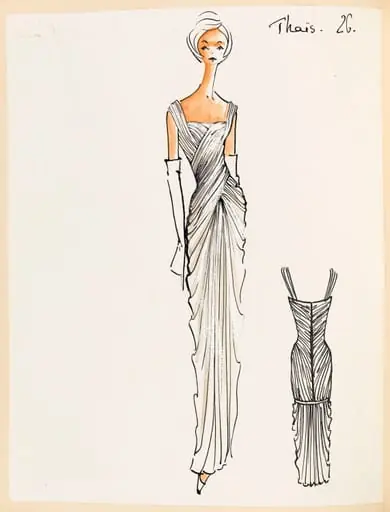
'Diane' is a drawing by Carven. It dates from 1951 and is held in the collection of the Palais Galliera - Musée de la Mode de la Ville de Paris.
About this work
Overview
The work appears to be a rapid study, likely made during the design process, capturing a figure in motion with minimal detail but clear intent.
Created around 1951, 'Diane' is a pencil sketch attributed to the fashion designer Carven. It resides in the collection of the Museum of Ethnography. The work appears to be a rapid study, likely made during the design process, capturing a figure in motion with minimal detail but clear intent. Its informal execution suggests it was not intended as a finished piece but as a working drawing for garment development.
Subject & Meaning
The figure depicts a woman in a modern, one-shoulder dress with a high slit and flowing fabric, suggesting movement and elegance. Her posture—hand on hip, the other resting on thigh—conveys poise and self-assurance. The name 'Diane,' scrawled in the corner, may reference the model, muse, or a character Carven envisioned. The drawing reflects mid-century ideals of feminine grace fused with practicality in ready-to-wear fashion.
Technique & Style
The sketch employs loose, confident pencil strokes to define form and fabric. Shading is achieved through quick, directional lines that suggest folds and volume without heavy rendering. The absence of fine detail emphasizes gesture over realism. The signature is discreet, underscoring the drawing’s functional purpose. The technique aligns with fashion illustration practices of the time, prioritizing speed and clarity over polish.
History & Provenance
The drawing entered the Museum of Ethnography’s collection as part of a broader acquisition of fashion-related materials from Carven’s studio. Its origin as a working sketch was confirmed through archival correspondence and stylistic comparison with known design notebooks. No record of public exhibition exists prior to its institutional acquisition, indicating it remained within the designer’s private process until preservation.
Context
In the early 1950s, Parisian fashion houses like Carven’s emphasized streamlined silhouettes and wearable elegance. This sketch reflects a shift toward more dynamic, body-conscious designs following wartime austerity. Fashion illustrators often worked quickly to capture ideas before fabrication, making such drawings vital yet ephemeral. 'Diane' exemplifies this transitional moment in postwar French fashion design.
Legacy
Though not widely known outside specialized circles, 'Diane' contributes to understanding how fashion designers translated ideas from sketch to garment. Its preservation highlights the value of preparatory work in fashion history. The drawing remains a quiet testament to the iterative, hands-on nature of design, offering insight into the unseen labor behind mid-century style.
Artist & collection
Artist
These delicate ink-on-paper drawings capture the quiet poetry of everyday things: pinecones, reeds, apples.
Museum
Palais Galliera - Musée de la Mode de la Ville de Paris
Continue through works from the same source collection.