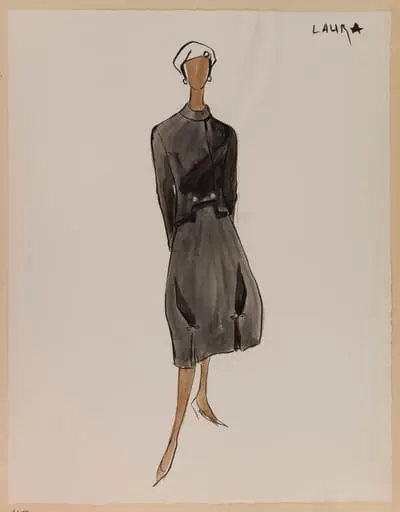
Artwork
Bouton d'or
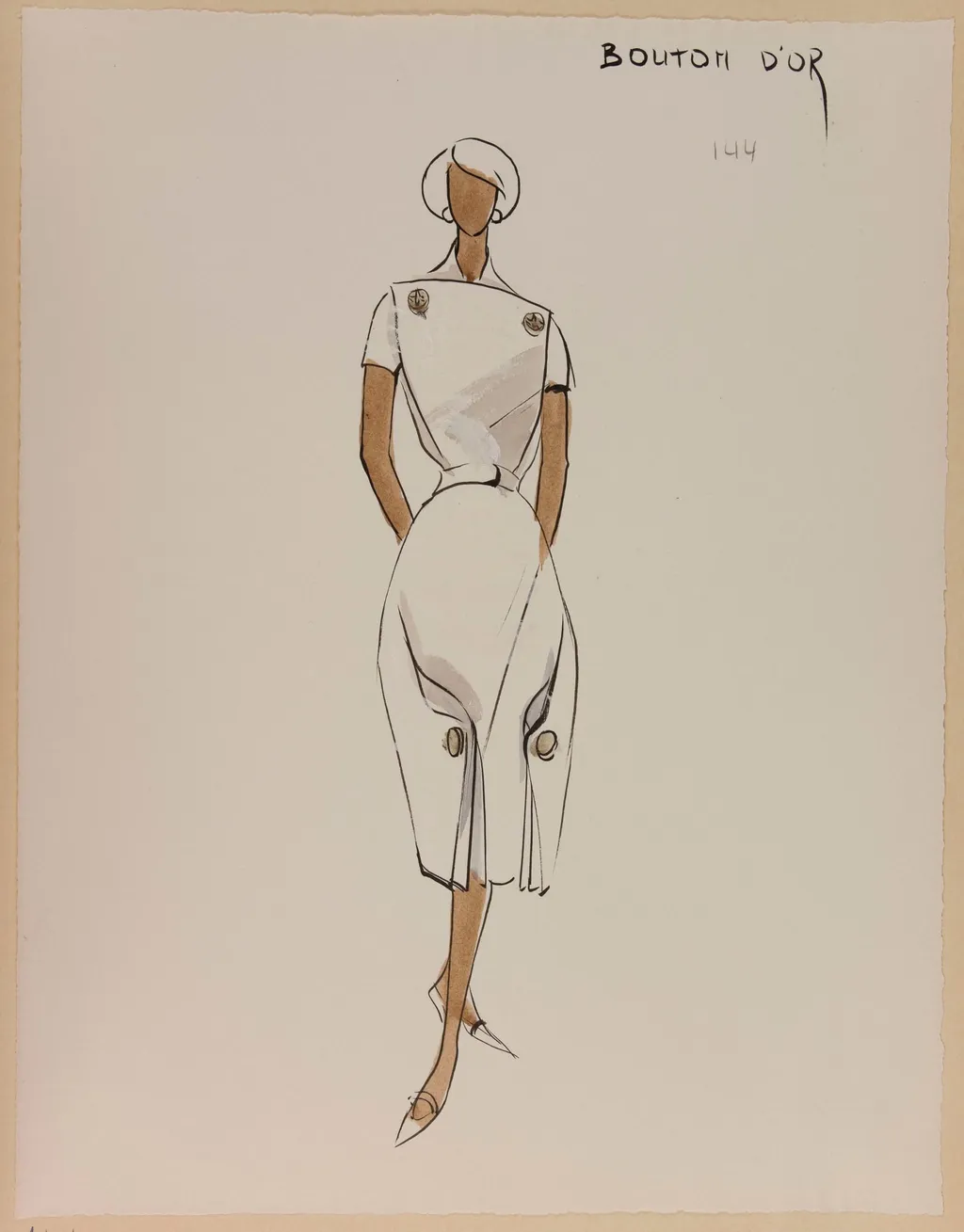
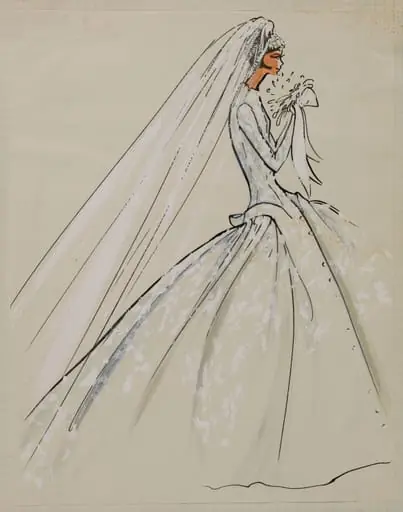
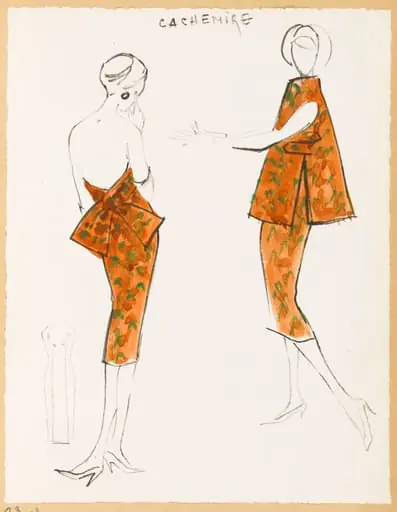
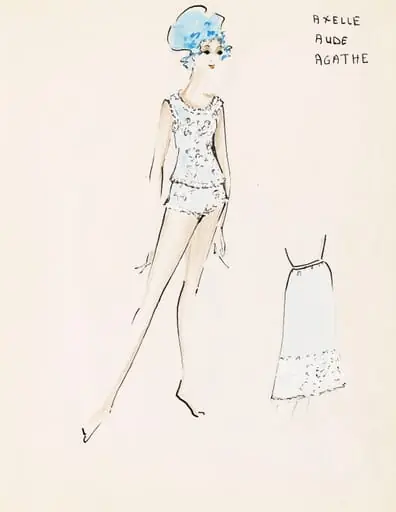
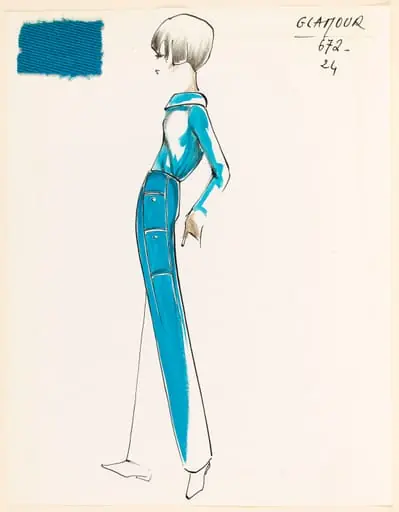
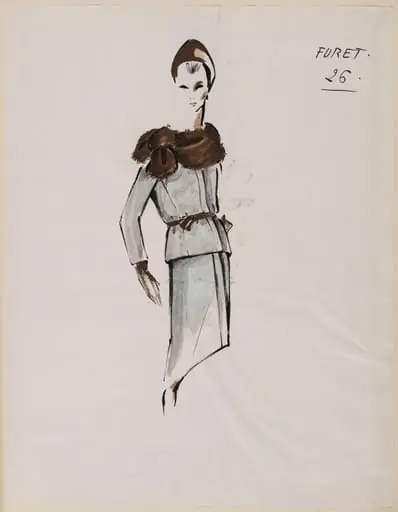
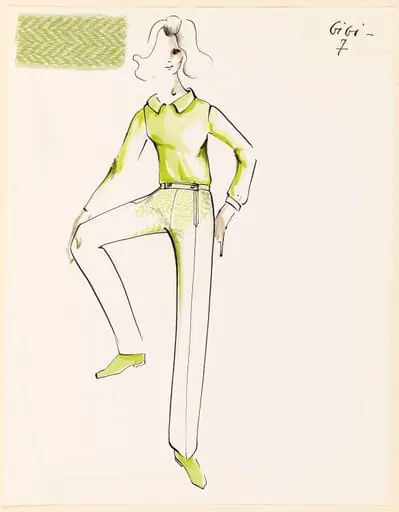
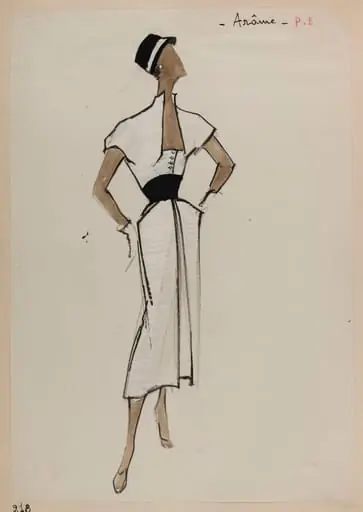
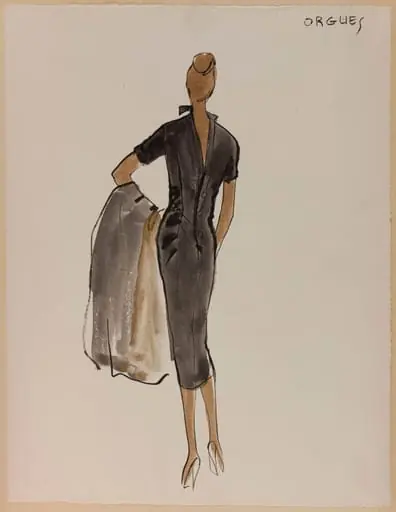
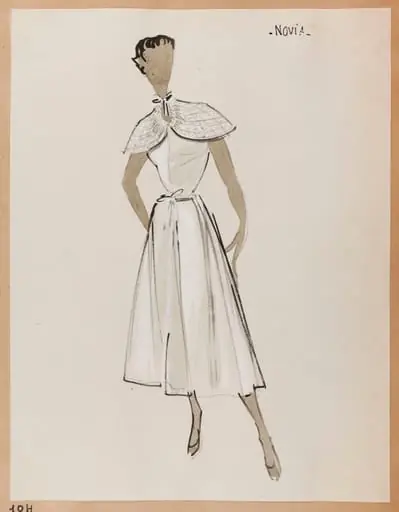
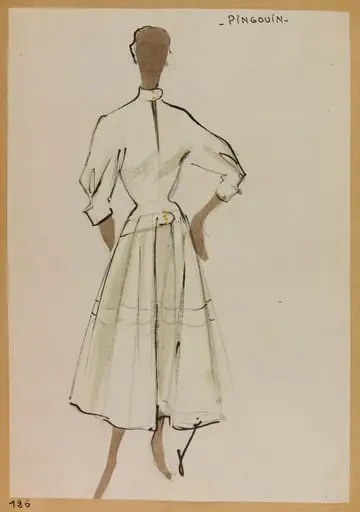
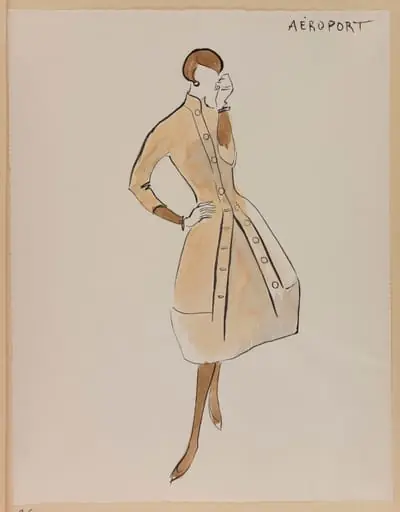
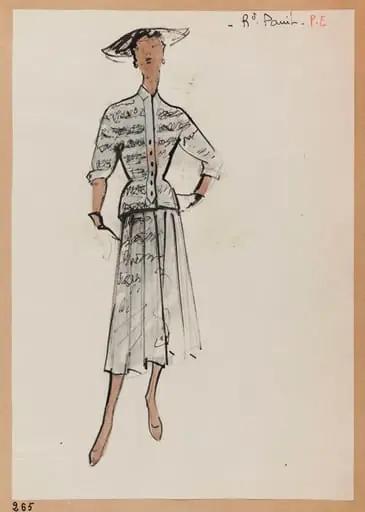
Bouton d'or is a drawing by Carven. It dates from 1956 and is held in the collection of the Palais Galliera - Musée de la Mode de la Ville de Paris.
About this work
Overview
The work is held in the collection of the Museum of Ethnography, where it is categorized as a study rather than a formal portrait.
Bouton d'or is a pencil sketch from around 1956 by the French designer and artist Carven. Executed with swift, unrefined lines, it captures a standing female figure in modest attire. The work is held in the collection of the Museum of Ethnography, where it is categorized as a study rather than a formal portrait. Its informal quality suggests it was made as a personal observation or preparatory exercise.
Subject & Meaning
The figure is a woman dressed in a plain white blouse and a long skirt ending just above the ankles, with her hair neatly gathered and low-heeled shoes visible. The title, meaning 'gold button' in French, may refer to a small detail on her clothing—perhaps a single button—or serve as a poetic allusion to quiet dignity. The absence of facial features and contextual elements shifts focus to posture and attire, evoking anonymity and everyday presence.
Technique & Style
Carven employed loose, economical pencil strokes to suggest form and movement. Light hatching indicates fabric folds without detailed rendering, emphasizing spontaneity over precision. The drawing lacks heavy shading or contouring, preserving a sense of immediacy. This approach reflects a sketchbook sensibility, prioritizing observation over completion, and aligns with mid-century artistic practices valuing gesture over finish.
History & Provenance
The work entered the Museum of Ethnography’s collection after Carven’s death, likely through donation or acquisition from personal archives. Its origin as a private study means little documentation exists about its creation context. The museum’s classification of it as an ethnographic artifact suggests interest in its representation of ordinary dress and posture rather than its artistic pedigree.
Context
Created in postwar France, Bouton d'or reflects a cultural moment when fashion designers often engaged in drawing as both profession and personal practice. Carven, known for clothing design, used sketching to record daily life, blending aesthetic sensitivity with functional observation. The figure’s plain clothing and unadorned stance mirror the restrained, practical style favored in civilian life during that era.
Legacy
Though not widely exhibited, Bouton d'or remains a quiet example of how fashion designers documented the human form beyond commercial illustration. Its inclusion in an ethnographic museum underscores its value as a record of ordinary dress and posture. The work invites reflection on the significance of small, unremarkable moments in visual culture.
Artist & collection
Artist
These delicate ink-on-paper drawings capture the quiet poetry of everyday things: pinecones, reeds, apples.
Museum
Palais Galliera - Musée de la Mode de la Ville de Paris
Continue through works from the same source collection.