Artwork
Rd Panif
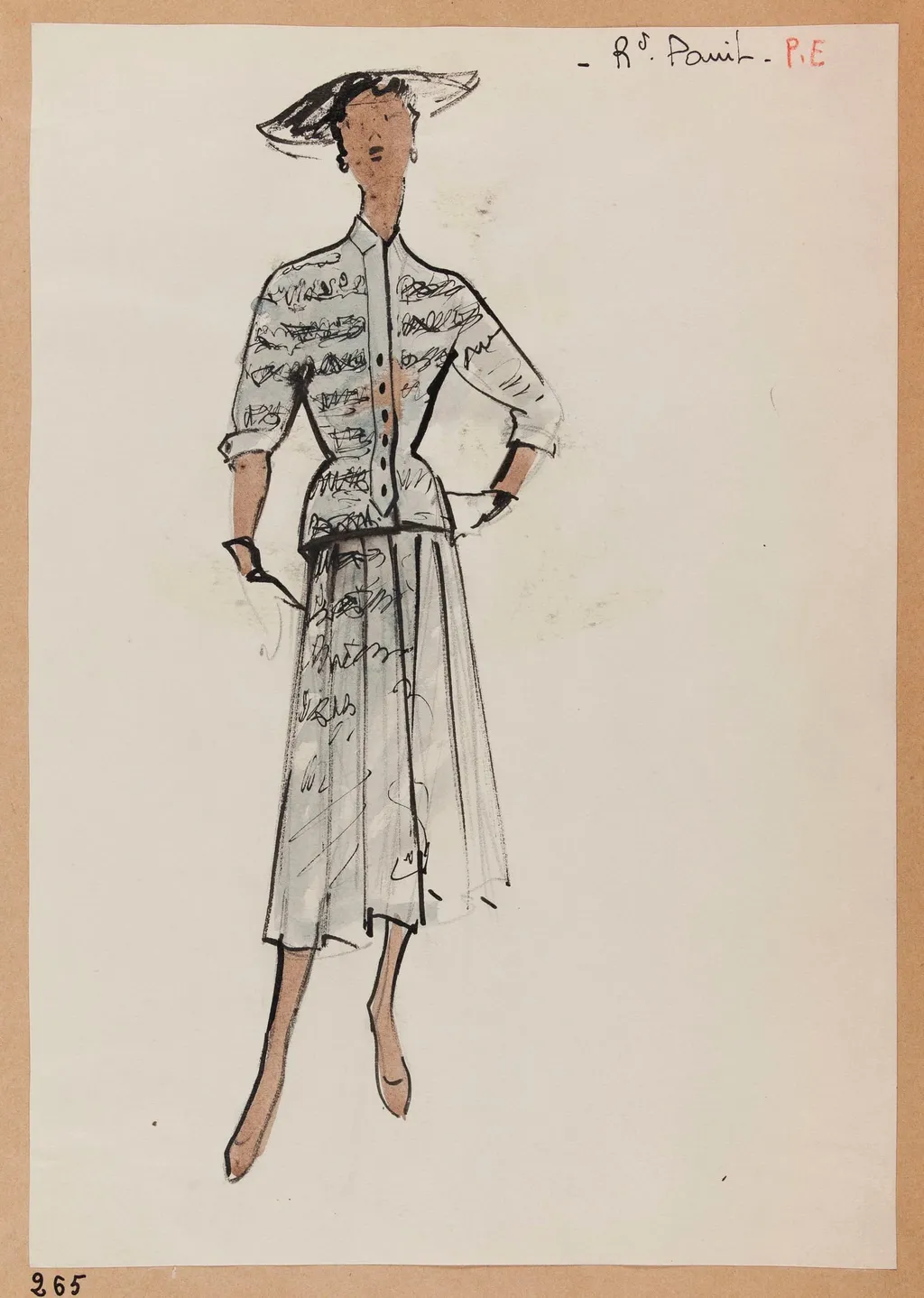
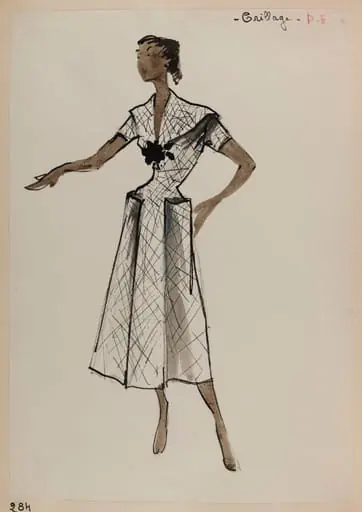
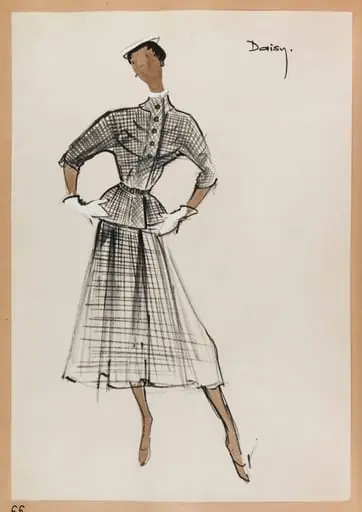
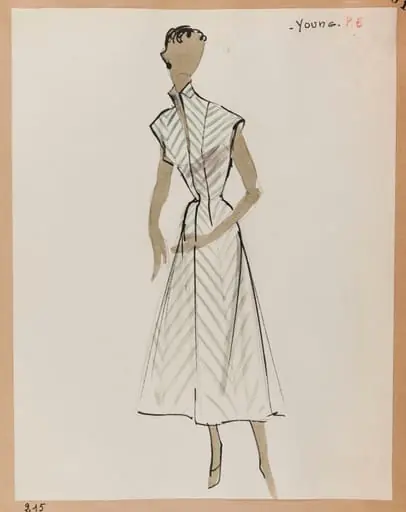
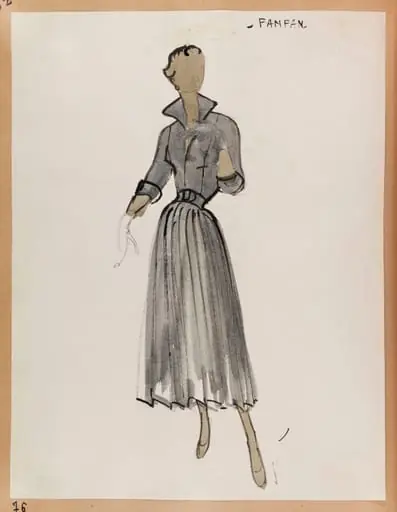
Rd Panif is a drawing by Carven. It dates from 1951 and is held in the collection of the Palais Galliera - Musée de la Mode de la Ville de Paris.
About this work
Overview
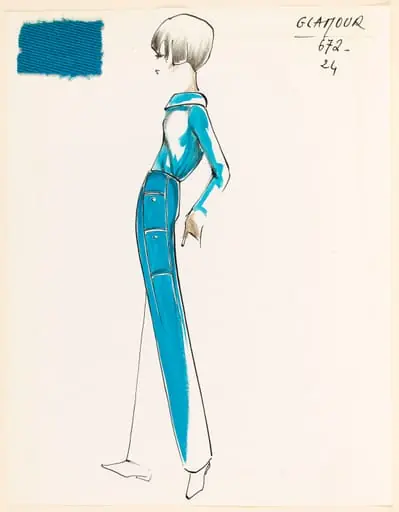
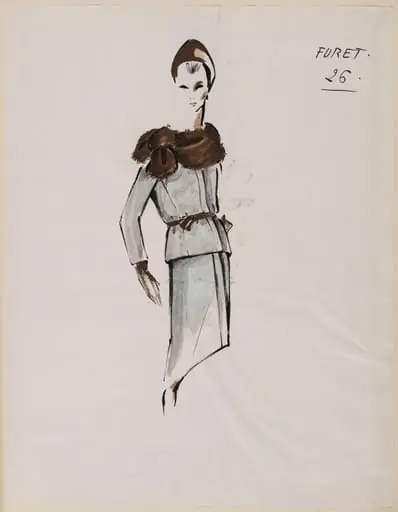
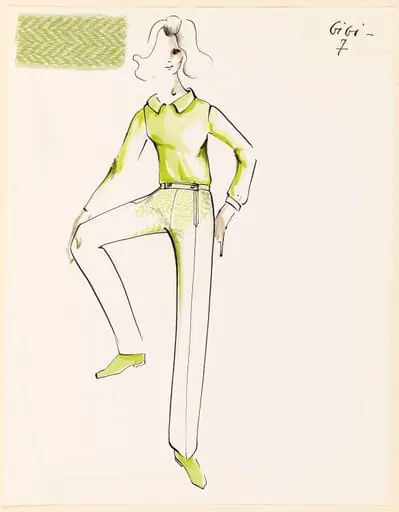
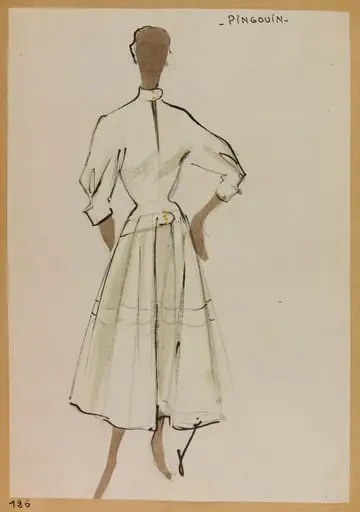
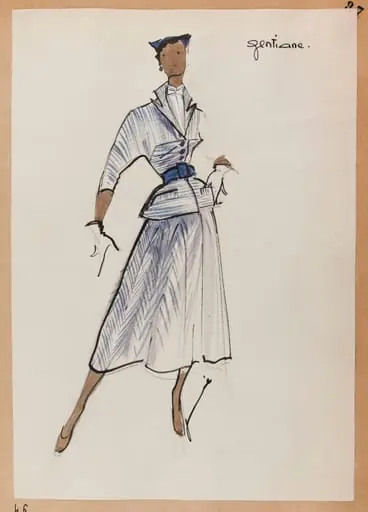
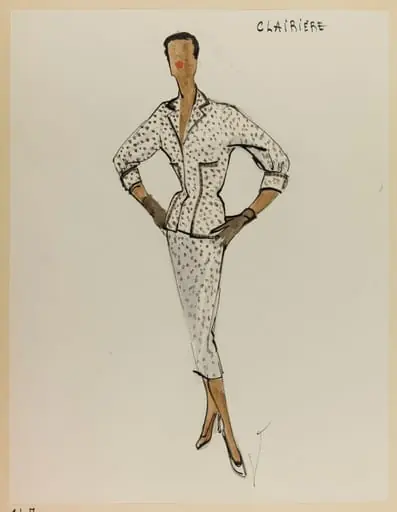
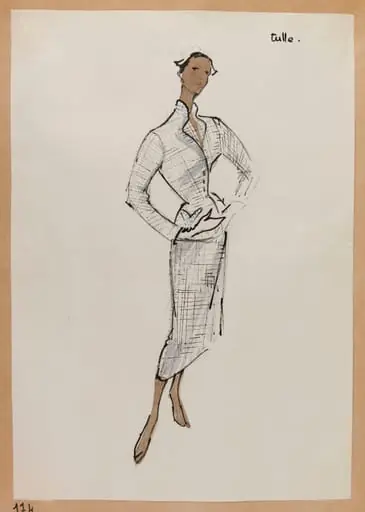
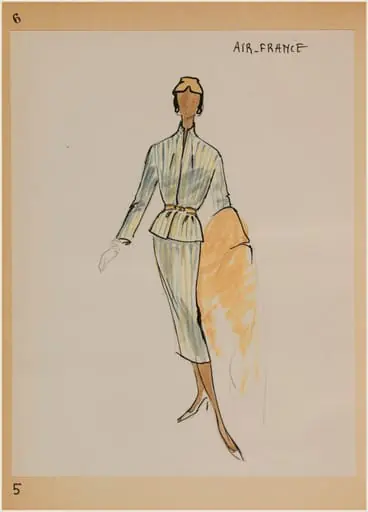
The work captures a female figure in motion, rendered with minimal, fluid lines that prioritize silhouette and gesture over refined detail.
Created around 1951, Rd Panif is a pencil sketch attributed to the fashion designer Carven. It resides in the collection of the Museum of Ethnography. The work captures a female figure in motion, rendered with minimal, fluid lines that prioritize silhouette and gesture over refined detail. Its informal quality suggests it was made as a preliminary design, possibly for a garment concept rather than a finished illustration.
Subject & Meaning
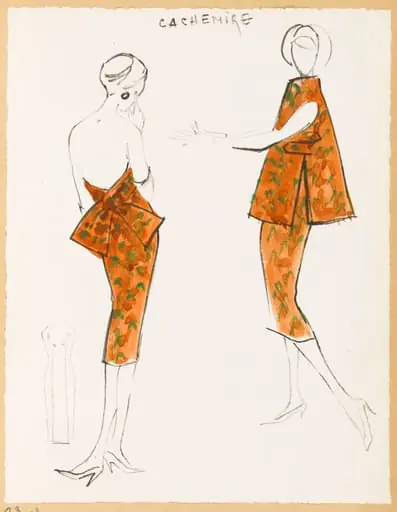
The figure depicts a woman dressed in a light jacket adorned with stylized floral motifs and a long, draped skirt, accessorized with a wide-brimmed hat and gloves. Her posture—one hand on the hip—conveys casual poise. The attire reflects mid-century feminine ideals of elegance and movement, likely intended to communicate a wearable aesthetic rather than a narrative. The sketch functions as a visual note for a clothing design, not a portrait.
Technique & Style
The drawing employs rapid, unrefined pencil strokes that emphasize form over precision. Floral patterns on the jacket are suggested with loose, repeating marks, and fabric folds are indicated by sweeping lines rather than detailed shading. This approach prioritizes spontaneity and movement, characteristic of fashion sketching used to capture ideas quickly. The absence of background or facial features directs focus entirely to the garment’s structure and flow.
History & Provenance
The sketch entered the Museum of Ethnography’s collection as part of a broader archive of 20th-century fashion documentation. While its exact origin within Carven’s atelier is undocumented, its attribution to the designer is supported by the signature in the corner and stylistic alignment with known designs from the early 1950s. It was likely preserved for its representation of postwar French fashion practices.
Context
In the early 1950s, Parisian fashion houses relied on rapid sketches to communicate design ideas between designers, patternmakers, and clients. Rd Panif exemplifies this working method, where speed and clarity outweighed finish. The garment’s floral motifs and flowing lines reflect a postwar shift toward softer, more fluid silhouettes, contrasting with wartime austerity and aligning with emerging trends in ready-to-wear.
Legacy
As a working drawing, Rd Panif offers insight into the iterative process behind fashion design rather than the final product. It remains a quiet testament to the role of sketching in shaping mid-century style. Though not widely exhibited, it contributes to scholarly understanding of how designers like Carven translated aesthetic ideas into wearable form during a period of rapid change in fashion production.
Artist & collection
Artist
These delicate ink-on-paper drawings capture the quiet poetry of everyday things: pinecones, reeds, apples.
Museum
Palais Galliera - Musée de la Mode de la Ville de Paris
Continue through works from the same source collection.