Artwork
Pingouin
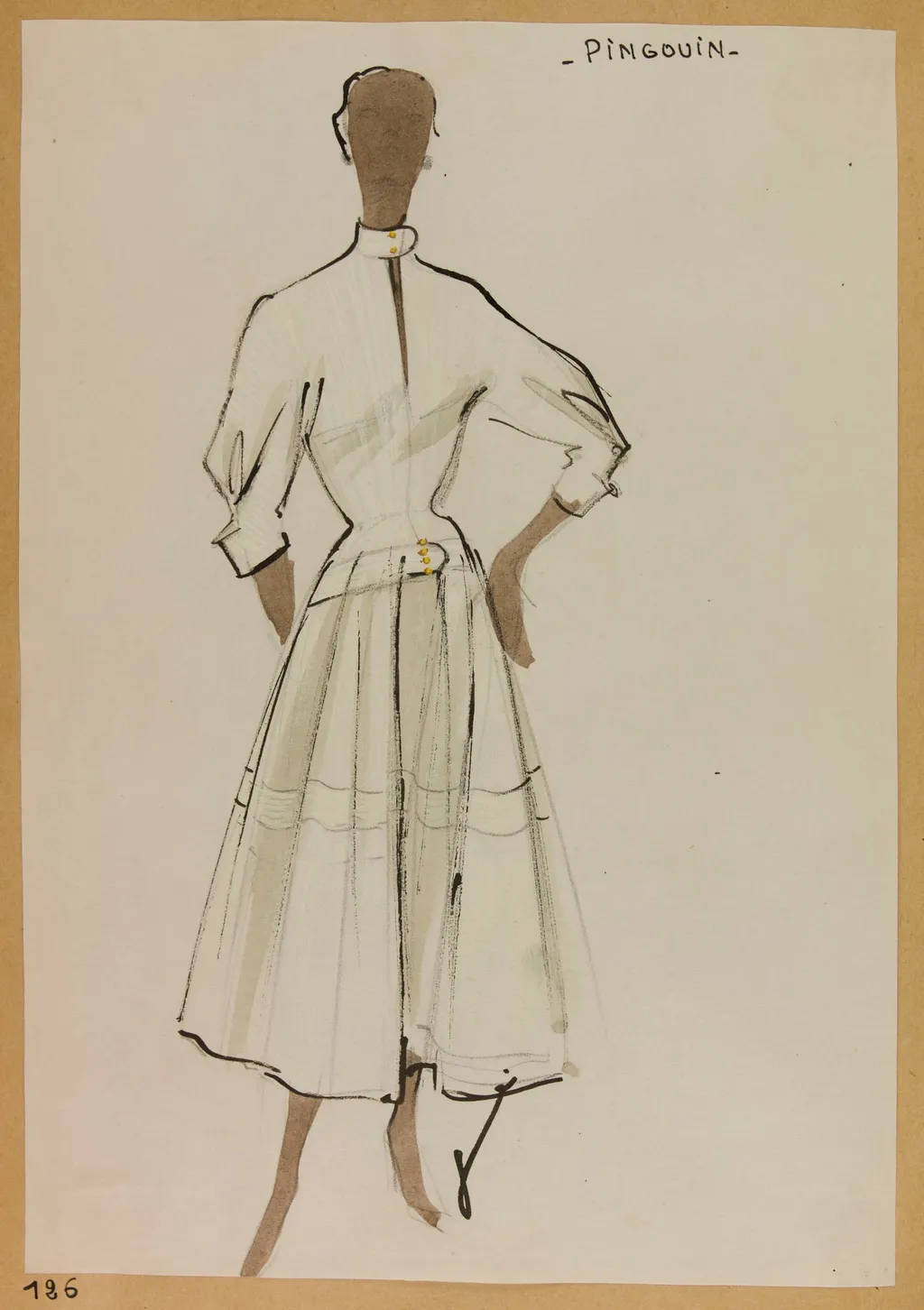
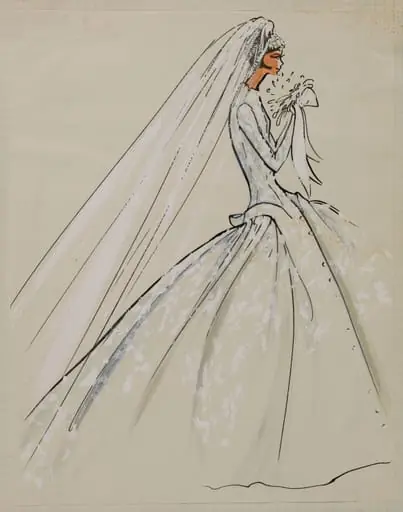
Pingouin is a drawing by Carven. It dates from 1952 and is held in the collection of the Palais Galliera - Musée de la Mode de la Ville de Paris.
About this work
Overview
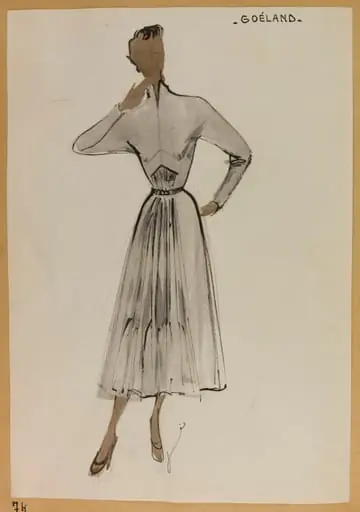
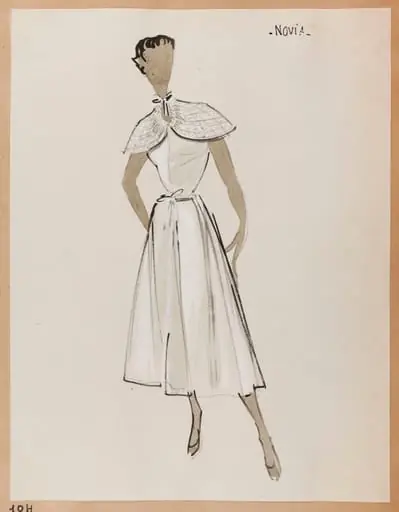
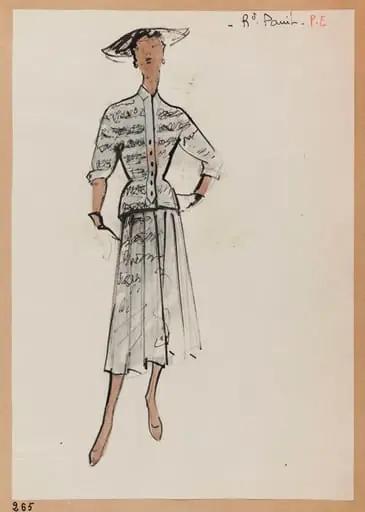
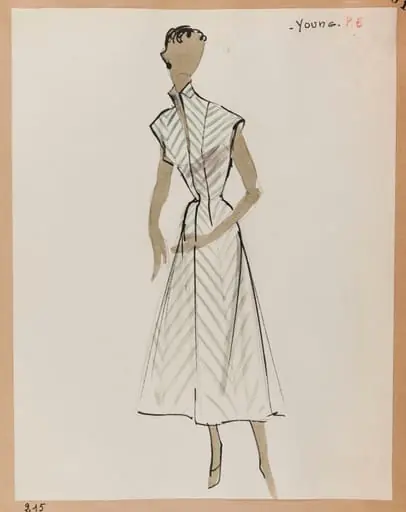
Created in 1952 by the French designer Carven, this image captures a fashion illustration rather than a traditional painting. It is part of the collection at the Museum of Ethnography, where it serves as a record of mid-century couture aesthetics. The work reflects the designer’s approach to wearable elegance, emphasizing structure and restraint over ornamentation.
Subject & Meaning
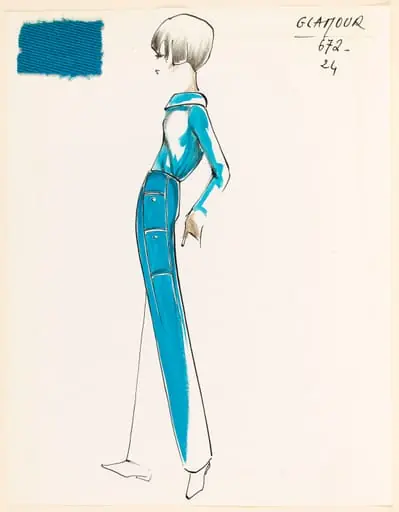
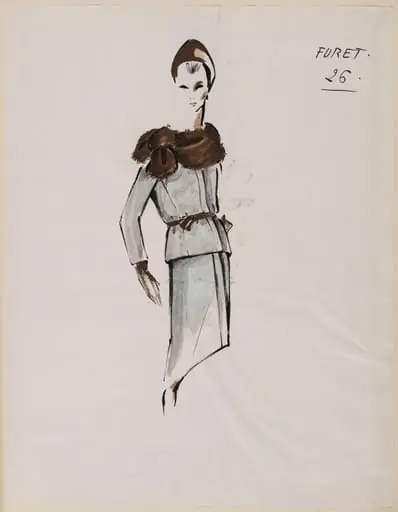
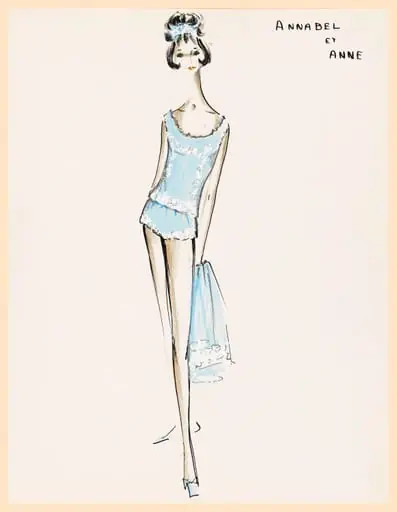
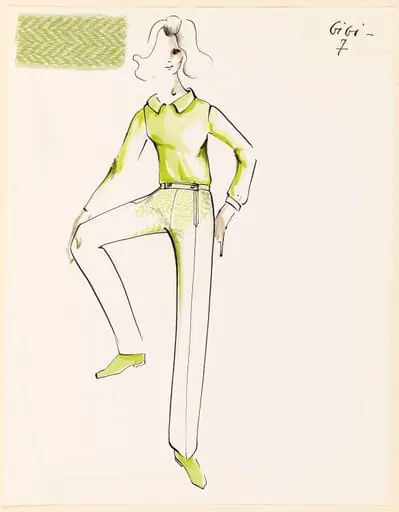
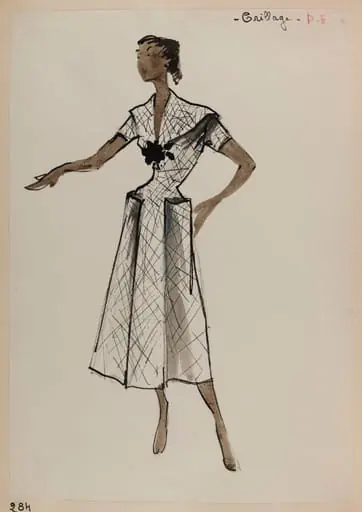
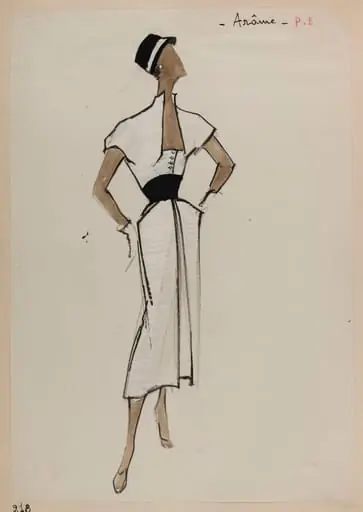
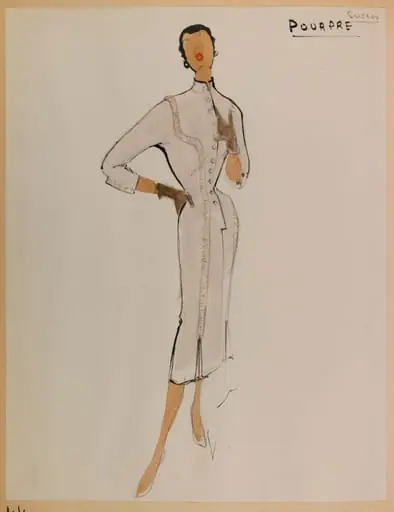
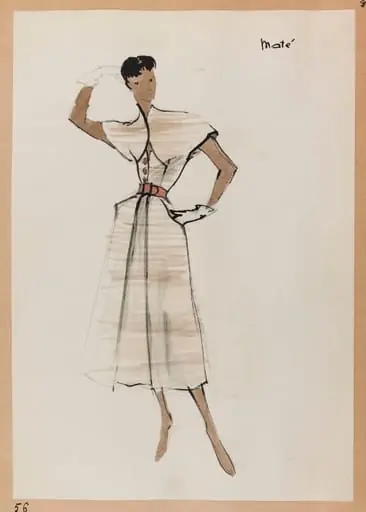
The figure is a woman standing with composed posture, hands on hips and legs slightly parted, conveying quiet confidence. Her attire—a white dress with a high neckline, long sleeves, and a fitted waist—suggests both modesty and refinement. The pose and garment together imply an ideal of postwar femininity: poised, self-assured, and deliberately unadorned.
Technique & Style
Rendered with clean, precise lines and minimal detail, the illustration prioritizes silhouette over texture. The dress is defined by smooth contours and flat planes of color, avoiding shading or decorative elements. This stylistic choice aligns with the modernist trend in fashion illustration of the era, favoring clarity and geometric harmony.
History & Provenance
The image was produced during Carven’s active years as a couturier, likely as part of a promotional or archival series. It entered the Museum of Ethnography’s collection as a cultural artifact representing mid-20th-century French fashion design. Its preservation underscores the institution’s interest in everyday material culture alongside ceremonial or ritual objects.
Context
In the early 1950s, Parisian fashion emphasized tailored silhouettes and restrained elegance following wartime austerity. Carven’s designs stood out for their feminine simplicity and accessibility. This illustration reflects broader societal shifts toward practical yet refined clothing, appealing to a new generation of modern women seeking both comfort and poise.
Legacy
Though not widely known outside fashion circles, Carven’s work contributed to the evolution of postwar womenswear. This image endures as a quiet example of how design language can communicate social values through form alone. It remains a reference point for scholars studying the intersection of fashion, gender, and visual culture in mid-century Europe.
Artist & collection
Artist
These delicate ink-on-paper drawings capture the quiet poetry of everyday things: pinecones, reeds, apples.
Museum
Palais Galliera - Musée de la Mode de la Ville de Paris
Continue through works from the same source collection.